Before starting from home for the airport, you put your flight number – DL28 on Google search. It shows you the current flight status from Atlanta to London. But another time, you want to ask what are the chances of this flight getting delayed. Google won’t give you any relevant answer, although it has all the flight data.
Imagine another scenario where you are boarding the flight to London and have updated your status on Facebook. A school friend you had lost touch with during the years resides in London and sees your post. You end up having dinner with her in the evening.
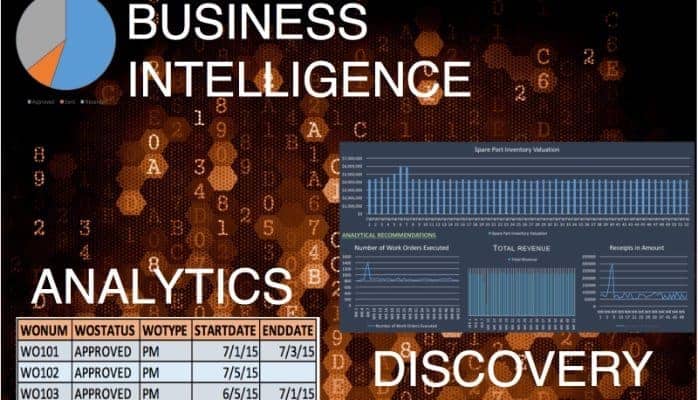
These are the three possibilities of how far you can go with data – when a question is very relevant and thought beforehand by R&D / IT (in the above case – Google) and the system is designed to answer that. This system design is referred to as BusinessIntelligence.
But when the system is not designed to answer a question that is crucial, the things we do to get an answer is called Data Analytics. In the third case, when the precise question itself is not known is termed as Discovery.
In modern enterprises, this “Discovery” layer is increasingly described as BI discovery, where users iteratively explore data, test hypotheses, and surface unknown insights that traditional BI reports were never designed to handle.
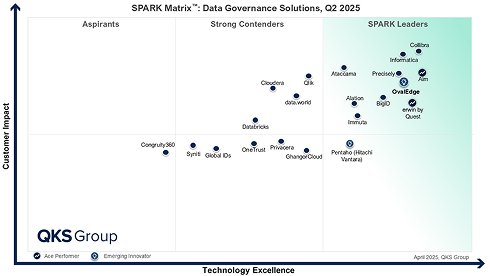
Platforms like OvalEdge extend this BI discovery approach by combining cataloging, lineage, and collaboration so that both business and technical users can move fluidly from standard BI dashboards to deeper discovery work in the same environment.
Existing Dimension Models
For better Business Intelligence, Organizations are building data-warehouses and organizing data in very formal dimension models or cubes so that the desired question can be answered rapidly. But these dimension models cannot be built up fast enough to keep pace with the increasing data needs of today's organizations.
Creating a platform for Analytics and Discovery is a better approach. Through Hadoop technology, it is getting possible to create a platform for Data Analytics and Discovery. Data Lake or Data Reservoir or Enterprise Data Hub are some new terms where you use Hadoop to store all the data. Organizations are hiring Data Scientists to think of questions and find answers using various algorithms, machine learning, etc. The problem here is that few individuals who don’t fully know the nitty-gritty’s of business have to come up with all the possible questions.
Since this article first appeared, cloud-native data lake platforms such as Databricks Delta Lake, Snowflake, and Google BigLake have matured, providing ACID transactions, scalable metadata, and native support for machine learning workloads on top of raw data.
These modern data lakes make it easier to operationalize BI discovery by enabling ad‑hoc queries, interactive notebooks, and semantic layers that sit directly on governed lake storage instead of rigid warehouse-only models.
OvalEdge complements these environments by crawling popular lakes like Azure Data Lake, automatically profiling files and tables so they become searchable and reusable assets for analytics teams.
What is a Data Lake?
What if there was a repository that could store all the data in its native format until it was needed? Could business users query that data in the way they wanted and get answers quickly? These questions lead to a Data Lake. In a practical sense, a Data Lake is characterized by three key attributes:
Collect anything and everything: A Data Lake contains all data, both raw sources over extended periods of time as well as any processed data.
Let everyone dive in: A Data Lake enables users across multiple business units to refine, explore and enrich data on their terms.
Use your own engine: A Data Lake enables multiple data access patterns across a shared infrastructure – batch, interactive, online, search, in-memory, and other processing engines.
In a BI discovery scenario, analysts often start with loosely defined questions, land diverse data into the lake, and then iteratively refine models as patterns emerge from exploratory queries and visualizations.
To keep this exploration governed, organizations pair the lake with a data catalog that tracks lineage, sensitivity, and ownership, so users can safely “dive in” without risking misuse of critical data assets.
OvalEdge’s catalog for data lake environments automates foundational tasks such as lineage generation, PII detection, and auto‑classification, turning raw lake objects into well‑described assets that are ready for BI discovery and analytics
Make the Data Lake as a Discovery Engine
Here are some tips to convert a Data Lake into a Discovery engine. By using these tips, organizations can create a culture of data-driven decision-making. It is important to give access to data not only to your business analysts but also to all the employees. This self-service discovery tool should be a part of the employee portal so that they can get an answer to your questions. This ultimately improves the efficiency of the organization.
1. Eliminate data modeling: Star Schema, Snowflake schema, etc are 20th-century concepts, designed when data storage was super expensive. Now, as storage is dirt cheap, you can keep your data in an original format. Use machine learning concepts to find facts, dimensions, and the relationship between data. If you store your data in the original form you can reach any time dimension you need. All you need to do is to store all the inserts, updates, and deletes on the data.
In practice, many teams now combine lightweight semantic layers with raw lake storage, giving BI tools just enough structure for performance while still preserving the flexibility needed for open‑ended BI discovery.
Machine learning models can infer joins, detect slowly changing dimensions, and recommend new metrics based on usage patterns, reducing the amount of manual modeling required from data engineers.
2. Catalog: If you enter into a library, and there is no catalog available, it is impossible to find a book. The same applies to data. To find data, it is necessary to build a catalog of all the data in your data lake. Advanced algorithms or machine learning techniques are used to build this catalog. It is important to have all the information cataloged and searchable at your fingertips.
This is where the strength of the OvalEdge search algorithm compared to Google becomes apparent: while Google focuses on documents and web pages, OvalEdge searches enriched metadata such as lineage, classifications, and usage context to surface the most relevant datasets for a specific business question.
Users can combine Google‑style keyword search with natural‑language queries like “customer churn tables used in marketing dashboards,” making the OvalEdge search algorithm compared to Google especially powerful for governed BI discovery inside the enterprise.
3. Collaboration: It is hard to do Discovery alone (there is only one Einstein). Hence, it is important for organizations to provide access to data with a collaboration tool. In our example, when you shared your flight information with your network, you got a nice evening with your friend.
Leading discovery platforms now embed comments, annotations, and Slack or Jira integrations directly into the catalog, so stewards, analysts, and domain experts can collaborate around specific tables, dashboards, or metrics.
Such collaboration turns isolated analyses into reusable BI discovery assets, because the context, decisions, and business definitions stay attached to the data rather than being lost in email threads or slide decks
4. Security: Data is an asset to an organization. As organizations are opening data to many employees it is also important that only the right eyes see the data. It is also very important to design a security model so that employees can collaborate securely.
Modern catalogs enforce row‑, column‑, and attribute‑based access controls, ensuring that sensitive attributes like PII are masked or restricted while still enabling broad self‑service analytics for approved users.
OvalEdge combines these controls with centralized audit trails and policy management so governance teams can prove compliance while still supporting fast BI discovery across data lakes, warehouses, and cloud platforms.
5. Recommendation: In the last decade, companies who build their fortune, mostly because of their recommendation engines. Whether it is Netflix, Facebook, LinkedIn, Google, companies are able to find new customers, customers are able to find new products using these recommendation engines. Every data has some co-relation with other data. These correlations are then converted to recommendations. Further data discovery can become very profound using these recommendation engines.
Within data catalogs, recommendation engines can suggest related datasets, dashboards, or glossaries based on user behavior, making BI discovery more intuitive for business users who may not know exactly what to search for.
OvalEdge leverages usage patterns and metadata relationships to recommend high‑quality, trusted assets first, helping teams converge quickly on the right data for analytics and BI discovery projects.
FAQs
1. What is the difference between BI, analytics, and discovery?
BI focuses on answering predefined, repeatable questions through dashboards and reports, while analytics explores new questions using statistical and ML techniques. Discovery (or BI discovery) goes a step further by surfacing unknown patterns and relationships when the exact questions are not yet clear.
2. How does a data lake support BI discovery?
A data lake stores raw and processed data from many sources in its native format, enabling flexible, schema‑on‑read access for experimentation. This architecture lets analysts and data scientists iterate quickly on models and visualizations without rebuilding rigid warehouse schemas, which is ideal for BI discovery use cases.
3. How is the OvalEdge search algorithm compared to Google for enterprise data?
Google optimizes for web pages and hyperlinks, while the OvalEdge search algorithm compared to Google is tuned for enterprise metadata such as lineage, classifications, and usage context. This allows OvalEdge to return datasets, dashboards, and glossary terms that are both relevant and compliant for a given business question.
4. What role does a data catalog play in BI discovery?
A data catalog inventories datasets across warehouses, lakes, and BI tools, capturing technical and business metadata in one place. By adding search, lineage, quality scores, and collaboration, it becomes the primary entry point for BI discovery, helping users find trusted data quickly.
5. How does OvalEdge enhance security and governance for discovery use cases?
OvalEdge provides features like data classification, policy‑based access control, and detailed audit trails for data usage. These capabilities ensure that BI discovery remains compliant with privacy and regulatory requirements while still enabling broad self‑service analytics.
.png?width=1081&height=173&name=Forrester%201%20(1).png)
.png?width=1081&height=241&name=KC%20-%20Logo%201%20(1).png)