Take a tour
Book demo

Trusted Agentic Analytics

Governed data agents that deliver trusted, repeatable insights and drive real business outcomes.

TRUSTED BY

Untitled (2000 × 1000 px) (51)
Untitled (2000 × 1000 px) (54)
Gousto_logo.svg 1-1
Farmers Insurance
globe
getty
Bedrock_FullLogo (1)
unnamed (8)

End-to-End Analytics Every
Business User Can Perform

From understanding the past to executing precise actions, AskEdgi lets business users complete the entire analytics journey—simply by prompting.

Historic Analytics

Historic Analytics

Understand the past with a governed, trusted view across all systems

Predictive Analytics

Predictive Analytics

Anticipate what’s next with predictive models and AI-driven insights

Group Decision Intelligence

Decision Intelligence

Evaluate options, simulate outcomes, and choose the best course of action

Decision Execution

Decision Execution

Execute decisions at scale through repeatable, governed data agents

Stock Images 1

High Impact Solutions Powered by Recipes

Recipes turn your data into repeatable, end-to-end agentic solutions for various business problems across industries & business functions.

Technology
Banking
Healthcare
Sales
Marketing
Finance
Data

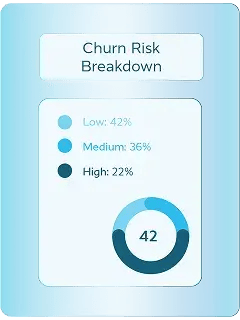
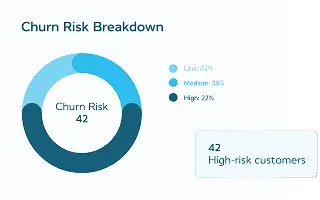
Customer Retention & Churn Prevention
Rectangle 5080
Revenue is lost when early churn signals go unnoticed. This recipe continuously monitors product usage, support activity, billing, and engagement to predict churn risk and automatically trigger targeted retention actions such as discounts, outreach, or playbooks—before customers leave.
Rectangle 5080 (1)

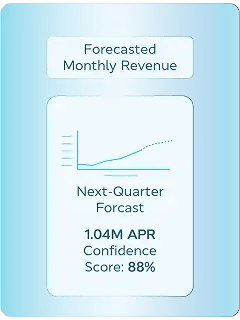
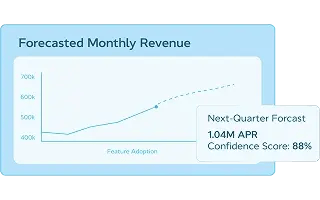
Usage-Based Revenue Forecasting

Rectangle 5080 (2)
ARR and usage forecasts lack confidence and consistency. This recipe combines usage trends, contract data, and seasonality to deliver continuously updated revenue forecasts with built-in confidence scoring.
Rectangle 5080 (3)

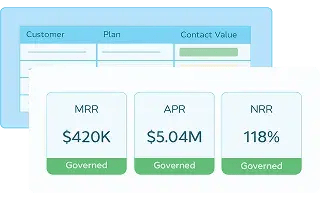
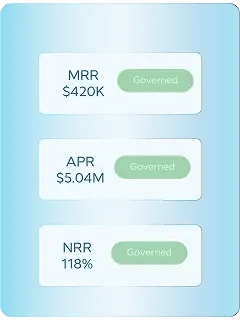
SaaS Metrics Governance (MRR, ARR, NRR)
Rectangle 5080 (4)
Teams report different versions of the same metrics. This recipe standardizes metric definitions and automatically generates trusted MRR, ARR, and NRR views that finance, sales, and executives can rely on.
Rectangle 5080 (5)

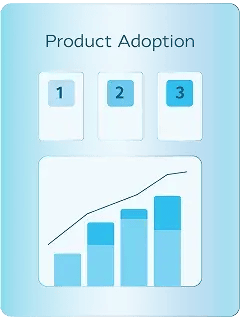
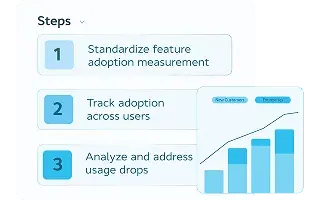
Product Adoption

Rectangle 5080 (7)
Standardizes how each feature adoption is measured, tracks adoption across users, and exposes where and why usage drops. It enables teams to target the right users with in-app guidance and more.
Rectangle 5080 (6)

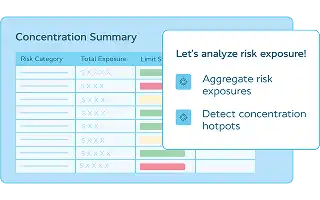
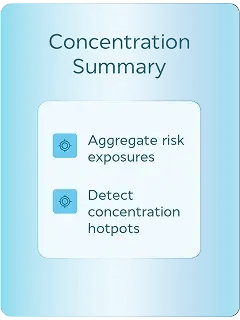
Risk Exposure & Concentration Analysis
Rectangle 5080
Risk concentrations remain hidden across fragmented portfolios. This recipe aggregates exposures across systems while enforcing consistent risk definitions and lineage, enabling clear visibility into concentration and systemic risk.
Rectangle 5080 (3)

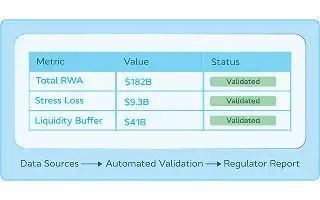
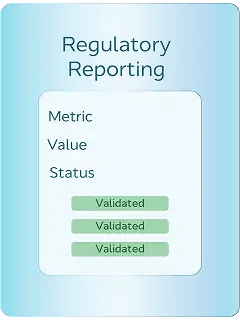
Regulatory Reporting (BCBS 239, Stress Testing)
Rectangle 5080 (1)
Regulatory reporting is manual, slow, and error-prone. This recipe automates data aggregation, validation, lineage capture, and report generation to produce regulator-ready outputs with confidence.
Rectangle 5080 (4)

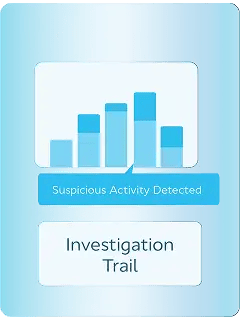
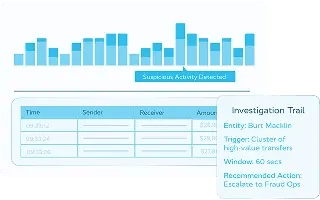
Fraud Detection & Investigation

Rectangle 5080 (2)
Anomalous transactions are detected too late. This recipe continuously monitors transaction patterns, flags suspicious activity, and automatically generates investigation trails to accelerate response and resolution.
Rectangle 5080 (5)

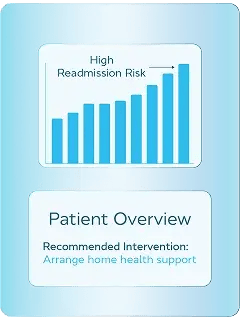
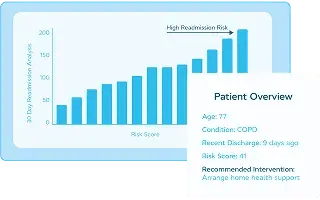
Readmission Risk Analysis

Rectangle 5080-1
High readmission rates lead to penalties and poorer outcomes. This recipe analyzes clinical, claims, and demographic data to predict readmission risk and recommend targeted interventions.
Rectangle 5080 (3)-1

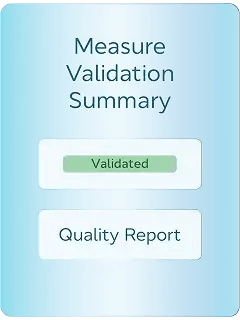
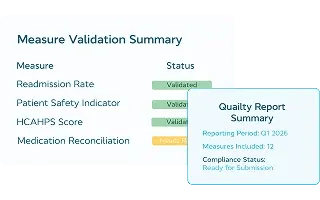
Quality Measures & CMS Reporting

Rectangle 5080 (1)-1
Quality reporting and audits require heavy manual effort. This recipe standardizes measure definitions, validates source data, and automatically produces compliant CMS and quality reports.
Rectangle 5080 (4)-1

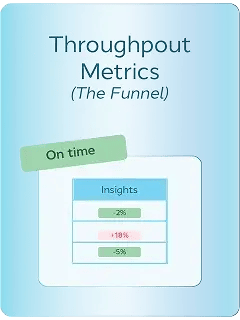
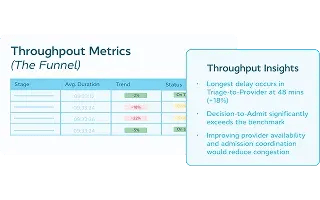
Operational Throughput Optimization
Rectangle 5080 (2)-1
ER congestion and delayed care impact patient outcomes. This recipe analyzes bed utilization, staffing levels, and patient flow to recommend scheduling and capacity improvements.
Rectangle 5080 (5)-1

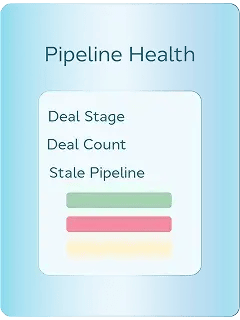
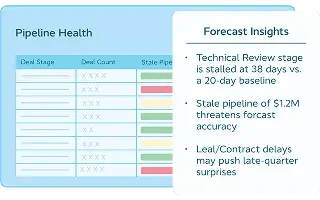
Pipeline Health & Forecast Accuracy
Rectangle 5080 (6)
Forecasts are unreliable and surprises surface late in the quarter. This recipe analyzes deal progression, rep behavior, and historical win patterns to improve forecast accuracy and visibility.
Rectangle 5080-2

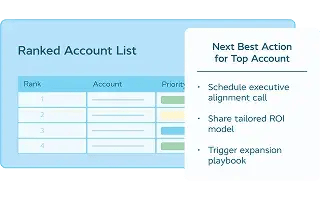
Account Prioritization & Next Best Action

Rectangle 5080 (7)
Sales reps lack clarity on where to focus. This recipe scores accounts using engagement, intent, and revenue signals, then recommends next best actions to maximize impact.
Rectangle 5080 (1)-2

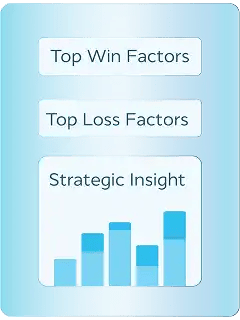
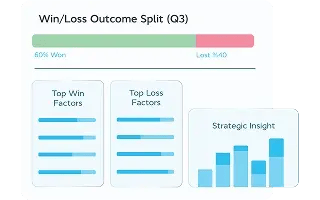
Win/Loss Analysis

Rectangle 5080 (8)
Teams lack insight into why deals are won or lost. This recipe analyzes CRM data, call notes, pricing, and competitors to surface patterns that inform coaching and strategy.
Rectangle 5080 (2)-2

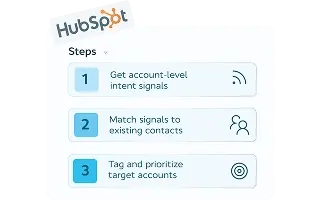
Account-Based Marketing

Rectangle 5080 (5)-2
Marketing spend can’t be clearly tied to revenue. This recipe connects campaigns, leads, opportunities, and closed revenue to reveal true ROI and attribution.
Rectangle 5080 (6)-1

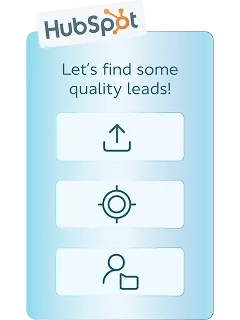
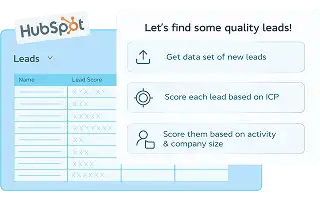
Lead Scoring

Rectangle 5080 (4)-2
Generic messaging leads to low engagement. This recipe analyzes behavior, demographics, and response data to create dynamic, high-impact audience segments.
Rectangle 5080 (7)-1

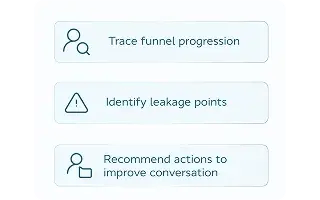
Marketing Funnel Leakage Analysis

Rectangle 5080 (3)-2
Leads drop out without clear explanation. This recipe traces funnel progression, identifies leakage points, and recommends actions to improve conversion.
Rectangle 5080 (8)-1

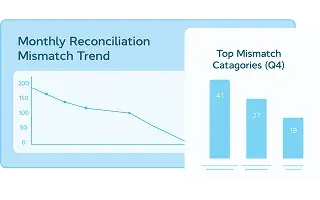
End-to-End Financial Reconciliation
Rectangle 5080-3
Month-end close is slow and resource-intensive. This recipe reconciles GL, sub-ledgers, and bank data, flags mismatches, and provides explanations to accelerate close.
Rectangle 5080 (3)-3

Cost & Margin Analysis

Rectangle 5080 (1)-3
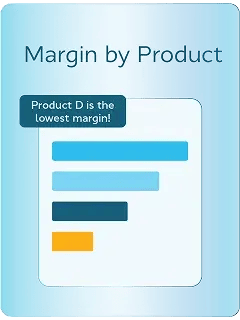
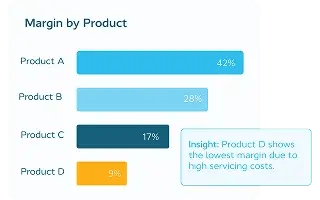
True margins are unclear across products and customers. This recipe allocates costs, analyzes margin drivers, and surfaces opportunities for improvement.
Rectangle 5080 (4)-3

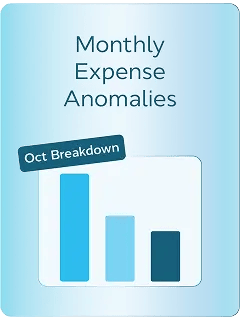
Expense Anomaly Detection

Rectangle 5080 (2)-3
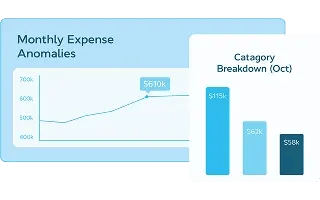
Fraud, waste, and policy violations go unnoticed. This recipe detects unusual spending patterns and routes alerts to finance teams for review.
Rectangle 5080 (5)-3

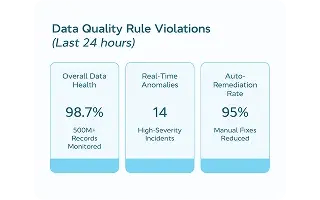
Operational Data Quality Monitoring

Rectangle 5080-4
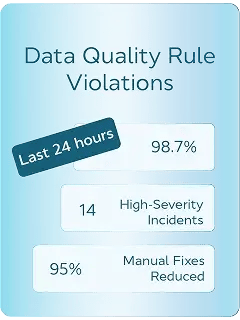
Data issues are discovered after decisions are made. This recipe defines quality rules, detects anomalies in real time, and triggers remediation workflows.
Rectangle 5080 (3)-4

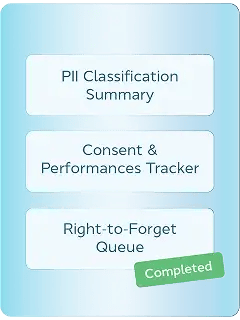
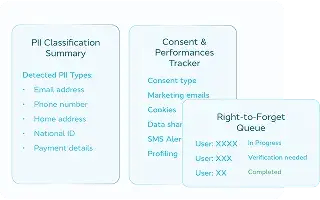
Privacy & Compliance (GDPR, CCPA)

Rectangle 5080 (1)-4
Compliance processes are manual and reactive. This recipe locates PII, tracks consent, supports right-to-forget requests, and generates compliance reports.
Rectangle 5080 (4)-4

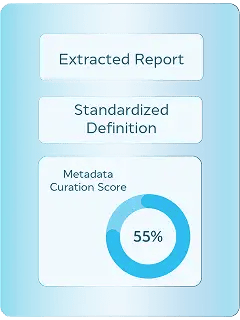
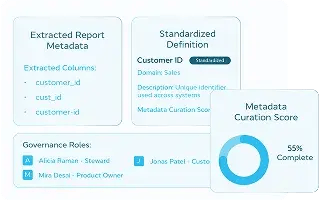
Metric & Glossary Standardization

Rectangle 5080 (2)-4
Metrics mean different things across teams. This recipe curates governed definitions and enforces consistent usage across analytics and reporting.
Rectangle 5080 (5)-4

Trusted Answers, Every Time

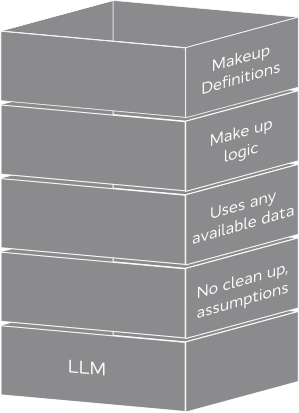
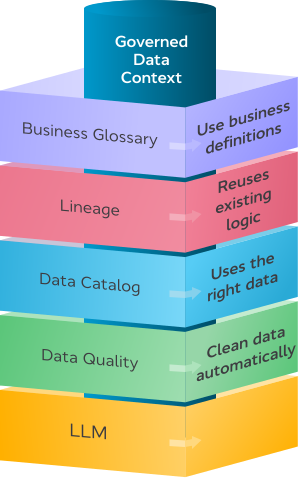
AskEdgi delivers answers grounded in Comprehensive, Governed Enterprise Data Context—not guesswork.

Group 6116
How much revenue did we lose last quarter due to late deliveries?
Thinking...

LLM guesses the late delivery definition

1 days past promised

Loss calculated using guessed formula

Loss=SUM​((Order Amount​×Loss Rate​)+Refund​)

Datasets found with low confidence

Orders (Staged Warehouse), , Deliveries (Logistic)), Refund(ERP)

cross_icon $12.8M revenue loss identified from delivery delays.
Group 27305
How much revenue did we lose last quarter due to late deliveries?
Thinking...

Late delivery definition applied

2 days past promised

Revenue loss calculated using the formula from an existing report

Loss = SUM​((Order Amount​×Loss Rate​)+Penalty​+Refund​)

Certified datasets used: Orders, Deliveries, Penalties, Refunds...

Orders (ERP), Penalties (Contract) , Deliveries (Logistic)), Refund(ERP)

Fallback rule applied for missing promised dates...

Empty Delivery Date = Order Date + 5

right_icon $8.6M revenue loss identified from delivery delays.

Use All Your Data, Wherever It Lives

Centralized metadata provides context—using warehouse compute when available, and on-demand Pop-Up Compute when data lives in Source Systems.

On-demand processing that spins up to query data directly from source systems. This eliminates complex ETL by bringing compute to the data, then disappearing to optimize costs.

A single source of truth storing data location, schema, and context without moving the actual files. It allows the system to query disparate sources like apps and warehouses seamlessly.

Connect to All Your Systems

ERP, CRM, SaaS, databases, data warehouses, and data lakes powered by 150+ enterprise connectors.

Denod0
Cognos IBM 1
Cloudera 1
Penhato 1
Cosmos 1
Databricks 1
IBM
DBT
Denod0
Cognos IBM 1
SAP
Boomi
Dremio 1
Oracle 1
snowflake 1
Qlik 1
DSEFS 1
Boomi
Qlik 1

Access Data Safely, Wherever It Lives

A comprehensive, scalable access governance framework that governs how data is accessed and used.

AI-driven PII Classification & Masking

AI-driven PII Classification & Masking

AskEdgi automatically detects and classifies sensitive data using AI, ensuring privacy risks are identified early and handled consistently across systems.

Group 27299

Role-Based Access Control

Access is enforced based on roles and responsibilities, ensuring users see only the data they are authorized to view—across warehouses and source systems.

Group 5884

Metadata Shared, Data On Approval

Metadata is openly shared to promote discovery, while data access is granted through owner approval—balancing collaboration with accountability.

Built For Enterprise With All Guardrails

Data Integrity & Control
Group 5858

Your data is not shared with LLM

Group 6168

All actions are auditable

Group 6121

Execution logic is transparent

Group 27279

Outputs are fully traceable

Group 6167

Workflows are repeatable and deterministic

consumption_source_outline

Secure by design

Compliance & Certifications
Soc2 Type II certified

Soc2 Type II certified

ISO 27001 Certified

ISO 27001 Certified

HIPPA Compliant

HIPPA Compliant

GDPR Compliant

GDPR Compliant

FedRAMP Compatible

FedRAMP Compatible

BCBS 239 Compliant

BCBS 239 Compliant

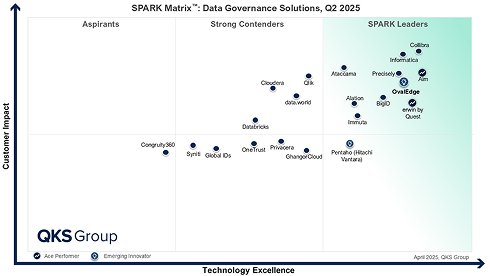
OvalEdge recognized as a leader in data governance solutions

SPARK Matrix™: Data Governance Solution, 2025
Final_2025_SPARK Matrix_Data Governance Solutions_QKS GroupOvalEdge 1
Total Economic Impact™ (TEI) Study commissioned by OvalEdge: ROI of 337%

“Reference customers have repeatedly mentioned the great customer service they receive along with the support for their custom requirements, facilitating time to value. OvalEdge fits well with organizations prioritizing business user empowerment within their data governance strategy.”

Named an Overall Leader in Data Catalogs & Metadata Management

“Reference customers have repeatedly mentioned the great customer service they receive along with the support for their custom requirements, facilitating time to value. OvalEdge fits well with organizations prioritizing business user empowerment within their data governance strategy.”

Recognized as a Niche Player in the 2025 Gartner® Magic Quadrant™ for Data and Analytics Governance Platforms

Gartner, Magic Quadrant for Data and Analytics Governance Platforms, January 2025

Gartner does not endorse any vendor, product or service depicted in its research publications, and does not advise technology users to select only those vendors with the highest ratings or other designation. Gartner research publications consist of the opinions of Gartner’s research organization and should not be construed as statements of fact. Gartner disclaims all warranties, expressed or implied, with respect to this research, including any warranties of merchantability or fitness for a particular purpose. 

GARTNER and MAGIC QUADRANT are registered trademarks of Gartner, Inc. and/or its affiliates in the U.S. and internationally and are used herein with permission. All rights reserved.

Resources to help you succeed

Whitepaper

Agentic analytics

Blog

Fast-tracking data governance with agentic metadata analytics

Blog

Enterprise agentic analytics: Meaning, context & use (2026)

Whitepaper

From data chaos to data trust: How OvalEdge powers the next era of data quality

Frequently Asked Questions

Product overview & value proposition

What is askEdgi and how is it different from ChatGPT or traditional BI tools?
askEdgi is a self-service, agentic analytics product. Unlike ChatGPT, which is a general-purpose language model, or traditional BI tools that rely heavily on structured dashboards and manual data querying, askEdgi is tailored for rapid, governance-aware data insights. It combines agentic AI with direct source system connectivity and advanced metadata handling to deliver relevant, actionable responses quickly and securely.

How does askEdgi reduce time-to-insight compared to traditional methods?
askEdgi connects directly to source systems or warehouses, pulls only the data required to answer a specific question, and analyzes it in a temporary, secure workspace. This streamlines the process and delivers insights significantly faster than traditional, manual methods.

How is askEdgi’s AI better than other platforms like Snowflake or Alation?
askEdgi uses a hybrid approach that combines in-house extensions for governance-aware tasks with secure integration to trusted public large language models (currently OpenAI, Gemini). This approach delivers governance-sensitive, context-rich analysis, unlike Snowflake (which focuses mainly on warehousing) or Alation (which is primarily a metadata catalog). askEdgi also ensures sensitive enterprise data remains internal by not sharing it with public AI providers.

What are Recipes, and how do they benefit both creators and consumers?
Recipes in askEdgi are predefined logic templates. They help creators by making it easy to build and share reusable analytics logic. For consumers, Recipes provide quick, consistent access to validated insights, bridging the gap between ad-hoc queries and repeatable business intelligence.

What data sources does askEdgi support?
askEdgi can connect to 150+ types of source systems—both warehoused and non-warehouse. To see the complete list of connectors, see the connectors page. 

Getting started and deployment

Is askEdgi available as a SaaS or on-prem deployment?
askEdgi has two main features: Catalog discovery and data analytics. Data Analytics is only available on a SaaS environment; however, Catalog discovery is available on an on-prem deployment with its complete enterprise packaging of the Data Governance Platform. 

Can I upload my own datasets (CSV, Excel, etc.)?
Yes. askEdgi allows you to upload your own datasets, including CSV and Excel files, enabling you to analyze custom or ad-hoc data along with your enterprise cataloged data and publicly available data. 

Can it connect to cloud data warehouses like Snowflake, BigQuery, or Redshift?
Yes. askEdgi can connect seamlessly to leading cloud data warehouses such as Snowflake, BigQuery, and Redshift, as well as many other cloud and on-premises data sources.

Does askEdgi integrate with existing data catalogs or governance tools?
Yes. askEdgi integrates with your existing data catalogs and governance tools, ensuring consistency, compliance, and leveraging your current governance investments.

What if users don’t know what questions to ask?
askEdgi offers domain-specific “Recipes” that suggest meaningful questions based on the dataset and context.

Architecture, integration, and scalability

How can askEdgi give insights for cross-functional questions without a data warehouse?
AskEdgi connects directly to source systems, pulls only the data needed for a specific question, and analyzes it in a temporary secure workspace.

What about companies that already have a data warehouse?
AskEdgi can enhance your warehouse by combining it with non-warehoused data, adding context through metadata. The result is that you get a better user experience. 

What’s the maximum size of data askEdgi can handle?
Up to 100GB per session for uploaded files, with real-time queries on live data sources askEdgi can handle about 1TB of data in its workspace. For more limit, please ask for a bigger server capacity.

Can askEdgi handle unstructured or semi-structured data?
Yes. Text fields and logs can be analyzed using AI Functions for sentiment, classification, and anomaly detection. However, if you have PDF files, etc, askEdgi can’t analyze them. If unstructured data is in a database or application, askEdgi can work with it using AI functions. 

How do AI Functions work?
AI functions use advanced AI models to analyze free-text data inside structured datasets, like detecting sentiment, entities, or errors.

Security & data privacy

How do you ensure data security?
Data never leaves your environment without encryption, strict access controls, and policy enforcement based on your existing governance setup.

Is enterprise data shared with an AI model provider?
No. askEdgi does not send your raw enterprise data to public AI providers. askEdgi creates a RAG with extended metadata, builds queries, and then runs in a secure temporary workspace. 

How does askEdgi answer questions without sharing data with AI providers?
By using retrieval-augmented generation (RAG) techniques, askEdgi keeps data processing internal, feeding only relevant metadata or summaries to the AI model.

Is the AI model trained on my data?
No. askEdgi does not train its models on your data. Your data is used solely for in-session processing.

How does askEdgi handle PII or sensitive data?
Sensitive data is automatically detected using metadata classification, and access is restricted according to your governance rules.

How does askEdgi ensure privacy compliance?
askEdgi enterprise offering has integrated compliance features that lets you manage the entire privacy compliance.

Governance, compliance, & data quality

How does askEdgi ensure data governance and compliance?
It enforces access policies, checks permissions before querying data, and logs every query for traceability—all integrated with your governance policies.

Can I control who accesses what data?
Yes. Role-based access controls and data-level permissions allow precise governance.

Does askEdgi log and audit user queries?
Yes. Every question, dataset accessed, and action taken is logged for auditing and compliance.

How does askEdgi ensure data quality?
Using the Data Quality module, you can define your data quality policies and their enforcement. In case the data is of low quality, OvalEdge can restrict its use in AskEdgi.

Customization & collaboration

Can I fine-tune the AI responses or SQL generation?
Yes. Users can refine, adjust, and override generated queries, with enterprise admins able to configure logic templates and recipe behavior.

Can I share or export insights with others in my team?
Yes. Share results, visualizations, and saved questions across your team.

Can I collaborate with others on the same question or report?
Yes. Multiple users can refine questions, co-develop recipes, and track insights together.

Is the data in askEdgi real-time or scheduled?
It supports real-time querying and also allows scheduled refreshes when needed.

Can I trigger data refreshes manually or automatically?
Yes. Users can configure both manual and automated refresh options.

AI & model management

Do you use your own model or publicly available models like ChatGPT?
AskEdgi uses a hybrid approach—combining in-house extensions for governance-aware tasks and secure integration with trusted public LLMs for language understanding. In the current version, we are supporting OpenAI and Gemini. 

How does askEdgi use retrieval-augmented generation (RAG)?
AskEdgi has built in AI contextual catalog, which keeps capturing all the contextual information at the table, file, report, and column level. Now, all this information goes to RAG, and then all the questions are routed to RAG to find the most appropriate data sets based on RAG and other governance policies. 

Which public LLMs are supported (e.g., OpenAI)?
As of now, we are supporting OpenAI and Gemini. In the coming release, we'll also support other models like Bedrock, Azure, Grok, etc. 

Find your edge now. See how OvalEdge works.