-Dec-31-2025-05-30-22-1292-AM.png)
Enterprise data lineage becomes critical when a dashboard looks wrong, and no one knows why.
Engineers scan pipelines, analysts question metrics, and leadership waits for answers that take far too long.
This breakdown happens when teams lack clear visibility into how data moves and transforms across systems.
Enterprise data lineage brings clarity by showing how data flows from source to report, how it transforms at each step, and which systems and teams depend on it.
With accurate, end-to-end lineage, organizations improve transparency, speed up impact analysis, and build confidence in analytics, compliance, and AI initiatives. Yet adoption still lags behind demand.
A TDWI survey found that only 18% of organizations currently use a dedicated data lineage tool, while 52% plan to adopt one, signaling a major shift underway.
Platforms like OvalEdge's automated data lineage help enterprises automate data lineage at scale by combining metadata management, governance workflows, and real-time visibility.
In this guide, we’ll explore what enterprise data lineage looks like in practice, how automated approaches compare to manual ones, the capabilities that matter most in lineage platforms, and how to implement lineage effectively across complex, multi-cloud environments.
What is data lineage in an enterprise context?
Enterprise data lineage tracks how data moves, changes, and connects across enterprise systems.
It shows data sources, transformations, and destinations with end-to-end visibility.
Organizations use enterprise data lineage to ensure data accuracy, support governance, and meet compliance requirements.
Lineage relies on metadata to document dependencies across pipelines, warehouses, and analytics platforms.
Teams use lineage to assess impact, explain reports, and validate results.
Modern enterprise data lineage scales across cloud and hybrid environments and supports trusted analytics, reporting, and AI use cases.
Once lineage is in place, teams no longer rely on tribal knowledge or outdated documentation.
Instead, they gain a shared, reliable view of how data actually behaves across the enterprise.
In day-to-day operations, enterprise data lineage helps answer practical questions like:
a. Why did this number change in a report?
b. Which upstream tables or columns feed this metric?
c. What downstream dashboards or models will break if a schema changes?
This visibility matters to different teams for different reasons. Governance teams depend on lineage for data provenance and audit readiness.
Engineers use it to debug pipelines and speed up root cause analysis. Analytics teams rely on lineage to explain metrics and maintain consistency across reports.
What sets enterprise data lineage apart is its scope and depth. It spans:
a. Data warehouses and data lakes
b. ETL and ELT pipelines
c. BI and analytics tools
d. Cloud and hybrid data platforms
It also supports both table-level lineage for high-level visibility and column-level lineage when precision is required for compliance, sensitive data tracking, or change management.
Together, these capabilities turn lineage from a documentation exercise into a foundation for trusted, scalable data operations.
|
Stat: Fortune Business Insights estimates the data catalog market at $1.27 billion in 2025 and projects it to reach $4.54 billion by 2032, reflecting how fast metadata-driven capabilities like lineage are becoming standard. |
Manual vs automated enterprise data lineage approaches
Most organizations begin their data lineage journey manually.
Spreadsheets, diagrams, and tribal knowledge feel manageable at first, but they quickly strain under the weight of enterprise-scale data.
Let’s break down how manual and automated approaches compare, and where each fits in a modern data ecosystem.
|
Aspect |
Manual data lineage |
Automated data lineage |
|
How lineage is captured |
Documented by engineers and analysts |
Extracted directly from systems and pipelines |
|
Accuracy over time |
Degrades as pipelines change |
Stays current with continuous updates |
|
Scalability |
Difficult to maintain in large environments |
Scales across thousands of datasets and pipelines |
|
Change impact analysis |
Slow and error-prone |
Fast and reliable |
|
Column-level lineage |
Rarely feasible |
Supported by default |
|
Audit readiness |
Incomplete and inconsistent |
Audit-ready with traceable data flows |
|
Operational effort |
High manual effort |
Low ongoing maintenance |
|
Incident resolution |
Reactive and time-consuming |
Faster root cause analysis |
Manual lineage often starts with good intentions. Engineers document pipelines. Analysts annotate dashboards.
Over time, those diagrams fall out of sync with reality. Pipelines evolve faster than humans can update documentation, leaving teams with partial or outdated views of data flow.
Automated data lineage changes the equation. By pulling metadata directly from ETL and ELT processes, warehouses, and analytics tools, automated platforms keep lineage accurate without constant human intervention.
Teams gain real-time visibility, stronger governance, and the ability to trace issues down to individual columns when needed.
When to use hybrid lineage approaches?
Hybrid lineage approaches work best during periods of transition. Automation handles core pipelines and system-level metadata, while manual inputs add business context that tools cannot infer on their own.
This approach is especially useful when:
a. Legacy systems limit metadata extraction
b. Business definitions require human interpretation
c. Teams are migrating toward full automation
Hybrid models succeed when automation remains the foundation. Manual inputs should enrich lineage with context, not replace system-derived visibility.
When used correctly, hybrid lineage balances accuracy with flexibility while organizations modernize their data stack.
Key benefits of enterprise data lineage
1. Data governance and compliance:
Enterprise data lineage provides a transparent, auditable trail of how data moves, transforms, and is used across systems.
This helps organizations demonstrate regulatory compliance and enforce governance policies consistently.
2. Root cause analysis:
When dashboards break or numbers look incorrect, lineage enables teams to trace issues back to the source system or transformation step.
This significantly reduces troubleshooting time and operational disruption.
3. Impact analysis:
Before modifying schemas, pipelines, or data models, engineers can assess how changes will affect downstream reports, applications, and business metrics.
This minimizes risk and prevents unintended data failures.
4. Improved data trust:
By showing where data originates, how it is transformed, and who owns it, lineage increases confidence in data quality and reporting accuracy across business teams.
Key features of enterprise data lineage platforms
Not all data lineage platforms are built for enterprise scale.
The most effective solutions go beyond basic diagrams and provide continuous visibility, governance support, and operational confidence across complex data environments.
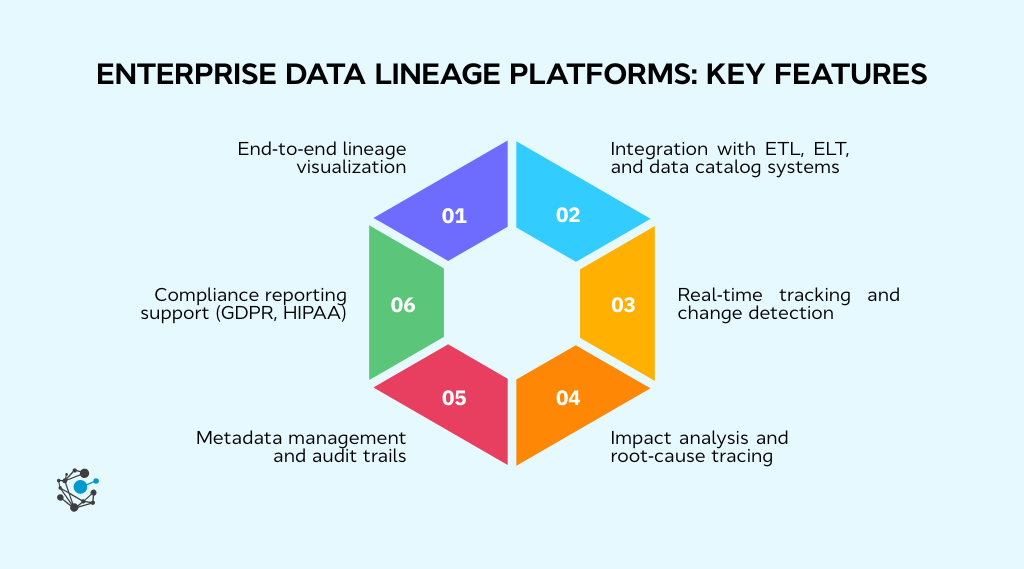
1. End-to-end lineage visualization
End-to-end lineage visualization shows how data moves from source systems to final consumption, including reports, dashboards, and AI models.
It connects upstream ingestion with downstream usage so teams can see the full data lifecycle in one view.
This visibility becomes especially valuable during change management.
Before updating a schema or pipeline, teams can quickly understand which assets depend on that data and avoid unintended downstream breakage.
2. Integration with ETL, ELT, and data catalog systems
Strong lineage platforms integrate directly with ETL and ELT tools, data warehouses, and data catalogs.
These integrations ensure lineage stays current as pipelines evolve, without relying on manual updates.
When lineage connects with a data catalog, users gain immediate context. They can discover datasets, understand transformations, and identify ownership in a single place, which improves trust and adoption across engineering, analytics, and governance teams.
3. Real-time tracking and change detection
Real-time lineage tracking monitors data pipelines as they change. When transformations are added, modified, or removed, lineage updates automatically to reflect the current state.
This capability helps teams respond faster when issues arise. Instead of searching through logs and documentation, they can pinpoint breaking changes and reduce downtime in analytics and reporting workflows.
4. Impact analysis and root-cause tracing
Impact analysis shows which downstream assets depend on a dataset before changes occur. Root-cause tracing works in the opposite direction by identifying where an issue originated.
Together, these capabilities reduce the time spent diagnosing data issues.
Teams move from reactive firefighting to proactive prevention by understanding dependencies before problems reach business users.
5. Metadata management and audit trails
Reliable lineage depends on strong metadata management.
Enterprise platforms capture technical metadata, business context, and usage information to create a complete view of data behavior.
Audit trails preserve historical lineage, allowing teams to review how data changed over time.
This history supports internal reviews, governance workflows, and accountability across the organization.
6. Compliance reporting support (GDPR, HIPAA)
Enterprise data lineage platforms support compliance efforts by documenting where sensitive data flows and how it transforms across systems.
This visibility helps organizations meet regulatory requirements for traceability and accountability.
Instead of assembling evidence manually, teams rely on lineage to demonstrate control over data usage, access, and movement.
|
Also read: Snowflake Data Lineage: The Complete Guide to Tracking Data Flow |
Implementation strategy for enterprise data lineage
Implementing enterprise data lineage works best when teams focus on progress over perfection. A clear, phased approach helps organizations build reliable lineage without overwhelming engineers, governance teams, or business users.
1. Assess the current state and lineage requirements: Start by reviewing existing metadata management and governance practices. Look for gaps in visibility, compliance coverage, and incident response. Clear requirements make it easier to prioritize which systems and datasets need lineage first.
2. Define lineage scope and depth: Not every dataset needs the same level of detail. Some use cases work well with table-level lineage, while others require column-level granularity for sensitive or regulated data. Defining scope early prevents overengineering and speeds adoption.
3. Establish data governance and stewardship: Lineage works when ownership is clear. Data stewards help define standards, validate metadata, and maintain consistency across teams. Strong governance ensures lineage supports business outcomes, not just technical documentation.
4. Deploy automated lineage tools incrementally: Automated lineage tools simplify enterprise data mapping across platforms. Start with core pipelines and high-impact systems, then expand coverage over time. A gradual rollout builds confidence and reduces disruption.
5. Onboard teams and embed documentation workflows: Training matters. Teams need to know how to use lineage for impact analysis, debugging, and audits. Integrating lineage into existing workflows encourages consistent use and long-term adoption.
Taken together, these steps help organizations move from fragmented visibility to reliable, enterprise-wide lineage. As lineage expands across systems and teams, new challenges begin to surface, especially in complex, multi-cloud environments.
Challenges in enterprise data lineage
Enterprise data lineage delivers significant value, but implementing it at scale comes with real-world challenges. These obstacles often emerge as data environments grow more complex and teams adopt lineage at different speeds.
AI pressure is accelerating this shift.
In a Gartner survey, 29% of CDAOs said they will revamp how they manage data assets and apply governance policies, and 38% said their data and analytics architecture will be overhauled in the next 12–18 months.
1. Complex multi-cloud environments: Data spread across multiple clouds and platforms makes lineage harder to maintain. Disparate systems introduce integration challenges and inconsistent metadata, which can create gaps in visibility unless lineage tools support hybrid architectures.
2. Legacy systems and incomplete metadata: Older systems often lack standardized metadata or modern integration capabilities. These limitations create blind spots in lineage that require incremental modernization and targeted integration to resolve.
3. Scalability issues with large data estates: As data volumes and pipelines grow, lineage must scale without slowing down metadata processing or visualization. Enterprise-grade platforms are designed to handle thousands of pipelines while maintaining accuracy and performance.
4. Inconsistent lineage adoption across teams: Lineage adoption often varies by team or department. Without alignment, coverage remains uneven and trust erodes. Strong governance and clear communication about lineage value help drive consistent usage.
Addressing these challenges early prevents lineage from becoming fragmented or unreliable. With the right approach, organizations can turn these obstacles into opportunities to strengthen governance, collaboration, and operational resilience.
|
Also read: Data Lineage vs Data Catalog: Key Differences for 2026 |
Business value of enterprise data lineage
When enterprise data lineage is implemented well, its value extends far beyond documentation. It becomes a practical tool for reducing risk, improving trust in data, and helping teams work faster and more confidently across the organization.
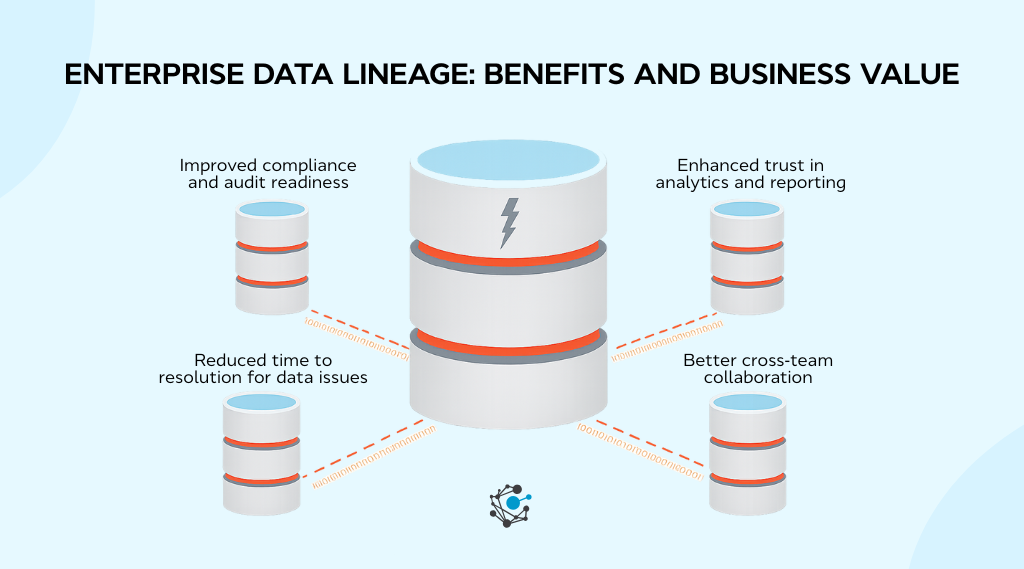
Improved compliance and audit readiness
Enterprise data lineage simplifies audits by clearly showing where data comes from, how it transforms, and where it is used. Instead of assembling evidence manually, teams rely on lineage to demonstrate data provenance and accountability.
For regulated industries, this visibility reduces compliance risk and shortens audit cycles. Governance teams spend less time tracking down answers and more time enforcing consistent data policies.
Enhanced trust in analytics and reporting
Lineage improves confidence in analytics by making metrics explainable. Analysts and business users can see how numbers are calculated and which sources feed each report.
This transparency reduces disputes over data accuracy and strengthens decision-making. When teams trust the data, they move faster and rely less on manual validation.
Reduced time to resolution for data issues
When data breaks, lineage speeds up incident response. Teams trace issues directly to the source instead of searching across pipelines and dashboards. This faster root cause analysis reduces downtime and prevents recurring issues. Over time, organizations spend less energy firefighting and more time improving data quality.
Quantified studies often tie these gains to real dollars.
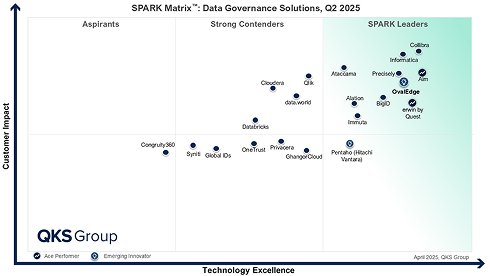
A Forrester TEI study (commissioned by Ataccama) reported a 348% ROI over three years with payback in under six months for a data management platform that includes governance, catalog, and lineage capabilities.
Results vary, but it’s a useful benchmark for how teams value operational efficiency.
Better cross-team collaboration
Shared lineage views give engineers, analysts, and governance teams a common understanding of data flow. Everyone works from the same source of truth instead of isolated documentation.
For instance, platforms like OvalEdge support this collaboration by combining automated lineage, metadata management, and governance workflows in one place. Teams gain clarity without adding operational overhead.
Together, these benefits turn data lineage into a strategic capability rather than a technical afterthought. Organizations that invest in lineage see stronger governance, faster resolution of issues, and greater confidence in data-driven decisions.
OvalEdge helps enterprise teams realize this value by automating lineage across complex environments and embedding governance directly into daily workflows. The result is better visibility, stronger compliance, and data teams that can focus on impact instead of investigation.
Conclusion
Most data problems don’t start as big failures. Without clear visibility into how data moves and changes, even the most advanced data stacks struggle to stay reliable. Enterprise data lineage provides that clarity, but only when it’s automated, scalable, and embedded into everyday workflows.
When organizations engage with OvalEdge, the focus begins with understanding their current data environment and identifying lineage gaps. From there, teams work together to map critical data flows, automate lineage across platforms, and align governance with real operational needs.
The outcome is faster issue resolution, stronger compliance, and data teams that spend less time investigating problems and more time delivering value.
If you’re ready to move beyond fragmented visibility and manual guesswork, now is the time to take the next step.

Schedule a call with OvalEdge to see how automated enterprise data lineage can bring clarity, confidence, and control to your data ecosystem.
FAQs
1. How is enterprise data lineage different from basic data lineage?
Enterprise data lineage operates across multiple platforms, clouds, and teams, offering scalable visibility, governance alignment, and compliance support. Basic lineage typically focuses on single pipelines or tools without enterprise-wide context or automation.
2. Does enterprise data lineage require changes to existing data pipelines?
Most modern lineage platforms integrate directly with existing pipelines using metadata extraction. This approach minimizes disruption while enabling visibility across current ETL, ELT, warehouse, and analytics tools without redesigning workflows.
3. How detailed should enterprise data lineage be?
The required detail depends on use cases. High-level reporting may need table-level lineage, while compliance, sensitive data tracking, and impact analysis often require column-level lineage for precise visibility and accountability.
4. Can enterprise data lineage support cloud migrations?
Yes. Enterprise data lineage helps teams understand existing dependencies before migration, track changes during the transition, and validate outcomes afterward, reducing risk when moving data pipelines to cloud or hybrid environments.
5. How does enterprise data lineage help with schema changes?
Lineage enables teams to see downstream dependencies before making schema changes. This visibility helps prevent breaking dashboards, reports, or models and supports safer, faster decision-making during data model evolution.
6. Who typically owns enterprise data lineage in an organization?
Ownership is usually shared. Data engineering manages technical accuracy, governance teams oversee standards and compliance, and analytics teams use lineage for trust and clarity, making lineage a cross-functional responsibility.
.png?width=1081&height=173&name=Forrester%201%20(1).png)
.png?width=1081&height=241&name=KC%20-%20Logo%201%20(1).png)