


Table of Contents
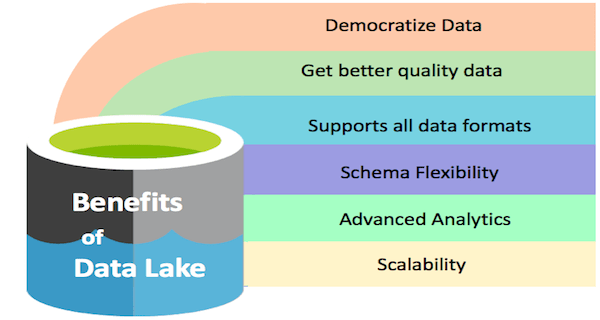
Data Lake Benefits: 13 Advantages + 5 Challenges (2026 Guide)
📌 QUICK ANSWER
A data lake is a centralized repository that stores all structured and unstructured data at scale in its raw format. Key benefits include: cost-effective storage ($0.02/GB/month), support for any data type, advanced analytics and ML capabilities, and flexibility to define schemas as needed.
Modern cloud-based data lakes (AWS, Azure, GCP) enable organizations to store petabytes of data and derive insights without upfront infrastructure costs.
The data lake market is growing from $7.9 billion in 2019 to a projected $20.1 billion by 2024, representing a 20.6% compound annual growth rate. Over 50% of organizations now consider data lakes critical to their business intelligence and analytics strategy.
But what exactly makes data lakes so valuable? And what challenges should you be aware of before implementation?
This comprehensive guide explores 13 key benefits of data lakes, 5 common challenges with solutions, real-world use cases, and implementation best practices for 2026.
What is a Data Lake? (2026 Definition)
A data lake is a centralized repository designed to store, process, and secure large volumes of data in its native format. Unlike traditional databases that require structured schemas, data lakes accept any data type - structured, semi-structured, and unstructured - without predefined organization.
Modern data lakes in 2026 are predominantly cloud-native, leveraging platforms like AWS S3, Azure Data Lake Storage, and Google Cloud Storage.
The emergence of lakehouse architecture combines the flexibility of data lakes with the performance and data management features of data warehouses, offering ACID transactions, schema enforcement, and unified analytics.
Key characteristics of modern data lakes:
- Schema-on-read: Store data first, define structure when analyzing
- Scalability: Grow from gigabytes to petabytes seamlessly
- Cost-effective: Pay only for storage used, starting at $0.023/GB/month
- Multi-format support: Store logs, images, videos, sensor data, documents, and databases
- Cloud-native: Built on object storage with elastic compute resources
The evolution from 2018's Hadoop-centric data lakes to 2026's cloud-native lakehouses represents a fundamental shift in how organizations manage and analyze data at scale.
Data Lake vs Data Warehouse vs Database
Understanding when to use each storage system is critical for effective data governance and analytics strategy:
|
Aspect |
Data Lake |
Data Warehouse |
Traditional Database |
|
Data Type |
All types (structured, semi-structured, unstructured) |
Structured and processed |
Structured only |
|
Schema |
Schema-on-read (flexible) |
Schema-on-write (rigid) |
Schema-on-write (rigid) |
|
Cost |
Low ($0.02-0.03/GB/month) |
Medium-High |
High |
|
Processing |
Batch, real-time, ML |
Batch, optimized queries |
Transactional (OLTP) |
|
Users |
Data scientists, engineers, analysts |
Business analysts, executives |
Application users |
|
Best For |
Exploration, ML, raw data retention |
Business reporting, BI dashboards |
Operational applications |
|
Query Speed |
Variable (depends on processing) |
Fast (pre-structured) |
Very fast (indexed) |
|
Data Volume |
Petabytes+ |
Terabytes |
Gigabytes-Terabytes |
|
Examples |
AWS S3, Azure Data Lake, Databricks |
Snowflake, Redshift, BigQuery |
PostgreSQL, MySQL, Oracle |
When to use a data lake:
- Storing raw data from multiple sources for future analysis
- Machine learning and AI model training
- IoT and sensor data collection
- Preserving historical data for compliance
- Enabling data science experimentation
When to use a data warehouse:
- Business intelligence and reporting
- Fast SQL-based analytics
- Aggregated data analysis
- Executive dashboards
When to use a database:
- Transactional applications (banking, e-commerce)
- Real-time data updates
- High-concurrency operations
- ACID transaction requirements
Many modern organizations use a hybrid approach: data lakes for raw storage and exploration, data warehouses for BI reporting, and databases for operational applications.
The lakehouse architecture increasingly bridges the gap between lakes and warehouses.
13 Key Benefits of Data Lakes
1. Centralized Data Repository (Break Down Data Silos)
Data lakes consolidate data from disparate sources into a single, unified location. Instead of data scattered across departmental databases, file shares, and SaaS applications, everything resides in one accessible repository.
Business Impact:
- Single source of truth for all organizational data
- Eliminate data duplication and inconsistency
- Enable cross-functional analytics and collaboration
- Reduce time searching for data across systems
Real-world example: A retail company consolidated customer data from point-of-sale systems, e-commerce platforms, loyalty programs, and customer service logs into an AWS S3 data lake. This unified view enabled a complete customer journey analysis that was previously impossible, increasing personalization effectiveness by 40%.
Technical advantage: Modern data catalogs make data lakes searchable and discoverable, ensuring the centralized repository doesn't become a "data swamp."
2. Store Any Data Type (Unmatched Versatility)
Data lakes excel at storing diverse data formats without transformation or preprocessing:
Structured data:
- Relational database exports (CSV, Parquet, Avro)
- Spreadsheets and tabular data
- ERP and CRM system outputs
Semi-structured data:
- JSON and XML files
- Log files (application, server, security)
- API responses
- Email messages
Unstructured data:
- Images and videos (JPEG, PNG, MP4)
- Audio files and podcasts
- PDF documents and presentations
- Social media content
- Sensor and IoT data streams
Business Impact: The global datasphere is expected to reach 175 zettabytes by 2026, with 463 exabytes produced daily. Data lakes are uniquely positioned to handle this explosion of diverse data types.
Real-world example: A healthcare provider stores patient medical images (CT scans, X-rays), electronic health records (structured data), physician notes (unstructured text), and wearable device data (IoT streams) in Azure Data Lake Storage.
Machine learning models analyze all data types together to predict patient readmission risks with 85% accuracy.
This versatility is critical for modern use cases like computer vision, natural language processing, and IoT analytics that require multiple data types.
3. Raw Data Preservation (Schema-on-Read Flexibility)
Unlike traditional databases that require defining schemas before loading data (schema-on-write), data lakes use a schema-on-read approach. Data is stored in its raw, native format, and schemas are applied only when reading or analyzing the data.
Key advantages:
Future-proof your data: Store data today without knowing all future use cases. New business questions often require historical data in ways not originally anticipated.
Multiple schemas for the same data: Different teams can apply different structures to the same raw data based on their needs. Marketing might view customer data by campaign, while finance analyzes it by revenue attribution.
Agility and experimentation: Data scientists can explore raw data, test hypotheses, and iterate on analyses without waiting for IT to restructure databases.
No data loss: Transforming data before storage (ETL) risks losing information. Schema-on-read preserves everything, even fields that seem irrelevant today.
Real-world example: A financial services company stored 5 years of transaction logs in raw format. When new anti-money laundering regulations emerged requiring analysis of previously ignored metadata fields, they had complete historical data available. Competitors who had preprocessed their data lost critical information.
The rise of Delta Lake and Apache Iceberg adds ACID transaction capabilities to data lakes, enabling schema evolution and data reliability while maintaining flexibility.
4. Cost-Effective Scalability
Data lakes offer dramatically lower storage costs compared to traditional data warehouses, especially for large-scale data retention.
Cost comparison:
Cloud data lake storage:
- AWS S3 Standard: $0.023/GB/month
- Azure Data Lake Storage: $0.03/GB/month
- Google Cloud Storage: $0.02/GB/month
Data warehouse storage:
- Snowflake: $40-60/TB/month ($0.04-0.06/GB)
- Amazon Redshift: $0.024/GB/month (compressed)
- Traditional on-premises: $100-300/TB/month
Savings example: Storing 100TB of data:
- Data lake (AWS S3): $2,300/month
- Data warehouse (Snowflake): $4,000-6,000/month
- Savings: 40-60% ($1,700-3,700/month)
Additional cost benefits:
Lifecycle management: Automatically move cold data (80% of data goes cold within months) to lower-cost tiers:
- S3 Glacier: $0.004/GB/month (82% cheaper)
- Azure Cool tier: $0.01/GB/month (67% cheaper)
Pay-as-you-go processing: Only pay for compute resources when analyzing data, not continuous infrastructure costs.
No upfront hardware investment: Cloud-native data lakes eliminate capital expenditures for servers, storage arrays, and networking equipment.
Organizations report 60-70% storage cost reductions by implementing lifecycle policies that automatically tier aging data to cold storage while maintaining accessibility.
Scalability without limits: Data lakes scale from gigabytes to petabytes seamlessly without performance degradation or complex sharding strategies required by traditional databases.
5. Advanced Analytics and Machine Learning Support
Data lakes provide the foundation for modern AI and machine learning initiatives, offering the volume, variety, and flexibility required for sophisticated analytics.
Machine learning advantages:
Model training at scale: Store and access massive datasets for training deep learning models. A single image recognition model might require millions of labeled images - easily stored in data lakes.
Feature engineering: Data scientists can explore raw data to create and test thousands of features without impacting production databases.
Multi-modal learning: Combine structured data, text, images, and audio in single ML pipelines. Example: Analyze customer transaction history (structured) + product reviews (text) + social media images (visual) for comprehensive insights.
MLOps integration: Modern data lakes integrate with MLOps platforms (Databricks, SageMaker, Azure ML) for end-to-end ML lifecycle management.
Real-world example: Netflix stores user viewing data, engagement metrics, thumbnail images, and video files in its data lake. Machine learning models trained on this diverse data power their recommendation engine, which drives 80% of content watched on the platform. The recommendation system processes over 3 billion predictions daily.
Performance improvement: Organizations report 3-5x faster ML model training on data lakes compared to pulling data from multiple disparate sources.
Supported frameworks: Data lakes work with all major ML frameworks:
- TensorFlow and PyTorch for deep learning
- Scikit-learn for traditional ML
- Apache Spark MLlib for distributed processing
- XGBoost for gradient boosting
Modern lakehouse platforms like Databricks provide unified analytics workspaces where data engineers, data scientists, and ML engineers collaborate on the same data without copies or movement.
6. Data Democratization (Self-Service Analytics for All)
Data lakes enable organizations to make data accessible to employees across all levels and departments, not just technical specialists or senior executives.
Traditional data access problems:
In most organizations pre-data-lake:
- Only senior executives could request cross-departmental reports
- Middle management waited weeks for IT to prepare data extracts
- Data analysts spent 80% of time finding and preparing data
- Business users couldn't explore data independently
How data lakes solve this:
Self-service access: Business analysts and domain experts can query and explore data using SQL-based tools (Athena, Presto, Trino) without data engineering support.
Role-based permissions: Secure access controls ensure users see only data relevant to their roles while maintaining governance. Learn more about data access management.
Data cataloging: Tools like AWS Glue, Azure Purview, and OvalEdge make data lakes searchable, showing what data exists, its meaning, and who owns it.
Business impact:
- Faster decision-making: Reduce time from question to insight from weeks to hours
- Innovation at all levels: Employees at every level can test hypotheses and generate insights
- Reduced IT bottlenecks: Free data teams from repetitive report requests to focus on strategic initiatives
Real-world example: LinkedIn democratized data across the organization through their data lake. Product managers, engineers, and business analysts all access the same unified data layer.
Every employee can make data-driven decisions without waiting for executive approval or IT intervention. This democratization contributed to LinkedIn's rapid innovation cycle and product improvements.
Modern enablement: Cloud BI tools like Tableau, Power BI, and Looker connect directly to data lakes, providing visual analytics interfaces for non-technical users while maintaining a single source of truth.
7. Faster Time to Insight
Data lakes dramatically reduce the time between data collection and actionable insights by eliminating traditional ETL bottlenecks.
Traditional data warehouse workflow:
- Define business requirements → 2 weeks
- Design data model and schema → 1-2 weeks
- Build ETL pipelines → 2-4 weeks
- Test and validate → 1-2 weeks
- Load data and begin analysis → 1 week Total time: 7-11 weeks from data collection to insights
Data lake workflow:
- Ingest raw data → Real-time to 1 day
- Begin exploratory analysis → Immediate
- Refine and productionize → 1-2 weeks Total time: 1-3 weeks, often much faster for exploratory work
Speed advantages:
No ETL delay: Data is available for analysis immediately upon ingestion in its raw format. Transformation happens only when needed (ELT vs ETL).
Parallel development: Multiple teams can work on different analyses simultaneously without waiting for sequential ETL processes.
Rapid iteration: Data scientists can test hypotheses, fail fast, and pivot without costly pipeline rebuilds.
Real-time data availability: Streaming ingestion from Kafka, Kinesis, or Event Hubs makes data accessible within seconds of generation.
Business impact example: A financial services firm reduced fraud detection time from days to minutes by analyzing transaction data directly in their data lake rather than waiting for nightly data warehouse updates.
This speed improvement prevented an estimated $12 million in fraudulent transactions annually.
Real-time analytics: Modern data lakes support streaming analytics for:
- IoT sensor monitoring and predictive maintenance
- Real-time fraud detection in banking
- Dynamic pricing in e-commerce
- Live customer behavior tracking in gaming
Research shows organizations using data lakes achieve 70-80% reduction in time-to-insight compared to traditional data warehouse approaches.
8. Support for Real-Time Streaming Data
Modern data lakes excel at ingesting and processing continuous streams of data from IoT devices, clickstreams, social media, and application logs.
Streaming capabilities:
Ingestion at scale: Data lakes handle millions of events per second from sources like:
- IoT sensors (manufacturing equipment, vehicles, wearables)
- Website and mobile app clickstreams
- Social media feeds
- Financial market data
- Server and application logs
Processing frameworks: Integration with stream processing tools:
- Apache Kafka for event streaming
- Amazon Kinesis for real-time data ingestion
- Apache Flink for stateful stream processing
- Spark Structured Streaming for unified batch and streaming
Use cases requiring real-time data:
Manufacturing: Monitor 10,000+ sensors across production lines to detect anomalies and prevent equipment failures before they occur. Predictive maintenance reduces downtime by 30-50%.
Retail: Analyze customer browsing behavior in real-time to personalize product recommendations and adjust dynamic pricing. Conversion rates improve 15-25% with real-time personalization.
Financial services: Process transaction streams to detect fraudulent patterns within milliseconds, preventing losses before money leaves accounts.
Telecommunications: Monitor network performance data from millions of devices to proactively address service issues before customer complaints.
Real-world example: Tesla ingests sensor data from its vehicle fleet in real-time to a data lake. They process over 1.5 billion miles of driving data monthly, using it to improve autonomous driving algorithms, predict component failures, and optimize battery performance. The real-time nature enables over-the-air updates that improve vehicle safety and performance continuously.
Technical architecture: Modern lakehouse platforms like Databricks Delta Lake and Apache Iceberg provide ACID transactions on streaming data, ensuring data consistency even with concurrent reads and writes.
9. ACID Transaction Support (Modern Lakehouse Architecture)
Traditional data lakes lacked reliability features like ACID transactions (Atomicity, Consistency, Isolation, Durability), making them unsuitable for critical business operations. Modern lakehouse architecture solves this limitation.
What are ACID transactions?
- Atomicity: Operations complete fully or not at all (no partial updates)
- Consistency: Data always remains in a valid state
- Isolation: Concurrent operations don't interfere with each other
- Durability: Once committed, data persists even if systems fail
Technologies enabling ACID on data lakes:
Delta Lake (Databricks):
- Open-source storage layer providing ACID transactions
- Time travel (query historical versions)
- Schema evolution and enforcement
- Unified batch and streaming
Apache Iceberg (Netflix):
- Table format with ACID guarantees
- Hidden partitioning for performance
- Schema evolution without rewriting data
Apache Hudi (Uber):
- Incremental processing on data lakes
- Record-level insert/update/delete
- Point-in-time queries
Business benefits:
Data reliability: Ensure data accuracy for business-critical reporting and compliance. No more inconsistent or partially updated data sets.
Concurrent operations: Multiple teams can read and write data simultaneously without conflicts or corruption.
Schema evolution: Modify table structures (add columns, change types) without disrupting existing workflows.
Time travel: Query data as it existed at any point in the past, crucial for auditing, debugging, and regulatory compliance.
Real-world example: A financial services company implemented Delta Lake to manage trade execution data. ACID transactions ensure 100% accuracy for regulatory reporting while enabling concurrent access by risk management, compliance, and analytics teams.
Time travel capabilities allow auditors to verify data states for any historical date, satisfying SEC requirements.
The evolution to lakehouse architecture means data lakes now offer both flexibility and reliability, making them suitable for mission-critical workloads previously limited to data warehouses.
10. Multi-Cloud and Hybrid Support
Modern data lakes are designed for multi-cloud and hybrid deployment strategies, providing flexibility and avoiding vendor lock-in.
Cloud deployment options:
Single cloud: Deploy on AWS, Azure, or GCP based on organizational preferences and existing infrastructure.
Multi-cloud: Distribute data across multiple clouds for:
- Disaster recovery and business continuity
- Regional data sovereignty compliance
- Leveraging best-of-breed services from each provider
- Negotiating leverage with cloud vendors
Hybrid: Combine on-premises data centers with cloud storage for:
- Sensitive data retention on-premises
- Gradual cloud migration
- Edge computing integration
- Regulatory compliance requirements
Statistics: 85% of enterprises use multi-cloud strategies as of 2026, with data lakes as a key enabling technology.
Interoperability features:
Open formats: Data lakes use open file formats (Parquet, ORC, Avro) and table formats (Iceberg, Delta, Hudi) that work across any platform.
Portable analytics: Query engines like Presto, Trino, and Apache Spark run on any infrastructure, avoiding vendor-specific query languages.
Standard APIs: S3-compatible APIs work across AWS S3, Azure Blob Storage, Google Cloud Storage, and on-premises object storage (MinIO, Ceph).
Real-world example: A global pharmaceutical company maintains a hybrid data lake with sensitive patient data on-premises (HIPAA compliance) and anonymized research data in AWS (scalability for ML).
They use Azure for European operations (GDPR data residency) while maintaining unified data governance through OvalEdge's data catalog.
Business advantages:
- Avoid vendor lock-in: Migrate between clouds or use multiple simultaneously
- Optimize costs: Choose most cost-effective storage for each workload
- Meet compliance: Store data in specific geographic regions as required by regulations
- Disaster recovery: Replicate critical data across clouds for resilience
11. Regulatory Compliance and Data Governance
Data lakes provide critical capabilities for meeting regulatory requirements across industries, from healthcare (HIPAA) to finance (SOC 2, GLBA) to privacy regulations (GDPR, CCPA).
Compliance features:
Audit trails: Every data access, modification, and deletion is logged with timestamps, user IDs, and operations performed. Essential for SOC 2, ISO 27001, and PCI DSS audits.
Data retention policies: Automatically enforce retention requirements:
- GDPR: Delete personal data after specified periods
- Financial regulations: Retain transaction records for 7 years
- Healthcare: Maintain patient records per HIPAA guidelines
Access controls: Fine-grained permissions at file, folder, table, row, and column levels ensure users see only authorized data. Critical for HIPAA PHI protection and PII management.
Data classification: Tag and classify data by sensitivity level (Public, Internal, Confidential, Restricted) for appropriate handling. Learn more about data governance policies.
Encryption: Data encrypted at rest and in transit meets security requirements for:
- HIPAA (healthcare)
- PCI DSS (payment card data)
- GDPR (personal data)
- SOX (financial records)
Real-world example: A healthcare network stores protected health information (PHI) for 15 million patients in Azure Data Lake. They implement:
- Row-level security ensuring physicians see only their patients
- Encryption at rest (AES-256) and in transit (TLS 1.3)
- Automated 7-year retention with compliant deletion
- Complete audit logs for HIPAA compliance auditors
- Data masking for analytics workloads (SSN shown as XXX-XX-1234)
The system passed HIPAA audits with zero findings and enables healthcare analytics while protecting patient privacy.
Governance integration: Data governance platforms like OvalEdge integrate with data lakes to provide:
- Data cataloging and lineage tracking
- Policy management and enforcement
- Compliance reporting dashboards
- Automated data quality checks
Right to erasure (GDPR): Data lakes support deletion of individual records to comply with GDPR's "right to be forgotten," using row-level deletion capabilities in Delta Lake or Iceberg.
12. Experiment-Friendly Environment (Innovation Enablement)
Data lakes provide sandbox environments where data scientists and analysts can experiment, test hypotheses, and innovate without impacting production systems or incurring high costs.
Experimentation advantages:
Fail fast, learn faster: Teams can test ideas quickly and abandon unsuccessful approaches without wasting weeks on data pipeline development.
No production impact: Experiments run on isolated compute resources and copies of data, ensuring zero risk to operational systems.
Low cost of exploration: Pay only for computing time during experiments. Store experimental datasets at low data lake rates rather than expensive data warehouse storage.
Reproducible research: Version control for data (Delta Lake time travel) and notebooks (Git integration) ensures experiments can be replicated and validated.
Collaborative workspaces: Platforms like Databricks and Azure Synapse provide shared environments where data teams collaborate on analyses, share findings, and build on each other's work.
Innovation use cases:
New analytics approaches: Test whether graph analytics could reveal customer relationships that traditional SQL analysis misses.
ML model comparison: Train 20 different models with various algorithms and hyperparameters to find the best performer, without manually creating 20 ETL pipelines.
Feature discovery: Explore raw data to identify predictive signals that weren't part of original data models.
Proof of concepts: Validate business ideas with real data before committing to full-scale implementation.
Real-world example: Spotify provides data scientists with sandbox environments in their data lake where they can:
- Experiment with new recommendation algorithms
- Test playlist generation approaches
- Analyze user behavior patterns
- Train ML models on historical listening data
This experimentation culture has led to innovations like Discover Weekly (personalized playlists), which drove significant user engagement increases. Data scientists can test ideas in hours rather than weeks.
Business impact: Organizations with strong experimentation cultures (enabled by data lakes) report 2-3x higher innovation rates and faster time-to-market for new data-driven products and features.
13. Future-Proof Architecture
Data lakes provide architectural flexibility to adapt to evolving business needs, emerging technologies, and unforeseen data types without costly migrations or rearchitecture.
Adaptability advantages:
New data sources: Easily integrate emerging data sources without redesigning storage architecture:
- IoT devices and edge computing
- Social media platforms
- APIs and web services
- Streaming sensors
- Unstructured documents
Technology evolution: Adopt new processing frameworks and analytics tools as they emerge without data migration:
- Today: Spark, Presto, Hive
- Tomorrow: Next-generation query engines
- Data remains accessible to all tools
Schema changes: Business requirements change. Data lakes accommodate:
- Adding new fields without restructuring existing data
- Changing data types as understanding evolves
- Supporting multiple concurrent schemas for different use cases
Scale gracefully: Start small and grow to enterprise scale without architectural changes:
- Begin: Gigabytes of data
- Grow: Terabytes, petabytes, even exabytes
- Same architecture, just more capacity
Real-world example: Amazon started building its data lake in 2006. The same architectural principles that worked for gigabytes then now support petabytes of data powering product recommendations, supply chain optimization, and AWS service improvements. The architecture adapted to:
- New data types (voice data from Alexa)
- New processing frameworks (from Hadoop to Spark to serverless)
- New use cases (from batch reporting to real-time ML)
- Massive scale increases (1000x+ data growth)
Investment protection: Organizations that built data lakes 5-10 years ago still use them today with modern updates, while companies that built proprietary data warehouses have faced costly migrations to cloud platforms.
Emerging technology readiness: Data lakes are prepared for:
- Generative AI requires massive training datasets
- Quantum computing analytics (when available)
- Real-time edge analytics
- Autonomous decision systems
- Technologies not yet invented
The open architecture and standards-based approach ensure data lakes remain relevant as technology evolves.
5 Challenges of Data Lakes (and Solutions)
While data lakes offer tremendous benefits, organizations must address these common challenges for successful implementation.
Challenge 1: Data Swamp Risk
The Problem: Without proper governance, data lakes become "data swamps" - repositories of unorganized, undocumented data that nobody can find or trust. Studies show 60% of data lake projects fail to deliver value due to poor governance.
Warning signs of a data swamp:
- No one knows what data exists in the lake
- Data has no descriptions or metadata
- Duplicate datasets proliferate
- Data quality is unknown
- No clear data ownership
- Old data never gets archived or deleted
Solutions:
Implement data cataloging: Use tools like AWS Glue Data Catalog, Azure Purview, or OvalEdge to automatically:
- Discover and inventory all datasets
- Extract technical metadata (schemas, formats, sizes)
- Document business meaning and context
- Track data lineage (where data comes from and goes)
Establish data governance: Create policies for:
- Data quality standards and validation
- Naming conventions for datasets
- Retention and archival rules
- Access controls and permissions
- Data ownership and stewardship
Enforce governance from day one: Don't wait until the swamp forms. Implement governance processes before loading significant data.
Real-world example: A retail company's initial data lake became unusable within 18 months. They couldn't find relevant data among 40,000 undocumented files. After implementing OvalEdge for cataloging and establishing a data governance committee, they:
- Cataloged 95% of datasets within 3 months
- Reduced time-to-find-data from days to minutes
- Increased data lake usage 300%
- Deleted 30% of duplicate or obsolete data
Challenge 2: Data Quality Issues
The Problem: Data lakes accept any data without validation, leading to quality problems:
- Incomplete records (missing required fields)
- Inaccurate data (typos, wrong formats)
- Outdated information (stale data)
- Duplicates (same data from multiple sources)
These issues cause incorrect analyses and poor business decisions.
Solutions:
Implement data quality frameworks:
- Define quality rules (completeness, accuracy, timeliness, consistency)
- Automated validation at ingestion
- Ongoing monitoring and alerts
- Quality scorecards for datasets
Data quality tools: Solutions like Great Expectations, Deequ, or cloud-native services (AWS Glue DataBrew) automatically:
- Validate data against rules
- Detect anomalies and outliers
- Profile data to understand characteristics
- Generate quality reports
Master data management (MDM): Create golden records for critical entities (customers, products, locations) that serve as trusted sources.
Data stewardship: Assign data stewards responsible for data quality in their domains. Domain experts who understand the data best.
Best practice: Implement a "trusted" zone in your data lake:
- Bronze zone: Raw data as ingested (untrusted)
- Silver zone: Cleaned and validated data (quality checked)
- Gold zone: Business-level aggregated data (production-ready)
Real-world example: A manufacturing company had a 15% error rate in sensor data, causing false predictive maintenance alerts. After implementing automated quality checks:
- Detect and filter corrupt sensor readings at ingestion
- Flag anomalies for human review
- Maintain quality metrics dashboards
- Error rate dropped to <2%
- Maintenance prediction accuracy improved from 65% to 89%
Challenge 3: Security and Access Control Complexity
The Problem: Data lakes contain sensitive information from across the organization. Managing who can access what data becomes complex, especially with:
- Thousands of users
- Hundreds of datasets
- Multiple sensitivity levels
- Regulatory requirements (GDPR, HIPAA, SOX)
Poor access controls lead to:
- Data breaches and unauthorized access
- Compliance violations and penalties
- Insider threats
- Accidental data exposure
Solutions:
Fine-grained access controls: Implement security at multiple levels:
- Storage level: IAM policies control who accesses S3 buckets, Azure containers
- Table level: Grant/revoke permissions to specific datasets
- Row level: Users see only rows meeting criteria (e.g., their department's data)
- Column level: Mask sensitive columns (show XXX-XX-1234 instead of full SSN)
Attribute-based access control (ABAC): Dynamic permissions based on:
- User role (analyst, data scientist, executive)
- Department (finance, marketing, operations)
- Data classification (public, internal, confidential, restricted)
- Location and time (office network during business hours)
Encryption everywhere:
- At rest: AES-256 encryption for stored data
- In transit: TLS 1.3 for data movement
- In use: Confidential computing for processing sensitive data
Monitoring and auditing:
- Log every data access (who, what, when, from where)
- Anomaly detection for unusual access patterns
- Real-time alerts for suspicious activity
- Compliance reports for auditors
Zero Trust architecture: "Never trust, always verify" - continuous authentication and authorization for every data access request.
Real-world example: A financial services firm managing customer PII implemented:
- Row-level security (advisors see only their clients)
- Column masking (SSN/account numbers masked for analysts)
- Comprehensive audit logs (track every access)
- Automated compliance reporting (SOC 2, GLBA)
Results: Zero data breaches in 4 years, passed all compliance audits, reduced manual access reviews by 80% through automation.
Learn more about implementing data access management best practices.
Challenge 4: Complexity for Non-Technical Users
The Problem: Data lakes were traditionally built for data engineers and data scientists. Business analysts and domain experts often struggle with:
- Complex query languages (SQL on Spark, Presto)
- Understanding data schemas and structures
- Finding relevant datasets among thousands
- Unclear data meaning and context
This technical barrier limits data democratization and ROI.
Solutions:
Self-service BI tools: Connect business intelligence platforms directly to data lakes:
- Tableau: Visual analytics on data lake tables
- Power BI: Excel-like interface for business users
- Looker: Semantic layer translating business terms to technical queries
- Qlik Sense: Associative data exploration
Semantic layers: Tools like dbt create business-friendly views:
- "Active Customers" instead of complex JOIN queries
- "Monthly Revenue" instead of SUM aggregations
- Business terminology matching user mental models
Data catalogs with business glossaries: OvalEdge and similar tools provide:
- Google-like search for datasets
- Business descriptions in plain language
- Sample data previews
- Usage examples and documentation
SQL interfaces: Modern query engines (Athena, BigQuery, Synapse SQL) provide familiar SQL syntax that business analysts already know.
Training and enablement:
- Data literacy programs teaching data concepts
- Office hours with data engineers for support
- Internal documentation and best practices
- Champion programs (power users helping peers)
Real-world example: An insurance company struggled with 5% data lake adoption among business analysts. After implementing:
- Power BI direct connections with the semantic layer
- OvalEdge data catalog with search
- 2-day data literacy training program
- Weekly office hours for questions
Results: Adoption increased to 65%, business users generated insights independently, and reduced requests to the data team by 70%.
Challenge 5: Cost Management and Optimization
The Problem: While data lakes are cost-effective, costs can spiral without proper management:
- Storing redundant or obsolete data
- Keeping all data in expensive "hot" storage
- Running inefficient queries that consume excessive compute
- No visibility into cost drivers
Unmanaged data lakes can cost $50,000-500,000+ monthly at enterprise scale.
Solutions:
Lifecycle policies: Automatically move aging data to cheaper storage tiers:
- Hot (S3 Standard): $0.023/GB - frequently accessed data (0-30 days)
- Cool (S3 Infrequent Access): $0.0125/GB - monthly access (30-90 days)
- Cold (S3 Glacier): $0.004/GB - quarterly access (90+ days)
- Archive (S3 Deep Archive): $0.00099/GB - compliance retention (1+ years)
Example savings: 100TB stored for 1 year:
- All hot tier: $27,600/year
- Tiered (20% hot, 30% cool, 40% cold, 10% archive): $8,900/year
- Savings: $18,700 (68%)
Delete obsolete data: Regularly review and remove:
- Duplicate datasets
- Failed processing outputs
- Superseded versions
- Expired data per retention policies
Query optimization:
- Partition data for faster queries (by date, region, category)
- Use columnar formats (Parquet, ORC) for 3-5x compression
- Cache frequently accessed data
- Right-size compute resources
Cost monitoring and alerts:
- Track spend by team, project, or workload
- Set budgets and alerts for anomalies
- Show chargebacks to business units
Real-world example: A media company with a 500TB data lake reduced costs from $75,000 to $22,000 monthly (71% reduction) by:
- Implementing lifecycle policies (85% of data moved to cold tiers)
- Deleting 80TB of duplicates and test data
- Converting files to Parquet (60% compression)
- Right-sizing Spark clusters (30% compute savings)
Best practices:
- Review and optimize monthly
- Set retention policies before ingesting data
- Monitor costs per team for accountability
- Use reservations/savings plans for predictable workloads
Data Lake Use Cases by Industry
Data lakes solve industry-specific challenges across sectors:
Healthcare: Patient Data Analytics and Population Health
Challenge: Healthcare organizations have patient data scattered across EHR systems, lab systems, imaging, claims, and IoT devices (wearables, monitors).
Data lake solution:
- Store all patient data in a centralized repository
- Integrate structured (vitals, medications) and unstructured (physician notes, images)
- Enable ML for readmission prediction, disease progression
- Support population health analytics
Results: A hospital network reduced readmissions by 18% by analyzing complete patient histories to identify high-risk patients.
Financial Services: Fraud Detection and Risk Management
Challenge: Detect fraudulent transactions in real-time from millions of daily transactions while minimizing false positives.
Data lake solution:
- Ingest transaction streams in real-time
- Store historical transaction data for ML training
- Build fraud detection models using supervised and unsupervised learning
- Analyze patterns across accounts, merchants, and locations
Results: A bank reduced fraud losses 35% while cutting the false positive rate from 20% to 5%, improving customer experience.
Retail: Customer 360 View and Personalization
Challenge: Understand the complete customer journey across online, mobile, and in-store touchpoints.
Data lake solution:
- Consolidate clickstream, purchases, loyalty, customer service, and social media
- Build unified customer profiles
- Power personalized recommendations
- Optimize inventory and pricing
Results: E-commerce retailer increased conversion by 27% and average order value by 15% through personalized recommendations.
Manufacturing: Predictive Maintenance and Quality Control
Challenge: Prevent equipment failures and reduce downtime in production facilities.
Data lake solution:
- Collect sensor data from thousands of machines
- Store maintenance logs and failure history
- ML models predict failures 2-4 weeks in advance
- Optimize maintenance schedules
Results: Manufacturer reduced unplanned downtime 40%, maintenance costs 25%, and extended equipment life by 15%.
Media and Entertainment: Content Recommendation
Challenge: Keep users engaged with relevant content from vast catalogs.
Data lake solution:
- Analyze viewing history, search behavior, and ratings
- Train recommendation algorithms on user preferences
- A/B test different recommendation strategies
- Personalize user experience
Results: Streaming service improved watch time 22% and subscriber retention 12% through data lake-powered recommendations.
Modern Data Lake Architecture (2026)
Understanding the components of a modern data lake helps with implementation:
Storage Layer (Foundation)
Cloud object storage:
- AWS S3
- Azure Data Lake Storage (ADLS) Gen2
- Google Cloud Storage
Features: Virtually unlimited scalability, 99.999999999% (11 9s) durability, geo-redundancy
Ingestion Layer (Data Collection)
Batch ingestion:
- AWS Glue, Azure Data Factory for scheduled data loads
- Database exports via CDC (Change Data Capture)
- File uploads and API integrations
Streaming ingestion:
- Kafka for event streaming
- Kinesis, Event Hubs for real-time data
- IoT Hub for device data
Processing Layer (Data Transformation)
Batch processing:
- Apache Spark for large-scale data transformation
- Serverless compute (AWS Glue, Databricks serverless)
Stream processing:
- Spark Structured Streaming
- Apache Flink for complex event processing
Interactive queries:
- Presto, Trino for ad-hoc SQL
- Athena, BigQuery for serverless SQL
Lakehouse Layer (ACID Transactions)
Table formats:
- Delta Lake (Databricks)
- Apache Iceberg (Netflix, Apple)
- Apache Hudi (Uber)
Features: ACID transactions, time travel, schema evolution
Governance Layer (Control and Trust)
Data catalog:
- AWS Glue Catalog, Azure Purview
- OvalEdge for unified governance
Security:
- IAM policies, encryption
- Fine-grained access controls
- Audit logging
Quality:
- Data validation frameworks
- Quality monitoring and alerts
Analytics and ML Layer (Insights)
Business intelligence:
- Tableau, Power BI, Looker
Data science:
- Jupyter notebooks, Databricks notebooks
- SageMaker, Azure ML, Vertex AI
ML frameworks:
- TensorFlow, PyTorch, Scikit-learn
This layered architecture provides flexibility, scalability, and governance while maintaining cost-effectiveness.
Top Cloud Data Lake Platforms
Choosing the right platform depends on existing cloud infrastructure, technical requirements, and budget:
|
Platform |
Best For |
Key Features |
Starting Cost |
|
AWS Lake Formation |
AWS-centric organizations |
Deep AWS integration, comprehensive security, S3 foundation |
Storage: $0.023/GB/month |
|
Azure Data Lake Storage Gen2 |
Microsoft-centric organizations |
Azure integration, hierarchical namespace, strong security |
Storage: $0.03/GB/month |
|
Google BigLake |
Multi-cloud strategy |
BigQuery integration, cross-cloud analytics, ML focus |
Storage: $0.02/GB/month |
|
Databricks Lakehouse |
Unified analytics platform |
Delta Lake ACID transactions, collaborative notebooks, MLOps |
$0.40-0.55/DBU + storage |
|
Snowflake (hybrid) |
Structured data focus |
SQL performance, easy to use, automatic optimization |
$40-60/TB/month (compressed) |
Selection factors:
- Existing cloud commitments and skills
- Data types and volumes
- Analytics requirements (BI, ML, streaming)
- Budget and cost model preferences
- Governance and compliance needs
Most organizations adopt a cloud-native data lake (AWS, Azure, or GCP) combined with a lakehouse platform (Databricks, Delta Lake) for a best-of-both-worlds: low-cost storage with advanced analytics capabilities.
Data Lake Implementation Best Practices
Follow these proven practices for successful data lake deployment:
1. Start with Clear Business Objectives
Don't build a data lake "because everyone else is." Define specific goals:
- Improve customer analytics?
- Enable machine learning initiatives?
- Reduce data warehousing costs?
- Support IoT analytics?
Success metrics: How will you measure ROI? Time to insight, cost savings, new capabilities enabled, revenue impact?
2. Implement Strong Governance from Day One
Governance is not optional. 60% of data lake projects fail due to poor governance. Establish:
- Data governance committee with executive sponsorship
- Data policies and standards
- Clear data ownership and stewardship
- Access control policies
Tools: Implement data catalog and governance platform (OvalEdge) on day one, not as an afterthought.
3. Start Small, Scale Gradually
Don't try to migrate everything at once. Begin with:
- 1-2 high-value use cases
- Single department or domain
- Proof of concept (POC) demonstrating value
- Gradually expand to enterprise scale
Success breeds success. Early wins build organizational support for broader adoption.
4. Design with Data Zones
Organize data lake into zones:
- Raw/Bronze: Data as ingested, no transformation
- Cleaned/Silver: Validated, deduplicated, quality-checked
- Curated/Gold: Business-level aggregations and joins
- Sandbox: Experimentation area for data science
This structure balances flexibility with governance and makes data easier to find and trust.
5. Plan for Data Lifecycle
Data doesn't live forever. Define:
- How long to retain data
- When to move to cold storage
- When to archive or delete
- Compliance requirements (GDPR, HIPAA)
Lifecycle automation: Use cloud-native policies to automatically tier and delete data, saving 60-70% on storage costs.
6. Prioritize Security and Compliance
Security is not negotiable. Implement:
- Encryption at rest and in transit
- Fine-grained access controls
- Comprehensive audit logging
- Data classification and tagging
- Regular security reviews
Compliance requirements vary by industry. Ensure your architecture supports GDPR, HIPAA, SOC 2, or other relevant regulations from the start.
7. Invest in Data Quality
Garbage in, garbage out. Build quality into processes:
- Automated validation at ingestion
- Ongoing quality monitoring
- Clear quality metrics and scorecards
- Data steward accountability
Quality problems addressed early cost 10-100x less than fixing them after contaminating downstream analytics.
8. Enable Self-Service with Training
Technology alone doesn't democratize data. Invest in:
- User-friendly BI tools and semantic layers
- Data literacy training programs
- Documentation and best practices
- Support channels (office hours, champions)
Organizations with strong data literacy programs see 3-4x higher data lake ROI.
9. Monitor Costs Continuously
Data lakes can get expensive without management. Implement:
- Cost allocation by team and project
- Budget alerts for anomalies
- Regular optimization reviews
- Showback or chargeback models
Monthly reviews catch cost issues early before they become budget problems.
10. Avoid These Common Pitfalls
Data swamp: No governance leads to unusable data lake
Solution: Catalog and governance from day one
Over-engineering: Building complex architecture before proving value
Solution: Start simple, add complexity as needed
Neglecting security: Lax access controls risk breaches
Solution: Zero trust security from beginning
No user adoption: Building data lake nobody uses
Solution: Involve business users early, focus on their needs
Cost overruns: Unchecked spending on storage and compute
Solution: Lifecycle policies, monitoring, optimization
FAQs
What is the difference between a data lake and a data warehouse?
Data lakes store raw data in native formats (schema-on-read) at low cost, supporting all data types, including unstructured. Best for ML, exploration, and IoT.
Data warehouses store processed, structured data (schema-on-write) optimized for fast SQL queries. Best for business intelligence and reporting.
Many modern organizations use both: a data lake for raw storage and ML, data warehouse for BI reporting. Lakehouse architecture combines both approaches in a single platform.
How much does a data lake cost?
Storage costs: $0.02-0.03 per GB per month for hot storage, $0.001-0.004/GB for cold storage.
Example: 100TB data lake:
- Storage: $2,000-3,000/month (all hot tier)
- With lifecycle policies: $600-900/month (60-70% savings)
Compute costs depend on usage (queries, transformations, ML jobs). Pay-as-you-go model means you only pay when processing data.
Total cost: Typically 50-70% less than a traditional data warehouse for equivalent data volumes.
What types of data can data lakes store?
All types:
- Structured: Relational databases, CSV, Excel
- Semi-structured: JSON, XML, logs, email
- Unstructured: Images, videos, audio, documents, social media, sensor data
The versatility to store any data type is a primary advantage of data lakes over databases and warehouses.
What is a data swamp and how do you prevent it?
A data swamp is a data lake that becomes unusable due to poor governance - unorganized, undocumented data nobody can find or trust.
Prevention:
- Implement data cataloging from day one
- Establish data governance policies and ownership
- Enforce metadata standards
- Regular cleanup of obsolete data
- Training for users on governance practices
Key insight: Governance isn't overhead, it's what makes data lakes valuable.
Can small businesses use data lakes?
Yes! Cloud data lakes are accessible to organizations of all sizes due to:
- No upfront investment: Pay-as-you-go pricing
- Start small: Begin with gigabytes, scale as needed
- Managed services: Cloud providers handle infrastructure
- Low barriers: No specialized hardware or massive IT teams required
Small businesses can start with $50-200/month for an initial data lake and scale based on the value delivered.
What is lakehouse architecture?
Lakehouse combines the flexibility of data lakes with the reliability and performance of data warehouses:
- Store data in a low-cost data lake format
- Add ACID transactions using Delta Lake, Iceberg, or Hudi
- Enable both BI queries AND ML workloads on the same data
- Eliminate the need for a separate lake and warehouse
Benefits: Simplified architecture, lower costs, single source of truth, reduced data duplication.
Leading platforms: Databricks, Snowflake, Google BigLake
How do you secure a data lake?
Multi-layered security:
- Encryption: AES-256 at rest, TLS 1.3 in transit
- Access controls: IAM policies, role-based, and attribute-based permissions
- Row/column security: Fine-grained access to specific data
- Audit logging: Track every data access
- Data classification: Tag sensitive data (PII, PHI, financial)
- Network security: Private VPC, firewall rules, VPN access
Compliance: Implement controls meeting GDPR, HIPAA, SOC 2, or industry-specific regulations.
Learn more about data access management best practices.
What tools are needed for a data lake?
Core components:
Storage: AWS S3, Azure Data Lake, Google Cloud Storage
Processing: Apache Spark, serverless compute (Glue, Databricks)
Querying: Athena, BigQuery, Presto, Trino
Governance: OvalEdge, AWS Glue Catalog, Azure Purview
BI tools: Tableau, Power BI, Looker
ML platforms: SageMaker, Azure ML, Databricks MLflow
Many organizations use integrated platforms like Databricks or Snowflake that bundle multiple capabilities.
How long does data lake implementation take?
Timeline varies by scope:
Proof of concept: 4-6 weeks for a single use case
Departmental deployment: 2-3 months
Enterprise-wide implementation: 6-12 months
Factors affecting timeline:
- Data volume and sources
- Governance requirements
- Security and compliance needs
- Team experience
- Scope and ambition
Best practice: Start with a small POC, prove value, then expand gradually.
Is Hadoop still used for data lakes in 2026?
Hadoop's role has declined significantly. Modern data lakes predominantly use:
- Cloud object storage (S3, Azure Data Lake, GCS) instead of HDFS
- Serverless compute instead of Hadoop MapReduce
- Spark instead of MapReduce for processing
- Managed services instead of on-premises Hadoop clusters
Hadoop is still used in some legacy systems and organizations with significant on-premises investments, but cloud-native architectures dominate new implementations in 2026.
Conclusion: Is a Data Lake Right for Your Organization?
Data lakes have evolved from niche big data technology to mainstream enterprise architecture. With 50% of organizations considering them critical to analytics strategy and the market growing at 20.6% annually, data lakes are no longer optional for data-driven enterprises.
Data Lakes Are Ideal When You Need To:
✓ Store diverse data types (structured, semi-structured, unstructured)
✓ Enable machine learning and advanced analytics
✓ Support both batch and real-time analytics
✓ Scale cost-effectively from gigabytes to petabytes
✓ Preserve raw data for future use cases
✓ Democratize data access across the organization
✓ Reduce data warehousing costs by 50-70%
✓ Support IoT and sensor data analytics
Deep-dive whitepapers on modern data governance and agentic analytics
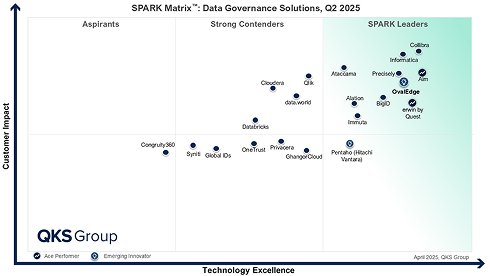
OvalEdge recognized as a leader in data governance solutions
.png?width=1081&height=173&name=Forrester%201%20(1).png)
“Reference customers have repeatedly mentioned the great customer service they receive along with the support for their custom requirements, facilitating time to value. OvalEdge fits well with organizations prioritizing business user empowerment within their data governance strategy.”
.png?width=1081&height=241&name=KC%20-%20Logo%201%20(1).png)
“Reference customers have repeatedly mentioned the great customer service they receive along with the support for their custom requirements, facilitating time to value. OvalEdge fits well with organizations prioritizing business user empowerment within their data governance strategy.”
Gartner, Magic Quadrant for Data and Analytics Governance Platforms, January 2025
Gartner does not endorse any vendor, product or service depicted in its research publications, and does not advise technology users to select only those vendors with the highest ratings or other designation. Gartner research publications consist of the opinions of Gartner’s research organization and should not be construed as statements of fact. Gartner disclaims all warranties, expressed or implied, with respect to this research, including any warranties of merchantability or fitness for a particular purpose.
GARTNER and MAGIC QUADRANT are registered trademarks of Gartner, Inc. and/or its affiliates in the U.S. and internationally and are used herein with permission. All rights reserved.