-Dec-31-2025-05-55-48-5933-AM.png)
The data looks right until someone asks where it came from, who owns it, or whether it’s compliant. That moment exposes a problem most growing organizations face: data exists everywhere, but trust in it does not.
This is where data governance principles matter. They define how data is owned, managed, protected, and used across the organization, ensuring accuracy, security, and compliance as data scales across analytics, cloud, and AI initiatives. Without these principles, even the best tools fail to deliver reliable outcomes.
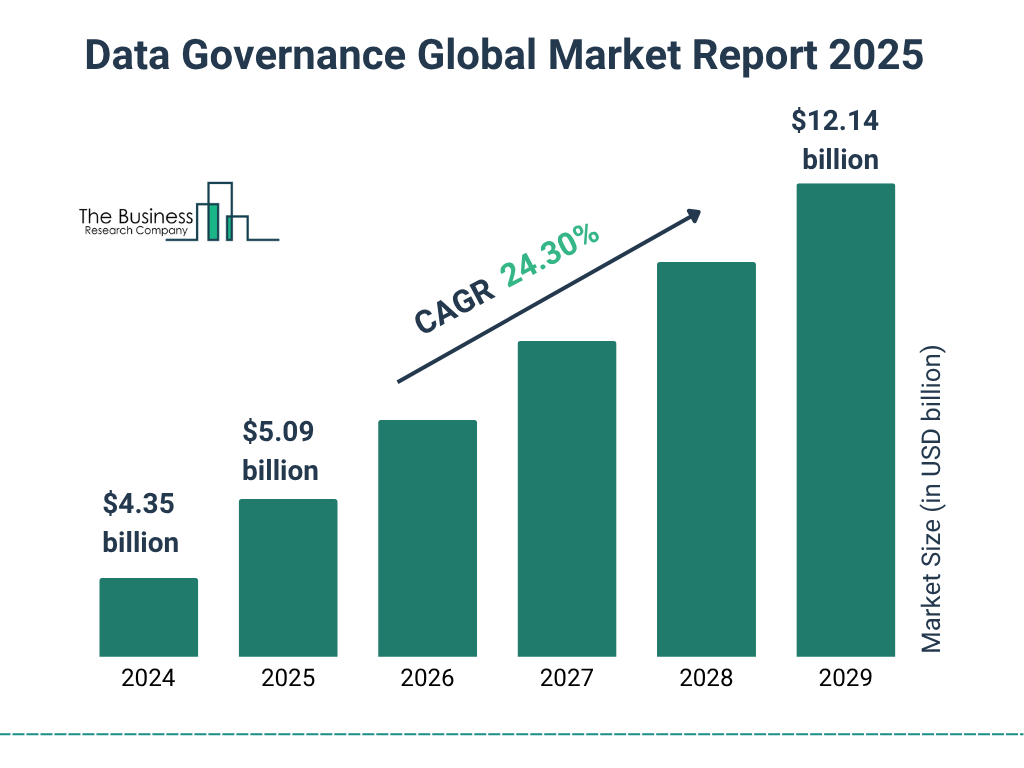
As organizations increasingly rely on data to drive decision-making, the data governance market, valued at USD 5.09 billion in 2025, is expected to reach approximately USD 12.14 billion by 2029.
This market growth reflects the rising demand for robust governance frameworks that support the ever-expanding role of data in modern businesses.
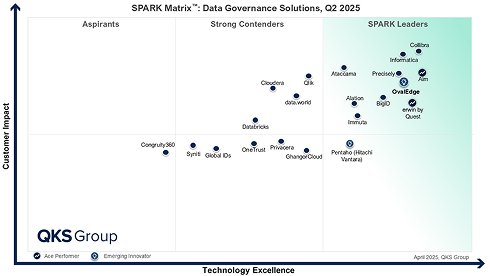
Modern organizations rely on governance platforms like OvalEdge to apply these principles consistently across systems, teams, and data lifecycles without adding operational overhead.
In this guide, we’ll break down why data governance principles matter, explore the key principles every organization should follow, and share best practices for implementing them effectively as your data, cloud, and AI initiatives scale.
Why data governance principles matter for modern organizations
Data governance principles define how organizations manage, protect, and use data across the enterprise. These principles establish clear ownership, enforce quality standards, and ensure security, privacy, and regulatory compliance.
Data governance principles improve trust by standardizing policies, documenting metadata, and controlling access throughout the data lifecycle. Organizations apply these principles to reduce risk, support analytics and AI, and enable consistent, reliable, and accountable data use at scale.
When data lacks clear ownership, quality controls, or security measures, organizations face a range of issues. Decision-makers rely on conflicting reports, analytics accuracy suffers, and teams waste time reconciling inconsistent numbers instead of acting on insights.
In short, data without governance leads to confusion, missed opportunities, and ultimately, poor decisions.
Here’s why these principles matter so much:
-
Improved decision making: When data is governed, leaders make decisions based on reliable, accurate, and consistent information, ensuring alignment across departments.
-
Regulatory compliance: A proactive approach to governance embeds compliance into daily operations, making audits smoother and less disruptive.
-
Scalability: Data models, algorithms, and automation depend on high-quality, well-documented data. Governance provides the guardrails needed to innovate safely and responsibly.
Data governance principles also reduce risk by setting the stage for streamlined operations and making data security part of the organization's culture. In fact, when these principles are in place, organizations can better leverage their data for future growth while staying compliant with evolving regulations.
Next, let’s explore the key data governance principles and how they can be implemented effectively within your organization to ensure that your data is trusted, accessible, and ready to drive your business forward.
|
Did you know? 58% of organizations report improved analytics quality and better data quality as top benefits from formal governance programs. This demonstrates the value of governance in delivering consistent and reliable data outcomes across teams. |
Key data governance principles and their implementation
Data governance is more than just a set of rules; it's a framework that ensures your data works for you, not against you. Implementing the right governance principles establishes the foundation for data accuracy, security, and compliance across the organization.
Let’s take a look at the key principles that every organization should adopt to build a reliable, scalable, and efficient data governance strategy.
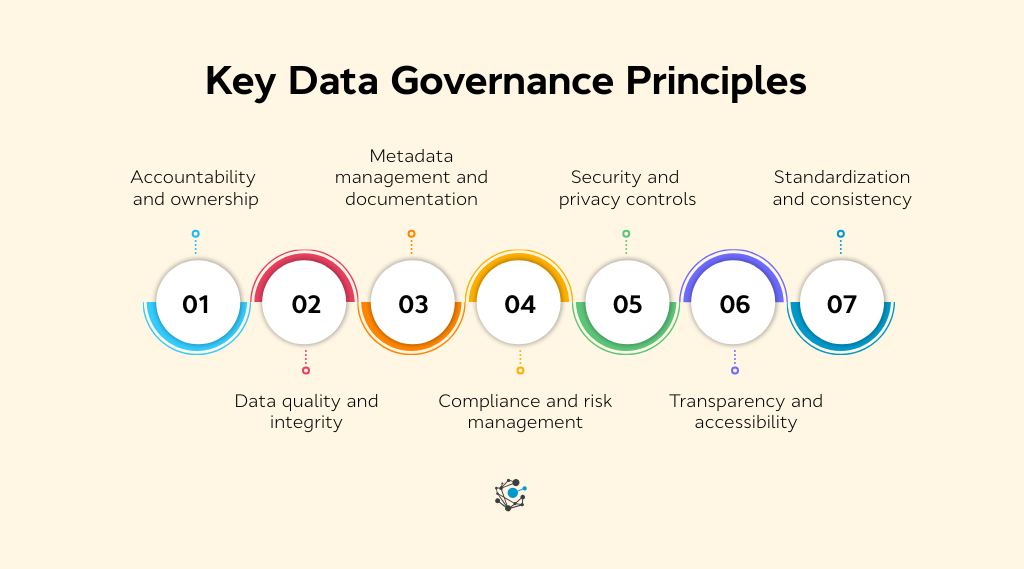
1. Accountability and ownership
Accountability is at the core of data governance. Every dataset should have a designated owner responsible for its accuracy, security, and appropriate usage. Without clear ownership, data issues go unresolved, leading to confusion and mistrust.
The implementation of this principle begins with assigning data owners and stewards. Data owners are responsible for ensuring that the data aligns with business objectives, while stewards manage the day-to-day operations of data quality, documentation, and issue resolution.
These roles need to be well-defined and supported by leadership to ensure the smooth running of data operations.
2. Data quality and integrity
Data quality is non-negotiable. For any analytics or reporting to be meaningful, the data must be accurate, consistent, and reliable. This principle ensures that the data can be trusted to make informed business decisions.
To implement this, organizations must establish clear data quality standards and regularly monitor data integrity. Validation rules help detect errors early on, while cleansing processes correct known issues. Continuous auditing guarantees that data quality remains high over time.
Shared accountability also plays a key role: when teams understand how their data impacts others, the quality of input improves naturally.
3. Metadata management and documentation
Metadata is the context behind the data. It explains what the data represents, where it came from, and how it should be used. Without proper metadata, even accurate data can be difficult to trust or reuse across teams.
To implement effective metadata management, it’s essential to document data definitions, lineage, and relationships. A centralized data catalog ensures that this information is easily accessible across the organization. When teams can discover, understand, and trust the metadata, data adoption improves, and misuse declines.
4. Compliance and risk management
Regulatory compliance is a core component of data governance, ensuring that sensitive data is handled in accordance with laws and industry standards. Governance principles should be applied to mitigate risks and reduce compliance-related disruptions.
A key driver for investment in data governance is the rising complexity of global privacy and security laws. In fact, 63% of governance workloads are projected to be cloud-based by 2025 due to the scalability needs imposed by these regulations.
Start by mapping relevant regulations to data policies. Sensitive data should be classified, and retention rules must be defined to ensure proper storage. Regular compliance audits help verify adherence to these regulations. When compliance is built into governance, it becomes an ongoing, proactive process rather than a reactive challenge.
5. Security and privacy controls
Security and privacy are essential in today’s data-driven world. Data governance principles help safeguard sensitive information and protect against unauthorized access or misuse.
Implementing this principle means applying the right security measures, including encryption, role-based access control (RBAC), and multi-factor authentication (MFA). Privacy guidelines should also define acceptable use and limit unnecessary exposure.
As the threat landscape evolves, so too should the security protocols, ensuring the protection of data remains a top priority.
6. Transparency and accessibility
Transparency in data governance fosters trust across the organization. When teams understand how data is governed and have easy access to the data they need, the governance framework becomes more effective and less resistant.
Clear documentation and communication of governance policies are key to this principle. Self-service analytics tools help make data accessible to authorized users while ensuring proper access controls are in place. This accessibility encourages widespread adoption and ensures that data is used responsibly.
7. Standardization and consistency
Standardization ensures that data is understood and used consistently across all teams and systems. It reduces confusion, rework, and errors by applying uniform processes, formats, and terminologies.
To implement standardization, develop naming conventions, data models, and metadata standards. Automated data integration tools can enforce consistency as data flows across different platforms and systems. Standardization also enables scalability, allowing governance to remain strong as organizations grow and evolve.
These principles form the bedrock of any successful data governance program. By establishing clear ownership, ensuring data quality, managing metadata, and maintaining security and compliance, organizations can build a robust data governance framework that supports informed decision-making and long-term business growth.
|
Stat: According to a Gartner Peer Community survey, organizations with governance frameworks in place see improved data security (66%) and reduced compliance breaches (52%), confirming that governance delivers tangible gains once foundational practices are adopted. |
Data governance best practices for implementation
Implementing data governance isn’t just about setting policies and regulations. It’s about embedding those principles into your organization's everyday operations, ensuring that they’re consistently applied across teams and systems. Let’s look at some best practices that can help you establish a strong data governance foundation.
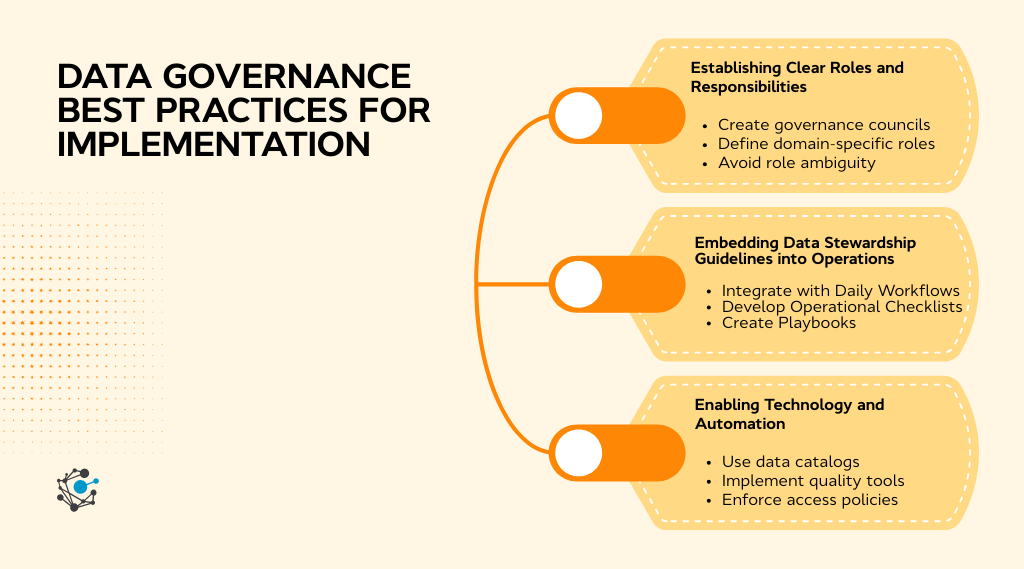
Establishing clear roles and responsibilities
One of the key pillars of a successful governance program is clarity in roles. If there’s ambiguity about who’s responsible for what, governance initiatives can quickly stall. Clear ownership and decision-making rights are essential for a smooth governance process.
Best practices:
-
Create governance councils: These should provide oversight, ensure alignment, and make strategic decisions.
-
Define domain-specific roles: Working groups dedicated to specific domains help tackle issues more efficiently and with more focus.
-
Avoid role ambiguity: Clearly define charters and responsibilities for each role involved in governance. Overlapping responsibilities can create confusion and slow progress.
When roles are well-defined and communicated, your data governance program will move forward without unnecessary roadblocks.
Embedding data stewardship guidelines into operations
Successful data governance becomes part of the company’s DNA when it’s integrated into daily operations. Data stewardship is not a one-off task; it needs to be embedded in how teams handle and transform data every single day. Without this, data governance can feel like an afterthought.
Start by aligning stewardship guidelines with existing workflows, ensuring that data governance isn’t just a policy but a natural part of your processes. You may find it helpful to create operational checklists for data stewards to ensure they consistently follow best practices.
Additionally, playbooks can help your teams address challenges in real-time, guiding them on how to handle common data governance issues. When governance becomes part of the routine, it’s not just something that happens once in a while; it’s how data is managed on a daily basis.
Enabling technology and automation
Technology is a game-changer for scaling data governance. By leveraging tools like data catalogs, quality management systems, and policy engines, organizations can reduce the manual workload and increase the consistency of governance practices.
Best practices:
-
Use data catalogs: Centralize metadata, definitions, and lineage in one easily accessible system.
-
Implement quality tools: Automate data validation and cleansing to reduce human errors.
-
Enforce access policies: Use automated tools to ensure that only authorized users can access sensitive data.
Platforms like OvalEdge enable organizations to operationalize governance principles by automating these processes, reducing overhead, and improving visibility and control. Automation ensures that teams can focus on strategic decision-making rather than micromanaging governance tasks.
By clearly defining roles, embedding governance into daily operations, and leveraging technology, organizations can implement robust data governance programs that improve data quality, security, and compliance. These best practices form the foundation of an efficient, scalable governance framework.
If you're ready to see how OvalEdge can help you ensure compliance, book a free demo today and experience how easy and effective data governance can be.
Conclusion
You’ve learned that strong data governance is essential for securing data, maintaining quality, and ensuring compliance across your organization.
But knowing the principles is just the first step; the real challenge lies in putting them into action. Without the right tools, your governance efforts can quickly become fragmented and difficult to manage.
With OvalEdge, you can start applying these principles in your organization seamlessly. OvalEdge helps you automate governance, ensure compliance, and provide consistent, secure data management across your entire data lifecycle. It’s not just about having governance in place; it’s about making it scalable and sustainable for the long run.
Ready to move from theory to practice? Let’s discuss how OvalEdge can help implement a data governance framework tailored to your needs.

 Schedule a call today and take the first step towards transforming your data governance strategy.
FAQs
1. What are the key benefits of implementing data governance principles?
Implementing data governance principles improves decision-making, enhances data quality, ensures compliance, and reduces risks. It enables more reliable analytics, seamless data access, and secure management of sensitive information across the organization.
2. How do data governance principles support AI and machine learning projects?
Data governance principles ensure high-quality, well-documented data, which is essential for accurate AI and machine learning models. They provide clear guidelines for data use, ensuring consistency and reliability in AI-driven insights.
3. How do I assess the effectiveness of my organization’s data governance program?
Assess effectiveness by evaluating ownership clarity, data quality, compliance adherence, and risk management. Conduct regular audits, gather feedback from teams, and identify areas where governance practices can be streamlined or improved.
4. What is the role of metadata in data governance?
Metadata helps define, track, and understand data’s context, lineage, and usage. Effective metadata management enhances data discoverability, ensuring stakeholders can access reliable and accurate data for decision-making while maintaining security.
5. Can data governance principles apply to cloud-based data management?
Yes, data governance principles are crucial for managing cloud-based data. They ensure data is secure, compliant with regulations, and accessible while mitigating risks associated with data sharing and integration across cloud platforms.
6. What are the common challenges when adopting data governance principles?
Common challenges include unclear ownership, resistance to change, lack of executive sponsorship, and data silos. Overcoming these requires strong leadership, clear communication, and a scalable governance framework that supports growth and collaboration.
.png?width=1081&height=173&name=Forrester%201%20(1).png)
.png?width=1081&height=241&name=KC%20-%20Logo%201%20(1).png)