.png)
Data stewardship is the operational practice of managing data quality, accessibility, and compliance across its full lifecycle. A data steward is the person responsible for making this happen within a specific data domain or business area.
Most organizations do not have a data problem. They have a trust problem. The compliance audit stalls because customer records do not match across systems. A machine learning model fails in production because nobody verified the training data's lineage.
According to PwC's 2025 Global Compliance Survey, 56% of business leaders identify unreliable data as one of the biggest barriers to staying compliant.
As regulations tighten and AI initiatives accelerate, the cost of ungoverned data extends beyond financial penalties into strategic risk. Failed governance programs erode credibility with every inaccurate report, every delayed audit, and every AI pilot that produces confident, incorrect outputs.
This guide covers what data stewardship means, how it differs from governance and ownership, the types of stewards organizations need, and how to implement a scalable framework that delivers measurable results.
What is data stewardship?
Data stewardship is the practice of ensuring organizational data remains accurate, accessible, and compliant at every stage of its lifecycle. It is the operational arm of data governance, where policies written by governance councils become enforced standards in daily operations.
A data steward is the person (or team) responsible for this work within a specific data domain. Stewards sit at the intersection of business and IT, translating governance policies into actions that keep data trustworthy.
Their core responsibilities include:
-
Enforcing quality standards and naming conventions across connected systems
-
Resolving data issues such as duplicates, missing fields, and schema mismatches between source and consumption layers
-
Managing access requests and tracking data usage patterns to prevent unauthorized exposure
-
Maintaining business glossary definitions so every team interprets the same metric the same way
-
Documenting data lineage from source to consumption, making it possible to trace errors back to their origin
Stewardship is not a one-time data cleanup project. It is a continuous operational discipline. Every dataset that enters an organization needs classification, validation, and metadata enrichment. Every record that changes needs reconciliation. The steward is the person accountable for this work, operating as the connective tissue between technical infrastructure teams and business users who consume data for decisions and reporting.
Data stewardship vs data governance vs data ownership
These three terms describe distinct functions within a data management program. Conflating them creates accountability gaps where critical data goes unmanaged because everyone assumes someone else owns the responsibility.
Here is how they relate, and where they differ.
|
Aspect |
Data governance |
Data stewardship |
Data ownership |
|
Function |
Defines policies, standards, and accountability structures |
Executes those policies in daily operations |
Holds ultimate business accountability for a data domain |
|
Led by |
Governance council, Chief Data Officer (CDO) |
Data stewards, domain stewardship teams |
Business unit leaders, domain executives |
|
Focus |
Strategic: what should be done |
Operational: how it gets done |
Accountability: who is responsible for the data's business value |
|
Outputs |
Governance policies, data standards, compliance frameworks |
Resolved quality issues, maintained glossary terms, approved access requests |
Domain-level data decisions, usage approvals |
|
Time horizon |
Quarterly and annual program governance |
Daily and weekly operational work |
Ongoing strategic oversight |
A fourth role, the data custodian, handles the technical infrastructure: storage, pipelines, backups, and encryption. Custodians implement the governance decisions that owners and stewards define. The steward says "this field must be classified as personally identifiable information (PII)." The custodian applies the masking rule in the pipeline.
Governance without stewardship produces policies nobody enforces. Stewardship without governance produces inconsistent decisions that vary by team. Ownership without either produces strategic intent with no operational follow-through. All three functions must work together.
For a deeper breakdown of this relationship, see this detailed comparison of data governance and data stewardship.
Types of data stewards
Not every steward does the same work. The right stewardship model depends on organizational size, industry, and governance maturity. Most organizations need at least two of these four types working in coordination.
Here are the four types of data stewards and what each one handles:
-
Business data stewards: It possess deep domain expertise and manage data within specific business functions like finance, sales, or human resources. They define business rules, set quality metrics for their domain, and ensure daily operations conform with governance policies. In practice, these stewards are often senior analysts or domain leads who take on stewardship as a defined part of their role.
-
Technical data stewards: It bring expertise in data systems, databases, Extract-Transform-Load (ETL) pipelines, and integration platforms. They implement technical quality controls, maintain schema documentation, and ensure secure data movement across environments. This role is common in engineering-led organizations or as a complement to business stewardship.
-
Operational data stewards: It focus on daily execution like processing access requests, monitoring quality dashboards, updating documentation, and routing issues to resolution. Their work is less about domain expertise and more about process discipline and consistent enforcement.
-
Domain data stewards: It manage stewardship across an entire data domain (customer data, product data, financial data) rather than a single business function. They coordinate across teams that produce and consume domain data, ensuring definitions, quality standards, and access controls remain consistent regardless of which system holds the data.
Pro Tip: Start with business and operational stewards for the highest-risk domain (usually customer or financial data). Add technical and domain stewards as the program scales into the second and third domains.
Why data stewardship matters in 2026?
Data stewardship has moved from a governance best practice to an operational requirement. Here are the four forces that make it indispensable.
1.Data quality drives every downstream outcome
When source data contains duplicates, missing fields, or outdated entries, every report, dashboard, and predictive model built on it inherits those errors. Stewards catch these issues at the source through profiling, validation rules, and continuous monitoring, before they cascade into decisions that cost money.
Organizations with mature enterprise data governance programs report measurably faster issue resolution because stewards have defined workflows for every quality incident.
2. Compliance demands continuous operations, not annual audits
Regulations like GDPR, HIPAA, and the California Consumer Privacy Act (CCPA) require demonstrable accountability for sensitive data: who can access it, how it is classified, and what happens when a data subject requests deletion. Stewards maintain these controls daily, not once a year before an audit.
3. Business and IT alignment breaks down without a bridge
Finance defines "revenue" one way. Engineering stores it another way. Marketing interprets it a third way. Stewards resolve this by maintaining shared definitions, enforcing naming conventions, and ensuring that the business glossary reflects what is actually in the systems.
AI has changed who consumes governed data
Historically, governance served human analysts and report consumers. AI agents are now data consumers too, pulling context from catalogs, glossaries, and lineage graphs to generate answers, recommendations, and automated actions. Stewardship must extend to govern what agents can access and act on.
Without trusted, steward-maintained context, AI models retrieve conflicting definitions and generate confident, incorrect outputs.
What are the key components of a data stewardship framework?
A stewardship program that runs on spreadsheets and informal ownership breaks down as soon as the data estate grows beyond a single domain. Scaling requires five components working as a connected system.
Governance policies
Every stewardship decision must trace back to a documented policy. These policies define the rules for data privacy, classification, usage, retention, and regulatory compliance. Without them, stewards make judgment calls that vary by person and by day. With them, stewards have a consistent reference for resolving access disputes, classification questions, and quality thresholds.
Data domains
Segmenting data into domains (customer, product, financial, regulatory) allows organizations to assign dedicated stewards who understand the context, systems, and business requirements behind each category. A customer data steward in a financial services firm faces different classification requirements than a product data steward in a manufacturing company. Domain segmentation keeps stewardship focused and expertise concentrated.
Defined roles and accountability
The framework must draw clear lines between stewards (operational execution), owners (strategic accountability), custodians (technical infrastructure), and governance leads (policy creation). A RACI matrix that maps every data domain to specific individuals prevents the most common stewardship failure: nobody taking ownership when something breaks.
Data quality management
This is where most hands-on stewardship work happens. Profiling data for completeness and accuracy. Cleansing duplicates and null values. Setting validation rules that reject records falling outside acceptable boundaries. Monitoring data quality dashboards for anomalies. The goal is proactive quality control, catching issues before they reach a report or a model, rather than reactive cleanup after the damage is visible.
Tools and automation
Manual stewardship does not scale past a few hundred assets. A unified data catalog gives stewards a centralized interface to maintain glossary terms, monitor quality scores, process access requests, track lineage, and manage certifications.
Automated classification using machine learning (ML) classifiers and configurable policies can scan connected systems to detect and tag sensitive data (PII, Protected Health Information, financial records) at a pace no manual process can match. Automated access workflows that integrate with ticketing systems like Jira or ServiceNow route requests through approval chains without email threads or manual tracking.
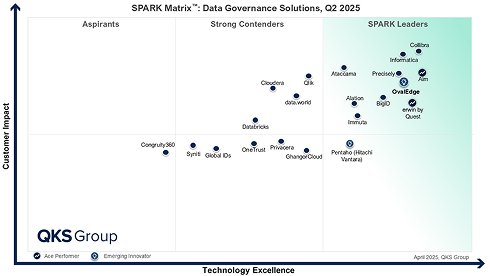
Platforms like OvalEdge bring catalog, lineage, quality, access governance, and classification into a single operating layer, enabling stewards to manage the full scope of their responsibilities from one interface rather than toggling between disconnected point solutions.
Data stewardship best practices
The gap between a stewardship program that exists on paper and one that changes how an organization operates comes down to six practices.
1. Assign stewardship before the crisis
Programs that launch after a compliance failure or a data breach start in recovery mode, defending their existence instead of building value. Assign owners and stewards to the two or three highest-risk domains proactively. The first steward in place before the first incident carries more credibility than ten stewards hired after one.
2. Make stewardship operational, not ceremonial
A program that meets quarterly to review policy documents without enforcing them delivers nothing. Effective stewardship is daily work: resolving quality issues, maintaining glossary terms, approving access requests, and documenting lineage changes. The governance framework makes that work consistent. It does not replace it.
3. Collaborate on definitions
Glossary terms that a steward defines in isolation and then publishes rarely get adopted. Involving business users, analysts, and domain owners in the definition process produces terms that teams actually use, because they helped shape them.
4. Tie every metric to a business outcome
Stewardship programs that report only on data quality scores struggle to secure sustained investment. Programs that connect stewardship to analyst productivity gains, reduced compliance remediation costs, and faster time-to-insight for business users speak a language executives fund.
5. Extend stewardship to AI inputs and outputs
As organizations deploy large language models and AI agents, the governance requirements for training data and retrieval datasets become a stewardship responsibility. Stewards must verify that the data agents retrieve is current, classified, and governed by the same access controls that apply to human consumers.
A catalog that agents can query for trusted context, certified datasets, and lineage metadata becomes the bridge between stewardship and agentic data stewardship at scale.
6. Automate what repeats
Classification, quality rule recommendations, steward and owner assignment, and access routing are all tasks that AI agents can handle with human oversight. Governance agents that analyze usage patterns and organizational structures to identify the most appropriate data steward for a new dataset, or that recommend quality rules based on schema patterns, free stewards to focus on the judgment calls that require domain expertise.
Explore deeper tactical guidance in this article on data stewardship best practices for modern enterprises.
How to implement a data stewardship program?
Stewardship programs fail most often because they try to govern everything at once. A phased approach that starts narrow, proves value, and then expands is more sustainable than a big-bang rollout.
Here is a three-phase roadmap that moves a program from first assignment to full-scale operations.
Phase 1: Foundation (months 1 to 3)
Identify the two or three data domains with the highest business risk or regulatory exposure. Assign a steward and an owner to each. Document the governance policies those stewards will enforce: quality thresholds, access rules, classification standards, and retention requirements. Select the governance model (centralized, federated, or hybrid) that fits the organization's structure and maturity.
Phase 2: Operationalize (months 4 to 6)
Deploy a data catalog as the steward's operational interface. Connect the highest-priority data sources through pre-built connectors. Set up automated workflows for access requests, quality monitoring, and classification. Train stewards on the platform and on the governance policies they will enforce. Begin the operational rhythm: weekly quality reviews, monthly stewardship reports, quarterly governance council check-ins.
A practical model for this phase follows a three-stage value realization path.
First, crawl: connect data sources, reports, and code so that AI automatically builds lineage, relationships, and a searchable inventory.
Second, curate: AI agents perform most curation work (metadata enrichment, glossary term discovery, quality rule recommendations) while stewards validate recommendations and answer business questions.
Third, consume: teams find, trust, access, and analyze data using governed context and governance agents that handle routine tasks.
Phase 3: Scale (months 7 to 12)
Expand stewardship to additional data domains. Implement more sophisticated quality rules and anomaly detection. Begin measuring and reporting stewardship KPIs: percentage of assets with assigned owners, quality score trends by domain, mean time to resolve data incidents, access request cycle time, and glossary coverage rate.
These metrics demonstrate program health to governance leadership and identify where investment is needed next.
Pro Tip: The single most important KPI in the first year is "percentage of critical data assets with an assigned steward." If nobody owns the data, nobody governs it. Everything else follows from that assignment.
Conclusion
Every report, dashboard, AI model, and compliance audit depends on data someone maintained, classified, and made accessible under governed controls. That someone is the data steward.
The organizations that get stewardship right treat it as an operating discipline with clear roles, defined processes, and purpose-built tooling. They do not treat it as a side project or a compliance checkbox. They assign stewards before the first crisis, measure their impact in business outcomes, and extend their discipline to govern data consumed by AI agents alongside human analysts.
OvalEdge brings the components of that discipline together: catalog, lineage, quality, access governance, classification, and AI-powered stewardship agents, unified in a single platform that delivers clarity, context, control, and adoption across the data estate.
For governance teams ready to move stewardship from policy to practice, book a demo to see how a unified governance platform operationalizes stewardship across domains and systems.
Frequently Asked Questions
Everything you need to know about this topic
.png?width=1081&height=173&name=Forrester%201%20(1).png)
.png?width=1081&height=241&name=KC%20-%20Logo%201%20(1).png)