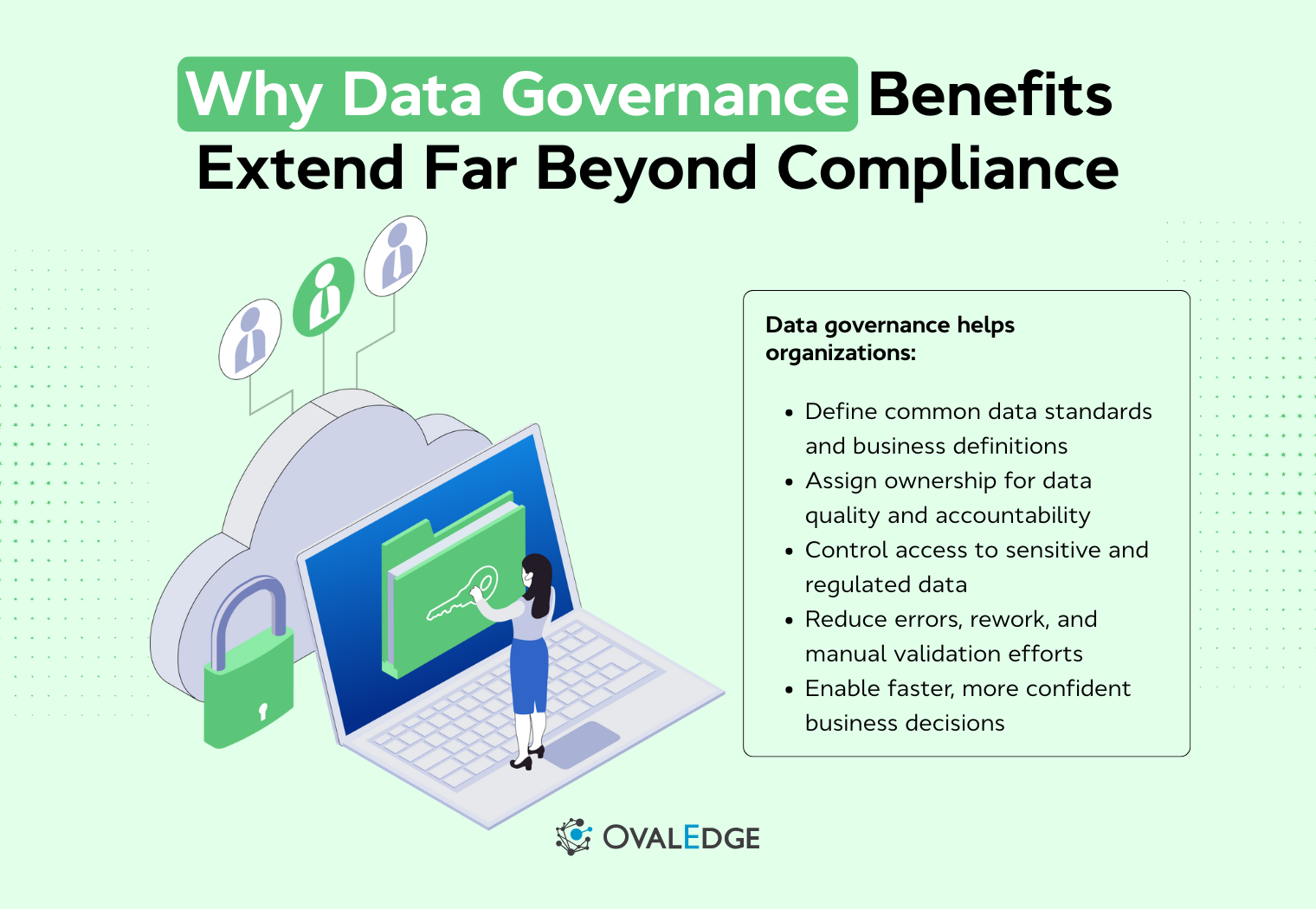
Organizations today face a growing challenge: data chaos.
As businesses collect more data than ever before, the sheer volume and complexity of this information often lead to inconsistency, inaccuracy, and poor accessibility. This makes decision-making slower and more prone to error, while also increasing the risk of non-compliance with regulations.
In fact, 2025 Gartner’s press release predicts that by 2026, 60% of AI projects will be delayed or abandoned due to issues related to data governance.
Without a proper governance framework, companies find themselves spending valuable resources to validate data, fix discrepancies, and deal with compliance issues. These inefficiencies not only slow down progress but also expose organizations to the threat of legal penalties and missed opportunities for innovation.
Data governance offers the solution. By putting clear policies, processes, and accountability in place, businesses can transform their data into a trusted asset. With robust governance, organizations can ensure data accuracy, boost operational efficiency, comply with regulations, and make smarter decisions, all while minimizing risks.
This article will explore the top 10 benefits of implementing data governance, showing how it can unlock tangible business value and drive long-term success.
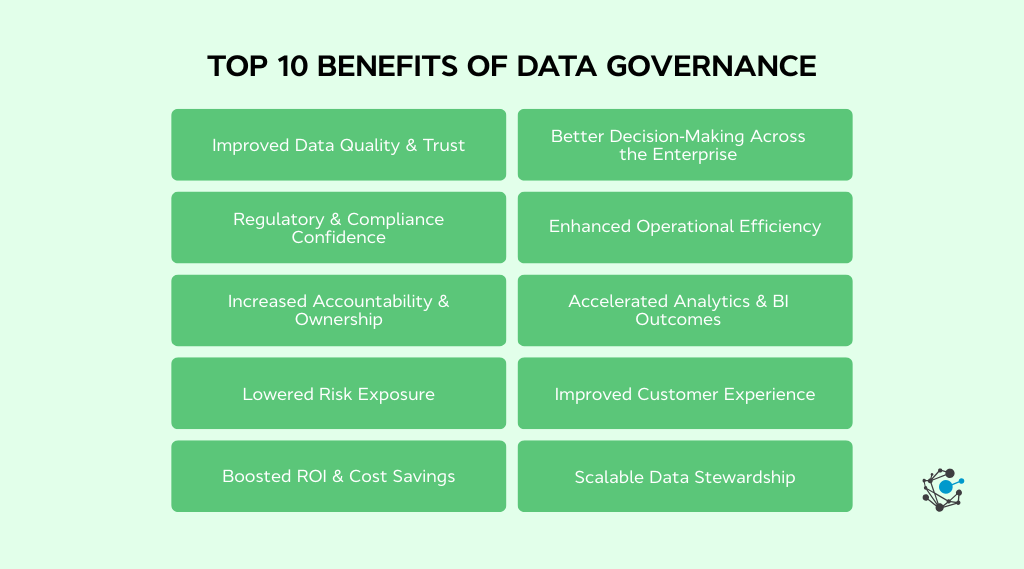
Top 10 benefits of data governance
Implementing data governance can deliver a wide range of advantages for businesses, especially as data grows in volume and complexity. Below are the top 10 benefits that demonstrate how effective governance can drive operational efficiency, improve decision-making, and increase ROI.
1. Improved data quality & trust
Data governance plays a critical role in improving the quality of data, making it a trusted asset for decision-making. When businesses establish clear processes and accountability around data management, it ensures consistency, accuracy, and reliability, which are core outcomes of effective data quality management. By defining data standards and enforcing validation rules, governance reduces errors that can stem from manual data entry or inconsistent formats.
With high-quality data, organizations can avoid costly mistakes, such as incorrect reporting or misguided strategies. Furthermore, Trusted data promotes collaboration across teams, supported by clear data stewardship practices that define ownership and accountability. In turn, this creates a culture of data-driven decision-making, where choices are based on facts rather than assumptions.
Ultimately, improved data quality not only boosts operational efficiency but also enhances customer trust, regulatory compliance, and overall business performance. A solid data governance framework provides the structure needed to maintain this consistency over time, ensuring the business can confidently rely on its data for growth and innovation.
2. Better decision-making
Effective data governance empowers organizations to make better, more informed decisions. When data is well-governed, it becomes a reliable and actionable asset that can drive strategic choices. In a governance framework, data is cleaned, validated, and categorized, ensuring that the right information is available to the right people at the right time.
With access to trusted and accurate data, decision-makers can analyze trends, forecast outcomes, and align strategies based on facts rather than assumptions or guesswork. This is especially critical in today’s fast-paced business environment, where small decisions can have significant long-term impacts.
For example, a company with reliable sales data can more confidently adjust pricing strategies, improve customer targeting, or optimize inventory.
The ability to make data-driven decisions accelerates organizational agility and competitiveness. Whether it's expanding into new markets, adjusting product offerings, or streamlining operations, high-quality data governance leads to smarter, quicker, and more successful outcomes across all areas of the business.
3. Regulatory & compliance confidence
In today’s complex regulatory landscape, maintaining data compliance with data protection laws like GDPR, CCPA, and HIPAA is critical. A strong data governance program helps organizations navigate these regulations by establishing clear protocols for data collection, storage, access, and sharing.
With a structured governance framework in place, businesses can track and manage data usage, ensuring that personal and sensitive information is handled in accordance with legal requirements. This reduces the risk of costly fines, lawsuits, and reputational damage.
Governance also ensures that data access is tightly controlled, ensuring that only authorized personnel can view or modify sensitive data, thereby preventing unauthorized disclosures or breaches. By maintaining a clear audit trail and regularly reviewing policies, organizations can demonstrate compliance during audits and regulatory reviews with confidence.
Ultimately, data governance enables businesses to mitigate legal and financial risks associated with non-compliance, while fostering trust with customers and stakeholders by protecting their data and privacy.
4. Enhanced operational efficiency
Data governance significantly enhances operational efficiency by organizing and standardizing data management practices. Here's how it works:
-
Reduced rework: With data consistency ensured by governance protocols, teams spend less time fixing errors or reconciling conflicting data.
-
Simplified processes: Well-defined workflows and standardized processes make it easier to access and use data, eliminating bottlenecks in day-to-day operations.
-
Faster decision-making: With reliable, easy-to-access data, teams can make informed decisions quickly, reducing delays in project timelines and operational tasks.
By reducing data-related issues, businesses can focus on more strategic objectives rather than wasting time on administrative tasks. Teams can also collaborate more effectively since everyone operates from a unified data set. Over time, this leads to smoother operations, less friction, and a more agile organization.
5. Increased accountability & ownership
One of the key benefits of data governance is that it fosters a culture of accountability and ownership within the organization. By clearly defining roles and responsibilities, data governance ensures that every piece of data has an identified owner who is accountable for its quality, security, and accessibility.
-
Clear data ownership: Assigning data stewards and owners ensures that there is no ambiguity about who is responsible for the data at every stage of its lifecycle. This reduces the chances of data being overlooked or mishandled.
-
Improved data stewardship: With designated stewards in place, there is a proactive approach to managing and maintaining data integrity. These individuals are empowered to implement best practices and guidelines for data usage, ensuring high-quality data is consistently available.
-
Responsibility for data accuracy: When ownership is assigned, the onus is on the respective teams or individuals to maintain accurate and up-to-date data, driving accountability at all levels.
This culture of accountability not only improves data quality but also leads to better decision-making and compliance, as all parties understand their role in maintaining data integrity. In the long run, it fosters greater trust in the organization’s data, knowing that every aspect is managed by responsible and dedicated individuals.
6. Accelerated analytics & BI outcomes
Data governance accelerates analytics and business intelligence (BI) outcomes by ensuring data is well-organized, accurate, and accessible. When data is governed properly, it can be quickly turned into actionable insights, reducing the time it takes to extract value from business data.
-
Faster time to insight: With clean, well-structured data, analytics teams can dive straight into analysis rather than spending time cleaning and preparing the data. This speeds up the entire analytics process, enabling quicker insights and more timely decision-making.
-
Cleaner data pipelines: Data governance minimizes errors and inconsistencies, which means data pipelines are streamlined, leading to more reliable BI reports and analyses. A consistent data foundation allows teams to confidently rely on the results of their analytics tools.
-
Empowered decision-making: With improved access to high-quality data, business leaders can quickly pivot strategies or respond to market changes with accurate, real-time insights.
By ensuring that data is always ready for analysis, data governance enables businesses to generate faster insights, optimize operations, and better leverage their analytics tools. This leads to improved BI outcomes, which in turn drive growth and competitive advantage.
7. Lowered risk exposure
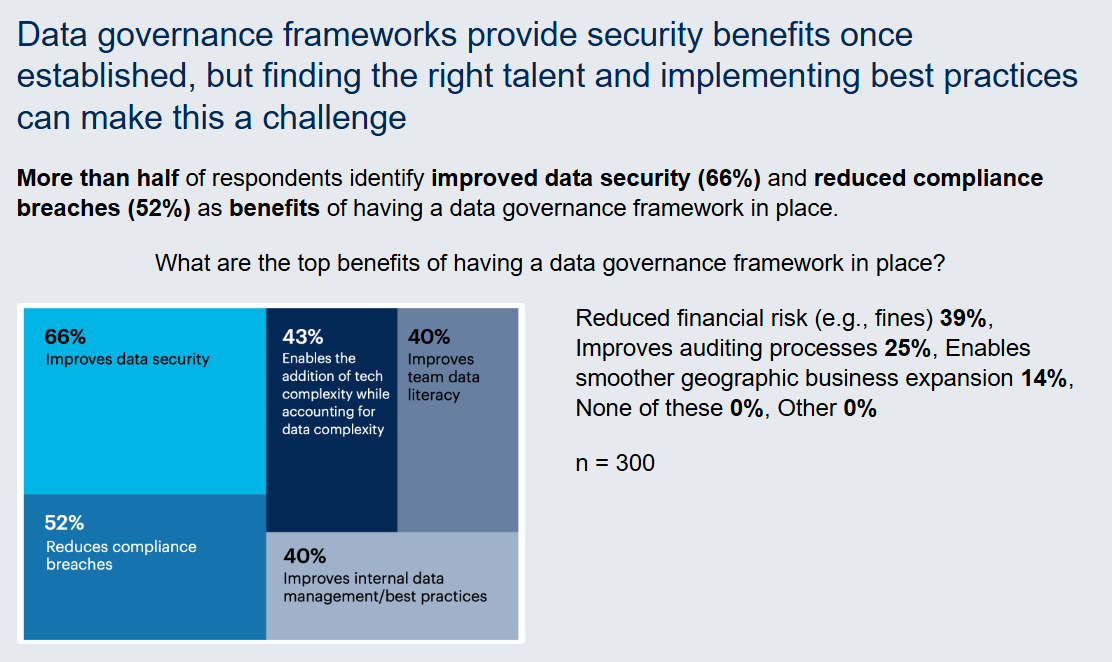
Effective data governance significantly reduces an organization’s exposure to various risks, such as security breaches, data loss, and compliance violations. By instituting clear policies and practices around data access, usage, and protection, businesses can mitigate risks that could otherwise lead to financial, legal, or reputational damage.
-
Security risks: Data governance ensures that sensitive information is properly protected through access controls, encryption, and other security measures. Defining who can access what data and under what circumstances, it reduces the chances of unauthorized access or data breaches.
-
Privacy risks: With governance in place, businesses can adhere to data privacy regulations like GDPR and CCPA, avoiding penalties and maintaining customer trust by safeguarding personal data.
-
Compliance risks: A well-structured governance framework ensures that data is handled in accordance with industry regulations, reducing the likelihood of costly fines and legal action.
By proactively managing data and its associated risks, businesses can operate with peace of mind, knowing that their data assets are secure, compliant, and protected against potential threats. This not only ensures regulatory compliance but also safeguards the organization’s reputation and operational stability.
8. Improved customer experience
Data governance plays a crucial role in enhancing the customer experience by ensuring that organizations can leverage accurate, timely, and relevant data to personalize interactions and make informed decisions that benefit customers.
-
Personalized experiences: With a solid governance framework, businesses can ensure customer data is consistent and up-to-date, allowing for targeted marketing, tailored recommendations, and personalized customer service.
-
Faster response times: By improving data accessibility and accuracy, businesses can respond more quickly to customer inquiries, complaints, or feedback, enhancing the overall customer experience.
-
Trust and transparency: When customers know their data is handled responsibly and in compliance with privacy laws, it fosters greater trust. Clear governance practices help ensure that customer data is securely managed, giving them peace of mind.
Ultimately, data governance enables businesses to create a more responsive and customer-centric approach. By providing teams with reliable data, organizations can deliver more relevant interactions, anticipate customer needs, and enhance overall satisfaction, leading to stronger customer loyalty and retention.
9. Boosted ROI & cost savings
Data governance contributes directly to financial benefits by improving data management practices, reducing inefficiencies, and minimizing risks, which collectively lead to significant cost savings and a higher return on investment (ROI).
-
Operational cost reductions: With better data quality and accessibility, teams spend less time on manual data cleaning, fixing errors, or searching for information, which lowers labor costs and operational overhead.
-
Compliance and legal savings: By ensuring compliance with data protection laws and regulations, businesses reduce the risk of costly fines and lawsuits. Data governance minimizes the chances of breaches that could lead to expensive legal and regulatory penalties.
-
IT cost optimization: A well-governed data system streamlines data storage, management, and processing, leading to more efficient use of IT resources and reducing unnecessary infrastructure costs.
The cost savings generated from these improvements can lead to better profitability, as organizations can allocate resources more effectively and avoid financial pitfalls. As businesses realize the value of their data assets through a structured governance program, they can achieve a better ROI by optimizing data-driven initiatives and leveraging accurate, trustworthy data for growth.
10. Scalable data stewardship
One of the long-term benefits of data governance is the ability to scale data stewardship across an organization. As businesses grow, the volume and complexity of their data increase, making it essential to have a robust governance framework in place that can scale with these changes.
-
Future-proofing data programs: With a scalable data governance system, organizations can manage and govern increasingly large and complex data sets without sacrificing quality or consistency. This flexibility ensures that governance processes can evolve as the business grows.
-
Streamlined expansion: As businesses expand into new regions or markets, data governance provides the foundation for consistent data management across different systems and geographies, making integration and expansion smoother.
-
Sustaining data quality: Scalable governance ensures that data stewardship responsibilities can be distributed across departments and teams, allowing for ongoing maintenance of data quality even as data volumes increase.
By putting scalable data governance practices in place, organizations can ensure that their data remains reliable, secure, and well-managed as they grow, enabling them to continue making data-driven decisions while maintaining high standards of data quality and compliance.
How to measure data governance ROI
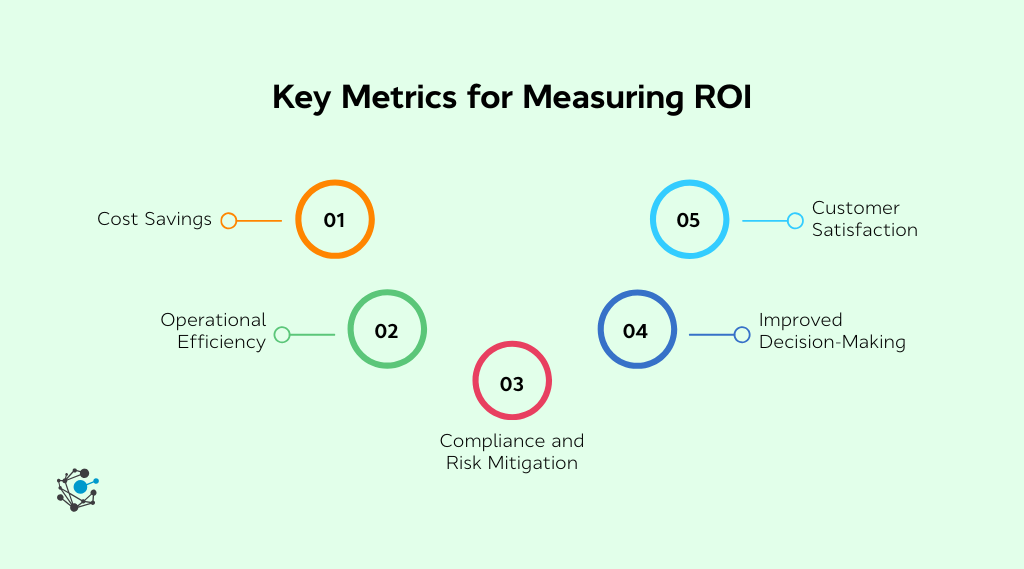
Measuring the return on investment (ROI) for data governance is essential to understanding its true value to the organization. By tracking specific metrics, businesses can quantify the tangible benefits of their governance initiatives and justify the investment in governance programs. Below are key metrics and considerations for measuring data governance ROI.
Key metrics for measuring ROI
-
Cost savings: Data governance can reduce operational costs by eliminating inefficiencies such as manual data cleaning, reconciliation, and error correction. By improving data quality and accessibility, teams can operate more efficiently, reducing time spent on non-value-added tasks.
-
Operational efficiency: Time saved through better data accessibility, streamlined workflows, and reduced errors is a measurable indicator of ROI. The faster teams can access and act on accurate data, the more efficient the entire organization becomes.
-
Compliance and risk mitigation: Data governance helps businesses avoid regulatory fines and legal penalties. The ROI here can be calculated by comparing the costs of potential non-compliance (penalties, lawsuits) against the investments made in governance.
-
Improved decision-making: Data-driven decisions lead to better outcomes, and this can be reflected in revenue growth, cost reductions, or improved market positioning. The ROI from enhanced decision-making can be calculated by measuring the financial impact of more informed choices on business performance.
-
Customer satisfaction: Improved data governance often leads to better customer interactions and personalization. By improving customer experience and retention, organizations can see a measurable increase in customer lifetime value (CLV) and overall satisfaction.
Short-term vs. Long-term ROI
-
Short-term ROI:
In the short term, the benefits of data governance are often seen in operational efficiencies, reduced data errors, and improved data accessibility. These "quick wins" contribute to an immediate return through cost savings and faster decision-making.
-
Long-term ROI:
Over the long term, the value of data governance becomes more evident in the form of strategic advantages like increased business agility, improved compliance, and enhanced ability to leverage data for innovation. Long-term ROI may include improved forecasting, better customer segmentation, and the ability to scale operations effectively.
Tools for measuring ROI
To effectively measure the ROI of data governance, organizations can leverage various tools and platforms designed for tracking data quality, compliance, and operational efficiency. Data management platforms, governance dashboards, and ROI calculators can provide actionable insights into how data governance impacts business outcomes.
By quantifying these benefits, businesses can demonstrate the value of their data governance efforts and secure continued investment in data management strategies.
Platforms like OvalEdge help organizations operationalize these measurements by bringing data cataloging, governance, and observability together in one place.
By tracking data quality trends, stewardship activity, policy compliance, and usage patterns, teams can connect governance initiatives directly to efficiency gains, risk reduction, and analytics outcomes.
|
Pro Tip: Measuring the impact of data governance requires linking improvements in data quality, risk reduction, and operational efficiency to tangible business outcomes. Building on these principles, the data governance white paper Implementing Data Governance outlines a structured approach to assessing governance impact across people, process, and technology. Download the white paper to understand how leading organizations measure value, demonstrate ROI, and sustain long-term governance success. |
Data governance benefits by stakeholder
Data governance delivers distinct benefits depending on the role and priorities of the stakeholder. Understanding how data governance impacts each group can help in aligning efforts across the organization and securing buy-in for governance initiatives.
For C‑Suite & Executives
For executives, data governance is crucial for enabling long-term strategic growth, mitigating risks, and ensuring compliance. The key benefits for the C-suite include:
-
Strategic decision-making: Access to clean, reliable data enables executives to make informed, data-driven decisions that align with organizational goals.
-
Risk mitigation: Data governance reduces the risk of costly data breaches, regulatory fines, and compliance failures, helping executives safeguard the company's reputation and bottom line.
-
ROI & business value: With effective governance, executives can see improvements in operational efficiency, cost savings, and overall organizational performance, making data governance an essential investment.
For data teams & analysts
Data teams and analysts benefit from data governance by having more reliable, consistent, and accessible data to work with. This leads to:
-
Improved data quality: Data governance ensures that analysts have access to clean, accurate data, allowing them to generate insights without spending excessive time cleaning and validating information.
-
Faster analytics: With well-governed data, analysts can quickly access and analyze the information they need, speeding up the decision-making process.
-
Streamlined collaboration: Clear roles and responsibilities within data governance frameworks allow for better collaboration between different teams, ensuring that everyone is working with the same trusted data.
For compliance & legal teams
Compliance and legal teams are crucial stakeholders in data governance, as they are responsible for ensuring adherence to data protection laws and regulations. Key benefits for these teams include:
-
Regulatory compliance: Data governance ensures that the organization complies with various data protection laws, such as GDPR, CCPA, and HIPAA, reducing the risk of legal penalties.
-
Audit-ready data: With well-managed data governance processes, compliance teams can quickly access necessary data for audits, reducing the time and effort spent on compliance activities.
-
Risk management: By enforcing security protocols and access controls, data governance helps mitigate the risk of data breaches, ensuring sensitive data is protected and handled in compliance with regulations.
By addressing the needs and priorities of each stakeholder group, data governance becomes a valuable tool for aligning business objectives and driving organizational success.
Conclusion: The value proposition of data governance
Data governance is the backbone of any modern organization, transforming raw data into a strategic asset that drives growth, compliance, and operational efficiency. By ensuring that data is accurate, accessible, and secure, governance empowers businesses to make smarter decisions, reduce risks, and streamline processes. This investment doesn’t just enhance performance today; it sets the stage for long-term success in a data-driven world.
As data complexities grow, so do the challenges of managing and securing it. Organizations without strong governance risk falling behind, whether due to compliance failures, operational inefficiencies, or missed opportunities for data-driven innovation.
With the right data governance framework, businesses can unlock the full potential of their data, fueling smarter decisions, enhanced customer experiences, and sustained ROI.
Ready to take control of your data?

Discover how OvalEdge’s comprehensive data governance solutions can help you maximize your data’s value and secure your future.

Get started with OvalEdge today!
FAQs
1. What exactly is data governance, and why does it matter?
Data governance is the framework that ensures your organization's data is accurate, secure, and accessible. It’s crucial because, without governance, data can become inconsistent, unreliable, or vulnerable, leading to costly mistakes, compliance issues, and inefficiencies. With strong governance, businesses can make better decisions, reduce risks, and unlock the full value of their data.
2. How can data governance improve my company’s decision-making?
By ensuring that data is high-quality and trustworthy, data governance gives decision-makers the confidence to base their choices on facts, not guesswork. It empowers teams to access reliable data quickly, enabling more informed, strategic decisions that drive business growth.
3. What are the consequences of not having a data governance strategy?
Without data governance, companies risk poor data quality, security breaches, compliance failures, and wasted resources. This can lead to inaccurate insights, missed opportunities, legal penalties, and ultimately, a loss of trust with customers and stakeholders.
4. Who is responsible for data governance in an organization?
Data governance is a shared responsibility. Typically, a dedicated data governance team or chief data officer (CDO) leads the initiative. However, data owners, stewards, compliance officers, and IT departments all play critical roles in maintaining governance standards across the organization.
5. How can I measure the success of data governance in my business?
The success of data governance can be measured through key performance indicators (KPIs) like improved data quality, reduced errors, faster decision-making, enhanced compliance, and cost savings. Tools that track data access, security incidents, and data use efficiency can provide clear metrics on the program’s impact.
6. What tools can help streamline data governance?
Tools like OvalEdge offer comprehensive solutions for managing data governance, providing features such as data cataloging, security controls, compliance tracking, and workflow automation. These tools make it easier to maintain oversight and control over your organization’s data, ensuring that governance processes are efficient and scalable.
.png?width=1081&height=173&name=Forrester%201%20(1).png)
.png?width=1081&height=241&name=KC%20-%20Logo%201%20(1).png)