Top Atlan Alternatives in 2026: Compare Platforms for Modern Data Governance
Evaluate leading Atlan competitors across catalog, governance, lineage, data quality, and AI-driven automation. Compare capabilities, costs, and time-to-value to choose the right fit.
In this article
What are the best Atlan alternatives?
The best Atlan alternatives include OvalEdge, Alation, Collibra, Microsoft Purview, and Informatica, each serving different governance and data management needs.
OvalEdge stands out for unified governance, AI-driven automation, and faster time-to-value, while Alation and Collibra are often chosen for established enterprise use cases. Microsoft Purview fits Azure-centric environments, and Informatica supports large-scale, complex data ecosystems. The right choice depends on your architecture, governance maturity, and adoption goals.
Here’s a quick comparison of these leading Atlan competitors to help you evaluate them side by side.
Atlan alternatives comparison: tools, strengths, and fit
|
Tool |
Best for |
Deployment model |
Key strengths |
Main limitation |
|
OvalEdge |
End-to-end governance in complex data environments |
SaaS, on-prem, hybrid |
Unified platform. AI-driven governance. Built-in data quality. 150+ connectors. |
Requires a structured rollout for full adoption |
|
Alation |
Data discovery and analyst adoption |
SaaS, hybrid |
Strong search and collaboration. Wide adoption |
Limited governance depth. Higher cost at scale |
|
Collibra |
Compliance-driven enterprises |
SaaS |
Mature governance workflows. Strong policy control |
Long implementation. High overhead |
|
Microsoft Purview |
Azure and Microsoft ecosystems |
SaaS |
Native integration. Automated classification |
Limited flexibility outside Microsoft |
|
Informatica |
Large, multi-cloud environments |
SaaS, hybrid |
Deep integration. Enterprise scalability |
Complex setup. Higher TCO |
|
data.world |
Collaborative data discovery |
SaaS |
Knowledge graph. Easy sharing |
Limited governance depth |
|
DataHub |
Engineering-led teams |
Open-source, SaaS |
Flexible. Customizable metadata platform |
Requires engineering effort |
|
Secoda |
Fast-moving data teams |
SaaS |
Simple UX. Quick deployment |
Limited for complex governance |
This quick view highlights where each tool fits. Next, we’ll break down how these competitors perform in real-world scenarios.
Not sure which Atlan alternative fits your use case?
Get a tailored walkthrough based on your data stack and governance needs.
Top Atlan alternatives reviewed
Each of the eight alternatives below is evaluated using a decision framework that compares tools based on where they fit, what changes after adoption, and what trade-offs to expect.
1. OvalEdge
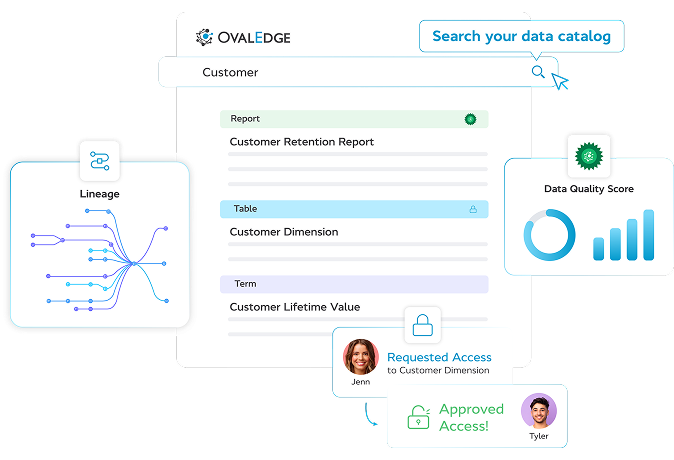
OvalEdge is a unified, AI-driven data governance platform that combines data catalog, lineage, data quality, and governance workflows into a single system. It is designed to help enterprises operationalize governance across complex data environments rather than treating it as a passive catalog.
Where it fits best
OvalEdge is best suited for organizations that need to move beyond basic data discovery and build a working governance system across tools and teams.
It typically fits:
-
Enterprises with multi-platform data stacks (warehouses, ETL, BI tools)
-
Teams managing high data complexity and scale
-
Regulated industries like financial services and healthcare, where audit, compliance, and traceability are critical
The platform is built for organizations that want governance to actually run as an ongoing process.
What typically drives the decision
Most buyers evaluating Atlan alternatives arrive here after hitting limits with catalog-first tools.
Common decision triggers include:
-
Need to reduce manual stewardship through AI-driven cataloging and automation
-
Need a trusted business context so analysts and AI tools use consistent data definitions
-
Preference for built-in data quality instead of relying on external tools
-
Friction in connecting systems and extracting metadata across platforms
-
Need predictable pricing and lower total cost of ownership
In many cases, teams are either:
-
Starting governance and want a complete foundation from day one, or
-
Switching after slow or failed implementations elsewhere
What changes after adoption
The shift is operational, with AI agents handling routine governance tasks continuously. Teams move from scattered tooling to a connected governance workflow.
This shows up in a few clear ways:
-
Unified data visibility: Users can see lineage, ownership, and quality in one place instead of switching between tools
-
Expanded self-service with AskEdgi: Users can ask natural-language questions, while AI agents execute governance in the background
-
Better impact analysis: Column-level lineage allows teams to understand downstream effects before making changes
-
Continuous data quality: Data quality becomes embedded in workflows, including tracking emerging concepts like data quality debt
-
Up-to-date metadata: Automated crawling and lineage updates reduce metadata drift as systems change
-
Broader adoption across roles: Business users engage more through AI-powered search and natural language querying
-
Business context integration: Metadata is enriched with business definitions and relationships, ensuring consistent interpretation and alignment across systems.
-
AI governance: AI models and data used for AI are automatically governed, ensuring compliance, transparency, and traceability across systems to mitigate risks.
This shift is reflected in how Bayview moved from reactive data management to a more continuous governance model after adopting OvalEdge. Data quality issues that were earlier detected only after client impact were now identified and resolved in minutes through automated monitoring, while standardized metadata and governance workflows reduced manual effort and improved consistency across teams.
|
Insight: G2’s 2025 Buyer Behavior Report found that over two out of three buyers actively consider AI capabilities when selecting software. Four out of five buyers reported positive returns on their AI-powered software investments. That matters because governance buyers now expect automation, search, metadata intelligence, and AI-assisted workflows in shortlist decisions. |
Trade-offs to consider
OvalEdge is designed for depth, which means it works best when there is a clear intent to implement governance.
-
Requires a structured rollout and use-case clarity
-
Needs enablement for business users to drive adoption
-
May feel heavy for teams looking only for quick data discovery
That said, teams typically start seeing value within 6 weeks to a few months, depending on scope and readiness.
Recognition and reviews
OvalEdge’s positioning is supported by consistent feedback across customer review platforms, reflecting both product capability and user experience.
-
On G2 reviews, users highlight ease of implementation, strong lineage visibility, and responsive support, with ratings typically in the high 4s.
-
On Gartner Peer Insights, OvalEdge holds an average rating of around 4.7/5, with positive feedback on governance workflows and deployment experience.
-
On Capterra reviews, users point to usability, feature depth, and value for cost as key strengths.
Across these platforms, feedback consistently reflects strong satisfaction with governance capabilities and implementation experience. This is reinforced by Forrester’s TEI study, which found 337% ROI, $2.5 million in NPV, and payback in under 6 months for a composite OvalEdge customer.
2. Alation
Alation is a data intelligence and catalog platform focused on helping teams discover, understand, and use data effectively across the organization. It combines metadata with real usage patterns to surface trusted data assets and improve accessibility.
Where it fits best
Alation is typically used in organizations where analytics adoption is the primary goal, and data teams want to make data easier to find and use.
It fits well for:
-
Analyst-heavy environments (BI teams, data analysts)
-
Organizations early to mid-stage in governance maturity
-
Teams prioritizing data discovery and collaboration over deep governance execution
What typically drives the decision
Buyers tend to choose Alation when usability and adoption are key concerns.
Common decision drivers include:
-
Need for strong search and discovery experience
-
Focus on collaboration and data usage visibility
-
Preference for a platform that reflects how data is actually used across teams
It is often selected when governance is important, but not the primary driver of the purchase decision.
What changes after adoption
After implementation, teams typically see improvements in data accessibility and usage visibility.
This shows up as:
-
Easier discovery of trusted datasets through search and recommendations
-
Increased collaboration through shared context, comments, and certifications
-
Better understanding of which data is actively used across teams
The impact is strongest in improving data literacy and adoption among analysts.
Trade-offs to consider
Alation is more focused on discovery and adoption than full governance execution.
-
Governance workflows and policy enforcement may require additional tooling or effort
-
Cost can increase as usage scales across teams
-
Implementation timelines can extend depending on the integration depth
It works best when the priority is driving data usage, not fully operationalizing governance.
3. Collibra
Collibra is a governance-focused data intelligence platform designed to help organizations manage data policies, stewardship, and compliance at scale. It emphasizes structured workflows and centralized control over enterprise data environments.
Where it fits best
Collibra is commonly used in large enterprises with strict regulatory and compliance requirements.
It fits well for:
-
Financial services, insurance, and healthcare organizations
-
Enterprises with formal governance programs and dedicated stewardship teams
-
Environments requiring policy enforcement, audit readiness, and compliance reporting
What typically drives the decision
Teams usually select Collibra when governance depth and control are the primary concerns.
Key decision triggers include:
-
Need for structured governance workflows and policy management
-
Requirement for regulatory compliance and audit documentation
-
Preference for a centralized governance operating model
It is often chosen when governance is a top-down, organization-wide initiative.
What changes after adoption
Collibra introduces a more structured and controlled governance environment.
In practice, this leads to:
-
Centralized management of policies, definitions, and ownership
-
Formalized data stewardship workflows and approvals
-
Improved consistency in how data is defined and governed across teams
This strengthens compliance, auditability, and governance standardization.
Trade-offs to consider
Collibra is built for depth, which comes with higher operational effort.
-
Implementation timelines can be long (often several months)
-
Requires dedicated governance teams and processes
-
User adoption can be slower due to the complexity for non-technical users
-
Total cost increases as more modules and workflows are added
It is best suited for organizations that prioritize governance control over speed and simplicity.
4. Microsoft Purview
Microsoft Purview is a unified data governance, security, and compliance platform from Microsoft that helps organizations discover, classify, and manage data across on-prem, multi-cloud, and SaaS environments. It brings together cataloging, risk management, and compliance into a single Azure-based service.
Where it fits best
Microsoft Purview fits organizations that are already operating within the Microsoft and Azure ecosystem and want governance tightly integrated with their existing tools.
It is commonly used by:
-
Enterprises heavily invested in Azure, Microsoft 365, and Power BI
-
Teams prioritizing data security, compliance, and risk management
-
Organizations adopting a federated governance model across business units
What typically drives the decision
The decision to choose Purview is often tied to ecosystem alignment rather than standalone capability.
Common triggers include:
-
Need for native integration with Microsoft services
-
Focus on compliance, data protection, and risk management
-
Preference for a unified governance and security layer within Azure
It is often shortlisted when organizations want to avoid adding another external governance platform.
What changes after adoption
Purview brings structure to how data is governed across Microsoft environments.
In practice, teams see:
-
Centralized visibility of data assets through a unified catalog
-
Improved data classification and compliance tracking
-
Better alignment between security, governance, and data teams
This helps organizations manage data risk and improve data confidence across the enterprise.
Trade-offs to consider
Purview works best inside the Microsoft ecosystem and can be limited outside it.
-
Limited flexibility for non-Microsoft or multi-vendor environments
-
Lineage and governance depth may require additional configuration or tools
-
Initial setup can involve technical dependencies on Azure services
It is a strong fit when governance is closely tied to Microsoft infrastructure decisions.
5. Informatica
Informatica is an enterprise data management platform that combines data integration, governance, data quality, and master data management into a unified cloud offering. It is part of the Informatica Intelligent Data Management Cloud (IDMC), designed for large-scale, complex data environments.
Where it fits best
Informatica is commonly used in large enterprises managing complex, multi-cloud, and legacy data ecosystems.
It fits well for:
-
Organizations with diverse data sources and integration needs
-
Enterprises requiring end-to-end data management
-
Teams with established data engineering and integration practices
What typically drives the decision
Buyers typically choose Informatica when they need a broad data management platform rather than a focused governance tool.
Key drivers include:
-
Requirement for deep data integration and ETL capabilities
-
Need for enterprise-grade scalability across environments
-
Preference for a single platform covering multiple data management functions
It is often selected when governance is part of a larger data management strategy.
What changes after adoption
Informatica introduces a more integrated approach to managing data across systems.
This results in:
-
Consolidation of data integration, quality, and governance workflows
-
Improved data consistency and reliability across pipelines
-
Better control over data movement and transformation processes
The impact is strongest in environments where data engineering and governance need to work together.
Trade-offs to consider
Informatica’s breadth comes with added complexity.
-
Implementation can be time-intensive and resource-heavy
-
Higher total cost of ownership compared to focused tools
-
May require specialized expertise to manage and scale effectively
It is best suited for organizations that need full-spectrum data management apart from governance capabilities.
6. data.world
data.world is a cloud-native data catalog and governance platform built on a knowledge graph architecture. It focuses on connecting metadata, business context, and usage insights to improve data discovery, collaboration, and governance across teams.
Where it fits best
data.world is commonly used in organizations that prioritize collaboration and data accessibility across business users.
It fits well for:
-
Teams looking to improve data literacy and shared understanding of data
-
Organizations adopting modern, cloud-first data stacks
-
Environments where governance needs to be flexible and user-driven
What typically drives the decision
Buyers tend to choose data.world when they want governance to support adoption and not slow it down.
Key drivers include:
-
Need for collaborative data discovery with business context
-
Preference for automation-driven governance workflows
-
Interest in a knowledge graph approach to connect data relationships
It is often selected when usability and collaboration matter as much as governance.
What changes after adoption
Teams typically see improved alignment between data producers and consumers.
This shows up as:
-
Easier access to trusted, well-documented data assets
-
Increased collaboration through shared metadata and context
-
Reduced manual effort through automated governance tasks
The impact is strongest in improving data accessibility and cross-team understanding.
Trade-offs to consider
data.world focuses more on collaboration and metadata context than deep governance execution.
-
Advanced governance workflows may require additional configuration
-
May not meet the needs of highly regulated or compliance-heavy environments
-
Depth of lineage and control can vary depending on implementation
It is best suited for organizations prioritizing collaborative governance over strict control models.
7. DataHub
DataHub is an open-source metadata platform originally developed at LinkedIn, designed for data discovery, lineage tracking, and governance at scale. It provides a unified metadata layer that connects datasets, pipelines, and business context across modern data stacks.
Where it fits best
DataHub fits engineering-led organizations that want flexibility and control over their metadata infrastructure.
It is commonly used by:
-
Teams with strong data engineering capabilities
-
Organizations adopting modern data stacks (dbt, Kafka, Airflow)
-
Companies that prefer open-source or customizable solutions
What typically drives the decision
The decision to adopt DataHub is often driven by the need for customization and scalability.
Key drivers include:
-
Preference for an open-source, extensible platform
-
Need for real-time metadata tracking and lineage
-
Requirement to integrate deeply with internal systems and workflows
It is often selected when off-the-shelf tools feel too restrictive.
What changes after adoption
DataHub introduces a centralized metadata layer across the data ecosystem.
In practice, teams see:
-
Improved data discovery and lineage visibility
-
Better understanding of data dependencies and pipeline health
-
Increased ability to customize governance and metadata workflows
This supports more engineering-driven governance models.
Trade-offs to consider
DataHub requires technical ownership and ongoing maintenance.
-
Deployment and scaling require engineering resources
-
UI and usability are more suited to technical users than business users
-
Governance features may need additional customization or tooling
It works best for teams that value flexibility over out-of-the-box simplicity.
8. Secoda
Secoda is a modern data catalog platform designed to simplify data discovery, documentation, and governance for fast-moving data teams. It focuses on ease of use, quick setup, and making data accessible across technical and non-technical users.
Where it fits best
Secoda is commonly used by teams that want to implement governance quickly without heavy setup.
It fits well for:
-
Startups and mid-sized companies with modern cloud data stacks
-
Teams prioritizing speed of implementation and usability
-
Organizations with smaller data teams and fewer governance layers
What typically drives the decision
Buyers typically choose Secoda when simplicity and speed are key priorities.
Common decision factors include:
-
Need for a lightweight, easy-to-deploy catalog
-
Focus on quick adoption across teams
-
Preference for a clean, user-friendly interface
It is often selected when teams want to move fast without complex implementation cycles.
What changes after adoption
Secoda helps teams quickly organize and access their data.
This results in:
-
Faster data discovery and onboarding for new users
-
Improved documentation and visibility across datasets
-
Easier collaboration between technical and business teams
The impact is strongest in improving speed and usability.
Trade-offs to consider
Secoda is designed for simplicity, which limits depth in more complex environments.
-
Limited support for advanced governance workflows and compliance needs
-
May not scale well for highly complex or regulated environments
-
Fewer capabilities for deep lineage and enterprise-grade control
It is best suited for teams that need fast, lightweight governance rather than full-scale enterprise governance.
See how OvalEdge fits your governance needs
Get a tailored walkthrough of how OvalEdge handles lineage, data quality, governance workflows, and governed self-service across your data stack.
OvalEdge vs Atlan: side-by-side comparison
This comparison focuses on how both platforms perform across governance depth, usability, and real user feedback. It combines product capabilities with verified ratings from G2 and Gartner to give a clearer evaluation baseline.
|
Criteria |
OvalEdge |
Atlan |
|
Ratings (G2, Gartner) |
~4.7–5.0 |
~4.5–4.6 |
|
Implementation |
Faster setup, guided onboarding |
Quick start, harder to scale governance |
|
Ease of use |
Structured, needs enablement |
Intuitive, high analyst adoption |
|
Governance |
Built-in workflows, automated policy execution |
Lighter, process-dependent |
|
Lineage |
Column-level, detailed visibility |
Integration-dependent |
|
Data quality |
Native, integrated |
External or add-ons |
|
AI and automation |
Agentic AI governance and monitoring |
AI-driven discovery and tagging |
|
Support |
Highly rated, hands-on |
Positive, less emphasized |
|
Scalability |
Strong for complex ecosystems |
Strong for modern stacks |
|
Cost |
Higher value for cost |
Increases with scale |
|
Best fit |
Governance-first enterprises |
Discovery-first teams |
Sources: G2 for OvalEdge and Atlan, Gartner for OvalEdge and Atlan
Key takeaway:
OvalEdge is chosen for governance depth and operational workflows, while Atlan is often selected for discovery and collaboration-first use cases.
Not sure which Atlan alternative fits your use case?
Get a tailored walkthrough based on your data stack and governance needs.
How to choose the right Atlan alternative
When choosing an Atlan alternative, focus on these decision points:
-
Prioritize governance depth: A strong interface helps adoption, but long-term value comes from how well the platform supports ownership, policy enforcement, and workflows.
-
Evaluate implementation effort early: Understand what it takes to connect systems, crawl metadata, and activate lineage. Faster setup often leads to faster business impact.
-
Compare adoption across personas: Look beyond analysts. The platform should work for stewards, data owners, and business users to drive real governance adoption.
-
Assess long-term cost: Pricing tied to users, connectors, or scale can increase over time. Evaluate total cost as usage grows.
-
Match the platform to your architecture: Ensure the tool fits your ecosystem, whether it is multi-cloud, Microsoft-centric, or built on modern data stacks.
-
Assess AI and automation capabilities: Look for agentic AI that automates metadata, lineage, data quality, and policy enforcement to reduce manual effort and improve consistency.
Making the right choice comes down to aligning the platform with how your data teams actually work.
Evaluate Atlan alternatives with agentic analytics and governance frameworks
Get a practical breakdown of how modern teams operationalize governance using agentic analytics. This whitepaper helps you compare platforms based on real implementation models.
Why OvalEdge is a strong Atlan alternative
When teams evaluate Atlan alternatives, the decision often comes down to how quickly they can operationalize governance and how well the platform scales across systems, users, and compliance needs.
OvalEdge is typically considered in scenarios where teams need both depth and speed.
-
Weeks to value: OvalEdge is designed for faster rollout with governance use cases activated early, helping teams move from setup to impact without long implementation cycles.
-
AI-first governance with agentic automation: AI drives metadata discovery, lineage updates, data quality monitoring, and policy enforcement, reducing manual stewardship and improving consistency.
-
AskEdgi for governed self-service: Business users can search, explore, and query data using natural language, grounded in trusted definitions, lineage, and ownership context.
-
Built for compliance and control: Supports regulatory requirements including GDPR, CCPA, NDMO, and DPDP, with built-in policy enforcement, lineage tracking, and auditability.
-
Broad connectivity across your data stack: With 150+ connectors, OvalEdge integrates across warehouses, ETL pipelines, BI tools, and enterprise systems to unify governance across environments.
-
Built for modern data ecosystems: Supports data product thinking with capabilities like a data product marketplace, helping teams manage and scale data as reusable assets.
-
Proven business impact: Organizations using OvalEdge have reported 337% ROI, $2.5 million in NPV, and payback in under 6 months, based on the Forrester TEI study.
-
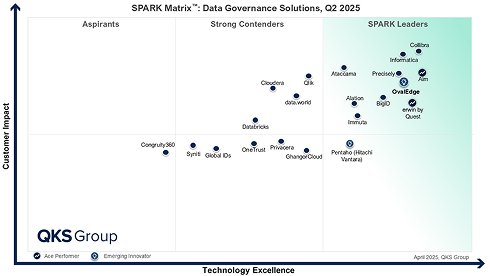
Recognized in the market: Positioned as a SPARK Matrix Leader 2025, reflecting strength in governance capabilities and enterprise adoption.
These capabilities change how governance works in practice by replacing fragmented and manual processes with a system that stays consistent over time. Delta Community Credit Union used OvalEdge to centralize metadata and establish clear governance workflows, which improved data consistency across departments and created a more reliable foundation for decision-making.
If governance depth and faster time-to-value matter, it’s worth seeing how OvalEdge works in your environment
Frequently asked questions
1. What are the best Atlan alternatives?
The top Atlan alternatives include OvalEdge, Alation, Collibra, Microsoft Purview, Informatica, data.world, DataHub, and Secoda. Each platform differs in governance depth, implementation effort, and ecosystem fit, so the right choice depends on your data complexity and use case.
2. Which Atlan competitor is best for enterprise data governance?
OvalEdge is often evaluated as one of the best options when teams need governance, lineage, data quality, and governed self-service in one system, while Collibra and Informatica are considered for structured governance and large-scale environments.
3. Is OvalEdge a better fit than Atlan for regulated industries?
OvalEdge is often a better fit for regulated industries because it supports governance workflows, lineage, and data quality within a single platform. This helps organizations meet compliance, audit, and traceability requirements more effectively than catalog-focused tools.
4. Which Atlan alternatives offer strong data lineage?
OvalEdge, Informatica, and DataHub are known for deeper lineage capabilities. OvalEdge provides column-level lineage with code-level visibility, while Informatica and DataHub support lineage across complex pipelines and multi-system environments.
5. What should buyers compare when evaluating Atlan competitors?
Buyers should focus on governance execution, lineage depth, data quality integration, implementation effort, and long-term cost. It’s also important to compare AI and automation capabilities, especially how well the platform supports metadata curation, self-service, policy execution, and continuous auditability.
6. Which Atlan alternatives are best for complex data ecosystems?
For complex environments, OvalEdge, Informatica, and Collibra are commonly evaluated. These platforms support multi-system integration, governance workflows, and scalability needed for large, distributed data ecosystems.
Unify catalog, lineage, and governance in one platform
OvalEdge combines AI-driven cataloging, AskEdgi-powered self-service, automated lineage, data quality monitoring, and policy enforcement to turn governance into a continuous operating layer across your data ecosystem.
Choosing an Atlan alternative? Start here
- Need governance workflows or only data visibility?
- Single system or multi-platform environment?
- Analyst-only usage or cross-team adoption?
- Immediate time-to-value required?
- Flexible governance and policy configuration needed?
Implement data governance faster with a proven framework
Access a practical 5-step framework used across real deployments to scope, prioritize, and implement governance without over-engineering.
Learn how to identify high-impact use cases and apply AI and automation to reduce manual effort.
Proven by customer successes across industries
.png?width=151&height=151&name=Mask%20group%20(18).png)
How Delta Community Credit Union enhanced its data governance with OvalEdge
"We have seen dramatic results across the board by implementing these programs, centralizing our metadata with the OvalEdge data catalog, and enabling self-service data education."
Dr. Su Rayburn
Vice President, Information Management & Analytics

.png?width=151&height=151&name=Mask%20group%20(19).png)
Bedrock leverages OvalEdge to standardize definitions, improve data accuracy
"OvalEdge stands out for its holistic approach, providing everything from business glossary to data lineage, all seamlessly integrated. The auto-lineage feature saves us months of work, enabling us to quickly understand data flows and address issues at the source.”
Sergei Vandalov
Senior Manager, Data Governance & Analytics

.png?width=151&height=151&name=Mask%20group%20(20).png)
Gousto’s continued data governance journey to deliver exceptional customer experience
“Incorrect pricing, nutritional or allergen information can disrupt the customer experience. With quality data at every stage, Gousto aligns its customer promise with operational excellence.”
Cathy Pendleton
Senior Manager - Data Governance
OvalEdge Recognized as a Leader in Data Governance Solutions
.png?width=1081&height=173&name=Forrester%201%20(1).png)
“Reference customers have repeatedly mentioned the great customer service they receive along with the support for their custom requirements, facilitating time to value. OvalEdge fits well with organizations prioritizing business user empowerment within their data governance strategy.”
.png?width=1081&height=241&name=KC%20-%20Logo%201%20(1).png)
“Reference customers have repeatedly mentioned the great customer service they receive along with the support for their custom requirements, facilitating time to value. OvalEdge fits well with organizations prioritizing business user empowerment within their data governance strategy.”
Gartner, Magic Quadrant for Data and Analytics Governance Platforms, January 2025
Gartner does not endorse any vendor, product or service depicted in its research publications, and does not advise technology users to select only those vendors with the highest ratings or other designation. Gartner research publications consist of the opinions of Gartner’s research organization and should not be construed as statements of fact. Gartner disclaims all warranties, expressed or implied, with respect to this research, including any warranties of merchantability or fitness for a particular purpose.
GARTNER and MAGIC QUADRANT are registered trademarks of Gartner, Inc. and/or its affiliates in the U.S. and internationally and are used herein with permission. All rights reserved.