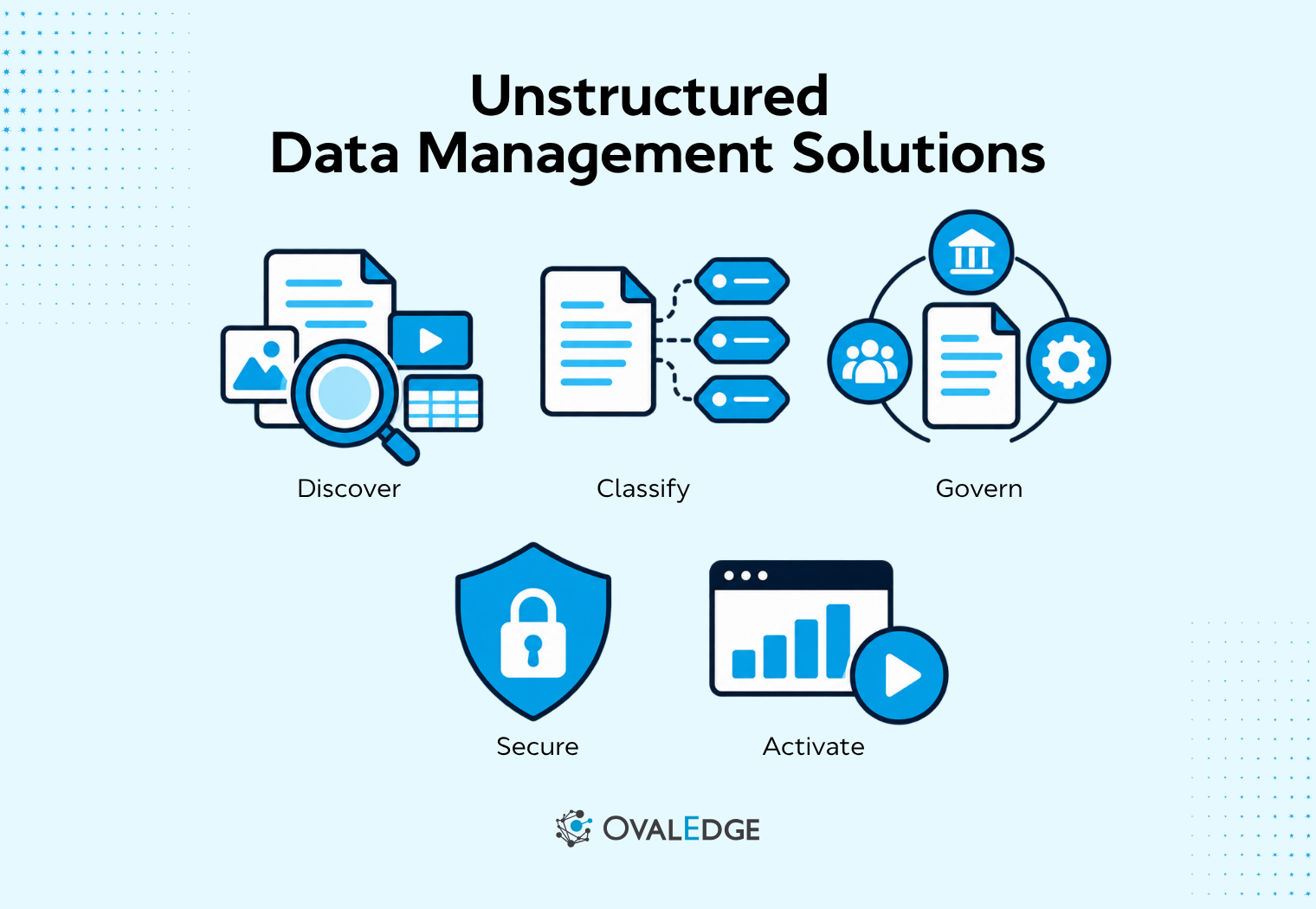
Most enterprise data never makes it into AI or analytics work, and the reason is simple: it lives in emails, PDFs, contracts, and recordings that nobody catalogs, classifies, or governs. Unstructured data management solutions close that gap. They add metadata, classification, and access control to file-based content, so teams can search it, trust it, and actually put it to use. The harder part is picking the right platform.
Data and governance leaders need something that handles discovery, compliance, and AI readiness together, without bolting on another layer of complexity. Here is how ten leading platforms stack up against exactly that
At a glance: how the 10 unstructured data management platforms compare
The ten platforms below split into two groups: some are built around storage economics and file visibility, others around governance and policy control, with security-first tools like Rubrik landing in between. The split matters more than any single feature, since it decides whether a rollout starts with cost savings or with compliance.
|
Platform |
Primary strength |
Best for |
Deployment |
Governance depth |
|
OvalEdge |
Governance |
Enterprises needing unified governance across file systems, databases, cloud storage, and BI tools |
SaaS, customer-managed cloud, on-premises, or hybrid |
High. Metadata-driven discovery, lineage, classification, and policy workflows. |
|
Databricks |
Lakehouse architecture with native ML and NLP pipelines |
AI and ML teams processing unstructured data at scale |
Cloud (AWS, Azure, GCP) |
Moderate. Unity Catalog is built in, but governance depends on configuration. |
|
Microsoft Purview |
Native governance across Microsoft 365 and Azure |
Azure and Microsoft-centric enterprises |
Azure cloud |
High inside the Microsoft ecosystem, limited outside it. |
|
Google Cloud Dataplex |
Unified metadata management for GCP |
GCP-native data teams |
Google Cloud |
Moderate to high inside GCP, limited across other clouds. |
|
Komprise |
File-level analytics and storage cost optimization |
Teams managing large file volumes on a storage-cost budget |
On-premises, cloud, or hybrid, non-disruptive |
Low. Built for visibility, not policy enforcement. |
|
Rubrik |
Data security, backup, and ransomware resilience |
Security-first teams prioritizing data protection |
Cloud and on-premises |
Low to moderate. Sensitive data monitoring is tied to backup, with limited catalog or lineage. |
|
MongoDB |
Flexible document storage for application development |
Dev teams with evolving schemas and AI vector search needs |
Atlas (cloud) or self-managed |
Low. No classification, lineage, or policy enforcement. |
|
Tonic.ai |
Synthetic data and de-identification for regulated environments |
Dev, test, and AI training teams needing safe non-production data |
Cloud or self-hosted |
Low. Privacy-focused, with no discovery or catalog layer. |
|
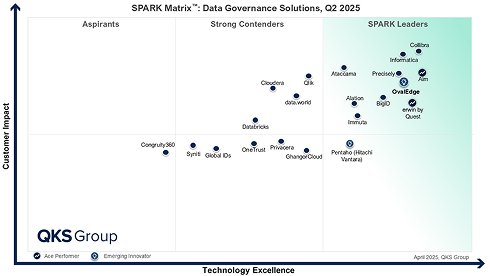
Congruity360 |
Sensitive data discovery and risk scoring |
Compliance teams needing a sensitive-data inventory |
On-premises, cloud, or hybrid |
Moderate. Strong on classification and risk, not a full governance platform. |
|
Apache Atlas |
Open-source metadata and lineage framework |
Engineering teams building a custom governance layer |
Self-hosted, primarily Hadoop ecosystem |
Moderate. Strong metadata and lineage, but requires heavy engineering investment. |
Disclosure: OvalEdge publishes this article and is one of the platforms reviewed below. We've aimed to represent every tool on this list accurately; verify features on each vendor's own site before deciding.
10 best unstructured data management solutions
-2.png?width=1024&height=569&name=Info%202%20(3)-2.png)
Each entry below expands on what the table above summarized, with the specific capabilities, limitations, and best-fit scenarios that decide whether a platform works for a given data estate. OvalEdge leads the list, with the rest following in roughly the order they compete on governance depth.
1. OvalEdge
OvalEdge is a data governance and catalog platform that manages structured and unstructured data together, spanning databases, file systems, cloud storage, and BI tools. Most governance platforms were built for tables and columns, leaving emails, contracts, and recordings to be handled separately. OvalEdge extends the same catalog, lineage, and policy layer across both, so teams work from one governed view instead of stitching tools together.
How it handles governance for unstructured data
-
Enterprise Context Graph: Connects file-level metadata, lineage, and classification into one governed layer, so unstructured content gets the same policy enforcement as structured data.
-
Classification and discovery: Sift discovers content across file stores while Curo classifies sensitive data like PII, and Notary enforces access policy once content is classified.
-
Stewardship workflows: Governance tasks route to the right owner automatically, cutting the manual work that usually stalls unstructured data programs.
-
AI and analytics readiness: Metadata-driven discovery and end-to-end lineage make unstructured assets traceable back to source, which matters once that content feeds AI models or analytics pipelines.
-
Connector coverage: 170+ pre-built connectors bring file stores, cloud storage, and business applications into the same catalog as structured sources.
In practice, a compliance team preparing for a GDPR audit can use Sift to surface every file containing personal data across shared drives and cloud storage, Curo to classify what it finds, and Notary to restrict access to approved users, all inside the same catalog that governs their structured data.
Example:
Consider a government agency facing a public records request with a 10-day deadline: surface every vendor contract above $50K from the past five years. Sift discovers matching contracts across shared drives and document management systems, Curo confirms the classification, and Notary checks access clearance before release, all inside the same catalog.
Customers report reducing the effort required to catalog metadata, fulfill data requests, and compile lineage by up to 40%, per a Forrester Total Economic Impact study.
Watch-outs
OvalEdge is built for organizations with a governance mandate. Teams looking only for lightweight file discovery or storage analytics may find the platform heavier than needed.
Best for
Enterprises managing governance across a mixed structured and unstructured data estate, where file systems and cloud storage need the same policy discipline as databases.
2. Databricks
Overview
Databricks is a unified data lakehouse platform for large-scale data engineering, analytics, and AI workloads. It brings unstructured, semi-structured, and structured data into one architecture, so raw files, documents, logs, images, and audio can be processed through the same ML and NLP pipelines. Teams already invested in the Databricks ecosystem use it to skip a separate unstructured-data tool entirely.
How it handles AI and ML workloads on unstructured data
-
NLP and ML pipelines: Process raw files, documents, logs, images, and audio directly inside the lakehouse instead of moving data to a separate tool.
-
Unity Catalog: Provides a unified metadata layer across the lakehouse, though governance depth depends on how it gets configured.
-
MLflow integration: Tracks models built on unstructured data end-to-end, from experimentation through deployment.
-
Scalability: Handles large data volumes without a separate architecture for bigger workloads.
Watch-outs
Databricks requires significant technical expertise to run well, and governance capabilities depend on proper configuration rather than working out of the box. Cost also escalates substantially at high data volumes.
Best for
AI and ML teams that need to process unstructured data at scale inside a single lakehouse, rather than stitching together separate storage and processing tools.
3. Microsoft Purview
Overview
Microsoft Purview is a unified data governance platform for discovering, classifying, and managing data assets across Microsoft and Azure environments. It reaches into SharePoint, Teams, Exchange, and OneDrive, where most enterprise unstructured content actually lives. Organizations already running on Azure and Microsoft 365 get governance built into the productivity stack instead of bolted on.
How it handles governance across Microsoft 365 and Azure
-
Automated discovery and classification: Scans SharePoint, Teams, Exchange, and OneDrive to find and classify unstructured content automatically.
-
Compliance and policy management: Applies policy controls tied to Microsoft's compliance framework.
-
Data catalog and lineage: Centralizes visibility across data services and productivity tools in one place.
Watch-outs
Purview's flexibility drops outside Azure environments, and setup complexity increases in large, heterogeneous enterprises. Coverage gaps show up for multi-cloud or non-Microsoft infrastructure.
Best for
Enterprises already running data infrastructure on Azure and productivity workloads on Microsoft 365, where governance needs to reach SharePoint, Teams, and OneDrive directly.
4. Google Cloud Dataplex
Overview
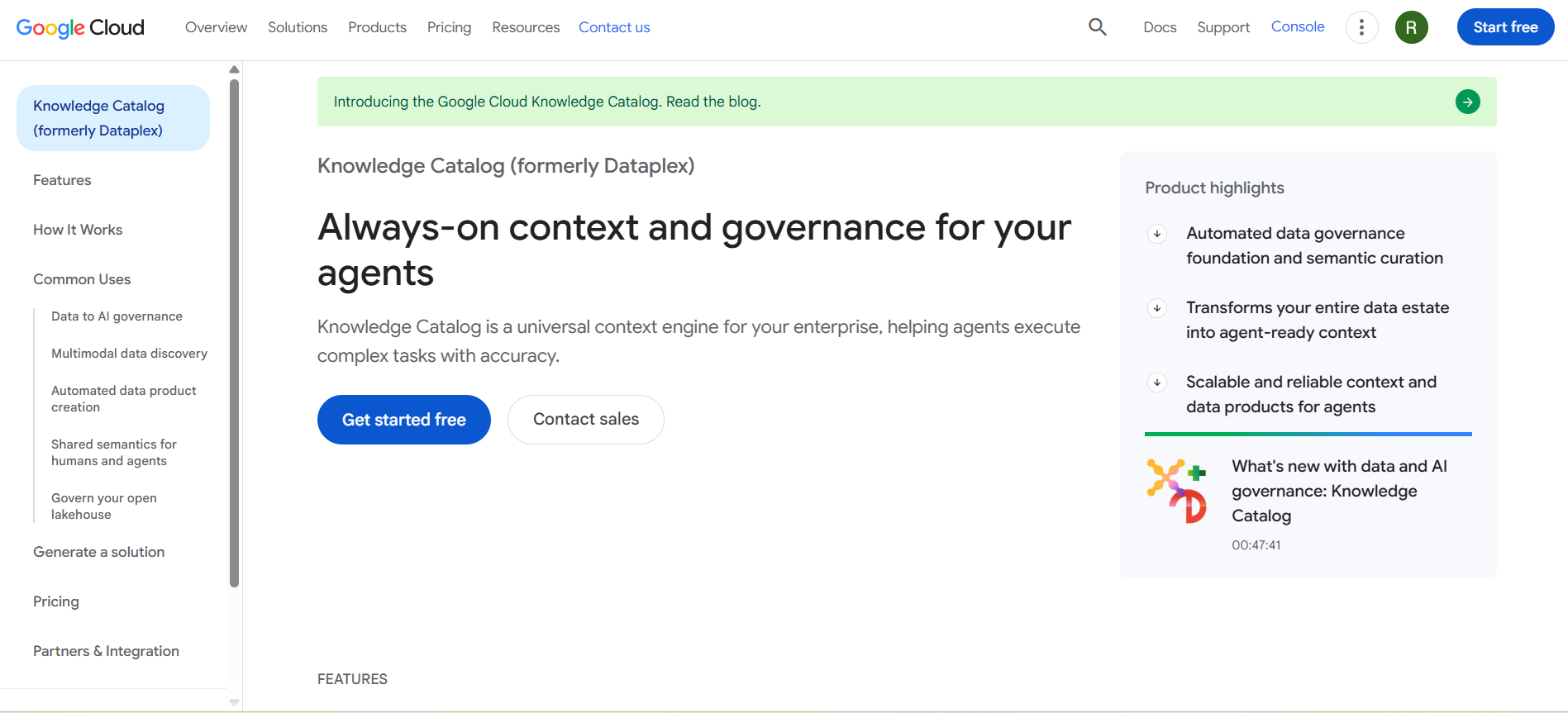
Google Cloud Dataplex is a cloud-native data governance and management platform unifying data discovery, classification, and quality management across Google Cloud. It connects directly to BigQuery and Vertex AI, so governance runs alongside the analytics and AI tools teams already use. GCP-native organizations get this without building a separate catalog layer.
How it handles governance inside Google Cloud
-
Unified metadata management: Centralizes metadata across GCP data sources without a separate catalog build.
-
AI-driven classification: Automates classification and discovery to cut manual governance effort.
-
BigQuery and Vertex AI integration: Connects governance directly to the analytics and AI tools teams already use.
-
Data quality management: Adds quality checks alongside classification, not as a separate step.
Watch-outs
Dataplex is primarily effective within Google Cloud, and cross-cloud governance capability is limited. Multi-cloud organizations typically need a supplementary tool.
Best for
Organizations running data-intensive workloads natively on GCP that want governance without building separate catalog infrastructure.
5. Komprise
Overview
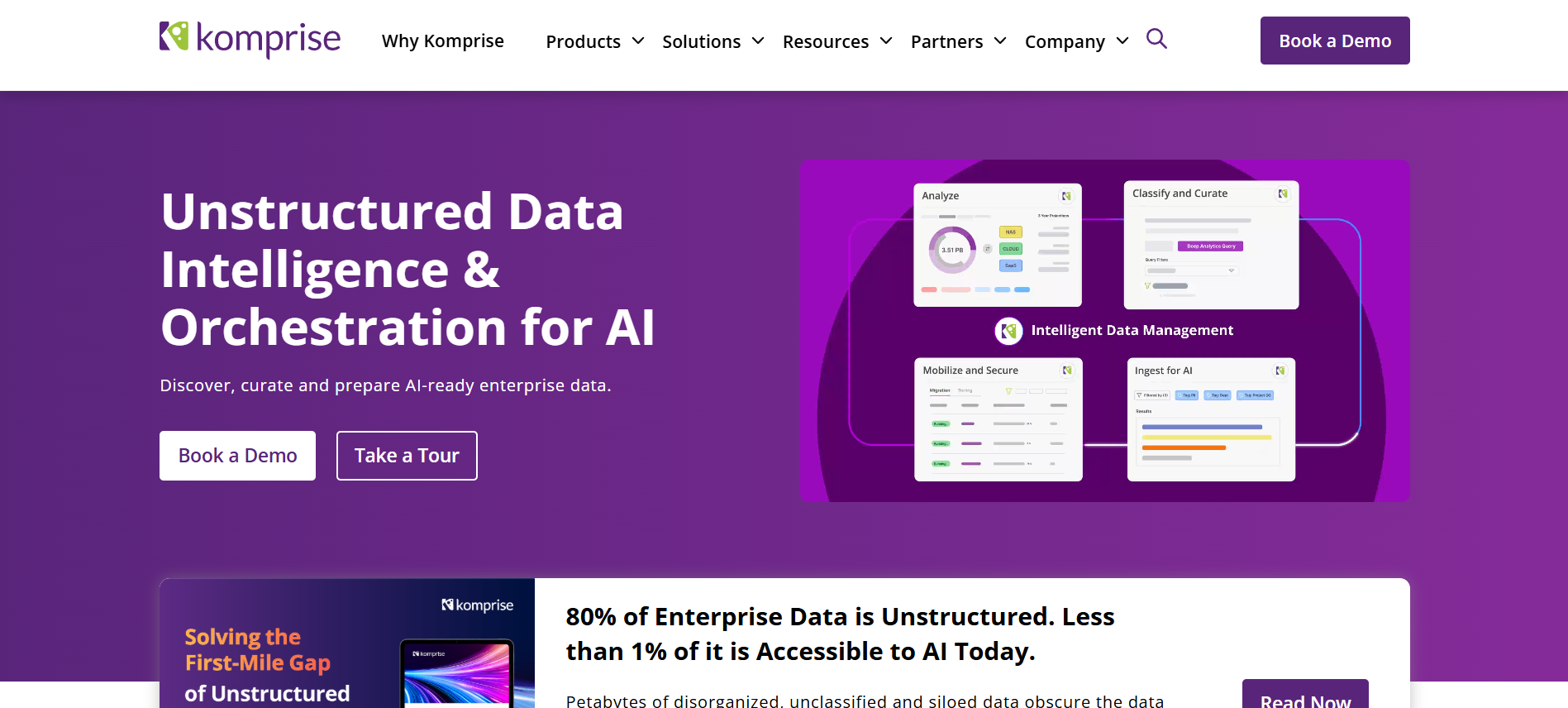
Komprise is a file data management and analytics platform giving enterprises visibility and control over large volumes of unstructured file data across NAS, object storage, and cloud environments. It focuses on where storage costs are climbing, and file growth has outpaced visibility. Deployment runs non-disruptively alongside existing infrastructure, without a migration project.
How it handles unstructured file data at scale
-
File-level analytics: Surfaces visibility into where file-based data lives and how it is used.
-
Lifecycle management: Automates data movement across storage tiers based on usage.
-
Cost optimization: Targets storage spend directly, without disrupting existing workflows.
-
Non-disruptive deployment: Runs alongside existing infrastructure rather than requiring a migration.
Watch-outs
Komprise's governance capabilities are limited, and it is not designed for AI, ML, or analytical workloads. Organizations that need governance depth alongside storage visibility typically pair it with another tool.
Best for
Teams where file-based data has grown large enough that storage costs and visibility are the immediate problem, ahead of governance.
6. Rubrik
Overview
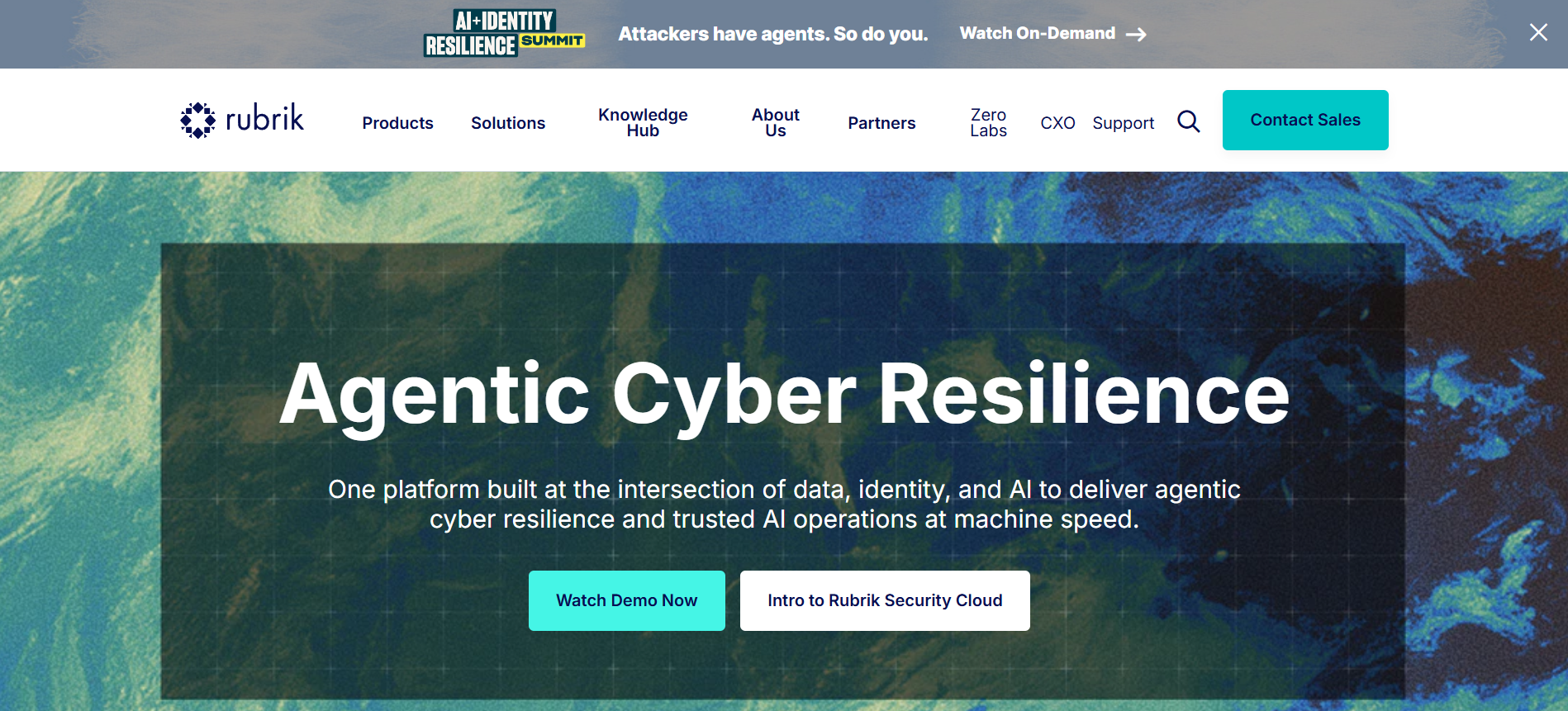
Rubrik is a data security and cloud data management platform protecting, monitoring, and recovering unstructured and structured data across enterprise environments. It leads with ransomware resilience and backup, folding sensitive data monitoring into that same protection workflow. Security-first teams use it where data protection is the immediate priority, ahead of cataloging.
How it handles data protection for unstructured data
-
Sensitive data monitoring: Flags sensitive content as part of the backup and protection workflow.
-
Backup and recovery: Covers unstructured and structured data together under one recovery plan.
-
Threat detection: Watches for ransomware and other threats across protected data.
-
Compliance reporting: Generates audit-ready reporting tied to protection activity.
Watch-outs
Rubrik is primarily a data protection platform, so metadata catalog, lineage, and discovery capabilities are limited. It usually needs pairing with a governance platform for broader coverage.
Best for
Security-first teams where ransomware resilience and data protection are the priority, with sensitive data visibility as a byproduct of backup rather than the main goal.
7. MongoDB
Overview
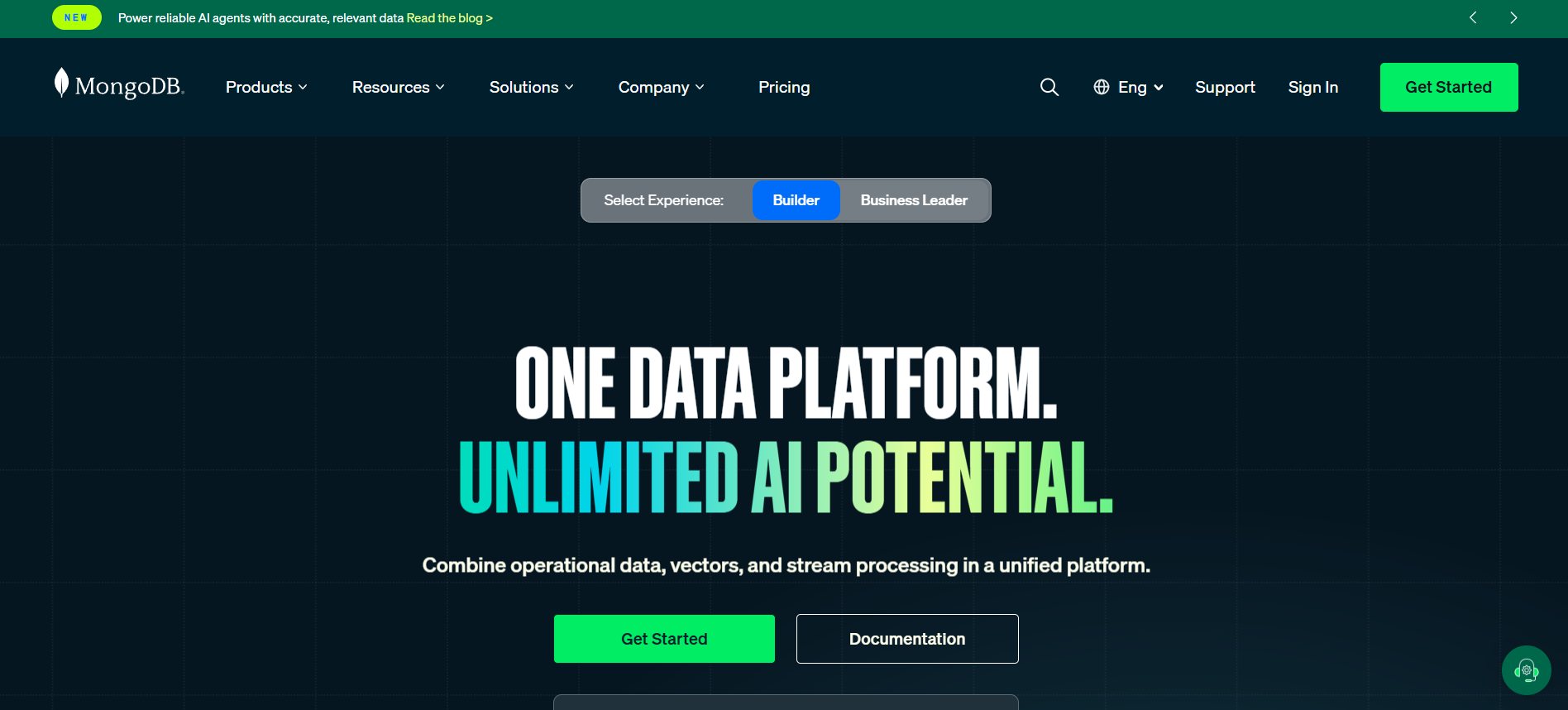
MongoDB is a document database platform for storing, querying, and scaling semi-structured and unstructured data in flexible JSON-like documents. It fits application development where data schemas evolve quickly, and rigid relational structures create bottlenecks. Native vector search extends it into AI use cases without a separate search layer.
How it handles flexible, fast-changing data
-
Flexible document storage: Adapts to evolving schemas without the rigid structure of relational databases.
-
Atlas platform: Runs as a managed cloud service or self-managed deployment.
-
Vector search: Supports AI use cases natively, without a separate search layer.
-
Horizontal scalability: Scales with relatively low operational overhead as data grows.
Watch-outs
MongoDB is not a data governance platform. It lacks classification, lineage, and policy enforcement, so enterprises with compliance needs typically need additional tooling alongside it.
Best for
Application development teams building on fast-changing schemas, where document flexibility matters more than built-in governance.
8. Tonic.ai
Overview
Tonic.ai is a data privacy and synthetic data platform helping organizations safely use sensitive data in non-production environments, including development, testing, and AI model training. It targets regulated industries that cannot use production data directly for those workflows. Masking and synthetic generation extend across both unstructured and structured content.
How it handles sensitive data for AI training
-
Data masking and de-identification: Strips or obscures sensitive fields before data reaches non-production environments.
-
Synthetic data generation: Creates realistic but non-sensitive data for testing and model training.
-
Privacy compliance support: Built around regulated-industry requirements from the start.
-
Unstructured data handling: Extends de-identification to unstructured content, not just structured tables.
Watch-outs
Tonic.ai is not a complete unstructured data management solution. It has no discovery, lineage, or catalog capabilities, and stays narrowly focused on privacy and de-identification.
Best for
Regulated-industry teams that need safe, realistic data for development and AI training without exposing production data.
9. Congruity360
Overview
Congruity360 is a data classification and risk management platform that discovers, classifies, and prioritizes sensitive and high-risk data across file systems, cloud storage, and collaboration environments.
It focuses on compliance-driven organizations that need sensitive-data understanding without adopting a full enterprise governance platform. Risk scoring keeps compliance teams working the highest-priority findings first.
How it handles sensitive data discovery and risk
-
Sensitive data discovery: Scans file systems and collaboration tools to surface sensitive content.
-
Risk scoring: Prioritizes findings so compliance teams work the highest-risk items first.
-
File-level classification: Tags sensitive data at the file level for downstream handling.
-
Compliance reporting: Documents sensitive data inventory for audit readiness.
Watch-outs
Congruity360's broader data management capabilities are limited, with no AI/ML readiness, lineage, or catalog features. It usually needs pairing with a governance platform for coverage beyond classification.
Best for
Compliance-driven teams that need a sensitive-data inventory and risk prioritization without adopting a full enterprise governance platform.
10. Apache Atlas
Overview
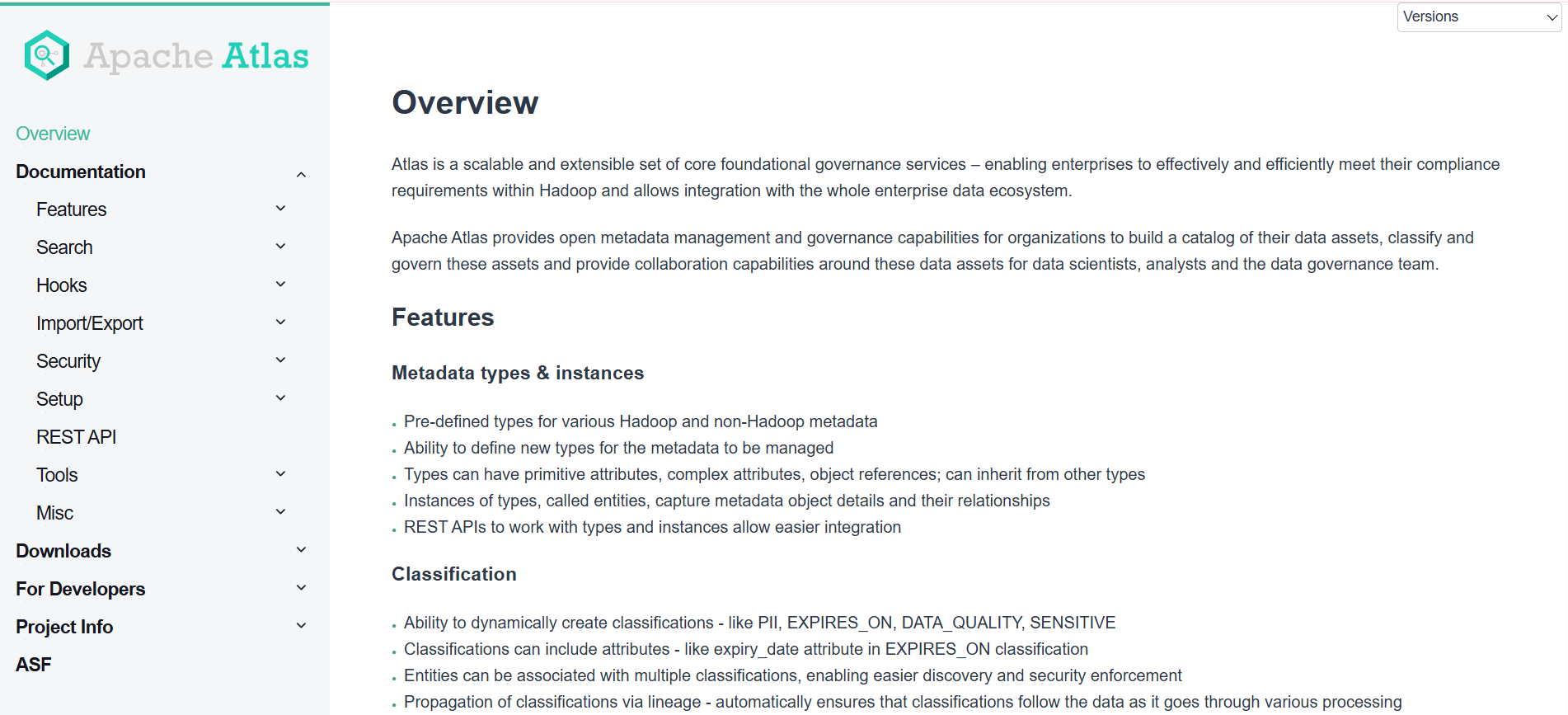
Apache Atlas is an open-source metadata management and data governance framework originally developed for Hadoop. It fits engineering teams that want to build and operate their own governance layer without vendor lock-in or licensing costs. The trade-off is substantial engineering effort to deploy and maintain.
How it handles metadata and lineage
-
Metadata management: Tracks technical metadata across connected systems.
-
Lineage tracking: Traces data movement and transformation through the pipeline.
-
Classification and tagging: Supports custom taxonomies for governance teams to define.
-
Extensible architecture: Built to be configured and extended by engineering teams directly.
Watch-outs
Apache Atlas requires substantial engineering effort to deploy, configure, integrate, and maintain, with limited out-of-the-box enterprise features compared to commercial alternatives. Upgrades, scaling, and reliability stay an ongoing operational burden.
Best for
Engineering teams that want full control over their governance layer and are prepared to build and maintain it themselves, without vendor lock-in.
Key capabilities to evaluate in unstructured data management solutions
-1.png?width=1024&height=569&name=info%201%20(2)-1.png)
This section replaces the current 5 H3s (metadata extraction, classification, search/discovery, governance/compliance, integration) with the 7 that match the fan-out query language directly.
1. Governance and policy control
Governance-first platforms like OvalEdge, Microsoft Purview, and Apache Atlas apply classification, lineage, and access policy directly to file-based content, closing the gap that leaves unstructured data outside standard governance controls. OvalEdge routes classified content through Curo and Notary automatically, while Purview and Atlas require more manual policy configuration to reach the same coverage.
2. Compliance coverage (GDPR, HIPAA, AI Act)
OvalEdge, Microsoft Purview, and Congruity360 lead on compliance coverage for unstructured data, each mapping classification results to regulatory categories like PII, PHI, and financial records. OvalEdge and Purview extend that mapping into enforceable policy, while Congruity360 stops at classification and risk scoring, leaving enforcement to a separate system.
3. Security and access control
Rubrik, OvalEdge, and Microsoft Purview offer the strongest access control for unstructured data, though each comes at it differently. Rubrik ties access monitoring to backup and threat detection, OvalEdge enforces access policy through Notary once content is classified, and Purview applies Microsoft's native compliance and access framework across Microsoft 365.
4. Scalability across storage tiers
Databricks, Komprise, and OvalEdge scale differently depending on what is actually growing. Databricks scales compute for AI and ML workloads, Komprise scales storage visibility and cost control across tiers, and OvalEdge scales governance coverage as more of the data estate gets connected.
5. Flexibility across data types
MongoDB, Databricks, and OvalEdge handle the widest range of data types without forcing a rigid structure. MongoDB adapts to evolving application schemas, Databricks processes files, logs, images, and audio through the same pipelines, and OvalEdge catalogs structured and unstructured sources under one governed layer.
6. Customer support and implementation
Komprise and Tonic.ai are typically the fastest to implement, since both run non-disruptively alongside existing infrastructure. OvalEdge and Microsoft Purview take longer to reach full coverage, since governance value scales with how much of the data estate gets connected and configured.
7. Storage capacity and cost
Komprise is built specifically around storage cost, tracking file-level usage to optimize spend across tiers. Databricks and OvalEdge are not storage-cost tools by design; their cost tracks compute and governance scope instead, so teams focused purely on storage economics should start with Komprise.
How to choose the right unstructured data management solution
The right pick depends on which constraint matters most: what the data is being used for, how it fits the existing architecture, or how fast it needs to scale. The three lenses below use only the platforms already covered above, matched to the specific problem each one solves best.
1. Based on the primary use case
For AI training and synthetic data needs, Tonic.ai handles de-identification and synthetic generation directly. For storage cost and lifecycle control, Komprise targets spend across tiers without disrupting workflows. For governance discipline across a mixed data estate, OvalEdge extends the same policy layer to both structured and unstructured sources.
2. Based on architecture
For teams standardized on a lakehouse, Databricks keeps unstructured processing inside the same architecture as structured data. For teams on Azure and Microsoft 365, Purview reaches governance into SharePoint, Teams, and OneDrive natively. For hybrid environments spanning legacy systems and multiple clouds, OvalEdge connects across the estate rather than locking into one platform.
3. Based on scale and integration needs
For petabyte-scale file growth, Komprise tracks usage and cost as volume increases. For large-scale AI and analytics workloads, Databricks scales compute alongside the data itself. For organizations connecting many source systems at once, OvalEdge's 170+ pre-built connectors bring file stores, databases, and cloud storage into one catalog without a separate integration project for each source.
Conclusion
Unstructured data keeps growing faster than any other type, and most of it stays ungoverned because it was never built to fit standard classification, lineage, or policy tools. The gap now carries real cost: ungoverned files slow AI initiatives, widen compliance exposure, and leave teams unable to say where sensitive content lives or who can reach it.
OvalEdge closes that gap by extending its Enterprise Context Graph across file-based content, the same governed layer that already covers structured data. Curo classifies sensitive content, Notary enforces access policy once it's found, and both report into one audit trail instead of a separate system for files.
Book a demo to see how OvalEdge brings unstructured data under the same governance discipline as everything else in the catalog.
.png?width=1081&height=173&name=Forrester%201%20(1).png)
.png?width=1081&height=241&name=KC%20-%20Logo%201%20(1).png)