Precisely Alternatives: Find the Right Tool for Governance Beyond MDM
Evaluate leading competitors across governance workflows, data quality coverage, lineage, and AI-driven automation to find the right fit beyond master data management.
In this article
What are the best Precisely alternatives?
The best Precisely alternatives include OvalEdge, Alation, Informatica, Talend, Reltio, and Alteryx. Each serves a different need across governance, integration, and MDM:
-
OvalEdge: Unified governance platform with built-in catalog, lineage, data quality, and AI-driven workflows
-
Alation: Data catalog focused on discovery, stewardship, and governance adoption
-
Informatica: Enterprise-grade integration, MDM, and governance for complex environments
-
Talend: Flexible data integration and pipeline management with strong cloud support
-
Reltio: Cloud-native MDM platform for mastering customer and business data
-
Alteryx: Self-service data preparation and analytics for business users
The right choice depends on whether you prioritize governance execution, data integration, MDM capabilities, cloud flexibility, or implementation cost. Let’s compare these Precisely alternatives side by side.
Precisely alternatives compared
Here’s a quick comparison of the top Precisely alternatives based on what actually drives buying decisions.
|
Tool |
Best for |
Core strength |
AI capability |
Limitation |
|
OvalEdge |
Unified governance + catalog |
Integrated catalog, lineage, quality |
Agentic AI + governed analytics |
No native MDM |
|
Alation |
Data discovery + stewardship |
Strong catalog + collaboration |
AI-assisted search |
Limited governance execution |
|
Informatica |
Enterprise data management |
Integration + MDM scale |
CLAIRE AI engine |
High cost, complex setup |
|
Talend |
Data integration pipelines |
ETL/ELT + data movement |
Data quality automation |
Limited governance depth |
|
Reltio |
Master data management |
Cloud-native MDM |
AI-driven entity resolution |
Narrow beyond MDM |
|
Alteryx |
Self-service analytics |
Data prep + automation |
ML-assisted workflows |
Not a governance platform |
This comparison highlights a clear divide: some tools focus on integration or MDM, while others focus on governance. The right choice depends on which layer of the data stack you’re trying to solve for.
What users say about Precisely
Precisely works well for organizations focused on master data management and maintaining the integrity of core business records. It is commonly used in enterprise environments where customer, vendor, or product data accuracy is a priority, especially in regulated industries.
Based on reviews, Precisely is strong in the following areas:
-
Strong MDM capabilities: Reliable for maintaining and enriching core entities such as customer and vendor records, with structured workflows for consistency
-
Enterprise fit: Commonly used in large environments where data integrity and compliance requirements are well defined
However, as teams extend beyond MDM, certain gaps become more visible:
-
Narrow focus on master data: Capabilities are centered around core records, with limited coverage across operational data pipelines and broader data quality needs
-
Fragmented experience: Governance, enrichment, and data quality workflows often operate across separate modules rather than a unified system
-
Complex ownership and stewardship: Managing workflows, ownership, and enrichment across teams requires coordination and can be difficult to scale
-
High total cost of ownership: Licensing and services increase significantly as more modules and use cases are added
-
Limited governance execution: Focus remains on data integrity, while end-to-end governance workflows are harder to operationalize
These patterns also align with internal discussions, where Precisely is seen as MDM-focused, while governance execution across pipelines and processes remains a gap. These limitations push teams to evaluate alternatives based on what they actually need to solve next.
Best Precisely alternatives for your use case
Different tools are built to solve different data challenges. The right choice depends on whether your priority is MDM, data integration, or broader governance across your data ecosystem.
Below, we group the top Precisely alternatives by use case so you can evaluate which platform aligns best with what your teams actually need to solve.
|
Did you know? Governance gaps are now directly slowing down AI adoption. Deloitte 2025 GenAI enterprise survey highlights that 38% of organizations cite regulatory compliance as the top barrier to GenAI adoption, and 32% struggle with managing AI risks. This is where traditional data integrity tools fall short. Teams need platforms that support compliance workflows, audit trails, and risk monitoring as part of everyday data operations. |
Tools for unified data governance and cataloging
These tools are designed for teams that want governance, cataloging, lineage, and data quality to function as one connected system instead of separate modules.
1. OvalEdge
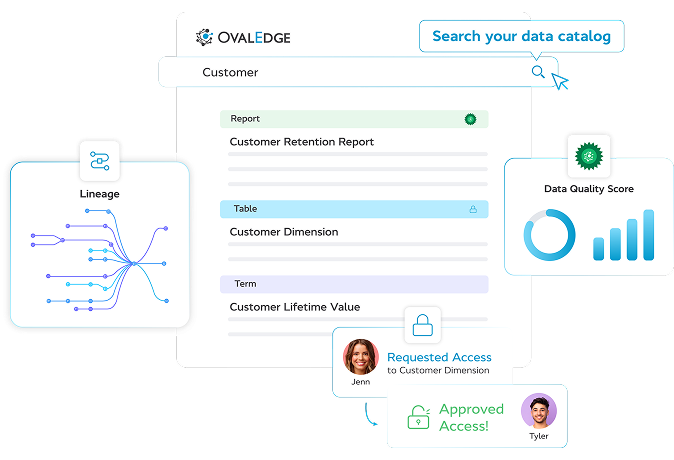
OvalEdge is a unified data governance platform that brings catalog, lineage, data quality, access control, and governance workflows into one system. It focuses on faster time-to-value and practical adoption by combining built-in workflows with AI-driven automation, so teams can start governing data early instead of spending months on setup.
What is it used for
OvalEdge is used to manage governance as an ongoing operational process rather than a static initiative. Teams rely on it to build and maintain a data catalog, define business glossaries, track lineage, monitor data quality, and enforce access policies within the same environment.
It connects governance directly with how data is used. Business users can understand data through the catalog and glossary, while technical users manage pipelines, lineage, and quality. This shared system reduces dependency on separate tools and helps teams work with the same context.
When teams evaluate it against Precisely
Teams usually evaluate OvalEdge when their needs extend beyond master data management and into broader governance and data usage. Precisely is often adopted for MDM, but teams start exploring alternatives when they need a more connected approach to managing data across pipelines, processes, and users.
It is considered in situations where:
-
When data quality needs to be managed across operational pipelines
-
When lineage and impact analysis are required to understand the downstream effects of changes
-
When governance workflows involve multiple teams and need to be easier to execute
-
When business users need direct access to trusted data instead of relying on technical teams
-
When faster implementation and early adoption are critical
In these scenarios, OvalEdge is considered because it reduces setup effort, connects governance components in one system, and makes it easier for teams to move from planning governance to actually using it.
What changes after adoption
Once OvalEdge is implemented, teams move beyond managing master data integrity to actively governing how data is created, used, and trusted across the organization. Governance becomes part of daily workflows instead of a separate initiative.
-
Faster time to value: Teams start operationalizing governance within weeks using prebuilt workflows, connectors, and AI-assisted setup
-
Higher business adoption: Business users engage directly with the catalog and glossary, making governance part of everyday data usage
-
Governance that runs end-to-end: Workflows for defining terms, assigning ownership, and enforcing policies are executed within the platform instead of manual coordination
-
Continuous visibility across data flows: Lineage and impact analysis stay current as systems evolve, helping teams understand how data moves and where changes matter
-
Broader data quality coverage: Data quality is tracked across pipelines, business processes, and data assets, not limited to master data alone
-
Support for AI readiness: Governance outputs feed directly into AI use cases, ensuring data used for analytics and AI is consistent, validated, and usable
-
Lean operating model: Teams can manage governance without large dedicated resources, since automation handles much of the ongoing effort
This shift is where OvalEdge differs. Instead of focusing only on master data integrity, it helps teams govern, understand, and use data across the full data ecosystem.
|
Did you know? Most organizations are rethinking how governance actually runs day to day. According to the 2025 State of Enterprise Data Governance report, 54% of governance modernization efforts now focus on embedding governance directly into workflows and increasing automation, instead of just defining policies. This shift explains why execution matters for data intelligence platforms. Governance delivers value only when it becomes part of how teams work, not just how it is documented. |
AI governance and automation capabilities
OvalEdge uses accelerated data governance powered by AI agents and AskEdgi recipes to reduce manual effort and improve how governance is executed across teams. The system continuously analyzes data, suggests actions, and supports users with guided decisions so governance progresses as part of everyday workflows.
- Agentic governance automation: AI agents discover, organize, and enrich data assets, then route approvals to the right users so governance progresses without manual tracking
- AI-assisted glossary creation: The platform analyzes usage patterns to suggest business terms and identify the right owners, reducing the effort needed to build a glossary
- Automated data quality management: AI detects anomalies, highlights data quality gaps, and suggests rules to improve data reliability across systems
- Governed self-service analytics: askEdgi allows users to ask questions in natural language and receive answers grounded in approved metadata, ensuring consistency in how data is interpreted
- AI-powered lineage and impact analysis: Lineage is inferred and updated continuously, helping teams understand how changes affect downstream systems without manual mapping
- Privacy and access automation: Sensitive data is identified automatically, and access policies are enforced based on roles and compliance requirements
OvalEdge also supports governance of AI by ensuring that all AI-driven outputs are grounded in validated metadata. This helps teams maintain control over how data is used in AI systems, reducing the risk of incorrect or unverified responses.
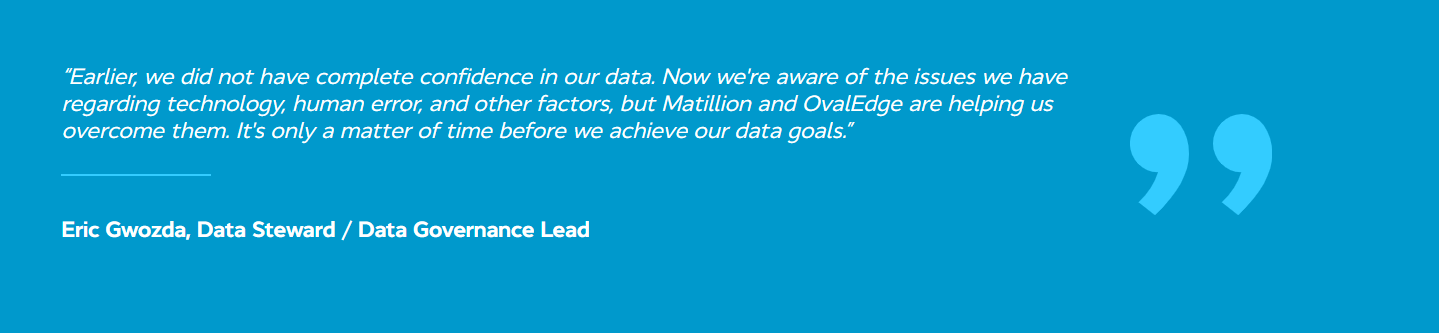
In the case of Bayview, OvalEdge’s AI-driven governance capabilities helped standardize data definitions and improve visibility across systems. The team was able to understand data flows more clearly through automated lineage and impact analysis. This reduced manual effort and enabled faster issue resolution, which directly improved confidence in data used for decision-making and analytics.
|
Did you know? Turning AI governance into repeatable execution is still a challenge. According to the 2025 PwC report, 50% of organizations say their biggest challenge is turning Responsible AI into repeatable processes. This gap highlights the need for systems that operationalize AI governance. Platforms need to move beyond policies and actively support how AI is built and used across teams. |
Things to consider
Before choosing OvalEdge, it’s important to understand where it fits best and how it aligns with your requirements.
-
No native MDM: If your primary need is master data management, you may need to pair it with an MDM solution
-
Best for governance-led use cases: Delivers the most value when catalog, lineage, quality, and workflows are core priorities
-
Early-stage to mid-maturity teams: Works well for teams looking to operationalize governance without large dedicated resources
-
Process alignment required: Teams need to adopt structured workflows to fully benefit from automation
Ratings, reviews, and analyst validation
OvalEdge’s capabilities are consistently validated across user reviews and analyst recognition, reflecting real-world adoption and outcomes.
-
On G2, users highlight ease of use, faster onboarding, and strong lineage capabilities
-
Reviews on Gartner Peer Insights highlight that customers emphasize integrated governance features and responsive support
-
TrustRadius has reviews that point to quick implementation, business-user adoption, and comprehensive functionality across catalog, lineage, and quality
Across platforms, a consistent pattern emerges. Teams value how quickly they can move from setup to usage, how easily business users engage with the system, and how governance workflows translate into actual execution.
Did you know?Independent analysis shows the impact goes beyond feature depth. A Forrester Total Economic Impact study found that organizations using OvalEdge achieved 337% ROI with payback in under 6 months. This reflects how teams use the platform in practice, where automation reduces manual effort and governance becomes part of daily workflows instead of a separate initiative. |
If you are evaluating Precisely alternatives, the next step is understanding how OvalEdge fits your specific environment.
Book a demo and see how OvalEdge compares in your environment.
2. Alation
Alation is a data catalog platform focused on helping teams discover, understand, and document data. It emphasizes metadata management, collaboration, and stewardship to improve how users find and use data across the organization.
What is it used for
Alation is used to create a centralized catalog of data assets and make them easier to discover and understand. Teams use it to document datasets, define business terms, and enable collaboration between data producers and consumers.
It is commonly used to improve data discovery and encourage data usage across business teams. The platform helps users search for data, understand context, and identify trusted sources before using them for analysis.
When teams evaluate it against Precisely
Teams evaluate Alation when they want to improve how data is discovered and documented, especially when existing systems do not provide clear visibility into available datasets.
It is considered when the need shifts from managing data integrity to helping users find and understand data more easily. Organizations also look at Alation when they want to build a structured catalog that supports governance efforts through documentation and stewardship.
What changes after adoption
After adopting Alation, teams typically see improvements in how data is accessed and understood.
-
Better data discovery: Users can search and locate relevant datasets without relying on informal knowledge or manual coordination
-
Improved documentation: Data assets and business terms are defined more consistently, which helps reduce confusion
-
Increased collaboration: Data teams and business users interact more through shared context and documentation
-
Clearer data ownership: Roles and responsibilities become more visible through stewardship features
These changes are often centered around improving visibility and usage rather than enforcing governance workflows.
Things to consider
-
Limited governance execution: The platform focuses on cataloging and documentation, with less emphasis on enforcing governance workflows
-
Dependence on manual stewardship: Metadata curation and updates often require ongoing human effort
-
Additional tools may be required: Data quality, lineage depth, and policy enforcement may need separate solutions
-
Adoption depends on usage: Value increases as more users actively contribute and maintain the catalog
Also read → Looking for Alation alternatives in 2026? Compare tools before you buy
Tools for data integration and pipeline management
These tools are suited for teams that need to move, transform, and manage data across systems at scale, especially when integration is the primary requirement.
3. Informatica
Informatica is an enterprise data management platform that supports data integration, ETL, and ELT pipelines, and master data management. It is often used in large environments where multiple systems need to be connected and managed in a structured way.
What is it used for
Informatica is used to build and manage data pipelines across cloud and on-premise systems. Teams use it to ingest data, transform it, and deliver it to downstream systems such as data warehouses and analytics platforms.
It is also used for master data management and data governance capabilities within enterprise setups. Organizations rely on it when they need centralized control over data movement and consistency across multiple systems.
When teams evaluate it against Precisely
Teams evaluate Informatica when their focus is on large-scale data integration rather than just data integrity. It is considered when organizations need a unified platform that can handle ETL workflows along with MDM and governance components.
It also comes into consideration when teams want to consolidate multiple data management functions into a single enterprise platform, especially in environments with complex data flows and multiple data sources.
What changes after adoption
After adopting Informatica, teams typically gain more control over how data moves across systems.
-
Centralized data pipelines: Data ingestion and transformation processes are managed within a single system
-
Standardized data movement: Workflows become more consistent across teams and systems
-
Improved data consistency: Data transformations follow defined logic, which reduces variation across outputs
-
Broader enterprise coverage: Multiple data management functions can be handled within the same platform
These changes are most visible in environments where integration and data movement are the primary challenges.
Things to consider
-
Complex implementation: Setup often requires planning, configuration, and coordination across teams
-
Higher cost of ownership: Licensing, infrastructure, and support can increase total cost over time
-
Requires specialized skills: Managing and maintaining the platform may require experienced technical teams
-
Slower time to value: Full adoption can take time, especially in large enterprise environments
Also read → The best Informatica alternatives compared in 2026
4. Talend
Talend is a data integration platform focused on building and managing ETL and ELT pipelines across cloud and hybrid environments. It supports data ingestion, transformation, and quality processes within a unified development framework.
What is it used for
Talend is used to move and transform data between systems such as databases, applications, and cloud platforms. Teams use it to build pipelines that prepare data for analytics, reporting, and downstream applications.
It also includes data quality features that help standardize and validate data during pipeline execution. This makes it useful for teams that want to combine integration and data preparation within the same workflow.
When teams evaluate it against Precisely
Teams evaluate Talend when they need more flexibility in building and managing data pipelines, especially in cloud-based environments. It is considered when integration requirements extend beyond data integrity and require active data movement and transformation across systems.
It also becomes relevant when teams want more control over how pipelines are designed and executed, rather than relying on predefined modules or workflows.
What changes after adoption
After adopting Talend, teams typically see improvements in how data is prepared and delivered across systems.
-
Greater control over pipelines: Teams can design and manage data flows based on specific use cases
-
Improved data preparation: Data is cleaned and standardized as part of the pipeline process
-
Faster data availability: Data can be moved and transformed more frequently to support analytics needs
-
Better alignment with cloud workflows: Pipelines can be built and deployed across modern data platforms
These changes are most noticeable in environments where data movement and transformation are ongoing requirements.
Things to consider
-
Limited governance depth: The platform focuses on integration, with less emphasis on governance workflows and policy enforcement
-
Requires technical expertise: Building and maintaining pipelines often requires skilled developers
-
Separate tools for full coverage: Additional platforms may be required for cataloging, lineage, and governance
-
Maintenance overhead: Pipelines need regular updates as data sources and requirements change
Tools for MDM and advanced data quality
These tools are used when the priority is to manage core business entities and ensure consistency of key data such as customers, products, or vendors across systems.
5. Reltio
Reltio is a cloud-native master data management platform designed to unify and maintain core business entities across systems. It focuses on creating a consistent and accurate view of data such as customer, product, and supplier records.
What is it used for
Reltio is used to consolidate and manage master data from multiple sources into a single, reliable view. Teams use it to match, merge, and enrich records so that key entities remain consistent across applications.
It also supports data stewardship and governance around master data. This helps organizations maintain accuracy as data changes over time and as new sources are added.
When teams evaluate it against Precisely
Teams evaluate Reltio when they want a cloud-native approach to master data management. It is considered when the primary requirement is to unify and manage core business entities rather than extend governance across the broader data ecosystem.
It also becomes relevant when organizations are moving away from on-premise systems and want to manage master data within modern cloud environments.
What changes after adoption
After adopting Reltio, teams typically gain more consistency in how core data is managed.
-
Unified master records: Data from multiple systems is consolidated into a single view
-
Improved data accuracy: Matching and merging processes reduce duplication and inconsistencies
-
Centralized stewardship: Data ownership and updates are managed within defined workflows
-
Better data synchronization: Changes to master data are reflected across connected systems
These changes are most visible in use cases where accurate and consistent master data is critical to operations.
Things to consider
-
Focused on MDM: Reltio performs well for managing core business entities, but does not extend into broader data governance or operational data quality across pipelines
-
Limited coverage beyond master data: Data outside customer, product, or vendor domains may require additional tools
-
Implementation effort: Defining match rules, hierarchies, and stewardship workflows can take time
-
Separate systems required: Catalog, lineage, and enterprise-wide governance capabilities are typically handled outside the platform
6. Alteryx
Alteryx is an analytics automation platform that helps teams prepare, blend, and analyze data through a visual workflow interface. It focuses on enabling business users and analysts to work with data without relying heavily on engineering teams.
What is it used for
Alteryx is used to clean, transform, and combine data from different sources before it is used for reporting or analysis. Teams use it to automate repetitive data preparation tasks and create workflows that can be reused across projects.
It is commonly used by analysts who need to work directly with data and want a faster way to prepare datasets without writing code. The platform also supports advanced analytics and model building within the same environment.
When teams evaluate it against Precisely
Teams evaluate Alteryx when their focus is on data preparation and analytics rather than managing data integrity or master data. It is considered when users need more flexibility in shaping datasets and running analysis without depending on centralized data engineering processes.
It also becomes relevant when business teams want more direct control over how data is prepared and used for decision-making.
What changes after adoption
After adopting Alteryx, teams typically see changes in how data is prepared and used across business functions.
-
Faster data preparation: Analysts can clean and transform data without waiting for upstream changes
-
Greater self-service capability: Business users work directly with data using visual workflows
-
Repeatable processes: Data preparation steps are saved as workflows and reused across projects
-
Improved turnaround time: Reports and analyses can be delivered more quickly
These changes are most visible in teams that rely heavily on manual data preparation for reporting and analytics.
Things to consider
-
Not a governance platform: The platform focuses on analytics and data preparation, and not governance workflows
-
Limited control over upstream data: Changes made in workflows do not always address root data issues
-
Requires user discipline: Consistency depends on how workflows are created and maintained
-
Additional tools needed: Cataloging, lineage, and enterprise-wide data governance require separate solutions
Also read → Compare OvalEdge vs Alation vs Collibra vs Informatica side-by-side
Not sure which Precisely alternative fits your use case?
Get a tailored walkthrough based on your data stack and governance needs.
OvalEdge vs Precisely: side-by-side comparison
This comparison focuses on how both platforms perform in real evaluation scenarios, especially when teams move from data integrity to broader governance execution.
|
Factor |
OvalEdge |
Precisely |
|
Positioning |
Unified data governance and AI-ready data platform |
Data integrity and master data management |
|
Data governance capability |
Built-in workflows across catalog, glossary, lineage, and access |
Limited governance beyond MDM modules |
|
Data integration |
Connectors + metadata ingestion |
Strong integration tied to MDM and enrichment |
|
Data quality support |
Covers data quality debt, pipelines, and processes |
Focused on master data integrity |
|
Lineage depth |
Auto-generated lineage with impact analysis |
Limited and not central to platform |
|
AI capability |
Agentic AI for governance, askEdgi for queries |
Basic observability and enrichment features |
|
Setup effort |
Out-of-the-box workflows, minimal configuration |
Requires setup across multiple modules |
|
Time-to-value |
Weeks to operational governance |
Longer rollout cycles |
|
User adoption |
Designed for business + technical users |
More dependent on technical teams |
|
Flexibility (cloud / hybrid) |
Supports cloud and hybrid environments |
Often tied to existing data stacks |
|
Implementation effort |
Medium to low (supports implementation) |
Medium |
|
Cost model |
Lower implementation and team overhead |
Higher cost due to licensing and services |
|
G2 rating |
Higher satisfaction with usability and adoption |
Lower on usability and complexity |
|
Best fit |
Governance-led teams, AI readiness, lean teams |
MDM-heavy environments |
When Precisely fits better:
If your primary requirement is master data management and you are focused on maintaining high integrity for core business entities like customer or vendor records, Precisely aligns well with that need. It also fits organizations that are already invested in MDM-led architectures.
When OvalEdge fits better:
If you want governance to start working within weeks, with built-in workflows across catalog, lineage, data quality, and access, OvalEdge is a more practical choice. It is better suited for teams that want to operationalize governance across the broader data ecosystem and prepare data for analytics and AI use cases.
Evaluate OvalEdge for your governance needs
Get a focused walkthrough of how OvalEdge handles governance workflows, lineage, data quality, and business-user adoption based on your data setup.
How to choose the right Precisely alternative
At this stage, the decision usually comes down to what you need your platform to actually do once it is implemented. These are the factors worth evaluating before you move forward:
-
Start with your primary use case: If your focus is master data, MDM-led tools may fit. If you need catalog, lineage, quality, and workflows to run together, look for a governance-first platform.
-
Check how governance is executed, not just defined: Look for built-in workflows for ownership, approvals, and policy enforcement. Documentation alone will not drive adoption.
-
Understand data quality coverage: Evaluate whether the platform addresses only core records or also covers pipelines, business processes, and ongoing data quality issues.
-
Evaluate time-to-value: Ask how long it takes to move from setup to real usage. Platforms that require long configuration cycles often delay outcomes.
-
Look at who will actually use it: The system should work for both business and technical users. If adoption depends only on a small group, it limits long-term value.
-
Consider AI readiness: If AI is part of your roadmap, the platform should ensure data is governed, consistent, and usable before it reaches downstream use cases.
The right choice becomes clearer when you align the platform with how your teams actually work. Focus on what needs to change in your current setup, and choose a tool that helps you get there without adding complexity.
|
Insight: AI ownership is now shifting directly to data leaders, and usage is already widespread across teams. Gartner CDAO Agenda Survey 2025 states that 70% of Chief Data and Analytics Officers say they are responsible for building their organization’s AI strategy and operating model. At the same time, 58% of employees report regularly using AI tools at work, as reported by the 2025 University of Melbourne and KPMG global AI study. This makes governance of AI a core enterprise requirement. Teams need systems that ensure AI outputs are grounded in trusted, governed data. Know where your organization stands with AI adoption → Assess your AI readiness. |
Where OvalEdge stands out among Precisely competitors
When you look beyond features and focus on what teams actually achieve after adoption, a clear pattern starts to emerge around how OvalEdge delivers value in real environments.
Governance that moves from planning to execution
Most governance programs struggle to translate policies into day-to-day usage. OvalEdge addresses this by embedding workflows directly into how teams work with data.
In the Forrester TEI study, organizations reported up to 40% reduction in manual effort for cataloging, lineage, and data requests, along with 30% improvement in analyst productivity. These outcomes come from automation and built-in workflows that reduce reliance on manual coordination.
This aligns with feedback from users on G2, where reviewers highlight that teams are able to “quickly onboard datasets and make them usable across teams,” and that governance becomes part of regular workflows rather than a separate process.
Faster time to value with measurable impact
Implementation timelines often determine whether governance initiatives succeed or stall. OvalEdge’s approach is built around early adoption and incremental rollout.
The Forrester TEI study shows payback in under 6 months, with a total 337% ROI over three years. This reflects how quickly organizations move from setup to usage once the platform is deployed.
User feedback on Gartner Peer Insights also points to faster onboarding and ease of implementation, with customers noting that the platform is “easy to deploy and start using with minimal complexity.”
Broader data quality coverage beyond master data
Precisely is often evaluated for maintaining master data integrity. OvalEdge expands this by addressing data quality across pipelines, business processes, and data usage.
Organizations in the Forrester study reported 75% reduction in effort for identifying and securing sensitive data, along with improved visibility into data quality across systems.
Source:
This is reflected in user reviews on TrustRadius, where customers mention improved ability to “understand data flows and identify issues faster,” which helps maintain consistency across reporting and analytics.
AI-driven governance that supports real usage
AI capabilities are only useful when they improve how teams work with data. OvalEdge applies AI to governance processes such as cataloging, lineage, and data quality monitoring.
The platform’s positioning as an agentic governance system means AI handles discovery, enrichment, and analysis while users review and approve outcomes. This reduces manual effort and helps teams scale governance without increasing headcount.
Analyst expectations in the Gartner Magic Quadrant highlight that modern platforms must support AI-driven automation and governance as part of analytics workflows. OvalEdge’s approach aligns with this direction, where governance and AI operate together rather than separately.
Impact analysis and lineage that influence decisions
Understanding how data changes affect downstream systems is a key requirement for governance. OvalEdge’s automated lineage and impact analysis help teams identify dependencies and reduce risk during changes.
In practice, this capability reduces time spent on manual analysis and improves confidence in decision-making. The Forrester study notes that automated lineage contributes to improved productivity and faster issue resolution.
Analyst recognition and market validation
Beyond customer feedback, OvalEdge’s positioning is supported by analyst recognition.
-
Recognized in the 2025 Gartner Magic Quadrant for analytics and BI platforms, which emphasizes governance, AI, and interoperability as key evaluation factors
-
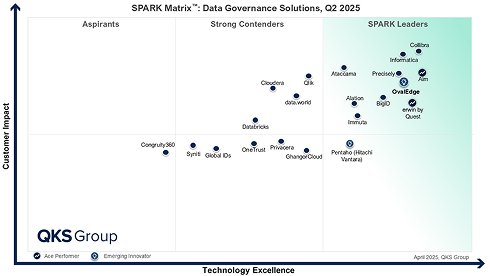
Named a Leader in the SPARK Matrix 2025 for data governance, reflecting capability depth and market presence
-
Backed by a Forrester TEI study with measurable financial and operational outcomes
What this means for your decision
At this stage, the evaluation usually comes down to a few practical questions.
-
Can the platform go beyond master data and support governance across your entire data ecosystem?
-
Can it reduce ongoing manual effort through automation, not just initial setup?
-
Can business users work with it directly without depending on technical teams?
-
Can it start delivering value within weeks, skipping long rollout cycles?
OvalEdge is built around these outcomes. It focuses on making governance usable, measurable, and part of everyday data workflows.
Book a demo with OvalEdge to see how it fits your use cases, data environment, and rollout priorities.
Evaluate Precisely alternatives with agentic analytics and governance frameworks
Understand how agentic analytics accelerates data governance through AI-driven workflows, real-time insights, and governed self-service. This whitepaper shows how teams operationalize governance for analytics and AI readiness.
Frequently asked questions
1. What are the best Precisely alternatives for data governance?
The best Precisely alternatives include OvalEdge, Alation, Informatica, Talend, and Reltio. The right choice depends on whether your focus is governance, integration, or MDM. If your priority is operationalizing governance with lineage, data quality, and workflows, OvalEdge is often shortlisted first.
2. How is OvalEdge different from Precisely?
Precisely focuses on master data management and data integrity for core business records. OvalEdge focuses on governing the broader data ecosystem, including catalog, lineage, data quality, and workflows. This makes it more suitable when governance needs to run across systems and support analytics or AI use cases.
3. Can OvalEdge replace Precisely?
It depends on your use case. If your primary requirement is MDM, Precisely may still fit better. If your focus is governance execution, data quality across pipelines, and AI readiness, OvalEdge can cover those needs more effectively.
4. Which Precisely alternative is best for AI readiness?
Platforms that combine governance, lineage, and data quality are better suited for AI use cases. OvalEdge is designed to support AI readiness by ensuring data is governed, consistent, and usable across systems. This helps reduce risk in AI-driven decision-making.
5. How long does it take to implement a Precisely alternative?
Implementation timelines vary by platform and complexity. Some enterprise tools can take months due to setup and configuration requirements. Platforms like OvalEdge are designed for faster onboarding, allowing teams to start governance workflows within weeks.
6. What should I look for when choosing a Precisely alternative?
Focus on how the platform supports your primary use case, whether it is governance, integration, or MDM. Evaluate how easily teams can adopt it, how quickly it delivers value, and how well it supports data quality and lineage across systems. OvalEdge is often evaluated when teams want these capabilities in one integrated platform.
Move beyond master data and operationalize governance
OvalEdge brings together catalog, lineage, data quality, and AI-driven workflows so you can govern and trust data across systems without adding complexity.
Choosing a Precisely alternative? Start here
- Looking beyond master data or staying focused on MDM?
- Need governance workflows or just data visibility?
- Single integrated platform or multiple tools working together?
- Business team adoption or analyst-only usage?
- Faster time-to-value or long implementation cycles?
- Data quality across pipelines or only core records?
Implement data governance faster with a proven framework
Access a practical 5-step framework used across real deployments to scope, prioritize, and implement governance without over-engineering.
Learn how to identify high-impact use cases and apply AI and automation to reduce manual effort.
Proven by customer successes across industries
.png?width=151&height=151&name=Mask%20group%20(18).png)
How Delta Community Credit Union enhanced its data governance with OvalEdge
"We have seen dramatic results across the board by implementing these programs, centralizing our metadata with the OvalEdge data catalog, and enabling self-service data education."
Dr. Su Rayburn
Vice President, Information Management & Analytics

.png?width=151&height=151&name=Mask%20group%20(19).png)
Bedrock leverages OvalEdge to standardize definitions, improve data accuracy
"OvalEdge stands out for its holistic approach, providing everything from business glossary to data lineage, all seamlessly integrated. The auto-lineage feature saves us months of work, enabling us to quickly understand data flows and address issues at the source.”
Sergei Vandalov
Senior Manager, Data Governance & Analytics

.png?width=151&height=151&name=Mask%20group%20(20).png)
Gousto’s continued data governance journey to deliver exceptional customer experience
“Incorrect pricing, nutritional or allergen information can disrupt the customer experience. With quality data at every stage, Gousto aligns its customer promise with operational excellence.”
Cathy Pendleton
Senior Manager - Data Governance
OvalEdge Recognized as a Leader in Data Governance Solutions
.png?width=1081&height=173&name=Forrester%201%20(1).png)
“Reference customers have repeatedly mentioned the great customer service they receive along with the support for their custom requirements, facilitating time to value. OvalEdge fits well with organizations prioritizing business user empowerment within their data governance strategy.”
.png?width=1081&height=241&name=KC%20-%20Logo%201%20(1).png)
“Reference customers have repeatedly mentioned the great customer service they receive along with the support for their custom requirements, facilitating time to value. OvalEdge fits well with organizations prioritizing business user empowerment within their data governance strategy.”
Gartner, Magic Quadrant for Data and Analytics Governance Platforms, January 2025
Gartner does not endorse any vendor, product or service depicted in its research publications, and does not advise technology users to select only those vendors with the highest ratings or other designation. Gartner research publications consist of the opinions of Gartner’s research organization and should not be construed as statements of fact. Gartner disclaims all warranties, expressed or implied, with respect to this research, including any warranties of merchantability or fitness for a particular purpose.
GARTNER and MAGIC QUADRANT are registered trademarks of Gartner, Inc. and/or its affiliates in the U.S. and internationally and are used herein with permission. All rights reserved.