DataHub Alternatives for Teams Scaling Governance Beyond Metadata
Compare the top DataHub competitors across governance execution, stewardship workflows, lineage visibility, AI governance, and business-user adoption.
In this article
What are the best DataHub alternatives?
The best DataHub alternatives include OvalEdge, Collibra, Atlan, Select Star, OpenMetadata, and Apache Atlas. These platforms support different governance and metadata management needs depending on implementation style, collaboration requirements, compliance priorities, and infrastructure preferences.
-
OvalEdge focuses on unified governance with built-in lineage, data quality, access governance, and AI-driven workflows.
-
Collibra is commonly used for enterprise governance and compliance-heavy operating environments.
-
Atlan emphasizes collaborative metadata management for modern cloud data teams.
-
Select Star focuses on automated lineage visibility and warehouse usage insights.
-
OpenMetadata provides a modern open-source framework for metadata operations and observability.
-
Apache Atlas supports classification-based governance within Hadoop and legacy enterprise ecosystems.
When comparing alternatives, the right choice depends on whether your team prioritizes governance execution, collaboration, open-source flexibility, or operational simplicity. Let’s compare these DataHub alternatives side by side.
DataHub alternatives compared
Here’s a quick comparison of the leading DataHub alternatives before we break down each platform in detail.
|
Tool |
Deployment model |
Best for |
Core strength |
AI capability |
Limitation |
|
OvalEdge |
SaaS / Hybrid |
Enterprise governance adoption |
Unified governance workflows |
AI-driven governance automation |
Requires governance ownership |
|
Collibra |
SaaS |
Large regulated enterprises |
Stewardship and compliance |
Policy automation |
Longer rollout cycles |
|
Atlan |
SaaS |
Cloud-first data teams |
Collaborative metadata experience |
AI-assisted discovery |
Pricing scales with usage |
|
Select Star |
SaaS |
Warehouse lineage visibility |
Automated lineage mapping |
AI-powered metadata discovery |
Narrower governance depth |
|
OpenMetadata |
Open-source |
Metadata operations teams |
Extensible metadata framework |
Observability integrations |
Self-managed infrastructure |
|
Apache Atlas |
Open-source |
Hadoop-based governance |
Classification governance |
Metadata automation |
Legacy ecosystem dependency |
What users say about DataHub
DataHub is commonly used by data engineering and platform teams for metadata discovery, lineage tracking, and modern data cataloging. Many organizations adopt it because of its open-source flexibility and strong integration ecosystem across cloud data stacks.
Reviews across G2 and Gartner Peer Insights frequently highlight its cloud-native architecture, strong integration ecosystem, and engineering-focused usability. Users also describe it as a more modern metadata platform compared to legacy governance tools.
Strengths users mention
-
Strong lineage visibility across tools like dbt, Snowflake, Kafka, and Airflow.
-
Modern developer experience with cleaner APIs and faster metadata ingestion workflows.
-
Active open-source ecosystem with regular updates and strong community momentum.
Limitations users mention
-
Operational complexity increases significantly in large enterprise deployments.
-
Kafka dependencies and infrastructure management can add maintenance overhead.
-
Governance workflows may require additional process maturity before scaling effectively.
-
Some users mention a steeper learning curve around metadata models and platform administration.
-
OSS deployments can require more engineering ownership compared to managed SaaS alternatives.
Overall, DataHub is often viewed as a strong option for engineering-led metadata operations and cloud-native data environments. The right alternative depends on how teams balance governance depth, collaboration requirements, operational overhead, and deployment preferences.
Best DataHub alternatives for your use case
Best DataHub alternatives for your use case
Different DataHub alternatives solve different governance and metadata challenges. Some platforms are built for engineering-led metadata operations, while others focus more on governance adoption, compliance workflows, stewardship, and business collaboration.
The following categories help narrow down which platforms fit best based on roll-out priorities and long-term governance goals.
Tools for enterprise data governance and operational adoption
This category fits organizations that need governance programs to work across business and technical teams, not just inside engineering workflows. These platforms are better suited for companies looking for governance execution, operational accountability, stewardship workflows, and faster adoption across departments.
1. OvalEdge
OvalEdge is an AI-driven data governance platform that combines data cataloging, lineage, governance workflows, data quality, privacy management, and business collaboration in one system. Unlike metadata-focused platforms, OvalEdge is designed to help governance teams work across technical teams, stewards, analysts, compliance leaders, and business users.
What is it used for
Organizations use OvalEdge to centralize governance operations across cloud platforms, BI systems, SaaS applications, and AI workflows. It helps teams manage metadata discovery, automate lineage tracking, improve data quality, classify sensitive information, govern access policies, and support self-service analytics using trusted business context.
OvalEdge is commonly used by enterprises that want governance adoption without building and maintaining heavily customized internal frameworks.
When buyers choose it over DataHub
Here are a few reasons why buyers typically choose OvalEdge over DataHub:
When governance needs to move beyond metadata visibility
DataHub is widely adopted for metadata centralization and engineering-led discovery workflows. OvalEdge is often evaluated when organizations need governance capabilities beyond metadata collection. Teams looking for stewardship workflows, ownership management, policy enforcement, data quality remediation, approvals, and governance accountability usually require broader functionality than metadata visibility alone.
When organizations want faster operational adoption
One of the biggest evaluation factors is implementation effort. DataHub’s open-source flexibility appeals to technical teams that want extensibility and customization. At the same time, that flexibility often requires engineering ownership, infrastructure management, connector maintenance, and ongoing support.
OvalEdge is positioned differently. It focuses on faster configuration and easier deployment so governance teams can move faster without building large internal support structures.
When governance requires business-user participation
Many governance programs fail because governance remains isolated within technical teams. OvalEdge places heavy emphasis on business-user adoption. Business glossary management, governance workflows, stewardship collaboration, certification policies, governed data access, and self-service discovery are designed for cross-functional participation instead of purely developer-driven workflows.
When enterprises need broader operational coverage
Modern governance environments extend beyond warehouses and metadata ingestion pipelines. Enterprises often need visibility across SaaS systems, BI tools, applications, cloud platforms, governance workflows, and AI environments. OvalEdge positions itself strongly around end-to-end operational visibility and governance coverage across these systems.
What changes after adoption
Organizations adopting OvalEdge often move from fragmented governance processes to a more connected governance model where business and technical teams work from the same trusted context. Teams typically gain better visibility into lineage, ownership, policy coverage, and governed data usage across analytics and AI initiatives.
Common improvements include:
-
Clearer lineage visibility across BI, cloud, and AI systems.
-
Faster issue resolution through governed ownership workflows.
-
Better trust in business definitions and reporting consistency.
-
Reduced manual governance coordination across teams.
Built-in stewardship workflows, automated classification, AI-assisted governance recommendations, and integrated governance controls also help teams spend less time maintaining governance processes manually.
A great example is how Gousto used OvalEdge to improve trust in operational and customer-facing data across its food delivery operations. The company strengthened data quality governance around pricing, allergen, and nutritional information while enabling teams to work from more trusted and standardized business definitions.

AI governance and automation capabilities
OvalEdge positions AI as part of governance execution rather than only metadata enrichment. The platform combines lineage analysis, governance context, business glossary intelligence, and AI-assisted automation to help teams manage trusted data environments at scale.
Key capabilities include:
-
AI-generated classification: Automatically identifies PII, sensitive data, and governance categories.
-
Governance-grounded AI responses: askEdgi generates answers using governed enterprise metadata and approved business context.
-
AI-assisted lineage analysis: Uses lineage, reporting context, and metadata relationships to improve trust visibility.
-
Data quality debt detection: Identifies undocumented assets, stale datasets, and governance gaps.
-
Automated governance workflows: Supports stewardship routing, approvals, tagging, and policy-driven access governance.
-
Connector-level AI controls: Enables selective rollout of AI lineage and governance capabilities by source system.
Things to consider
OvalEdge is best suited for organizations prioritizing governance adoption, stewardship workflows, and cross-functional collaboration. Teams looking for highly extensible open-source development frameworks may still prefer platforms like DataHub for developer-led customization.
A few important considerations:
-
Governance programs still require ownership and process alignment internally.
-
AI-driven governance workflows work best when metadata coverage is mature.
-
Large enterprises may require phased onboarding across business domains and source systems.
Ratings, reviews, and analyst validation
OvalEdge is consistently recognized for governance usability, implementation speed, and strong business-user collaboration capabilities. Users across G2, Gartner Peer Insights, and TrustRadius frequently mention the platform’s lineage visibility, integrated governance workflows, responsive support experience, and ease of managing governance programs across teams.
Platform recognition includes:
-
Strong ratings for usability, governance workflows, and metadata visibility on G2 with a 5/5 rating.
-
Positive feedback around governance adoption and implementation support on Gartner Peer Insights.
-
Appreciated for lineage depth, data catalog capabilities, and governance integration on TrustRadius.
-
Recognized in the 2025 Gartner Magic Quadrant for Augmented Data Quality Solutions.
-
Named a leader in the 2025 SPARK Matrix for Data Catalogs.
Did you know?Organizations adopting OvalEdge reported up to 337% ROI with payback in under six months in a Forrester Total Economic Impact study. The analysis highlighted faster governance adoption, reduced manual stewardship effort, and improved data accessibility across business teams. For organizations evaluating long-term governance costs, that changes the conversation from software pricing to governance efficiency at scale. |
See how OvalEdge compares in your environment
If you are evaluating Data Galaxy alternatives, OvalEdge is worth a closer look. Explore how OvalEdge fits your architecture, governance needs, and rollout plan.
2. Collibra
Collibra is an enterprise data governance platform focused on governance workflows, policy management, stewardship, and compliance management. It is commonly evaluated by organizations that build formal governance programs in regulated and large-scale enterprise environments.
What is it used for
Organizations use Collibra to manage governance policies, business glossaries, stewardship workflows, lineage visibility, and compliance initiatives across distributed data environments. It is commonly adopted in industries with strict governance requirements, such as finance, healthcare, insurance, and large enterprise operations.
When buyers choose it over DataHub
Collibra is often evaluated when organizations need structured governance programs beyond engineering-led metadata management. Compared to DataHub, it places heavier emphasis on governance, ownership, stewardship, accountability, and policy management workflows.
Buyers commonly choose it for:
-
Formal governance operating models with dedicated stewardship teams.
-
Regulatory and compliance-heavy environments requiring governance documentation.
-
Business glossary standardization across large organizations.
-
Governance approval workflows tied to enterprise controls and audit processes.
Some organizations also prefer Collibra when governance adoption needs to extend beyond technical teams into compliance, legal, risk, and business operations groups.
What changes after adoption
Organizations adopting Collibra often centralize governance processes that were previously handled across disconnected spreadsheets, approval systems, and documentation tools. Governance ownership becomes more standardized across domains and business units.
Common changes include:
-
Better visibility into ownership and stewardship responsibilities.
-
More consistent governance terminology across teams.
-
Structured approval and certification processes for governed data assets.
-
Improved audit readiness for regulated environments.
At the same time, implementation timelines may extend depending on governance maturity, internal process alignment, and customization requirements.
AI and automation capabilities
Collibra includes AI-assisted governance and metadata management capabilities focused on classification, discovery, governance recommendations, and policy support. The platform also integrates governance intelligence into broader enterprise governance workflows.
Capabilities commonly highlighted include:
-
AI-assisted metadata discovery and enrichment.
-
Automated classification of sensitive and regulated data.
-
Governance policy recommendations and stewardship workflows.
-
Lineage visibility for governance and impact analysis.
The platform focuses more on governance management and policy orchestration than engineering-led metadata extensibility.
Things to consider
Collibra is generally better suited for organizations with mature governance structures and dedicated governance ownership. Smaller teams or organizations looking for lightweight deployment may find implementation effort and administrative complexity higher compared to some modern SaaS alternatives.
A few considerations include:
-
Governance onboarding may require significant process alignment internally.
-
Configuration and workflow customization can extend deployment timelines.
-
Licensing and expansion costs may increase as governance coverage grows.
-
Business-user adoption depends heavily on governance program maturity.
Ratings and reviews
Users on G2 and TrustRadius frequently mention Collibra’s governance workflows, glossary management, stewardship capabilities, and compliance support. Reviewers also highlight its governance visibility across large organizations and regulated environments.
Some recurring concerns include:
-
Steeper onboarding and configuration effort.
-
User interface complexity in larger deployments.
-
Higher dependency on governance administrators for ongoing management.
-
Longer implementation cycles compared to lighter governance tools.
On Reddit, users often appreciate Collibra’s governance depth and enterprise process alignment. At the same time, discussions regularly mention implementation heaviness, administrative complexity, slower UI workflows, and challenges keeping business-user adoption consistent after rollout.
Also read → Comparing Collibra alternatives in 2026? Compare tools before you buy
Evaluate DataHub alternatives with agentic analytics and governance frameworks
Understand how agentic analytics accelerates data governance through AI-driven workflows, real-time insights, and governed self-service. This whitepaper shows how teams operationalize governance for analytics and AI readiness.
Tools for modern collaborative metadata management
This category fits teams that want metadata discovery and collaboration to work closely with analytics, cloud warehouses, and modern data tooling. These platforms are commonly evaluated by organizations prioritizing usability, faster discovery, and shared metadata visibility across data teams.
3. Atlan
Atlan is a cloud-based metadata and data catalog platform focused on collaborative metadata management, data discovery, lineage visibility, and modern data team workflows. It is commonly evaluated by organizations working heavily with cloud data warehouses and analytics platforms.
What is it used for
Organizations use Atlan to centralize metadata discovery, document data assets, improve collaboration between analytics and engineering teams, and provide lineage visibility across modern cloud data environments. It is often used alongside Snowflake, dbt, BigQuery, Tableau, and other analytics tooling.
When buyers choose it over DataHub
Atlan is commonly evaluated by teams that want a managed SaaS experience instead of maintaining open-source infrastructure internally. Compared to DataHub, buyers often prefer Atlan when collaboration and usability become higher priorities across analytics and business teams.
Common reasons include:
-
Faster onboarding for analysts and business users.
-
Cleaner collaboration workflows around metadata discovery.
-
Reduced infrastructure management compared to self-hosted environments.
-
Easier integration into modern cloud analytics ecosystems.
Some organizations also prefer Atlan when they want metadata management without building extensive internal governance tooling around an open-source platform.
What changes after adoption
Teams adopting Atlan often improve visibility into data ownership, lineage, and asset usage across analytics environments. Metadata discovery becomes easier for analysts, data consumers, and governance stakeholders.
Common changes include:
-
More centralized documentation around data assets.
-
Faster collaboration between analytics and engineering teams.
-
Better visibility into downstream reporting dependencies.
-
Reduced dependency on tribal knowledge during analysis work.
At the same time, governance depth may still require additional process design depending on enterprise governance requirements.
AI and automation capabilities
Atlan includes AI-assisted metadata discovery and workflow automation focused on improving search relevance, metadata enrichment, and collaboration across modern data environments.
Capabilities commonly highlighted include:
-
AI-assisted metadata enrichment and recommendations.
-
Automated lineage visibility across cloud systems.
-
Search and discovery improvements using metadata context.
-
Workflow automation tied to collaboration and asset management.
Its AI positioning is more focused on metadata usability and collaboration workflows than governance-heavy policy orchestration.
Things to consider
Atlan is generally better suited for organizations prioritizing collaborative metadata management and modern analytics workflows. Teams looking for deeper governance execution or extensive stewardship management may still require additional governance processes outside the platform.
A few considerations include:
-
Governance workflow depth may vary depending on enterprise requirements.
-
Costs can increase as metadata coverage and usage scale across teams.
-
Some advanced governance use cases may require additional customization.
-
Adoption success often depends on metadata documentation discipline internally.
Ratings and reviews
Users on G2 and Gartner Peer Insights frequently mention Atlan’s usability, modern interface, collaboration workflows, and integration experience with cloud data platforms. Reviewers also highlight faster metadata discovery and easier onboarding for analytics teams.
Some recurring concerns include:
-
Pricing increases as deployments expand across domains.
-
Governance workflows may require additional configuration for larger enterprises.
-
Certain advanced features involve a learning curve during onboarding.
-
Metadata organization can become difficult without governance discipline internally.
On Reddit, users frequently mention Atlan’s cleaner user experience and easier analyst adoption compared to older governance tools. At the same time, discussions often point to higher pricing, concerns around scaling costs, and limitations for organizations requiring deeper governance customization.
Also read → Looking for Atlan alternatives in 2026? Start comparing platforms here | Compare OvalEdge vs Alation vs Collibra vs Informatica side-by-side
4. Select Star
Select Star is a metadata discovery and lineage platform focused on warehouse visibility, data usage analysis, and analytics collaboration. It is commonly evaluated by teams working heavily with cloud warehouses and BI reporting environments.
What is it used for
Organizations use Select Star to improve visibility into warehouse assets, understand reporting dependencies, document business metrics, and trace lineage across analytics systems. It is often adopted by teams working with Snowflake, BigQuery, Looker, dbt, and Tableau environments.
When buyers choose it over DataHub
Select Star is commonly evaluated by organizations that want faster warehouse-focused metadata visibility without maintaining open-source infrastructure internally. Compared to DataHub, it is often preferred when analytics lineage and business metric visibility are larger priorities than extensible metadata engineering workflows.
Common reasons include:
-
Easier visibility into warehouse dependencies and BI usage.
-
Simpler onboarding for analytics and reporting teams.
-
Managed SaaS deployment with lower infrastructure ownership.
-
Better focus on metric lineage and downstream reporting visibility.
Some organizations also evaluate Select Star when they want metadata visibility centered around analytics workflows instead of broader governance programs.
What changes after adoption
Teams adopting Select Star often gain clearer visibility into reporting dependencies and warehouse usage patterns. Analysts and BI teams spend less time identifying trusted tables, dashboard relationships, and downstream impacts of schema changes.
Common changes include:
-
Better understanding of metric ownership and reporting usage.
-
Easier identification of unused or duplicate assets.
-
Improved lineage visibility across dashboards and warehouse systems.
-
Faster troubleshooting for broken reporting dependencies.
Governance process management may still require additional tooling depending on enterprise governance requirements.
AI and automation capabilities
Select Star includes AI-assisted metadata discovery and automation features focused on analytics visibility, lineage understanding, and metadata enrichment across cloud warehouse environments.
Capabilities commonly highlighted include:
-
Automated lineage generation across analytics systems.
-
Metadata enrichment using warehouse and BI context.
-
AI-assisted search and discovery improvements.
-
Usage-based visibility into frequently accessed assets and reports.
Its automation focus is more aligned with analytics discovery and reporting visibility than governance workflow orchestration.
Things to consider
Select Star is generally better suited for analytics-focused metadata visibility than full governance program management. Organizations requiring stewardship workflows, compliance management, or enterprise governance controls may need additional governance tooling outside the platform.
A few considerations include:
-
Governance workflow depth is more limited compared to governance-first platforms.
-
Broader policy management and compliance features may require integrations.
-
Enterprise customization options may be narrower than open-source alternatives.
-
Value realization depends heavily on warehouse and BI ecosystem maturity.
Ratings and reviews
Users on G2 and Gartner Peer Insights frequently mention Select Star’s lineage visibility, warehouse discovery workflows, and reporting impact analysis. Reviewers also highlight easier adoption across analytics teams and cleaner navigation for warehouse assets.
Some recurring concerns include limited governance workflow coverage for organizations managing broader stewardship or compliance programs. Users also mention that customization depth can feel narrower for complex enterprise governance requirements.
|
Did you know? Grand View Research projects the metadata management tools market to reach $36.44 billion by 2030 as enterprises invest more heavily in lineage visibility, governance standardization, and AI-ready metadata operations. This is also why organizations now evaluate metadata platforms based on governance execution, integration depth, and operational visibility instead of discovery alone. |
Open-source alternatives to DataHub
This category fits organizations that prefer open-source flexibility and want greater control over metadata infrastructure, integrations, and deployment management. These platforms are commonly evaluated by engineering-led teams that are comfortable managing configuration, customization, and long-term platform maintenance internally.
5. OpenMetadata
OpenMetadata is an open-source metadata platform focused on metadata discovery, lineage visibility, observability, and collaboration across modern data systems. It is commonly evaluated by teams looking for extensible metadata management with self-managed deployment flexibility.
What is it used for
Organizations use OpenMetadata to centralize metadata discovery, document data assets, monitor lineage, improve observability, and manage metadata workflows across cloud warehouses, pipelines, BI systems, and analytics environments.
When buyers choose it over DataHub
OpenMetadata is commonly evaluated by teams looking for an open-source metadata platform with broader observability and metadata management capabilities. Compared to DataHub, some organizations prefer its architecture, deployment flexibility, or observability-focused workflows.
Common reasons include:
-
Preference for its metadata and observability integrations.
-
Interest in open-source deployment flexibility.
-
Easier alignment with engineering-led platform ownership.
-
Broader focus on metadata quality and monitoring workflows.
Some teams also evaluate OpenMetadata when they want an alternative open-source ecosystem with active development around metadata operations.
What changes after adoption
Teams adopting OpenMetadata often centralize metadata visibility across pipelines, warehouses, dashboards, and analytics systems. Engineering and analytics teams gain easier access to lineage context and metadata documentation across distributed environments.
Common changes include:
-
Improved visibility into pipeline dependencies and lineage flows.
-
Better metadata organization across cloud systems.
-
Easier collaboration between engineering and analytics teams.
-
More centralized monitoring around metadata quality and observability.
Governance process maturity may still depend heavily on internal ownership and customization effort.
AI and automation capabilities
OpenMetadata includes automation capabilities focused on metadata ingestion, observability, lineage visibility, and metadata enrichment across modern data systems.
Capabilities commonly highlighted include:
-
Automated metadata ingestion workflows.
-
Lineage generation across pipelines and warehouse systems.
-
Metadata observability and monitoring integrations.
-
Search and discovery improvements using metadata relationships.
Its automation focus is more aligned with metadata operations and observability than enterprise governance process management.
Things to consider
OpenMetadata is generally better suited for organizations comfortable managing open-source infrastructure and engineering-led governance workflows. Teams expecting out-of-the-box governance process management may require additional customization and internal operational ownership.
A few considerations include:
-
Deployment and maintenance effort can increase over time.
-
Governance workflow depth may require custom implementation.
-
Internal engineering dependency remains high in larger deployments.
-
Long-term support depends heavily on internal expertise or external partners.
Reviews
On Reddit, users frequently mention OpenMetadata’s cleaner architecture, observability integrations, and active development momentum. At the same time, discussions also point to deployment complexity, evolving documentation, connector maturity gaps, and the ongoing engineering effort required for larger enterprise implementations.
Also read → Compare OpenMetadata vs DataHub side-by-side in detail
6. Apache Atlas
Apache Atlas is an open-source governance and metadata framework designed primarily for Hadoop-centric environments. It is commonly evaluated by organizations managing metadata classification, lineage tracking, and governance workflows inside Apache ecosystem deployments.
What is it used for
Organizations use Apache Atlas to manage metadata governance, lineage visibility, classification policies, and data asset discovery across Hadoop-based systems. It is often adopted in environments using Hive, HDFS, Ranger, and other Apache ecosystem technologies.
When buyers choose it over DataHub
Apache Atlas is commonly evaluated by organizations already invested in Hadoop-oriented governance architectures. Compared to DataHub, some teams prefer Atlas when governance classification and Apache-native ecosystem integration are larger priorities.
Common reasons include:
-
Alignment with Hadoop and Apache ecosystem deployments.
-
Metadata classification and tagging capabilities.
-
Governance visibility inside existing Apache environments.
-
Preference for open-source governance infrastructure ownership.
Some organizations also evaluate Atlas when extending governance capabilities across legacy enterprise data platforms already connected to Hadoop ecosystems.
What changes after adoption
Teams adopting Apache Atlas often gain more centralized governance visibility across Hadoop-related systems and metadata assets. Classification management and lineage tracking become more standardized within Apache ecosystem workflows.
Common changes include:
-
Better visibility into metadata relationships across Hadoop systems.
-
Improved governance classification management.
-
Easier lineage tracking for Hive and related Apache tools.
-
More centralized metadata documentation across legacy data environments.
Modern cloud-native governance workflows may still require additional integrations and customization effort outside the Apache ecosystem.
AI and automation capabilities
Apache Atlas includes automation capabilities centered around metadata governance, classification management, and lineage generation within Apache ecosystem environments.
Capabilities commonly highlighted include:
-
Automated metadata classification workflows.
-
Lineage tracking across Hadoop-related systems.
-
Policy integration with Apache governance tooling.
-
Metadata discovery across connected Apache services.
Its automation capabilities are more governance-foundation oriented and less focused on AI-assisted business collaboration or modern metadata intelligence workflows.
Things to consider
Apache Atlas is generally better suited for Hadoop-centric governance environments than modern cloud-native analytics ecosystems. Organizations adopting Atlas often require significant engineering ownership for deployment, scaling, integrations, and long-term maintenance.
A few considerations include:
-
Setup and configuration effort can be time-intensive.
-
Connector coverage may feel narrower outside Apache ecosystems.
-
User experience may feel less modern compared to newer metadata platforms.
-
Long-term maintenance and scaling often require dedicated technical ownership.
Ratings and reviews
Users on G2 frequently mention Apache Atlas’s governance foundations, metadata classification capabilities, and Apache ecosystem integration. At the same time, reviewers often point to deployment complexity, dated user experience, difficult configuration workflows, and ongoing maintenance effort in larger implementations.
Still not sure which DataHub alternative fits your use case?
Get a tailored walkthrough based on your data stack and governance needs.
OvalEdge vs DataHub: Side-by-side comparison
Here’s a practical comparison of how OvalEdge and DataHub differ across governance execution, adoption effort, metadata management, and long-term ownership.
|
Evaluation factor |
OvalEdge |
DataHub |
|
Positioning |
AI-driven governance platform |
Open-source metadata platform |
|
Deployment model |
SaaS / Hybrid deployment |
OSS / Managed cloud |
|
Governance execution |
Built-in stewardship and governance workflows |
Metadata-centric governance |
|
Data lineage |
End-to-end lineage across apps, BI, AI, and warehouses |
Modern lineage focused on technical systems |
|
Data quality support |
Integrated profiling and quality workflows |
Requires integrations and additional tooling |
|
AI governance |
AI-driven classification, governance context, askEdgi |
AI-assisted metadata discovery |
|
Setup effort |
Faster configuration with lower technical dependency |
Higher engineering ownership |
|
User adoption |
Designed for business and technical collaboration |
Primarily engineering-led adoption |
|
Ecosystem flexibility |
Connects across SaaS, BI, AI, cloud, and operational systems |
Strong cloud-native and developer integrations |
|
Implementation effort |
Lower infrastructure and DevOps overhead |
Higher customization and maintenance effort |
|
Pricing fit |
Better suited for organizations reducing governance overhead |
Lower licensing cost but higher engineering overhead |
|
Best fit |
Enterprise governance adoption and operational maturity |
Engineering-led metadata management |
DataHub offers modern metadata discovery, lineage visibility, developer-friendly APIs, and flexible open-source extensibility for engineering-led environments. Its focus stays centered around metadata management and technical workflows.
OvalEdge builds on those capabilities with governance workflows, stewardship management, integrated data quality, AI-driven classification, policy enforcement, and broader business-user adoption. It extends metadata visibility into day-to-day governance execution across business and technical teams.
Evaluate OvalEdge for your automated governance needs
Get a focused walkthrough of how OvalEdge handles governance workflows, lineage, data quality, and business-user adoption based on your data setup.
How to choose the right DataHub alternative
The right alternative depends less on feature checklists and more on how your organization plans to govern, manage, and scale trusted data usage over time. Before evaluating platforms, it helps to identify where your current friction actually exists. In many cases, the challenge is not metadata visibility alone. It is governance adoption, stewardship ownership, data trust, or an implementation effort.
Here are a few areas worth evaluating closely before making a decision:
-
Technical ownership: Some platforms offer open-source flexibility and deeper customization. At the same time, they may require ongoing engineering support for deployment, integrations, infrastructure management, and long-term maintenance.
-
Business-user adoption: Governance programs work better when stewards, analysts, compliance teams, and technical users can collaborate inside the same system instead of relying only on engineering-led workflows.
-
Governance workflow depth: Metadata discovery alone is usually not enough for enterprise governance. Look for stewardship workflows, policy management, access governance, certification processes, and data quality management capabilities.
-
Lineage and ecosystem coverage: Many organizations need visibility across SaaS applications, warehouses, BI platforms, cloud systems, and AI environments. Review how deeply the platform supports end-to-end lineage across your actual data ecosystem.
-
AI governance capabilities: AI-assisted discovery is useful, but governance teams also need automated classification, governance-aware business context, policy enforcement, and AI workflows grounded in trusted metadata.
The best platform is usually the one your teams can adopt consistently without creating long-term maintenance and governance overhead internally.
|
Did You Know? Gartner found that 70% of CDAOs now own AI strategy and operating models inside their organizations. At the same time, Deloitte’s 2026 AI research shows that workforce access to AI tools is rapidly expanding across enterprises. As AI usage grows, metadata visibility alone is no longer enough. Teams evaluating DataHub alternatives increasingly look for governance-ready platforms with lineage depth, policy enforcement, stewardship workflows, and AI-grounded business context. |
Where OvalEdge stands out among DataHub competitors
Metadata visibility is only one part of enterprise governance. Organizations evaluating DataHub alternatives often look deeper into governance adoption, implementation effort, lineage visibility, business-user usability, and long-term governance overhead. This is where OvalEdge is positioned differently.
Faster governance maturity with lower technical overhead
Many metadata platforms still require significant engineering ownership before governance programs become usable across the organization.
OvalEdge focuses on reducing that dependency through faster configuration, built-in governance workflows, and lower infrastructure overhead. This becomes especially relevant for organizations trying to scale governance adoption across business and technical teams instead of limiting usage to platform engineering groups.
Governance outcomes backed by measurable business impact
Independent analysis from the Forrester Total Economic Impact study reported a 337% ROI and payback in under six months for organizations adopting OvalEdge. The same analysis found up to 40% reduction in manual stewardship effort, 30% analyst productivity improvement, and 75% reduction in effort spent identifying and securing sensitive data.
Better adoption across business and governance teams
Across review platforms like G2, Gartner, and TrustRadius, users consistently highlight faster metadata discovery, easier lineage visibility, responsive support, and better collaboration between governance and analytics teams. Reviews also frequently mention easier onboarding for business users compared to governance tools that remain heavily engineering-focused.
Broader governance execution beyond metadata collection
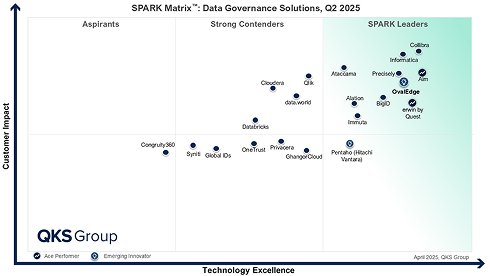
DataHub is often evaluated for metadata discovery and developer-centric extensibility. OvalEdge extends further into stewardship workflows, data quality management, AI-assisted classification, policy enforcement, governance approvals, and sensitive data management. This broader governance coverage is one reason OvalEdge was recognized in the QKS SPARK Matrix report and the 2025 Gartner® Magic Quadrant for data catalog and governance capabilities.
AI governance built on business context and lineage
Many platforms now offer AI-assisted discovery. OvalEdge’s positioning goes further by grounding AI workflows in lineage visibility, governed metadata, business glossary context, and profiling insights. This helps governance teams improve trust in reporting, reduce duplicate definitions, and improve governance consistency across systems.
What does this mean for your decision?
For teams evaluating DataHub alternatives, the decision usually comes down to more than metadata visibility or lineage alone. As governance programs grow, organizations often need stronger stewardship workflows, business-user adoption, AI-ready governance, and lower long-term implementation overhead.
Book a demo to explore how OvalEdge supports governed data operations across analytics, compliance, AI initiatives, and enterprise data governance programs.
Move beyond metadata visibility into governed data operations
OvalEdge connects metadata, lineage, business context, and governance workflows so teams can work from trusted data across analytics and AI environments.
Frequently asked questions
FAQs
1. What are the best alternatives to DataHub?
Some of the most commonly evaluated DataHub alternatives include OvalEdge, Collibra, Atlan, Select Star, OpenMetadata, and Apache Atlas. The right choice depends on whether your organization prioritizes governance workflows, business-user adoption, open-source flexibility, analytics collaboration, or faster implementation.
2. How does DataHub compare with OvalEdge?
DataHub is often preferred by engineering-led teams looking for open-source extensibility and metadata-focused workflows. OvalEdge is commonly evaluated when organizations need broader governance capabilities such as stewardship workflows, data quality governance, policy enforcement, and business-user collaboration in one platform.
3. Which DataHub alternative is best for enterprise governance?
Organizations with enterprise governance priorities often evaluate platforms like OvalEdge and Collibra because they support governance workflows beyond metadata discovery. This usually includes stewardship management, governance approvals, lineage visibility, compliance processes, and business glossary management across multiple teams.
4. What is the difference between DataHub and OpenMetadata?
Both DataHub and OpenMetadata are open-source metadata platforms focused on metadata discovery and lineage visibility. OpenMetadata is often evaluated for its observability-focused workflows and metadata monitoring capabilities, while DataHub is commonly preferred for its developer ecosystem, APIs, and real-time metadata integrations.
5. Which DataHub alternative is easier for business users?
Platforms like OvalEdge, Atlan, and Select Star are often evaluated for easier collaboration across analytics, governance, and business teams. These platforms place more emphasis on usability, discovery workflows, and governed business context compared to engineering-centric metadata management tools.
6. Are open-source alternatives to DataHub cheaper long term?
Open-source platforms may lower licensing costs initially, but infrastructure management, customization, maintenance, and engineering support can increase long-term overhead. Managed governance platforms are often evaluated to reduce implementation effort and improve governance adoption across teams.
Choosing a DataHub alternative? Start here
- Need governance workflows beyond metadata visibility?
- Want lineage, quality, stewardship, and policies in one platform?
- Do business teams need easier data discovery and ownership visibility?
- Looking to reduce engineering dependency and maintenance effort?
- Need AI-ready governance with trusted business context?
Implement data governance faster with a proven framework
Access a practical 5-step framework used across real deployments to scope, prioritize, and implement governance without over-engineering.
Learn how to identify high-impact use cases and apply AI and automation to reduce manual effort.
Proven by customer successes across industries
.png?width=151&height=151&name=Mask%20group%20(18).png)
How Delta Community Credit Union enhanced its data governance with OvalEdge
"We have seen dramatic results across the board by implementing these programs, centralizing our metadata with the OvalEdge data catalog, and enabling self-service data education."
Dr. Su Rayburn
Vice President, Information Management & Analytics

.png?width=151&height=151&name=Mask%20group%20(19).png)
Bedrock leverages OvalEdge to standardize definitions, improve data accuracy
"OvalEdge stands out for its holistic approach, providing everything from business glossary to data lineage, all seamlessly integrated. The auto-lineage feature saves us months of work, enabling us to quickly understand data flows and address issues at the source.”
Sergei Vandalov
Senior Manager, Data Governance & Analytics

.png?width=151&height=151&name=Mask%20group%20(20).png)
Gousto’s continued data governance journey to deliver exceptional customer experience
“Incorrect pricing, nutritional or allergen information can disrupt the customer experience. With quality data at every stage, Gousto aligns its customer promise with operational excellence.”
Cathy Pendleton
Senior Manager - Data Governance
OvalEdge Recognized as a Leader in Data Governance Solutions
.png?width=1081&height=173&name=Forrester%201%20(1).png)
“Reference customers have repeatedly mentioned the great customer service they receive along with the support for their custom requirements, facilitating time to value. OvalEdge fits well with organizations prioritizing business user empowerment within their data governance strategy.”
.png?width=1081&height=241&name=KC%20-%20Logo%201%20(1).png)
“Reference customers have repeatedly mentioned the great customer service they receive along with the support for their custom requirements, facilitating time to value. OvalEdge fits well with organizations prioritizing business user empowerment within their data governance strategy.”
Gartner, Magic Quadrant for Data and Analytics Governance Platforms, January 2025
Gartner does not endorse any vendor, product or service depicted in its research publications, and does not advise technology users to select only those vendors with the highest ratings or other designation. Gartner research publications consist of the opinions of Gartner’s research organization and should not be construed as statements of fact. Gartner disclaims all warranties, expressed or implied, with respect to this research, including any warranties of merchantability or fitness for a particular purpose.
GARTNER and MAGIC QUADRANT are registered trademarks of Gartner, Inc. and/or its affiliates in the U.S. and internationally and are used herein with permission. All rights reserved.