.jpg)
The same metric can mean different things depending on where it surfaces. A BI dashboard trusts one definition, a CRM export uses another, and an AI copilot generates its own on the fly. That inconsistency compounds when AI agents start querying the same data without governed context to anchor them.
Semantic layer tools solve the definition problem. But the real differentiator is what happens around the metric: the lineage, the certification, the catalog integration, and the AI-agent grounding that turn a defined metric into a governed one every consumer can trust.
This comparison guide evaluates platforms on governance depth, metric lineage, and AI-agent readiness.
12 best semantic layer tools at a glance
Semantic layer tools define business metrics, dimensions, and access rules in one governed place, so every BI dashboard and AI agent returns consistent numbers for the same question.
The comparison below rates 12 platforms on architecture, governance depth, AI-agent readiness, and best-fit deployment.
|
Tool |
Architecture |
Governance depth |
AI-agent readiness |
Best fit |
|---|---|---|---|---|
|
OvalEdge |
Governance layer around semantic tools |
Deep (catalog-native lineage, certification, Enterprise Context Graph) |
Native (askEdgi grounds LLM answers in cataloged, policy-checked assets) |
Enterprises needing metric consistency across BI, AI, and governance |
|
Atlan |
Governance layer + active metadata catalog |
Deep (column-level lineage, active metadata) |
Emerging (metadata surfaces for agents) |
Data teams standardizing the catalog before selecting a semantic engine |
|
Cube |
Headless semantic layer |
Basic (API-level access controls, no native catalog) |
Emerging (Cube AI for text-to-SQL) |
Product and engineering teams embedding metrics into apps |
|
dbt Semantic Layer (MetricFlow) |
Warehouse-native |
Moderate (Git-versioned metrics, no catalog by default) |
Emerging (MCP server for agent context) |
dbt-native shops with strong SQL discipline |
|
AtScale |
Universal semantic layer |
Moderate (row-level security, MDX-based governance) |
Emerging (AI-Link for LLM grounding) |
Enterprises with multi-BI stacks needing OLAP-scale performance |
|
Snowflake Semantic Views |
Warehouse-native |
Moderate (RBAC, tags, limited catalog-native lineage) |
Emerging (Cortex integration) |
Snowflake-only orgs consolidating on native features |
|
Databricks Metric Views |
Lakehouse-native |
Moderate (Unity Catalog integration) |
Native (Genie, AI/BI Genie spaces) |
Databricks-native lakehouses |
|
Looker (LookML) |
BI-native |
Moderate (governed through LookML, tied to Looker) |
Emerging (Gemini in Looker) |
Google Cloud shops standardized on Looker |
|
Dremio |
Universal + lakehouse |
Moderate (Iceberg-native governance) |
Emerging (AI Semantic Layer) |
Modern lakehouse teams needing federated semantics |
|
ThoughtSpot Spotter Semantics |
BI-native (search-first) |
Moderate (governance modeling in Spotter) |
Native (Spotter conversational analytics) |
Search-driven analytics deployments |
|
Power BI Semantic Models |
BI-native (Microsoft) |
Moderate (RLS, Purview integration) |
Emerging (Copilot for Power BI) |
Microsoft-stack enterprises |
|
Tableau Semantics |
BI-native (Salesforce) |
Basic (governed through Tableau Catalog) |
Emerging (Tableau Pulse, Einstein Copilot) |
Tableau-standardized orgs |
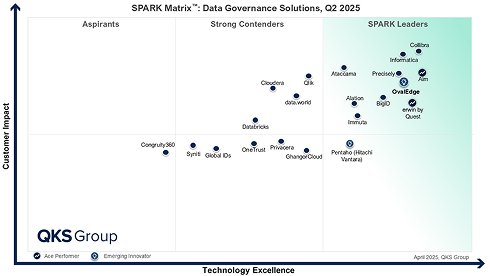
Disclosure: OvalEdge published this comparison. Our category, a governance layer that operates around and above semantic layer tools rather than competing with them directly, is described in the OvalEdge section below.
What problems do semantic layer tools solve?
Semantic layer tools stand between raw data and the surfaces that consume it. When they work, every BI dashboard, warehouse query, and AI-agent answer resolves against the same metric definition. When they do not, three problems compound in ways that show up in the boardroom before they show up in the data team's backlog.
1. Inconsistent metric definitions across teams
A finance analyst pulls quarterly revenue from the BI dashboard and gets $42.3M. A sales operations analyst pulls the same figure from the CRM export and gets $41.7M. Marketing pulls it from the attribution tool and gets $43.1M.
In fact, practitioners have also described having “net sales” defined differently across departments, resulting in conflicting numbers during leadership reviews.
All three numbers are calculated correctly, but each team just defined the metric slightly differently:
-
Finance includes deferred revenue
-
Sales excludes mid-quarter cancellations
-
Marketing counts booking date instead of invoice date
Without a semantic layer that owns the metric definition and enforces it downstream, every team ships its own version. The dashboard is not wrong. The CRM is not wrong. The problem is that "revenue" has no single owner, so every consumer of the number invents one.
OvalEdge expert insight: The revenue example is the version everyone recognizes. The harder version is when the metric is defined correctly in the warehouse and inconsistently in the BI layer. A semantic layer solves definition. A governance layer solves the lineage that proves every consumer actually resolves against it.
2. Limited access to governed data for BI and AI
Raw data lives in the warehouse. Governed data lives behind a certification workflow, a classification policy, and a lineage graph that most BI users and every AI agent skip on the way to a query. When access is limited to what has been governed, self-service analytics stalls and half the org falls back to shadow SQL.
The alternative most teams settle for is worse: open access to everything, with a hope that analysts and copilots will pick the right column. A semantic layer solves this by making the governed metric the default answer.
Every consumer, whether a Tableau dashboard or an LLM copilot, hits the same certified definition without needing to know which table it came from or which lineage step to trust.
3. AI agents inventing numbers the source of truth doesn't have
LLM copilots and agentic analytics tools now query the same warehouses that BI teams have spent years curating, and return answers that contradict the governed dashboard right next to them.
The gap is in the semantic layer. When an LLM sees a column called “revenue_usd,” it infers the metric definition on the fly, because nothing tells it which of six revenue columns the board deck actually uses.
McKinsey's 2025 State of AI survey found inaccuracy to be the most-cited risk of gen AI use, with 63% of organizations naming output reliability as a top concern.
A semantic layer built for AI-agent readiness exposes metric definitions, join logic, and access policies as structured context the LLM can query. When a finance leader asks a copilot "what was Q3 ARR," the answer resolves against the same certified metric the board deck used.
Example - A telecom finance team traces Q3 revenue leakage across mediation, rating, and billing. The governed dashboard resolves against post-adjustment billing. An AI agent starts from the mediation layer, picks up pre-adjustment figures, and reports a gap that mixes real leakage with timing differences the billing system already reconciled.
Also read: What is a semantic data model and why every analytics team needs one
12 semantic layer tools worth evaluating in 2026
The 12 tools below are grouped by architecture so buyers can shortlist the platforms that fit a specific data perimeter, from governance layers to BI-native semantic models.
Governance layer around semantic tools
These platforms operate above the BI and AI tools' queries, adding catalog, lineage, and certification workflows so metric definitions stay consistent across every consumer. Best fit when governance depth matters more than a specific semantic modeling paradigm.
1. OvalEdge

OvalEdge is a governance platform that connects the metric definitions, lineage, and access policies enterprises have already established across their semantic engines, BI tools, warehouses, and AI agents. Instead of shipping its own metric layer, it governs the metric infrastructure an enterprise already runs.
How it fits around semantic tools rather than competing with them
A semantic engine defines the metric. OvalEdge governs everything around it: which catalog assets feed the definition, whether the definition passed certification, who owns it, what lineage connects it to the source columns, and which downstream consumers break when it changes.
A metric definition on its own answers "what does Q3 ARR mean?" It does not answer where the number came from, who approved it, or whether the AI agent is using the same version the board deck used. Those are governance questions, and they sit outside the semantic engine's scope.
Named agents own each part of that governance flow:
-
Curo classifies and manages metadata across warehouses and catalogs
-
Sift maintains the column-level lineage graph from source table to metric consumer
-
Nexus keeps context connected across sources through the Enterprise Context Graph, so a metric change propagates to every downstream consumer
-
askEdgi grounds LLM answers in governed context, connecting copilot queries to catalog-approved metric definitions
-
Notary handles the certification workflow that marks a metric production-ready before it reaches a dashboard or an agent
The practical result of those agents working together is less time spent chasing definitions and lineage manually. '
A Forrester Total Economic Impact study found 337% ROI over three years for OvalEdge customers, with up to 30% improvement in analyst productivity.
Where it fits and where it doesn't
OvalEdge fits enterprises running multiple semantic engines and BI tools that need one governance layer to keep metric definitions, lineage, and access policies consistent across every consumer, including AI agents. Single-warehouse teams without an established governance function often start with a warehouse-native or headless semantic tool first.
OvalEdge expert insight: The governance layer works best when the semantic engine is already running and producing metrics. OvalEdge does not replace it. It connects the definitions, lineage, and policies the enterprise has already built through the Enterprise Context Graph, so every consumer from a Tableau dashboard to an LLM agent resolves against the same certified metric.
2. Atlan
Atlan is an active metadata catalog that adds governance, lineage, and discovery around metric definitions from external semantic engines. Atlan Inc. delivers the platform, with active-metadata policies driving how the catalog interacts with downstream tools.
How it separates the metric layer from the catalog
Atlan operates on metric definitions that live in an external semantic engine, layering active metadata on top. That layer covers:
-
Column-level lineage from source column to metric output
-
Glossary linkage to shared business terminology
-
Data-quality signals surfaced against the metric definition
-
Ownership metadata and stewardship workflows
-
Policy enforcement at the catalog level
The distinction matters when a metric is queried. The semantic engine returns the calculated value. Atlan carries the surrounding context: who owns the metric, which upstream columns feed it, whether it passes quality thresholds, and which access policies apply. Data teams often adopt Atlan when the catalog is the missing piece around an existing semantic setup.
Where it fits and where it doesn't
Atlan fits data teams standardizing on a catalog first, then wrapping governance and lineage around whichever semantic engine runs underneath. It works less well as a standalone semantic layer, since it does not ship a metric engine of its own and expects metric definitions to originate in an external tool.
Headless semantic layer
Headless semantic layers expose governed metrics as an API rather than through a UI. Product and engineering teams reach for them when metrics need to power embedded dashboards, internal apps, or LLM copilots through a callable service.
3. Cube
Cube is a headless semantic layer that exposes governed metrics through a single API to embedded analytics, LLM copilots, and internal tools. Cube Inc. maintains the open-source engine and offers Cube Cloud for hosted deployments.
How it powers embedded analytics and LLM apps
Cube's API-first architecture is the reason it appears in most modern-stack decisions. Metrics are defined in YAML, exposed through REST, GraphQL, SQL, and MDX endpoints, and pre-aggregated in memory for sub-second responses.
Two use cases dominate Cube deployments:
-
Customer-facing embedded dashboards, where a single metric definition serves every embedded surface and the pre-aggregation layer holds up under high-concurrency workloads
-
LLM copilot builds, where Cube's MCP server exposes the semantic layer as a callable tool so an agent queries pre-defined metrics instead of generating fresh SQL against raw tables
Governance is API-level and role-based, without a native metadata catalog behind it. Most enterprise deployments pair Cube with an external catalog for lineage and certification.
Where it fits and where it doesn't
Cube fits product and engineering teams embedding metrics into customer-facing apps and LLM copilot builds that need a callable semantic API. It works less well for enterprises needing catalog-native lineage and certification behind the metric layer, and for non-technical analysts who prefer UI-driven modeling over YAML.
Warehouse-native and lakehouse-native
These semantic layers are built directly into the warehouse or lakehouse that already stores the data. Metrics live as native platform objects, inherit the platform's access controls, and query through its engine, which suits teams standardizing on a single data platform.
4. dbt Semantic Layer (MetricFlow)
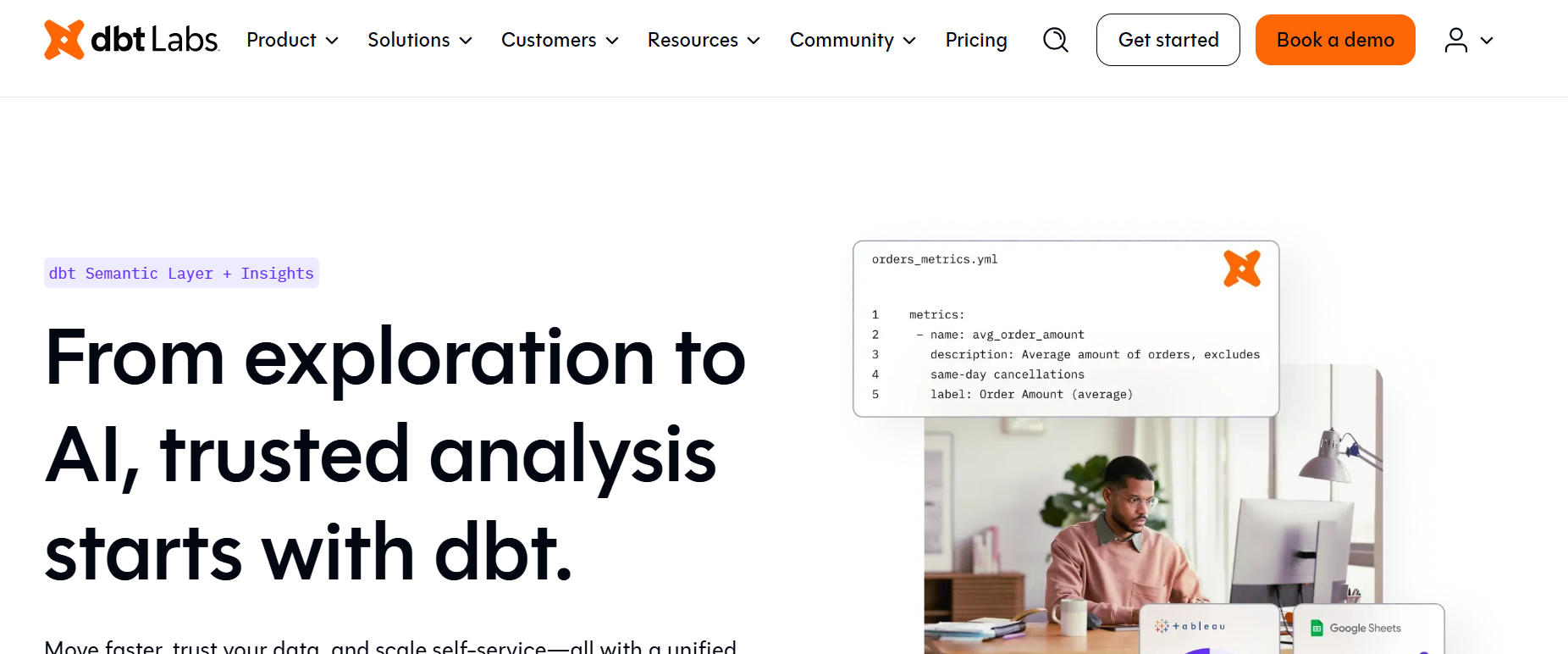
dbt Semantic Layer uses the MetricFlow engine to define metrics as YAML alongside dbt models, then serves them through a governed API to downstream BI tools and AI agents. dbt Labs maintains it as part of dbt Cloud.
How it works inside and outside a dbt-native shop
Inside a dbt-native shop, the Semantic Layer is the natural extension of an existing modeling workflow. Metrics are defined in YAML files that live next to the dbt models they reference, versioned through Git, and reviewed through the same pull-request process the team already runs.
MetricFlow compiles the definitions into SQL at query time, so downstream tools resolve against consistent logic without duplicating metric code in every BI layer.
Outside a dbt-native shop, adoption gets harder. The Semantic Layer requires:
-
dbt Cloud, since the Semantic Layer API does not run in dbt Core
-
YAML modeling comfort across the team defining metrics
-
A downstream tool or app that speaks the Semantic Layer API
-
A separate catalog for governance, since dbt does not ship one
Teams working outside the dbt paradigm usually adopt a different semantic layer or wrap dbt with an external metric layer.
Where it fits and where it doesn't
dbt Semantic Layer fits teams already running dbt Cloud with a mature YAML modeling practice and downstream tools that integrate with the Semantic Layer API. It works less well for teams that need a UI-driven metric builder, or for enterprises that require an integrated catalog and lineage graph alongside the metric layer.
5. Snowflake Semantic Views
Snowflake Semantic Views is a native Snowflake feature that defines metrics as SQL objects inside the warehouse, so BI tools, Cortex agents, and downstream apps all resolve against the same definition. Snowflake maintains it as part of the platform.
How it compares to a full semantic layer
Semantic Views handle the metric-definition part of the semantic layer job. Metrics are declared with ‘CREATE SEMANTIC VIEW DDL’, versioned like any Snowflake object, and queried through SQL, natural language via Cortex, or standard BI connectors. Access follows the existing Snowflake role and grant model, so RBAC and row-level security are inherited from the warehouse itself.
Where they stop short of a full semantic layer:
-
No metadata catalog outside Snowflake, so lineage across non-Snowflake sources is not tracked
-
No certification workflow to mark a metric production-ready before consumers pull it
-
No cross-warehouse federation, so metrics stay inside a single Snowflake account
-
Limited support for BI tools that expect a different modeling paradigm
Teams often use Semantic Views as the metric definition layer and pair them with an external governance layer for lineage and certification.
Where it fits and where it doesn't
Semantic Views fit Snowflake-only orgs consolidating metric definitions inside the warehouse and querying them through Cortex or SQL-native BI tools. They work less well for enterprises running multi-warehouse or multi-cloud data platforms, or for teams that need a catalog-native lineage graph behind every metric.
6. Databricks Metric Views

Databricks Metric Views is a native lakehouse feature that defines governed metrics inside the Databricks Data Intelligence Platform, so BI queries, ML pipelines, and Genie conversations resolve against consistent definitions. Databricks maintains it as part of the platform.
How it works with Unity Catalog and Genie
Metric Views live inside the Data Intelligence Platform, so governance and access flow through Unity Catalog by default. A metric defined in a Metric View inherits the same column-level lineage, ownership metadata, and access policies as any other Unity Catalog object.
For AI workloads, Genie (Databricks' conversational analytics interface) resolves natural-language questions against Metric View definitions rather than raw tables. The integration covers four surfaces:
-
Unity Catalog lineage propagates metric changes to every downstream consumer through the same graph BI tools already read
-
Genie grounding anchors LLM answers in Metric View definitions, so a business user asking "what was Q3 revenue" gets the governed metric
-
AI/BI dashboards query the same Metric Views, keeping BI-tool numbers and Genie answers aligned
-
ML pipelines consume the same definitions, so feature engineering does not drift from the reported metric
Where it fits and where it doesn't
Metric Views fit Databricks-native lakehouses that already run Unity Catalog and want governance, BI, and AI queries resolving against the same metric definitions without a separate semantic layer. They work less well for organizations running significant analytics outside Databricks, or for teams that need to federate metrics across other warehouses and data platforms.
Universal semantic layer
Universal semantic layers translate one semantic model into the native protocol of every connected BI tool and AI application. They fit enterprises running multiple BI stacks and needing consistent metrics across all of them, especially at OLAP scale.
7. AtScale
AtScale is a universal semantic layer that exposes a single set of governed metrics to multiple BI tools and AI applications, backed by an in-memory query acceleration engine tuned for enterprise-scale analytics. AtScale Inc. delivers the platform.
How it keeps multi-BI environments consistent at enterprise scale
AtScale operates between the warehouse, translating a single semantic model into the native protocol of each connected BI tool. Metrics defined once in AtScale's modeling layer serve MDX-based queries, SQL-based workbooks, and natural-language questions from AI-Link, without redefining logic per tool.
Two capabilities carry the enterprise-scale story:
-
Virtual cubes and pre-aggregations stored in the acceleration engine keep query latency low even against tens of billions of rows
-
AI-Link exposes the semantic model as grounded context for LLM copilots, so agent queries return governed metrics rather than fresh interpretations of warehouse columns
Governance runs through row-level security policies, MDX-based access controls, and metric versioning inside the modeling workspace.
Where it fits and where it doesn't
AtScale fits enterprises running multiple BI tools that need consistent metrics and OLAP-scale performance across all of them, especially in industries with heavy MDX-based reporting workflows. It works less well for smaller teams standardizing on a single modern BI tool, or for stacks where implementation complexity and licensing overhead outweigh the multi-BI benefit.
8. Dremio
Dremio is a universal semantic layer for lakehouse environments that exposes governed metrics across Apache Iceberg tables, cloud warehouses, and operational databases through a single query interface. Dremio Inc. delivers the platform.
How it federates governed metrics across the lakehouse
Dremio's core play is federation. The Semantic Layer holds metric definitions, join logic, and access policies once, then serves queries across every registered source without materializing data into a central warehouse. Metrics live as SQL views inside virtual datasets, versioned through the platform's Git-like catalog structure.
The AI Semantic Layer adds two capabilities on top:
-
Text-to-SQL grounding, so LLM queries resolve against governed metric definitions rather than raw Iceberg tables
-
Query acceleration via Reflections, pre-computed data structures that speed up interactive queries against large lakehouse datasets without breaking metric consistency
Access is enforced through Dremio's role-based grants, and lineage is captured in the platform's dataset graph.
Where it fits and where it doesn't
Dremio fits modern lakehouse teams standardized on Apache Iceberg who need federated queries across the lake, warehouses, and operational sources without duplicating data into a central store. It works less well for organizations without a lakehouse foundation, or for teams that need a mature enterprise catalog with certification workflows beyond what Dremio's built-in governance covers.
BI-native semantic layer
BI-native semantic layers are built into a specific BI platform, with metrics modeled inside that tool and consumed most naturally by its own reports, dashboards, and AI features. Best fit when the organization has already standardized on that BI tool.
9. Looker (LookML)
Looker is a BI-native semantic layer built on LookML, a modeling language that defines metrics, dimensions, and joins as versioned code. Google Cloud maintains the platform and integrates it with the wider Google Cloud data stack.
How it earns the LookML learning curve
LookML is the reason Looker is in this list, and the reason some teams walk away from it. Every metric, dimension, and join lives as versioned code in a LookML project, so a change to a metric definition propagates through every dashboard, embedded report, and API consumer at once.
The trade-off has three requirements:
-
An analytics engineer or LookML developer who owns the modeling layer
-
Git-based workflows for reviewing and deploying metric changes
-
A team comfortable with code-based modeling rather than a UI-driven experience
Teams that put in the modeling work get a semantic layer that scales cleanly across hundreds of dashboards. Gemini in Looker adds natural-language querying on top, so business users get answers grounded in the LookML model rather than raw tables.
Where it fits and where it doesn't
Looker fits Google Cloud shops that already run BigQuery and are ready to invest in an analytics engineering team to own the LookML layer. It works less well for smaller teams without dedicated modeling capacity, or for organizations standardized on non-Google BI tools that would need to consume Looker's model through a different interface.
10. ThoughtSpot Spotter Semantics
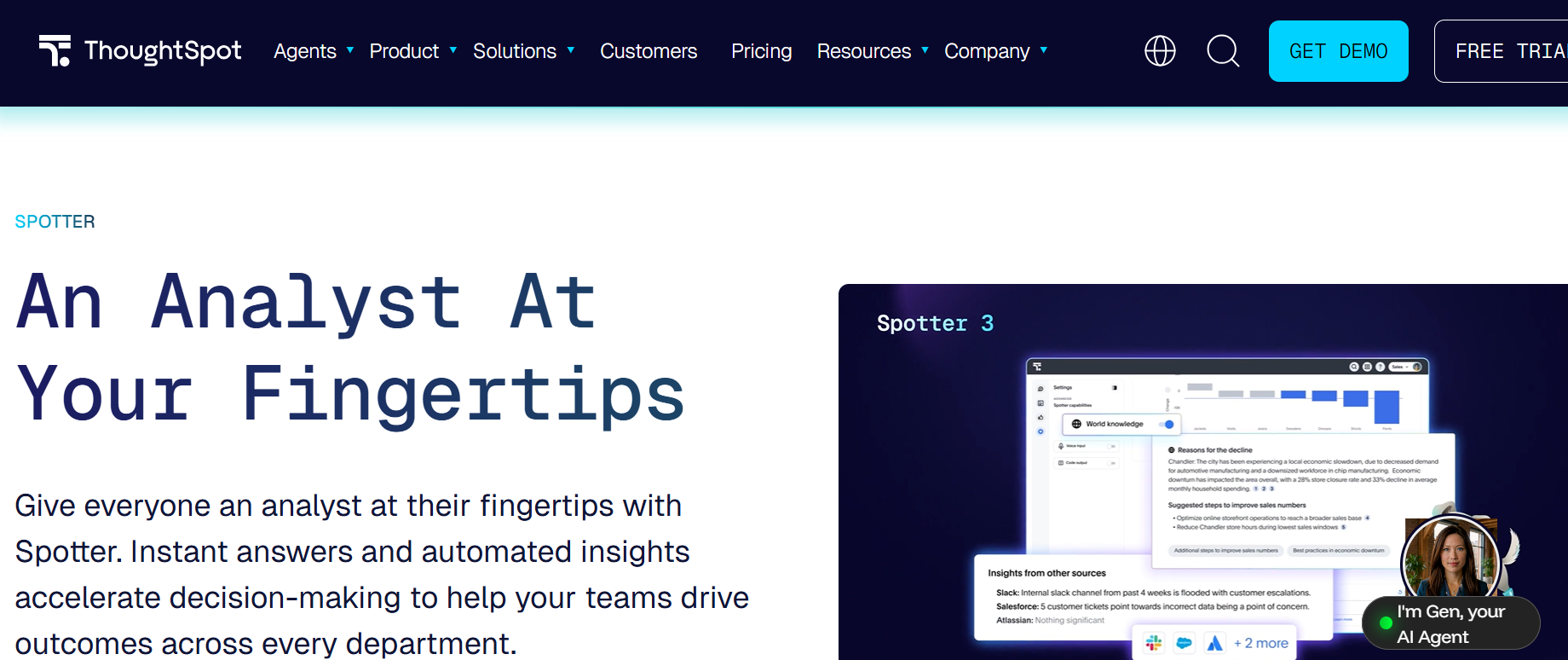
ThoughtSpot Spotter Semantics is the semantic layer that grounds ThoughtSpot's Spotter agent, defining metrics, dimensions, and business logic so natural-language questions return governed answers. ThoughtSpot Inc. delivers Spotter as part of the search-first analytics platform.
How it grounds conversational answers in governed data
Spotter Semantics is what turns a plain-English question into a governed answer. A business user typing "how are we tracking on Q3 revenue by region" hits the Spotter agent, which consults the semantic layer for metric definitions, join logic, and access policies before executing a query.
The semantic layer covers three responsibilities:
-
Metric and dimension modeling through TML, ThoughtSpot's modeling language, versioned as code
-
Governance rules including row-level security, column-level access, and object-level permissions inherited into every Spotter answer
-
Conversation memory that lets follow-up questions ("break that down by product line") resolve against the same governed context as the original query
Business users get answers grounded in the modeled semantic layer, so a "Q3 revenue" question returns the same figure whether the user asks in Spotter or opens a search-driven dashboard.
Where it fits and where it doesn't
ThoughtSpot Spotter Semantics fits organizations that have chosen ThoughtSpot as their primary analytics interface and want conversational answers grounded in a governed model rather than raw warehouse queries. It works less well as a standalone semantic layer for BI tools outside ThoughtSpot, since the modeling investment is tied to the platform.
11. Power BI Semantic Models

Power BI Semantic Models is Microsoft's tabular semantic layer (previously called Power BI Datasets), where metrics, dimensions, and relationships are modeled once and reused across Power BI reports, workspaces, and Fabric artifacts. Microsoft delivers it inside the Power BI service.
How it serves BI tools outside Microsoft
Power BI Semantic Models are built for Power BI, and everything about them assumes that lineage. The model runs on the tabular engine, is queried through DAX or MDX, and inherits governance from Fabric and Purview. Inside the Microsoft stack, a semantic model refreshed once propagates to every report and Copilot answer that consumes it.
For BI tools outside Microsoft, three connection paths exist:
-
XMLA endpoints for external MDX-compatible clients to query the model directly
-
DirectQuery mode in downstream tools that support it, though performance and DAX-feature parity vary
-
Analysis Services connections through the underlying tabular engine
Non-Microsoft consumers lose some of Power BI's row-level security enforcement and Copilot integrations. Enterprises running mixed BI stacks often keep Power BI Semantic Models for Microsoft-native reporting and add a universal semantic layer for cross-tool consumption.
Where it fits and where it doesn't
Power BI Semantic Models fit Microsoft-stack enterprises that have standardized on Power BI as the primary BI tool and want a governed model reused across reports, workspaces, and Copilot answers. They work less well for organizations running significant reporting outside the Microsoft stack, where the model's Microsoft-native features do not carry over cleanly.
12. Tableau Semantics
Tableau Semantics is Tableau's semantic layer, defining governed metrics and business logic that surface consistently across Tableau workbooks, Tableau Pulse insights, and Einstein Copilot conversations. Salesforce delivers it as part of the Tableau and Data Cloud ecosystem.
How it works with Einstein Copilot and Tableau Pulse
Tableau Semantics feeds three surfaces at once: Tableau workbooks, Tableau Pulse, and Einstein Copilot. A metric defined in the semantic layer surfaces in all three without redefinition.
The integration covers:
-
Tableau workbooks where authors reference the governed metric rather than rebuilding calculations in each workbook
-
Tableau Pulse, which watches the metric for anomalies, digest triggers, and threshold breaches, and notifies stakeholders proactively
-
Einstein Copilot, which grounds natural-language questions in the same metric definition, so an answer in a Slack thread matches the number on a Tableau dashboard
Governance runs through Tableau Catalog with lineage across metric definitions, workbooks, and downstream consumers. Access follows Tableau's project and permission structure, extended by Salesforce's identity model for cross-cloud consumers.
Where it fits and where it doesn't
Tableau Semantics fits Tableau-standardized organizations, especially those already running Salesforce Data Cloud and wanting proactive metric intelligence through Pulse and conversational analytics through Einstein Copilot. It works less well for teams outside the Tableau or Salesforce stack, since the semantic model's richer features assume those consumers.
Teams working outside the dbt paradigm usually adopt a different semantic modeling tool or wrap dbt with an external metric layer.
How to choose the right semantic layer tool
The decision comes down to five questions. Each maps to a scoring criterion in the copyable scorecard at the end of this section, so an evaluation team can move from these questions to a shortlist in one working session.
Where does the data actually live?
The first question is a data-perimeter question. A team running a single warehouse has a different shortlist than one federating across a lakehouse and multiple databases.
-
One warehouse, one platform: warehouse-native or lakehouse-native tools inherit the platform's access controls and query engine
-
Multiple BI tools consuming shared metrics: universal semantic layers translate a single model into each BI protocol
-
Embedded analytics or LLM apps: headless semantic layers expose the metric layer as an API
-
Governance around an existing semantic setup: governance-layer platforms wrap catalog, lineage, and certification around whatever engine is already in place
The perimeter narrows the category before individual tools get evaluated.
Does the semantic modeling paradigm fit the team?
Modeling paradigms range from YAML-defined metrics versioned through Git, to UI-driven modeling, to code-based domain-specific languages. A team already running Git-based analytics engineering picks up YAML modeling faster than a team of business analysts used to a UI. The wrong paradigm shows up as a stalled implementation six months in, not on day one.
Three checks that surface fit early:
-
Who owns the metric layer once it is live: analytics engineer, BI developer, or business analyst?
-
Is the team comfortable reviewing metric changes through pull requests, or does the workflow need to stay inside a UI?
-
Does the tool's modeling language have a learning curve the team is prepared to invest in?
How deep does governance run?
Governance depth separates a semantic layer from a metric definition tool. The full governance stack includes:
-
Column-level lineage from the source table to the metric consumer
-
Certification workflows that mark a metric production-ready
-
Metadata policies covering ownership, quality thresholds, and access classification
-
Catalog integration where lineage and certification stay in sync with the wider data platform
A team running a governance function already will score a governance-layer platform higher on this criterion. A team without an established governance function may score a warehouse-native or headless tool higher for simplicity, then add a governance layer once the stack diversifies.
Deloitte's Q1 2025 State of Generative AI in the Enterprise report puts data-related issues, including quality, lineage, and access governance, as the top barrier to scaling gen AI in 55% of organizations, which is why this criterion often carries the highest weight in the scorecard below.
Are AI agents grounded in the same semantic layer?
AI-agent readiness is the newest scoring criterion and the fastest-changing. Three tests separate the tools that are ready:
-
Does the semantic layer expose metric definitions as structured context an LLM can query (MCP server, dedicated AI API, or equivalent)?
-
Do LLM answers resolve against the same governed metrics as the BI dashboards, or does the agent generate fresh SQL against raw tables?
-
Are governance policies (row-level security, column-level access) enforced when the agent queries the semantic layer?
PwC's 2026 AI Business Predictions report finds that nearly half of enterprises struggle to turn responsible AI principles into operational processes, even as 60% say responsible AI directly boosts ROI and efficiency.
A tool that fails these tests can still be a good BI semantic layer. It just does not extend cleanly to AI-native use cases without a separate governance layer wrapping it.
What does 12-month TCO look like across licenses, implementation, and platform lock-in?
TCO on semantic layer tools is rarely the sticker price. The real cost lands in three places:
-
Licensing across the semantic layer, its acceleration engine, and any required BI or warehouse tier
-
Implementation including modeling work, integration with existing tools, and training for the team owning the metric layer
-
Platform lock-in if the semantic model is tied to a specific BI tool or warehouse and cannot travel if the stack changes
A 12-month TCO estimate keeps the comparison honest. A tool that scores highest on features can lose on total cost, and a tool that seems expensive on license fees can win on lower implementation cost.
Below is a small scorecard evaluation teams can copy into a spreadsheet and rate each shortlisted tool against.
|
Criterion |
Weight (out of 100) |
Rating (1–5) |
Weighted Score |
|
Data perimeter fit |
20 |
0.00 |
|
|
Semantic modeling paradigm fit |
15 |
0.00 |
|
|
Governance depth |
25 |
0.00 |
|
|
AI-agent readiness |
20 |
0.00 |
|
|
12-month TCO |
20 |
0.00 |
|
|
Total |
100 |
0.00 |
How to use it:
-
Adjust the weights so they add up to 100, based on which criteria matter most for the stack
-
Rate each shortlisted tool from 1 to 5 on every criterion, using the tool sections above and each vendor's own product-page verification
-
Multiply weight by rating for the weighted score per row, then sum for a total out of 500
-
The tool with the highest total earns the pilot slot, not the automatic buy
The scorecard replaces gut-feel debate with a structured shortlist decision that any senior stakeholder can review.
Build a governed semantic layer
Every semantic layer tool in this list solves the metric definition problem. What separates them is what happens around the metric: the lineage graph, the certification workflow, the catalog integration, and the AI-agent grounding that turn a defined metric into a governed one every consumer can trust.
Most enterprises running semantic engines have already invested in data governance: business glossaries, data quality rules, lineage, ownership, and access policies. That foundation doesn't need to be rebuilt. It needs to be connected and activated so every consumer, from BI dashboards to AI agents, resolves against the same certified metric.
OvalEdge does exactly that. The Enterprise Context Graph connects the governance artifacts an enterprise has already created and makes them usable across analytical AI use cases, from sales forecasting and revenue analysis to fraud detection and churn prediction. One governance layer that turns an existing data governance investment into trusted, governed analytical AI.
Book a demo to see how OvalEdge wraps governance around your semantic layer through the Enterprise Context Graph.
.png?width=1081&height=173&name=Forrester%201%20(1).png)
.png?width=1081&height=241&name=KC%20-%20Logo%201%20(1).png)