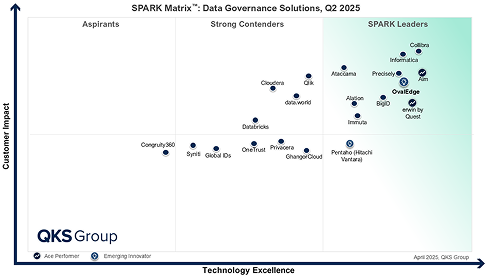
Metadata management tools organize, discover, and govern the metadata that describes an organization's data assets. They keep track of what data exists, where it lives, who owns it, and how it connects across systems.
Without them, teams spend more time searching for data than using it. Definitions drift, lineage breaks, and reports built on the same source return different numbers because no one agreed on what the terms meant. These problems compound as data stacks grow, because more sources and more consumers mean more metadata to manage manually.
This guide compares seven metadata management tools for 2026, covering what each does well, where it falls short, and which type of organization it fits best.
What are metadata management tools?
Metadata management tools organize, classify, and govern the metadata that describes an organization's data assets. They automate discovery, map lineage from source to consumption, enforce governance policies, and make enterprise data searchable and trustworthy across teams and systems.
These tools work across four categories of metadata, and most platforms handle some better than others.
|
Type |
What it covers |
Primary users |
|
Technical |
Schemas, column definitions, data types, ETL mappings, transformation logic |
Data engineers |
|
Business |
Glossary terms, ownership assignments, governance policies, business rules |
Analysts, stewards |
|
Operational |
Runtime statistics, job schedules, timestamps, data volumes, system logs |
Platform teams |
|
Usage |
Access patterns, query frequency, user ratings, annotations |
Governance leads |
Enterprise platforms tend to cover all four. Lightweight and open-source tools often stop at technical metadata, leaving business and usage categories undocumented.
What is active metadata management?
Active metadata management uses metadata as a live operational layer that triggers actions, surfaces recommendations, and automates governance in real time. It replaces the passive model where metadata sits in a repository and gets updated by stewards on a schedule.
The difference is practical:
-
Passive metadata management stores metadata in a catalog for teams to consult. Because updates depend on manual work, new assets may go undocumented, definitions may drift, and broken lineage may go unnoticed.
-
Active metadata management collects updates from connected systems and uses them to trigger actions. It can flag quality or lineage changes, classify new assets, and pass current context to analytics tools and AI agents.
The distinction determines ongoing manual effort and whether AI agents receive current metadata or static documentation.
OvalEdge expert insight: Active metadata is not a product feature. It is an architectural decision. The question is whether metadata flows into decisions automatically or waits to be looked up.
Why your modern data stack needs metadata management tools
Five shifts have made metadata management non-negotiable for enterprise data teams.
-
Multi-cloud and hybrid complexity: Most enterprises now manage data across multiple clouds, SaaS applications, internal databases, and real-time pipelines. Without centralized metadata, teams lose track of what data exists, where it lives, and how it connects across systems.
-
Regulatory pressure: GDPR, CCPA, HIPAA, and sector-specific regulations require proof of data control. Metadata tools track lineage, map ownership, and enforce policies, making audits faster and noncompliance less likely.
-
AI agent readiness: AI agents and LLMs consuming enterprise data need live, governed metadata to produce trustworthy answers. Without lineage, classification, and access policies attached to each asset, AI outputs lack traceability and compliance teams cannot sign off on them.
-
Self-service analytics adoption: Well-managed metadata removes the dependency on IT for data discovery. Search, glossary, and lineage views allow analysts to find and trust data independently, cutting request queues and time-to-insight.
-
Operational efficiency: Structured, searchable metadata means less time spent hunting for assets, fewer duplicate datasets, and less manual documentation. Decision-making becomes faster and less reliant on institutional knowledge.
Metadata management tools: comparison at a glance
The metadata management market spans enterprise governance platforms, active metadata engines, and lightweight open-source frameworks. Each category serves a different stage of data maturity and a different set of operational priorities.
The table below maps the leading tools across the criteria covered in this guide.
|
Tool |
Active metadata |
AI / agent readiness |
Governance depth |
Best fit |
|
Enterprise governance metadata management tools |
||||
|
OvalEdge |
Yes (ECG, event-driven) |
Named agents, NL query (AskEdgi) |
Full stack (glossary, stewardship, certification, access) |
Mid-to-large enterprises needing unified governance + AI |
|
Collibra |
Yes (alerts, lineage) |
AI governance, model risk |
Full stack + regulatory compliance |
Large regulated enterprises with mature data offices |
|
Informatica |
Limited |
Metadata enrichment |
Full stack + impact analysis |
Enterprises with existing Informatica investments |
|
Active metadata / intelligence tools |
||||
|
Alation |
Yes (automated harvesting) |
NLP search, recommendations |
Moderate (glossary, stewardship) |
Orgs prioritizing discovery and user adoption |
|
Atlan |
Yes (core strength) |
Active metadata-as-code |
Moderate (usage-driven) |
Modern-stack teams embedding metadata into workflows |
|
Lightweight metadata management tools |
||||
|
Dataedo |
No |
No |
Basic (documentation-only) |
Small teams starting metadata documentation |
|
Open source metadata management tools |
||||
|
Apache Atlas |
No |
No (extensible via APIs) |
Basic (requires custom dev) |
Engineering teams with Hadoop deployments |
Our platform, OvalEdge, sits at the top of the table. It is scored on the same criteria as every other tool, and vendor rows are grouped by market segment so the comparison stays fair.
How to evaluate metadata management software
Not every platform fits every stack. The right choice depends on where an organization sits today and where its data strategy is headed. These eight criteria separate tools that check boxes from tools that actually hold up in production.
|
Criterion |
What to look for |
|
Integration breadth |
Pre-built connectors for warehouses (e.g., Snowflake, BigQuery), BI tools (Power BI, Tableau), pipelines (Fivetran, dbt), and SaaS APIs. Fewer custom integrations means faster time-to-value. |
|
Automated discovery |
Continuous scanning that detects new assets, classifies them, and maps lineage without manual tagging. Manual entry breaks down past a few hundred assets. |
|
AI and agent readiness |
NLP-driven search, anomaly detection, and asset recommendations are table stakes. The next tier is agent-ready metadata: APIs and event hooks that let AI agents query, tag, and act on metadata autonomously. |
|
Governance and stewardship |
Business glossary management, ownership assignment, approval workflows, and policy enforcement that keep metadata consistent and audit-ready across teams. |
|
Scalability |
Multi-domain ingestion, concurrent users, and frequent crawls without performance degradation. Ask vendors for benchmark numbers, not just claims. |
|
User experience |
A single interface that works for data engineers, stewards, and business analysts. If business users cannot self-serve, adoption stalls. |
|
Deployment flexibility |
SaaS, on-prem, and hybrid options. Pricing tied to users, assets, or features, with room to scale without contract renegotiation. |
|
Active metadata support |
Real-time lineage updates, usage-based recommendations, and automated quality signals. This is the gap between a static catalog and a living metadata layer. |
Quick decision path:
-
Compliance and policy enforcement: Prioritize governance controls and clear ownership.
-
AI and automation: Look for tools that keep metadata current and make it available to AI agents.
-
Cloud and on-premises systems: Check deployment options and whether the tool connects to your existing systems.
Top 7 metadata management tools for 2026
1. OvalEdge
G2 Rating: 5/5
OvalEdge is a collaborative data catalog and governance system featuring native connectors, automated lineage, and built-in AI assistant capabilities. The platform is built around the Enterprise Context Graph (ECG), which connects technical, business, and operational metadata into a single queryable graph.
Recognized by KuppingerCole as a Product Leader in metadata management for balancing depth with ease of use.
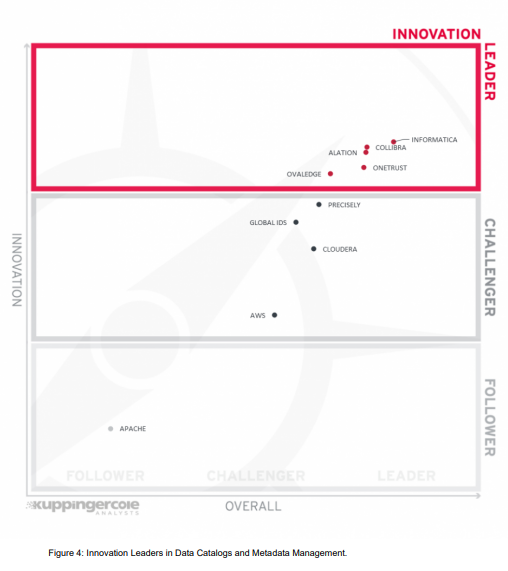
Download the KuppingerCole report and discover how OvalEdge leads in functionality, integration breadth, and strategic value.
How OvalEdge automates metadata discovery and governance
Automated crawlers discover and ingest metadata across 150+ connectors spanning warehouses, BI tools, pipelines, CRMs, and SaaS applications. Once ingested, named agents take over:
-
Sift detects sensitive data and auto-classifies assets
-
Curo manages data quality rules and triggers remediation
-
Notary enforces certification and approval gates
-
Helm orchestrates stewardship assignments and escalations
Governance rules propagate automatically as new assets enter the graph. Compliance coverage includes GDPR, HIPAA, and CCPA through audit-ready lineage trails and role-based access controls.
Bedrock, a commercial real estate firm managing a $7.5 billion portfolio, used OvalEdge to standardize terms like "property" and "revenue" across systems, replace disconnected reports with governed assets, and set up quality rules that catch invalid entries before they propagate. Auto-lineage alone saved months of manual work, with their team noting it let them "quickly understand data flows and address issues at the source."
How it enables self-service data access
AskEdgi provides natural-language querying over enterprise data, so analysts and business users can find trusted datasets without filing tickets or navigating technical schemas.
-
Nexus maps cross-system connectivity so lineage is visible end to end
-
Lingo standardizes terminology across business glossaries so search matches how teams actually describe their data
-
Packer packages metadata context for downstream consumption by AI models and pipelines
This makes the catalog a live context layer for AI agents rather than static documentation.
Limitations:
-
Best suited for organizations with a defined governance mandate. Teams looking only for lightweight discovery may find the setup heavier than needed.
-
Agent-driven automation requires initial configuration to map stewardship roles, policies, and glossary ownership before full value is realized.
Pricing: License-based, priced by connectors, capabilities, and author users. Includes 1,000 reader users at no extra cost. No consumption-based charges.
-
Where it fits: Mid-to-large enterprises that need governance, cataloging, and AI-readiness in one platform.
-
Where it doesn't: Small teams with no governance mandate that only need basic asset documentation.
How much of your metadata upkeep could your team automate? Book a demo with OvalEdge to find out.
2. Collibra
G2 Rating: 4.2/5
Collibra is an enterprise-grade data intelligence platform that places metadata at the core of discovery, governance, and compliance workflows across large organizations.
How it automates metadata discovery and governance
Collibra provides a unified data catalog for organizing and searching metadata across structured and unstructured data sources. Data lineage visualization shows how data flows and transforms across systems, while active metadata capabilities surface alerts, recommendations, and automation based on metadata changes.
Compliance and AI governance features round out the stack:
-
Data privacy and risk management tools support GDPR, HIPAA, and industry-specific regulations
-
Model governance tracks AI use cases, documentation, and bias risk across the enterprise
How it enables self-service data access
Business glossary and stewardship features enable consistent terminology, role assignments, and approval workflows to keep definitions aligned across teams. This makes it easier for business units to trust and use data confidently without relying on technical teams for context or validation.
Limitations:
-
Implementation complexity and cost can be prohibitive for mid-market teams or organizations without a dedicated data governance office.
-
The platform's depth is oriented toward mature governance programs. Teams early in their metadata journey may find the learning curve steep relative to immediate value.
Pricing: Enterprise-tier. Annual contracts typically start at $180K+ for small deployments, scaling with modules and user tiers. No public list pricing.
-
Where it fits: Large enterprises in regulated industries (finance, healthcare, insurance) that need mature governance frameworks and cross-functional collaboration.
-
Where it doesn't: Mid-sized organizations without dedicated governance staff or budget for enterprise-tier licensing.
3. Alation
G2 Rating: 4.4/5

Alation is a data intelligence platform built around collaboration, usability, and AI-assisted discovery, with a strong emphasis on making metadata accessible to business users.
How it automates metadata discovery and governance
Alation supports 120+ connectors with automated metadata harvesting and real-time updates to keep data documentation current. Data lineage and impact analysis tools trace how data moves and transforms across systems, aiding transparency and risk mitigation.
Governance capabilities include:
-
Business glossary and stewardship for standardized definitions, ownership assignment, and metadata asset workflows
-
Collaboration tools that support user annotations, endorsements, and usage tracking to build a living metadata ecosystem
How it enables self-service data access
Natural language search uses AI and machine learning to interpret user queries and surface relevant datasets quickly. The platform is designed for both technical and non-technical users, with a strong emphasis on data literacy and user adoption. Collaboration features mean metadata improves over time as more people contribute context, endorsements, and annotations.
Limitations:
-
Governance features are functional but lighter than dedicated governance-first platforms. Teams that need deep compliance tooling or policy enforcement as the primary use case may find gaps.
-
Enterprise pricing can be steep for mid-market organizations evaluating against lighter alternatives.
Pricing: Starts at ~$60K/year on AWS Marketplace for platform access. Most deployments land around $198K/year for 25 Creator users. No public list pricing.
-
Where it fits: Organizations prioritizing data discovery, literacy, and user adoption, especially those with decentralized data environments and data-savvy business teams.
-
Where it doesn't: Teams where regulatory compliance and policy enforcement are the primary driver rather than discovery and collaboration.
4. Atlan
G2 Rating: 4.5/5
Atlan is a next-generation active metadata platform for the modern data stack, built around collaboration, programmability, and metadata-as-code workflows.
How it automates metadata discovery and governance
Atlan automates metadata extraction, classification, and active lineage across deep integrations with tools like Snowflake, Redshift, dbt, Looker, and Power BI. Active metadata practices are a core design principle, not an add-on:
-
Event-driven alerts and auto-tagging trigger governance actions based on metadata changes
-
Auto-classification surfaces new assets without manual stewardship intervention
Governance capabilities include business glossaries, role-based access, and stewardship, oriented toward usage-driven governance that embeds into existing workflows rather than running as a separate function.
How it enables self-service data access
A unified data catalog powers search and contextual discovery for both business and technical users. Collaboration tools are built into the metadata layer: annotations, comments, and user-driven workflows surface knowledge across teams. The platform treats metadata as infrastructure rather than documentation, which means the catalog gets richer as teams use it.
Limitations:
-
Connector coverage is modern-stack focused. Enterprises with significant legacy systems or on-prem databases may find integration gaps.
-
Governance depth is moderate compared to enterprise-first platforms. Organizations with heavy regulatory compliance requirements may need supplementary tooling.
Pricing: Per-user subscription. Median annual spend around $50K, ranging from ~$30K to $180K+ depending on team size and tier.
-
Where it fits: Data-rich organizations with modern stacks that want to embed active metadata into engineering and analytics workflows.
-
Where it doesn't: Enterprises with legacy-heavy environments or compliance-first governance mandates that need deeper policy enforcement out of the box.
5. Informatica Metadata Manager
G2 Rating: 4.1/5
Informatica Metadata Manager is part of the Intelligent Data Management Cloud (IDMC) suite, focused on enterprise-scale metadata harvesting and lineage tracking in hybrid environments where legacy systems coexist with modern platforms.
How it automates metadata discovery and governance
Automated metadata harvesting collects metadata across databases, ETL pipelines, BI tools, data lakes, and cloud systems. Cross-system lineage tracking provides detailed visual lineage from source to consumption, including ETL mappings and data transformations.
Governance and compliance tools include:
-
Enterprise glossary with business term definitions, stewardship assignments, and metadata version control
-
Impact analysis that lets teams assess downstream effects of changes before executing data migrations or updates
How it enables self-service data access
Integration with the broader IDMC suite (data quality, data catalog, master data management) gives users end-to-end visibility across the data lifecycle. The platform is strongest when used as part of the full Informatica stack, where metadata flows between cataloging, quality, and integration modules without manual handoffs.
Limitations:
-
Value proposition is tightly coupled to the broader Informatica ecosystem. Organizations without existing Informatica investments will find less standalone appeal.
-
Active metadata support is limited compared to newer platforms. AI capabilities focus on metadata enrichment and classification rather than agent-ready APIs or event-driven automation.
Pricing: Median annual spend around $56K, ranging from ~$11K to $253K depending on data volume, connectors, and deployment model.
-
Where it fits: Enterprises with existing Informatica investments and complex hybrid data estates that need deep technical lineage across ETL processes.
-
Where it doesn't: Organizations looking for a standalone metadata platform or teams that prioritize active metadata and AI-agent readiness over traditional lineage depth.
6. Dataedo
G2 Rating: 5/5
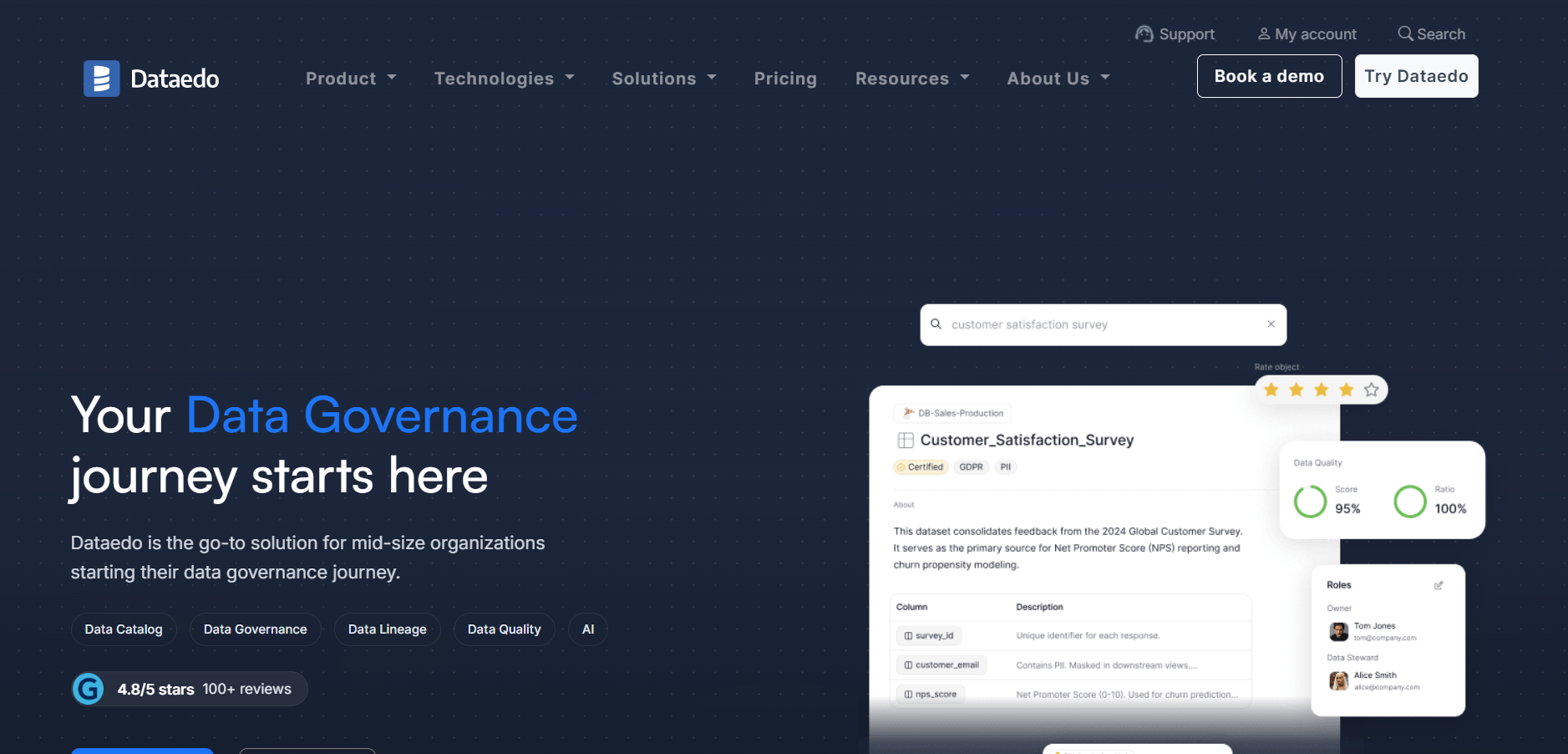
Dataedo is a lightweight, documentation-focused metadata management tool designed for teams starting their governance journey or organizations that need structured data documentation without enterprise-platform complexity.
How it automates metadata discovery and governance
Dataedo catalogs and organizes data assets across databases, data warehouses, and cloud systems. Business glossary features support tagging, classification, and consistent definitions across datasets. Visual lineage diagrams illustrate how data flows between tables and columns.
Automation is limited compared to enterprise platforms:
-
Metadata capture works in offline environments, a niche strength for restricted or air-gapped networks
-
No automated discovery, no event-driven triggers, and no active metadata capabilities
How it enables self-service data access
A shared web interface lets users comment, annotate, and contribute to data documentation collaboratively. The platform is straightforward enough that teams without dedicated data governance personnel can start documenting assets within days of setup.
Limitations:
-
No AI-driven discovery, no active metadata, and no agent-ready features. Teams that need automation beyond manual documentation will outgrow the platform quickly.
-
Governance is documentation-driven rather than policy-enforced. No stewardship workflows, approval gates, or compliance-specific tooling.
Pricing: Three tiers from $18K to $32K/year. Minimum 3 editors, unlimited viewers. Supports on-prem and cloud deployment.
-
Where it fits: Small to mid-sized teams with early-stage metadata maturity looking for affordable, structured data documentation.
-
Where it doesn't: Organizations that need automated governance, active metadata, AI readiness, or regulatory compliance tooling.
7. Apache Atlas (open source)
G2 Rating: 4.5/5
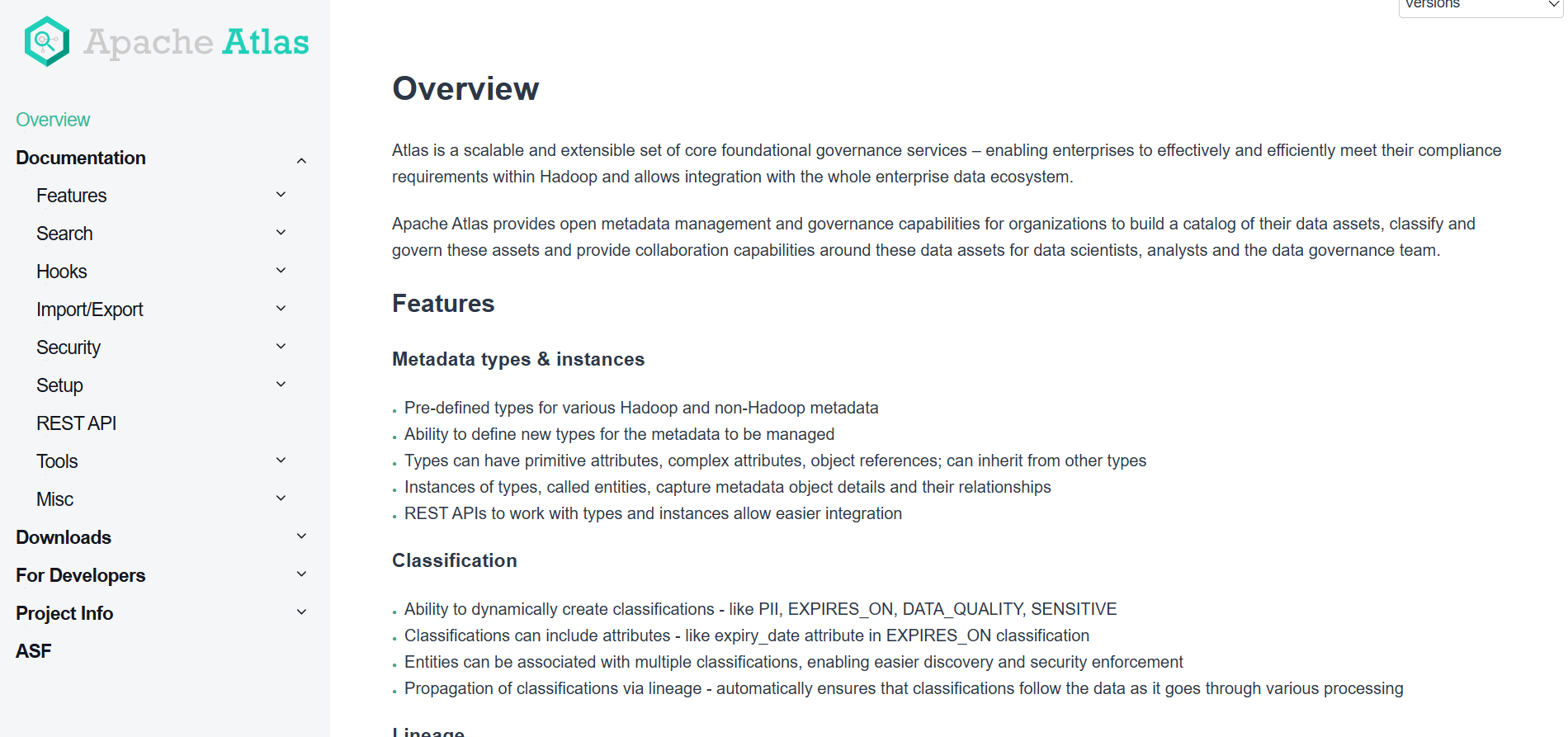
Apache Atlas is an open-source metadata management and governance framework developed within the Hadoop ecosystem, favored by engineering teams that want full control over lineage, classification, and policy enforcement.
How it automates metadata discovery and governance
Atlas captures metadata across Hadoop-based systems like Hive, HDFS, and Kafka, with lineage tracking across ingestion, transformation, and access layers. Entity classification tags data assets with regulatory or business context (PII, Confidential) for policy enforcement.
Security and policy integration extends through Apache Ranger:
-
Granular data access policies enforced at the asset level
-
REST APIs and hooks for integrating Atlas into custom data pipelines or governance workflows
How it enables self-service data access
Self-service capabilities are minimal out of the box. Atlas is built for engineering teams, not business users. Discovery and search are functional but lack the AI-driven recommendations, natural language querying, or collaboration features found in commercial platforms. Organizations that need broader user adoption will need to build a UI layer or integrate with a separate discovery tool.
Limitations:
-
Hadoop-centric architecture limits relevance for modern cloud-native stacks. Teams working primarily with Snowflake, BigQuery, or dbt will find connector coverage thin.
-
No built-in business glossary management, stewardship workflows, or compliance reporting. Governance capabilities require significant custom development.
Pricing: Free and open source. Infrastructure, setup, integration, and ongoing maintenance costs fall on internal engineering teams.
-
Where it fits: Engineering-heavy teams with large Hadoop deployments and the resources to maintain open-source infrastructure in-house.
-
Where it doesn't: Organizations without dedicated engineering capacity for setup and maintenance, or teams with modern cloud-native stacks that need broader connector coverage.
Open-source vs. enterprise metadata platforms
Open-source tools offer flexibility and community-driven development. However, governance features are minimal or must be custom-built, and setup, integration, and maintenance fall entirely on internal engineering teams. The total cost of ownership can rival commercial platforms even though the software itself is free.
Enterprise platforms bundle automated discovery, lineage, stewardship, compliance, and business glossary management into a single deployment. The trade-off is licensing cost and vendor dependency, but operational overhead drops significantly.
The table below breaks down how the two categories compare across the factors that shape total cost of ownership and time to value.
|
Decision factor |
Open-source tools |
Enterprise platforms |
|
Setup |
Internal engineering effort |
Vendor-supported onboarding |
|
Connectors |
Community-maintained; coverage varies |
Pre-built, certified, and vendor-maintained |
|
Governance controls |
Manual configuration through code or plugins |
Built-in workflows, policies, and audit trails |
|
AI and automation |
Limited to what the community builds |
Native classification, lineage, and NL querying |
|
Support |
Community forums and GitHub issues |
Dedicated SLAs, training, and customer success |
|
Cost model |
Free license; internal staffing and infra costs |
Subscription or license fee; lower internal overhead |
How to implement a metadata management tool
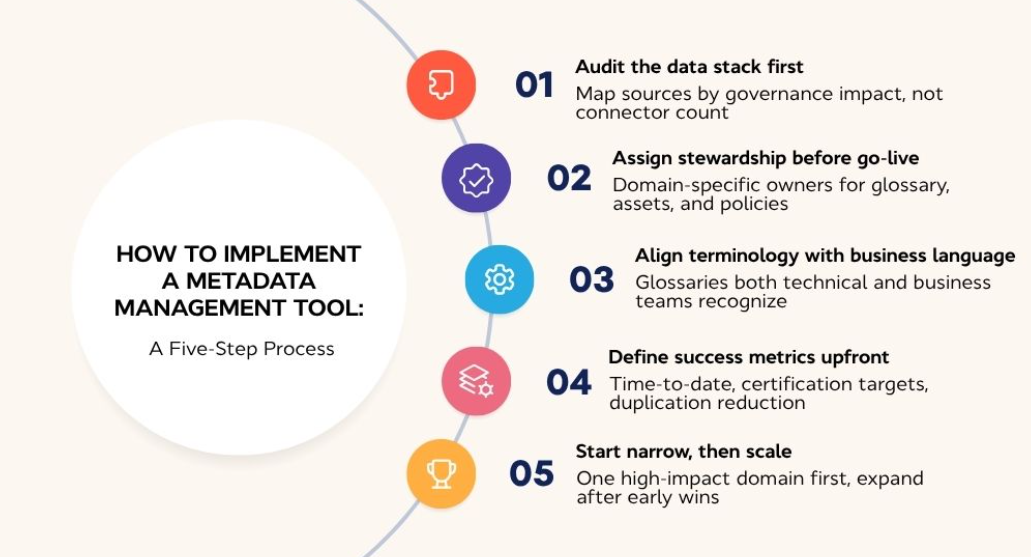
A metadata management platform does not deliver value on its own. The rollout strategy determines whether the tool becomes a trusted operating layer or an expensive shelf item. Five steps separate successful implementations from stalled ones.
-
Audit the data stack first. Map every source the platform needs to connect to. Prioritize integrations by usage and governance impact, not connector count. Start with core systems, then expand.
-
Assign stewardship before go-live. Without clear ownership, metadata goes stale within weeks. Assign domain-specific stewards for glossary accuracy, certified assets, and policy reviews.
-
Align terminology with business language. When glossary terms reflect engineering conventions instead of how business teams talk, adoption stalls. Map stakeholder vocabulary to technical assets and build glossaries both audiences recognize.
-
Define success metrics upfront. Set targets like reducing time-to-data by 40%, certifying 100 core reports in 90 days, or cutting report duplication by 25%. Track catalog engagement and data quality trends monthly.
-
Start narrow, then scale. Pick one high-impact domain like customer or finance data. Build trusted metadata assets for that scope and use early wins to validate the approach before expanding.
Choose the right metadata management tool
The right metadata management tool is not the one with the longest feature list. It is the one that fits an organization's data maturity, technical ecosystem, and governance roadmap. Three steps help narrow the field:
-
Assess metadata maturity. Identify where gaps cause the most friction. Teams early in their journey may start with lightweight cataloging. Mature programs need policy enforcement and AI-driven classification.
-
Shortlist with a structured framework: Use the evaluation criteria and comparison table above to score vendors on integration breadth, automation depth, governance workflows, scalability, and cost. Involve both IT and business stakeholders in scoring.
-
Run a focused pilot: Pick one high-impact domain like customer data or analytics reporting. Define success metrics upfront and measure with real users.
OvalEdge brings these capabilities together through the Enterprise Context Graph, connecting technical, business, and operational metadata into a single queryable layer that scales with the data stack.
Want to see how it works with your data environment?Schedule a personalized demo