.jpg)
Imagine your analytics team is testing a new dashboard, and someone uploads real customer data instead of a masked dataset. It happens more often than you might think, and one small oversight like that can expose sensitive information to the wrong people. That's why data masking has become such a priority.
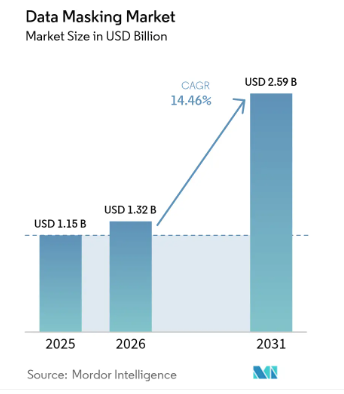
The data masking market is worth USD 1.32 billion in 2026 and is forecast to reach USD 2.59 billion by 2031, a compound annual growth rate of 14.46% as per a recent Mordor Intelligence study.
It shows how quickly privacy protection is becoming a standard part of how modern data teams work.
Data masking tools replace sensitive values with realistic, non-identifiable data, allowing teams to test, analyze, and innovate safely without putting real information at risk.
In this guide, we'll explain what data masking really means, the key types you'll encounter, and share the ten best data masking tools for 2026.
You'll also find practical tips to help you choose the right solution and apply it effectively so your organization can keep data private, compliant, and ready for secure innovation.
Data masking tools at a glance
|
Tool |
Best for |
Masking types |
Deployment |
What sets it apart |
|
OvalEdge |
Governance-first enterprises |
Static, dynamic, on-the-fly |
Cloud, hybrid, on-prem |
Discovery, lineage, catalog, and masking in one platform |
|
Informatica |
Large multi-database estates |
Static, dynamic |
Cloud, hybrid |
Mature policy automation, deep governance suite |
|
Delphix (Perforce) |
DevOps and CI/CD pipelines |
Static, deterministic |
Cloud, on-prem |
Virtual data delivery plus masking |
|
IBM InfoSphere Optim |
Legacy and mainframe estates |
Static |
On-prem, cloud |
Mask, archive, and subset in one tool |
|
Oracle Data Masking & Subsetting |
Oracle-centric shops |
Static, format-preserving |
On-prem, cloud |
Native to Oracle Enterprise Manager |
|
Broadcom Test Data Manager |
Large QA and test teams |
Static, synthetic |
On-prem, cloud |
Test data management plus masking |
|
Tonic.ai |
Engineering and AI/ML teams |
Synthetic, AI-assisted |
Cloud |
Synthetic data generation at its core |
|
K2view |
Complex, high-volume estates |
Static, dynamic |
Cloud, on-prem |
Entity-based masking, preserves referential integrity at scale |
|
IRI FieldShield |
Mid-market, structured data |
Static, dynamic |
On-prem, cloud |
Strong price-to-coverage, DarkShield adds unstructured |
|
DATPROF |
Mid-size test data teams |
Static, subsetting |
On-prem, cloud |
Lightweight, fast to deploy |
The table gives you the shortlist. To choose well, it helps to understand what data masking really does and the types you'll come across, which is where we'll start.
What is Data Masking (and why it matters in 2025)
Data masking is the process of protecting sensitive information by replacing it with realistic but fictional data. Think of it as a safe copy of your data, one that looks real and behaves the same way without exposing anything private.
A data masking tool automates this so teams can use masked data for testing, analytics, or AI development without breaking privacy or compliance rules.
Here's how it works in practice:
-
Identifies sensitive data such as names, emails, credit card numbers, and medical records.
-
Applies rules that substitute or randomize those values while keeping the same format and logic.
-
Preserves usability, so teams can run realistic tests, dashboards, and reports without touching real customer data.
Unlike encryption or tokenization, data masking is irreversible. Once data is masked, it can't be restored, which makes it a good fit for non-production environments where data gets shared widely for testing and analysis.
By adopting masking, organizations strengthen their data privacy posture, reduce breach risks, and meet global compliance standards such as GDPR, HIPAA, and CCPA.
As AI and cloud adoption grow in 2026, more teams are making masking a standard part of how they protect sensitive data.
Types of data masking explained
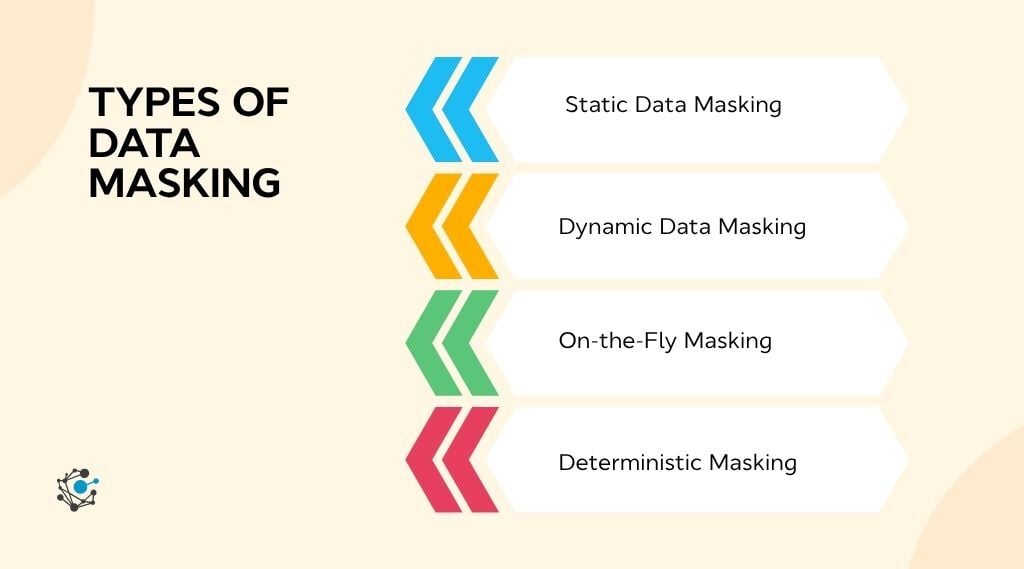
There isn't just one way to mask data. Different data masking techniques work for different goals: from protecting test environments to controlling live data access. Here are the main types you'll come across:
1. Static data masking
Static masking creates a safe, permanently masked copy of your production data. It's most common in testing, training, or analytics environments, where teams need realistic data without exposing real customer information.
For example, a bank may use static masking to share customer transaction data with developers while removing actual account details.
2. Dynamic data masking
Dynamic masking hides sensitive information in real time, based on who's accessing it. It doesn't alter the original database. Instead, it changes what users can see depending on their permissions.
This is often used in customer support dashboards or multi-user analytics systems. Microsoft SQL Server and Oracle both offer built-in dynamic masking capabilities. See the best dynamic data masking tools for a deeper look.
3. On-the-fly data masking
This type applies masking rules during data transfer, for instance, when moving data between production and non-production systems. It's useful in ETL pipelines, where you want to mask data before it reaches the destination.
4. Deterministic masking
Deterministic masking ensures that the same input value always produces the same masked result. This keeps relationships between datasets intact. For example, if "Christopher Nolan" appears in two systems, both will show the same masked version, helping maintain referential integrity across databases.
Each type of masking serves a unique purpose, and most tools specialize. For static masking of test data, look at Delphix, IBM InfoSphere Optim, Broadcom, and DATPROF. For dynamic masking that controls live access by role, Informatica, K2view, Oracle, and OvalEdge are stronger.
For synthetic data, Tonic.ai leads. The comparison table above shows which masking types each tool supports, so you can match the method to your data flows and environments.
The 10 best data masking tools for 2026
The right data masking tool depends on how your organization uses and shares sensitive data. Some focus on automation across cloud and on-premise systems, others on compliance or test-data protection. Here are the ten best data masking tools for 2026, each chosen for reliability, scalability, and the ability to protect personally identifiable information (PII) and regulated data without disrupting usability.
1. OvalEdge Data Governance & Masking
OvalEdge combines governance, discovery, and masking in one platform, so privacy protection is part of a governed lifecycle instead of an afterthought. It identifies sensitive data automatically and applies consistent masking rules across databases, cloud platforms, and analytics tools.
Key features:
-
AI-driven discovery to locate and classify PII, financial, and healthcare data across systems.
-
Automated masking policies that work with Snowflake, Databricks, and SQL Server.
-
Lineage tracking and on-the-fly masking through its analytics workspace, askEdgi.
Why it stands out: Discovery, lineage, and masking sit in one workflow, giving teams end-to-end visibility that standalone masking tools lack.
2. Informatica Data Masking
Informatica is one of the most established platforms for enterprise-scale data protection, automating masking policies across databases, applications, and cloud systems with consistent governance.
Key features:
-
Static and dynamic masking to protect data in motion and at rest.
-
Predefined templates for PII and protected health information (PHI) that cut setup time.
-
Integration with Informatica's wider governance suite for centralized compliance.
Why it stands out: Mature scalability and policy automation make it a strong fit for advanced compliance programs. If you're weighing it against other options, see our take on Informatica alternatives.
3. Delphix Data Masking
Delphix automates privacy protection across development and testing, delivering compliant, ready-to-use data to DevOps teams without exposing sensitive information.
Key features:
-
Automated masking and provisioning through application programming interfaces (APIs) for fast, repeatable workflows.
-
Referential integrity is preserved across multiple systems.
-
Integration with continuous integration and continuous delivery (CI/CD) pipelines, putting privacy controls inside the release process.
Why it stands out: It combines test data management and masking in one platform, cutting provisioning time in agile projects.
4. IBM InfoSphere Optim
IBM InfoSphere Optim suits large-scale, regulated environments, masking, archiving, and subsetting sensitive data while maintaining performance across diverse systems.
Key features:
-
Static masking across multiple databases and applications for non-production copies.
-
Data subsetting to cut storage and testing costs.
-
Audit and reporting to verify GDPR and HIPAA compliance, with mainframe, relational, and cloud support.
Why it stands out: A proven, enterprise-grade option with a strong compliance record for organizations modernizing legacy systems.
5. Oracle Data Masking and Subsetting
Oracle Data Masking and Subsetting is a native extension of Oracle Enterprise Manager that protects data within Oracle and non-Oracle databases while reducing storage needs.
Key features:
-
Predefined templates for PII, financial, and healthcare data.
-
Format-preserving masking, so data looks and behaves like the original.
-
Subsetting and centralized control through Oracle's security ecosystem.
Why it stands out: As a native Oracle solution, it offers deep integration and optimized performance for Oracle-centric estates.
Looking to move off Oracle?

Oracle Data Masking only shines in Oracle-centric estates. If your data lives across Snowflake, SQL Server, Databricks, and Oracle, a platform-agnostic option like OvalEdge will mask consistently across all of them without locking you to one database vendor.

Book a demo with OvalEdge now.
6. Broadcom Test Data Manager
Broadcom Test Data Manager generates, masks, and manages test data for large development and QA environments, helping teams build compliant, realistic datasets.
Key features:
-
Automated discovery and masking across databases.
-
Synthetic data generation when production samples aren't available.
-
Referential integrity maintained, with DevOps and CI/CD integration.
Why it stands out: It pairs test data management with masking, so large testing cycles stay secure and compliant.
7. Tonic.ai
Tonic.ai combines masking with synthetic data generation, built for engineering, analytics, and AI teams that need privacy-safe data for development, testing, and machine learning.
Key features:
-
AI-assisted masking to identify and protect PII automatically.
-
Synthetic data that mimics real patterns without real values.
-
Referential integrity preserved, with easy integration into data pipelines.
Why it stands out: It blends masking precision with synthetic data, giving teams flexibility across every stage of development.
8. K2view Data Masking
K2view masks sensitive data using a business-entity approach, organizing data around customers, orders, or devices so masking stays consistent across structured and unstructured sources. It handles static and dynamic masking at high volume.
Key features:
-
Entity-based masking that preserves referential integrity across every system tied to a record.
-
Static and dynamic masking from one platform.
-
Built-in discovery and synthetic data generation, with cloud and legacy integration.
Why it stands out: The entity model keeps relationships intact at scale, where row-by-row tools tend to break.
9. IRI FieldShield
IRI FieldShield masks structured data across databases and files, with its companion product DarkShield extending coverage to unstructured sources like documents and logs. It offers strong coverage at a mid-market price.
Key features:
-
Static and dynamic masking for structured data, plus field-level encryption and redaction.
-
DarkShield handles PII in unstructured and semi-structured data.
-
Classification and discovery built in, on-premise or cloud.
Why it stands out: Few tools at this price cover both structured and unstructured data as thoroughly.
10. DATPROF
DATPROF focuses on test data masking and provisioning for development and QA teams. It's lightweight, quick to deploy, and built around spinning up masked, subsetted data.
Key features:
-
Static masking with consistent results across related tables.
-
Data subsetting to create smaller, privacy-safe test sets.
-
Template-based setup that integrates with CI/CD and test automation.
Why it stands out: Speed of setup. Teams get usable masked test data quickly, with less overhead than enterprise suites.
Seeing the tools side by side is one thing. Knowing which one fits your stack is another. The questions below walk you through that decision.
How to choose the right data masking tool
When you start evaluating data masking tools, the real challenge is figuring out which one fits your data, your team, and your compliance goals. These are the questions most buyers ask, along with practical answers to help you make the right call.
1. Will the tool work with our current data environment?
Check how easily it integrates with your existing databases, ETL pipelines, and analytics platforms. The best tools connect natively with systems like Snowflake, Databricks, or SQL Server, so masking happens within your normal workflows.
2. Can it automate sensitive-data discovery and policy control?
Manual masking doesn't scale. A strong solution should automatically identify PII, classify it, and apply predefined masking rules. Sensitive data discovery tools are the foundation of that automation, and they cut manual effort while keeping compliance steady.
3. Does it support compliance with GDPR, HIPAA, and CCPA?
Look for built-in templates for PII and PHI, audit reports, and change tracking. These features make passing audits and maintaining compliance simpler and faster.
4. How well does it handle dynamic data masking and hybrid systems?
The right tool should perform consistently across cloud and on-premises environments, masking structured and unstructured data without slowing queries or breaking applications.
5. Can it scale and stay governed over time?
Privacy needs to evolve. Platforms like OvalEdge combine governance, lineage, and masking in one solution, keeping protection consistent as your data footprint grows.
6. What should you expect to pay?
Pricing varies widely. Enterprise platforms like Informatica, IBM, and Oracle run on custom quotes tied to data volume and modules, often reaching six figures a year. Mid-market tools like IRI FieldShield and DATPROF cost less and suit smaller teams.
Open-source options like GreenMask are free to run but need in-house effort to maintain. Match the spend to your data size, not the longest feature list.
Common implementation challenges (and how to overcome them)
Implementing a data masking tool isn’t always straightforward. Many organizations run into the same issues when trying to protect sensitive information at scale. The most common challenges include inconsistent protection, slow performance, unusable masked data, and a lack of governance alignment.
-
Inconsistent protection happens when masking relies on manual scripts or disconnected tools. Without centralized rules, sensitive data often slips through unmasked, creating compliance risks.
-
Performance bottlenecks appear when large datasets are masked inefficiently. Processing times slow down, especially in hybrid and multi-cloud environments. The right tool should apply masking directly at the source to reduce data movement and speed up workflows.
-
Data usability issues occur when over-masking changes data formats or breaks reports. Preserving referential integrity keeps masked data useful for testing and analytics while still being secure.
-
Governance misalignment is another common problem. When masking isn’t linked to data catalogs or lineage, it becomes difficult to audit or sustain compliance.
At BayView Financial, these same challenges once slowed projects and increased risk. After adopting OvalEdge, they automated data discovery, enforced policy-based masking, and aligned governance with masking workflows. The result was faster data access, consistent protection, and audit-ready compliance across their entire data landscape.
Best practices for sustainable data masking
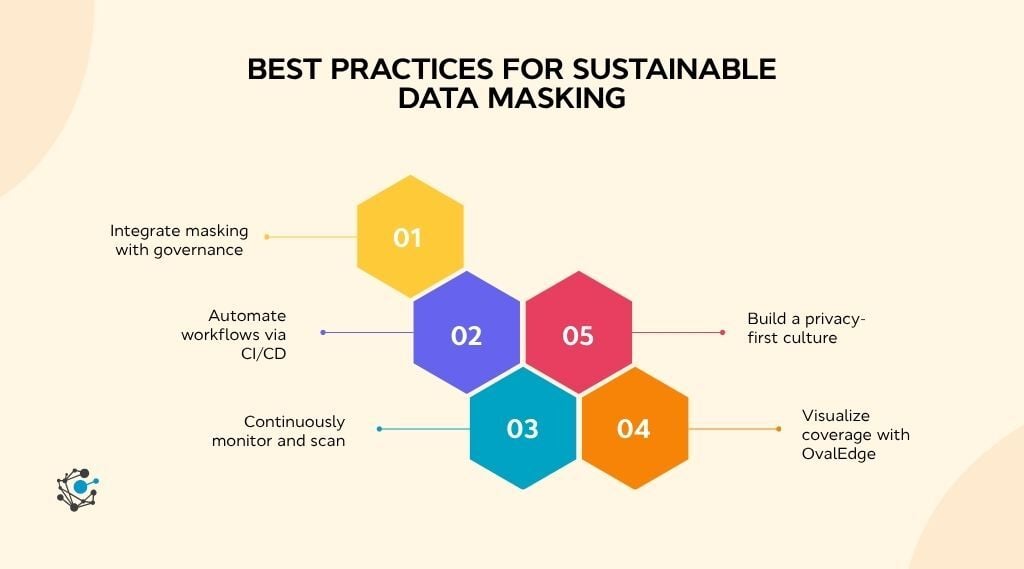
Sustainable data masking goes beyond initial implementation. These data masking best practices help you build a foundation where privacy, usability, and governance stay aligned over time.
1. Embed masking into your governance architecture.
Start by linking masking directly with your data catalog and lineage systems. This connection lets you trace every masked field back to its source, ensuring transparency for audits and regulatory checks.
According to a 2024 Gartner Press Release, 61% of organizations are evolving their data and analytics operating models due to AI-driven governance demands, making automation, lineage, and traceability critical for maintaining privacy at scale.
2. Automate classification and policy enforcement.
Manual masking can't keep pace with growing data volumes. Use AI-driven discovery and data classification software that automatically detects sensitive fields and applies the right masking templates.
3. Maintain referential integrity during masking.
Consistency is critical. When masking data across multiple databases, make sure relationships between datasets remain intact. This keeps analytics, testing, and AI models reliable.
4. Continuously monitor and update masking policies.
Data systems evolve, so review masking logic regularly and adapt it as new sources or compliance rules appear. Use automated monitoring to flag unmasked fields and detect schema changes early. This keeps masking policies current and consistently effective.
5. Combine technology with culture.
Train teams to treat masking as part of everyday data management. Promote a privacy-first mindset through collaboration between engineers, analysts, and compliance teams. Shared responsibility ensures lasting data protection across the organization.
Platforms like OvalEdge make this easier by combining automated discovery, lineage visualization, and policy-based masking in one governed framework, helping organizations scale privacy protection confidently.
Conclusion
Data masking has evolved from a compliance task into a core part of responsible data management. As data volumes expand and AI adoption accelerates, protecting sensitive information with the right data privacy tools is no longer optional; it's essential.
The right data masking tool doesn't just secure data; it keeps analytics accurate, testing realistic, and AI training safe. When masking is automated, governed, and embedded in daily workflows, it builds lasting trust in every decision your organization makes.
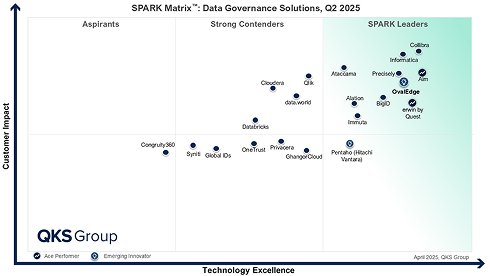
That's where OvalEdge stands out. It unifies governance, lineage, and masking, helping teams discover sensitive data, automate protection, and meet compliance confidently, all within one platform.
If your organization is ready to strengthen privacy and automate protection, schedule a personalized demo with OvalEdge. You'll see how a governance-first approach makes data masking simpler, scalable, and audit-ready from day one.
.png?width=1081&height=173&name=Forrester%201%20(1).png)
.png?width=1081&height=241&name=KC%20-%20Logo%201%20(1).png)