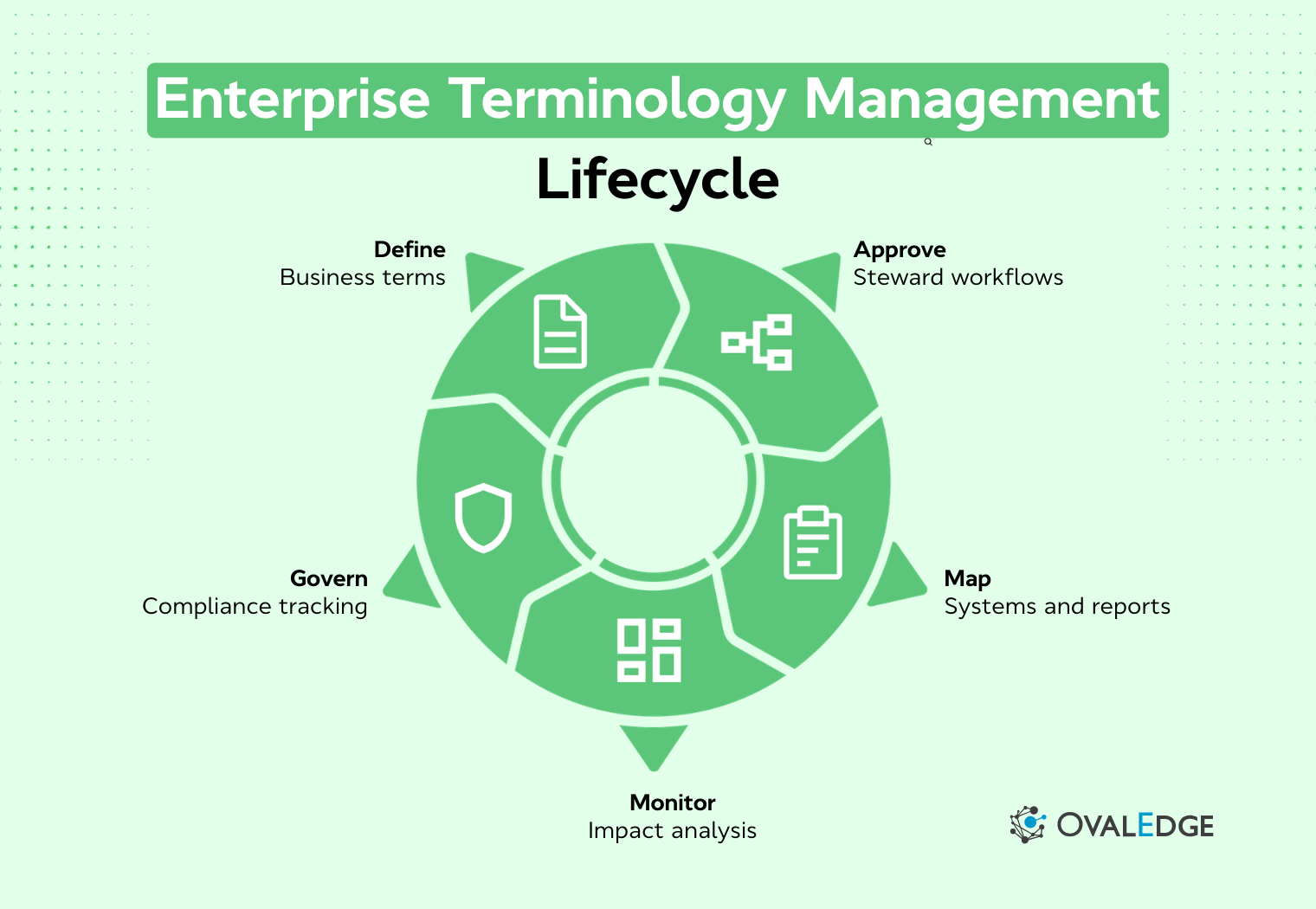
Finance, analytics, and product teams often use conflicting definitions for the same business terms, creating confusion across reports, dashboards, and compliance documentation.
That confusion is more common than many teams want to admit.
In a 2025 Outlook study, 76% of organizations said data-driven decision-making is a leading goal, yet 67% said they do not completely trust the data used for decision-making.
This is where enterprise terminology management software becomes critical. These platforms standardize business definitions, control enterprise vocabulary, and align business language with technical metadata. They establish a governed layer of semantic consistency that strengthens data governance, analytics trust, and regulatory reporting.
In this guide, we’ll explore why enterprises need terminology management systems, the core capabilities that define modern enterprise glossary software, common use cases across departments, and the leading tools organizations use to manage terminology governance at scale.
Why enterprises need terminology management systems
Enterprise terminology management software standardizes business terms, definitions, and metadata across an organization. The software typically includes a centralized business glossary that stores approved vocabulary, data definitions, and taxonomy relationships.
However, terminology management extends beyond glossary storage to include taxonomy governance, metadata linkage, and structured stewardship workflows that maintain consistency over time.
Governance workflows control how teams propose, review, and approve terminology changes. Metadata links connect business terms to data assets, reports, and analytics systems. Search and synonym mapping improve discoverability across departments.
This approach reduces definition conflicts, strengthens data governance, and improves reporting consistency across enterprise platforms.
|
Expert insight: This need is showing up in enterprise priorities as well. According to Precisely’s 2025 planning insights, 71% of global respondents said their organization has a data governance program, up from 60% in 2023, which suggests that terminology standardization is increasingly being addressed as part of broader governance and metadata initiatives. |
Key reasons enterprises adopt terminology management platforms include:
-
Eliminating conflicting KPI definitions across departments. Marketing, finance, and product teams often interpret metrics differently. Controlled vocabulary ensures shared understanding.
-
Improving trust in analytics and BI dashboards. When business definitions align with metadata and data lineage, analysts can rely on reports with greater confidence.
-
Strengthening regulatory reporting accuracy. Financial institutions and regulated industries must maintain consistent definitions across reporting frameworks.
-
Reducing audit and compliance risks. Standardized terminology improves traceability and documentation during internal or regulatory audits.
-
Aligning business vocabulary with technical metadata. Terminology governance bridges the gap between business users and data engineering teams.
-
Accelerating mergers and platform consolidation. When companies integrate new systems after acquisitions, shared vocabulary simplifies data integration.
-
Enabling enterprise-wide semantic governance. Controlled vocabulary becomes a structural component of enterprise knowledge management.
Ultimately, terminology management ensures that data integration also leads to meaning integration. Without it, organizations may connect systems but still struggle to agree on what their data actually represents. When definitions become standardized and governed, enterprises gain the semantic foundation needed to scale data governance with confidence.
Core capabilities of enterprise terminology management software
Organizations evaluating enterprise terminology management software typically look for a combination of glossary management, taxonomy governance, metadata integration, and structured workflows. Together, these capabilities help enterprises maintain semantic consistency across data platforms, analytics environments, and business operations.
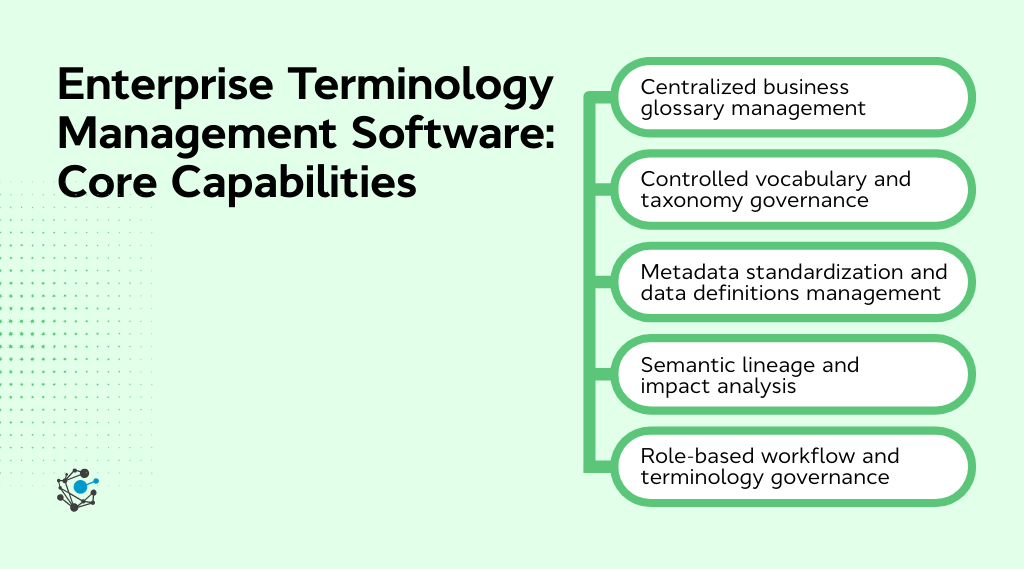
Centralized business glossary management
Enterprise glossary software serves as the central repository for enterprise terms and definitions. It stores approved definitions, synonyms, and contextual information so that teams across departments rely on the same vocabulary.
A mature glossary platform also includes version control, domain ownership, and historical tracking of definition changes. Data stewards oversee these terms, ensuring definitions stay accurate as business processes evolve.
By managing terminology in a shared glossary rather than scattered documents or dashboards, organizations create a single reference point for enterprise language.
|
Here’s a fact: That focus on shared business meaning aligns with where metadata investment is going. Mordor Intelligence estimates that business metadata accounted for 50.65% of enterprise metadata management spend in 2025, which is especially relevant for organizations investing in glossary, taxonomy, and terminology standardization. |
Controlled vocabulary and taxonomy governance
Terminology management systems also support enterprise taxonomy management. Taxonomies organize related terms into hierarchical structures, so teams understand how business concepts relate to one another.
Controlled vocabulary prevents the introduction of duplicate or conflicting terms. Classification models allow organizations to standardize terminology across business units while still reflecting domain-specific context. Governance workflows ensure that new terms go through review and approval before becoming part of the official vocabulary.
Metadata standardization and data definitions management
Modern terminology platforms integrate closely with metadata management systems. Automated metadata ingestion allows business terms to map directly to tables, columns, dashboards, and datasets across data platforms.
This connection links business definitions with technical metadata, making it easier for analysts to understand how metrics relate to underlying data structures. As a result, organizations gain better transparency into how data definitions translate into analytics and reporting outputs.
Some platforms integrate terminology management directly with metadata governance. OvalEdge, for instance, links business glossary terms with harvested metadata and lineage information so that business definitions remain synchronized with underlying data assets.
Semantic lineage and impact analysis
Terminology governance becomes far more valuable when connected to data lineage. Linking terms to lineage diagrams allows teams to trace how business definitions move through pipelines, models, and dashboards.
When a definition changes, governance teams can immediately identify which reports, systems, or analytics models depend on that term. This level of traceability improves documentation and supports audit readiness in environments where reporting accuracy is critical.
Role-based workflow and terminology governance
Terminology management platforms rely on stewardship workflows to maintain consistency over time. Role-based access controls ensure that only authorized users can propose, review, and approve changes to official business terms.
These governance workflows typically include structured approval stages along with detailed audit logs. Some platforms extend this capability by combining glossary management with metadata governance, lineage tracking, and automated metadata harvesting within a unified architecture.
Together, these capabilities transform terminology from scattered documentation into a governed enterprise asset. Once definitions, metadata, and governance workflows align, organizations gain the semantic foundation required for consistent reporting and analytics.
Enterprise use cases across departments
Terminology governance rarely stays confined to a single team. Once organizations begin standardizing business definitions, the impact spreads quickly across analytics, compliance, risk management, and data operations.
A well-governed enterprise vocabulary helps different departments interpret data consistently, even when they rely on different systems or reporting tools.
|
Did you know? That same foundation now matters for AI readiness too. IBM’s 2025 global CDO study found that 79% of respondents were still early in defining how to scale and govern diverse datasets for AI agents, showing how terminology and governance now support more than reporting and compliance. |
Below are some of the most common ways enterprises apply terminology management systems across their operations.
-
Data governance and compliance: Organizations standardize definitions for regulatory reporting and data classification. This approach ensures consistency in GDPR labeling, financial reporting, and audit documentation.
-
Analytics and BI standardization: Analytics teams rely on standardized KPIs to maintain consistency across dashboards. Terminology governance ensures that metrics such as revenue, churn, or customer acquisition have consistent definitions across departments.
-
Regulatory and risk reporting: Financial institutions align definitions for capital metrics, liquidity ratios, and compliance indicators. Terminology governance helps maintain alignment with regulatory frameworks.
-
Mergers and system consolidation: When companies integrate new business units or technology platforms, vocabulary conflicts often appear. Terminology management platforms help harmonize definitions across legacy systems and new environments.
These use cases show how terminology governance evolves from a documentation exercise into a practical operational capability. Once definitions are standardized and governed, organizations can apply that shared vocabulary across analytics, compliance, and data integration initiatives, often with the support of specialized enterprise terminology platforms.
Top 8 enterprise terminology management tools by use case
Organizations evaluating enterprise terminology management software usually look for platforms that combine glossary management, metadata governance, taxonomy control, and lineage visibility.
While many tools offer terminology capabilities, they often specialize in different areas depending on enterprise priorities, such as regulatory governance, analytics standardization, or system consolidation.
Below are 8 platforms frequently used by enterprises to standardize business vocabulary, maintain semantic consistency, and govern data definitions across complex data ecosystems.
For data governance and compliance
Organizations prioritizing governance and compliance need terminology platforms that connect business definitions with metadata, lineage, and policy workflows. These tools help ensure consistent vocabulary across regulatory reporting, audit documentation, and enterprise data governance frameworks.
1. OvalEdge
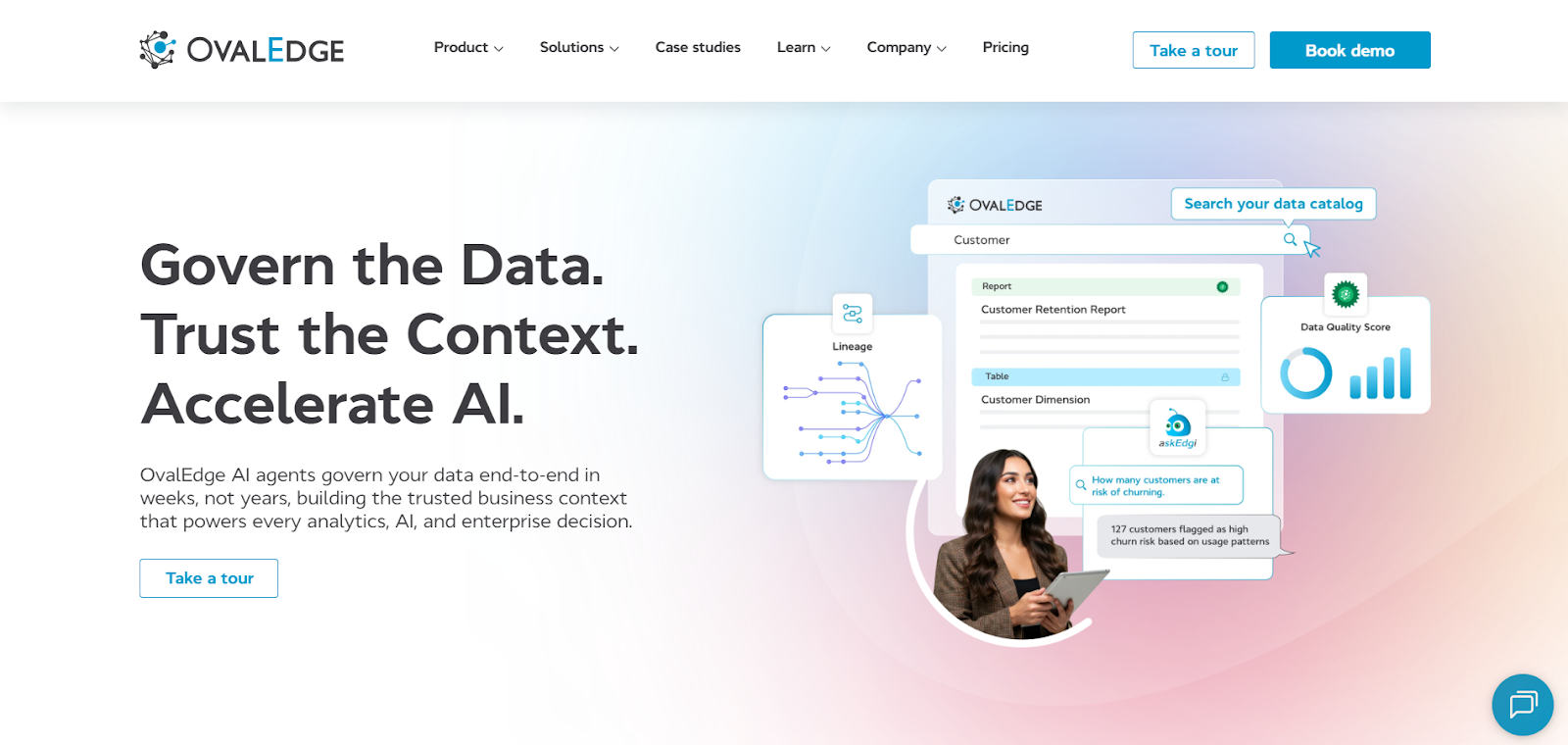
OvalEdge is an enterprise data governance platform that combines business glossary management, metadata management, and data lineage within a unified environment. The platform helps organizations standardize terminology across departments by connecting business definitions directly to technical metadata, pipelines, and reporting assets.
By bringing glossary, metadata, and governance workflows together, OvalEdge enables enterprises to operationalize terminology governance while strengthening broader data governance and analytics initiatives.
Key features:
-
Enterprise business glossary: OvalEdge provides a centralized glossary that enables organizations to manage approved business terms with clear domain ownership and stewardship.
-
Automated metadata harvesting: The platform automatically captures metadata from connected systems and links it to glossary definitions for consistent terminology across data assets.
-
End-to-end data lineage: It also offers lineage visualization that allows teams to trace how business definitions propagate through pipelines, datasets, and reports.
-
Governance workflows: The platform includes structured approval workflows that allow data stewards to propose, review, and approve terminology changes.
-
Role-based access controls: OvalEdge ensures that only authorized users can create, modify, or approve critical business definitions.
-
Impact analysis capabilities: It helps teams understand how changes to terminology or data definitions affect downstream reports and analytics assets.
-
Metadata-to-business term mapping: It links business terminology directly to tables, columns, and dashboards to maintain semantic consistency across data environments.
-
Integrated governance architecture: The platform combines glossary, metadata, lineage, and governance controls in a single environment to reduce fragmentation across governance tools.
Best for: OvalEdge is ideal for enterprises that want a unified platform to manage terminology governance alongside metadata management and data lineage.
Organizations trying to standardize business definitions across analytics, governance, and reporting environments often benefit from a platform that connects terminology directly to metadata and lineage.
If you are exploring ways to operationalize terminology governance at scale, scheduling a demo with OvalEdge can help you see how these capabilities work together in practice.
2. Collibra
Collibra is a data governance platform widely adopted by large enterprises to manage business glossaries and governance workflows. The platform helps organizations maintain standardized terminology across departments while supporting regulatory compliance initiatives. Collibra enables enterprises to govern definitions, classifications, and data policies within a structured governance framework.
Key features:
-
Collibra offers an enterprise business glossary that enables centralized management of approved terminology.
-
The platform’s stewardship workflows support review and approval processes for new terms and definitions.
-
It provides policy management features that connect governance rules with business terminology.
-
Collibra includes data classification capabilities that help organizations categorize regulated or sensitive data.
-
It also provides audit reporting tools that improve traceability for governance and compliance activities.
Ideal for: Collibra is best suited for large enterprises that require structured governance workflows and strong regulatory compliance support.
For analytics and BI standardization
Analytics teams depend on consistent KPI definitions to maintain trust in dashboards and reporting environments. Terminology management tools in this category focus on connecting business glossary definitions with datasets, dashboards, and analytics workflows.
3. Alation
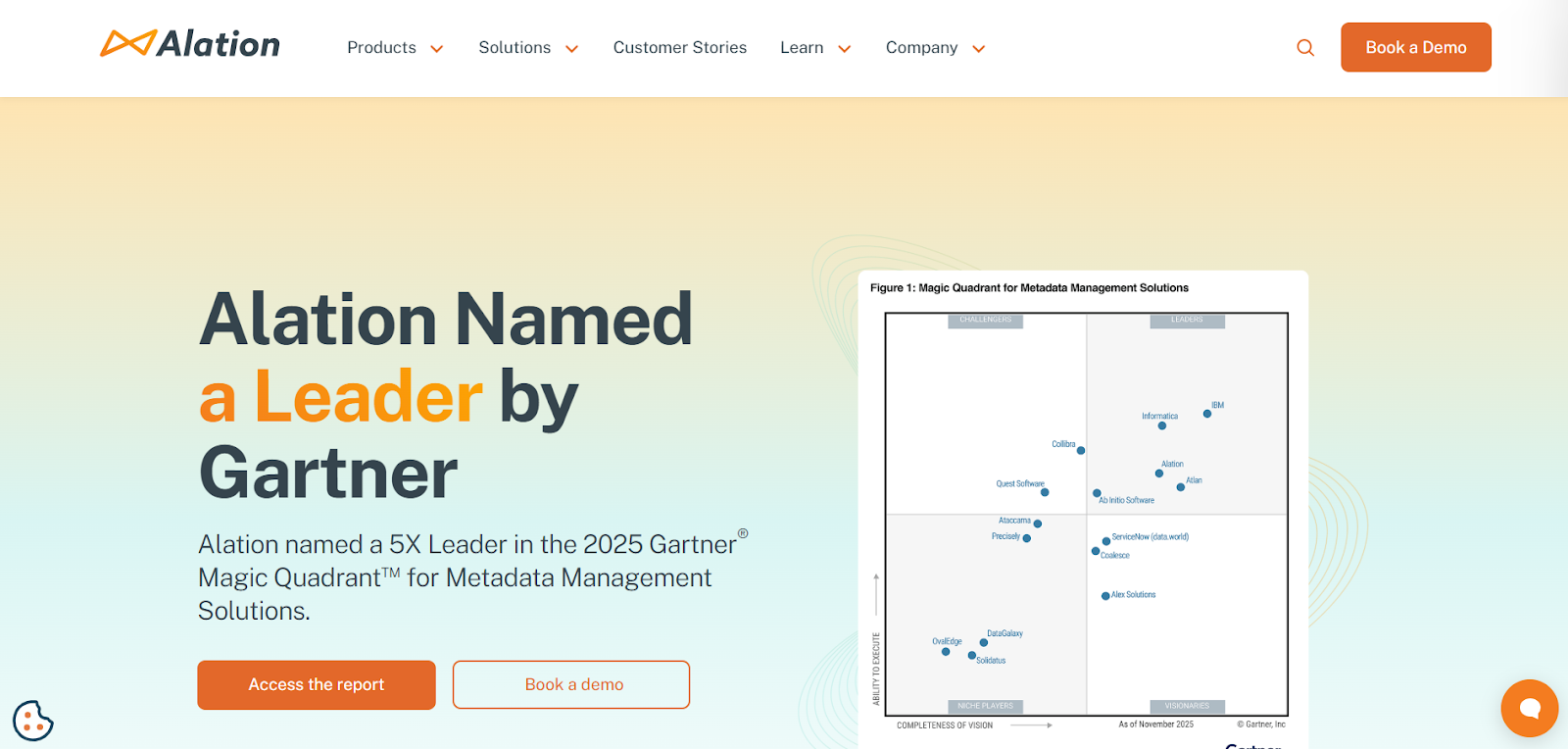
Alation is a data catalog platform that integrates business glossary management with analytics discovery and collaboration features. The platform helps organizations standardize terminology used across analytics environments by linking business definitions to datasets and dashboards. This approach enables analysts and data teams to better understand the meaning behind metrics and improve trust in enterprise reporting.
Key features:
-
Alation integrates a business glossary that connects approved definitions directly to analytics datasets.
-
Its metadata scanning capabilities automatically capture technical metadata from connected data sources.
-
The platform provides collaboration features that allow teams to discuss and refine terminology within the catalog.
-
Alation offers usage analytics that help organizations understand how datasets and terms are used across teams.
-
It also integrates with BI tools to ensure glossary definitions remain consistent across reporting dashboards.
Ideal for: Alation is ideal for organizations focused on improving analytics reliability and maintaining consistent KPI definitions across BI environments.
4. Atlan
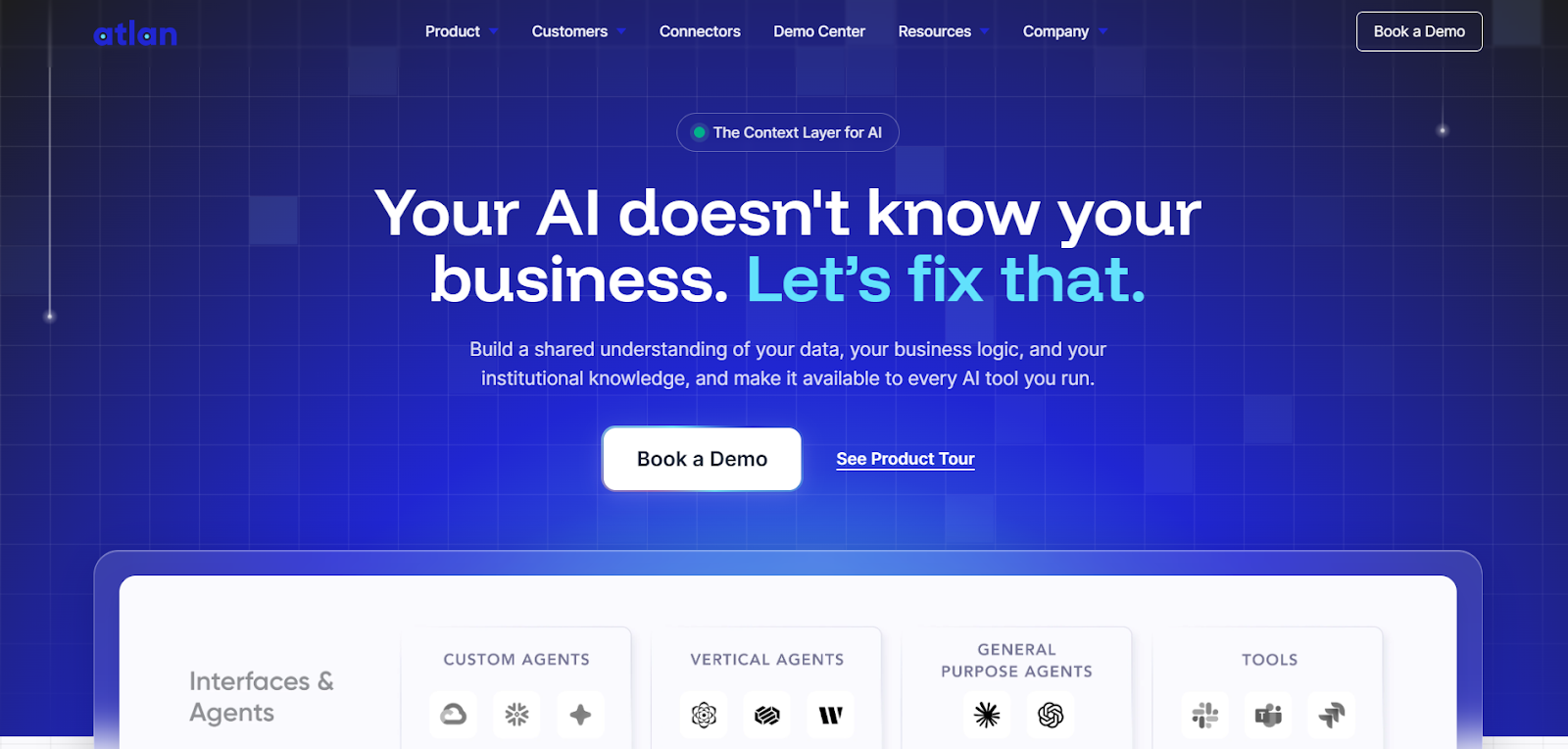
Atlan is an active metadata platform that integrates business glossary capabilities with metadata management and data lineage features, allowing organizations to synchronize terminology across warehouses, transformation pipelines, and analytics tools. This approach helps cloud-native enterprises maintain consistent business definitions while managing rapidly evolving data ecosystems.
Key features:
-
Atlan provides active metadata APIs that synchronize glossary definitions across connected data platforms.
-
The platform’s automated term suggestion engine helps identify potential glossary terms from metadata patterns.
-
It offers data lineage visualization that shows relationships between datasets, pipelines, and metrics.
-
It integrates with cloud data platforms such as Snowflake to support modern data architectures.
-
The platform also includes collaboration features that allow data teams to annotate and manage terminology together.
Ideal for: Atlan is best suited for cloud-native enterprises that need terminology governance across modern data stacks and analytics environments.
For regulatory and risk reporting
Regulated industries must maintain precise definitions for financial metrics, compliance indicators, and reporting terms. Terminology platforms in this space help align glossary definitions with governance frameworks and regulatory reporting requirements.
5. Informatica Axon
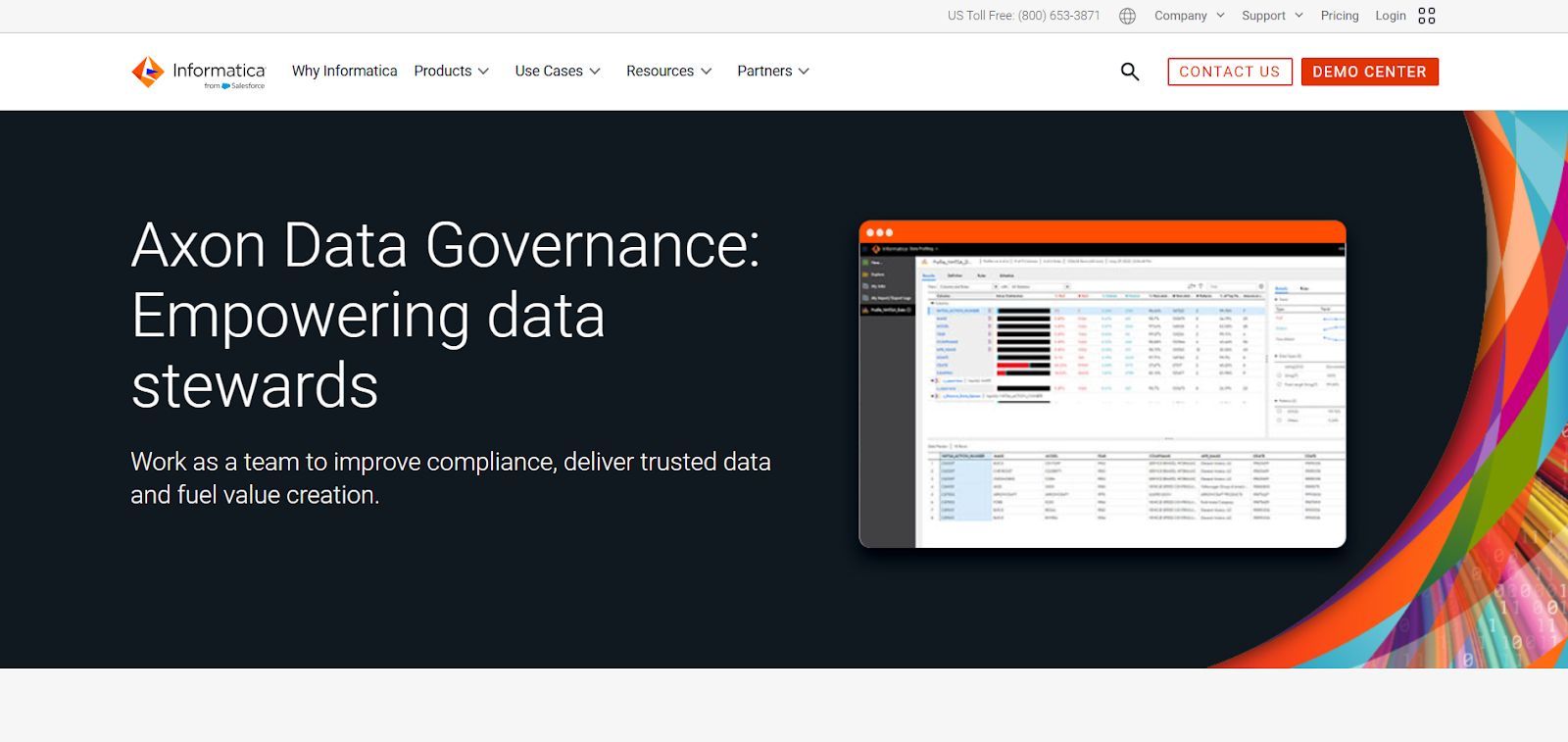
Informatica Axon is a data governance platform designed to connect business glossary management with enterprise governance frameworks. It helps organizations align business definitions with regulatory reporting requirements by linking glossary terms to technical metadata and governance workflows. This structure allows regulated industries to maintain consistent terminology across systems.
Key features:
-
Informatica Axon provides a business glossary that centralizes enterprise terminology and definitions.
-
The platform includes regulatory reporting models that align glossary definitions with compliance frameworks.
-
It allows the user to connect business terms with technical metadata through glossary-to-data mapping.
-
The platform also provides impact analysis dashboards that highlight how terminology changes affect reports and systems.
-
Informatica Axon offers governance workflows that support controlled approval and stewardship processes.
Ideal for: Informatica Axon is best suited for financial services and regulated industries that require terminology governance aligned with regulatory reporting.
6. IBM Watson Knowledge Catalog
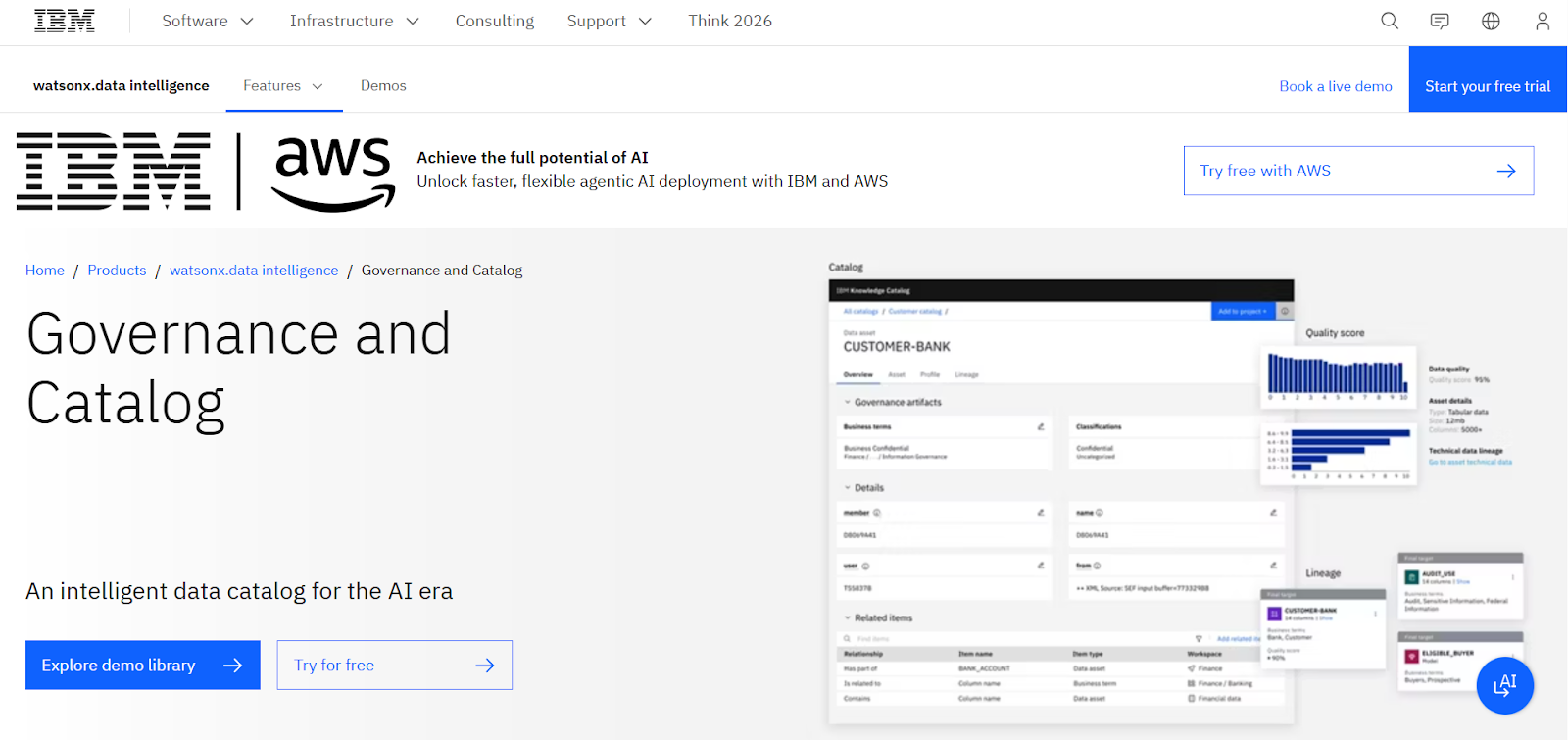
IBM Watson Knowledge Catalog combines business glossary capabilities with enterprise knowledge management and data governance tools. The platform enables organizations to manage terminology, apply policy controls, and map business definitions to enterprise data assets. By integrating glossary management with metadata classification, it supports governance initiatives across hybrid and multi-cloud data environments.
Key features:
-
IBM Watson Knowledge Catalog provides business term management that helps teams define and govern enterprise terminology.
-
The platform enforces governance policies by linking rules and controls to glossary definitions.
-
Its AI-driven classification capabilities help identify relevant metadata and terminology across datasets.
-
It also maps business terms to data assets, improving traceability across enterprise systems.
-
The platform integrates with IBM’s data ecosystem to support hybrid cloud deployments.
Ideal for: IBM Watson Knowledge Catalog is ideal for large enterprises managing terminology governance within complex hybrid cloud environments.
For mergers and system consolidation
During mergers, acquisitions, or platform modernization, organizations often inherit multiple definitions for the same business concepts. Terminology management tools help harmonize vocabulary across legacy systems, new platforms, and integrated data environments.
7. SAP Information Steward
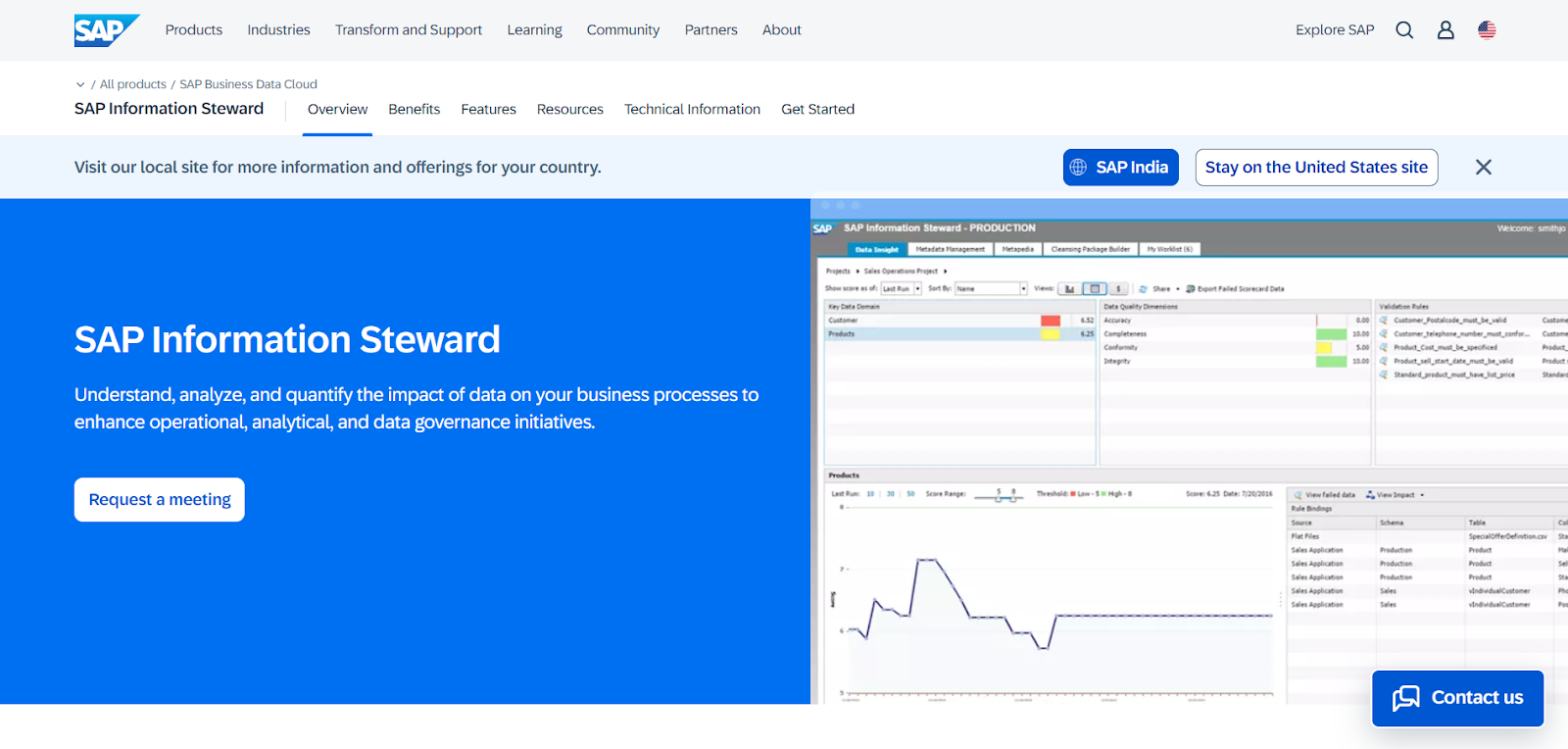
SAP Information Steward helps organizations manage metadata governance, data quality, and enterprise taxonomy alignment within SAP-centric environments. The platform enables enterprises to harmonize data definitions across multiple systems while supporting broader digital transformation initiatives. It allows organizations to standardize terminology and metadata across SAP applications.
Key features:
-
The platform provides metadata management capabilities that help standardize data definitions across enterprise systems.
-
It supports enterprise taxonomy management that organizes terminology within hierarchical structures.
-
SAP Information Steward aligns data quality rules with standardized business terminology.
-
It integrates directly with SAP applications to support governance within SAP ecosystems.
-
The platform also provides governance dashboards that improve visibility into terminology and metadata quality.
Ideal for: SAP Information Steward is best suited for SAP-centric enterprises that need to harmonize terminology and metadata across integrated business platforms.
8. Talend Data Fabric
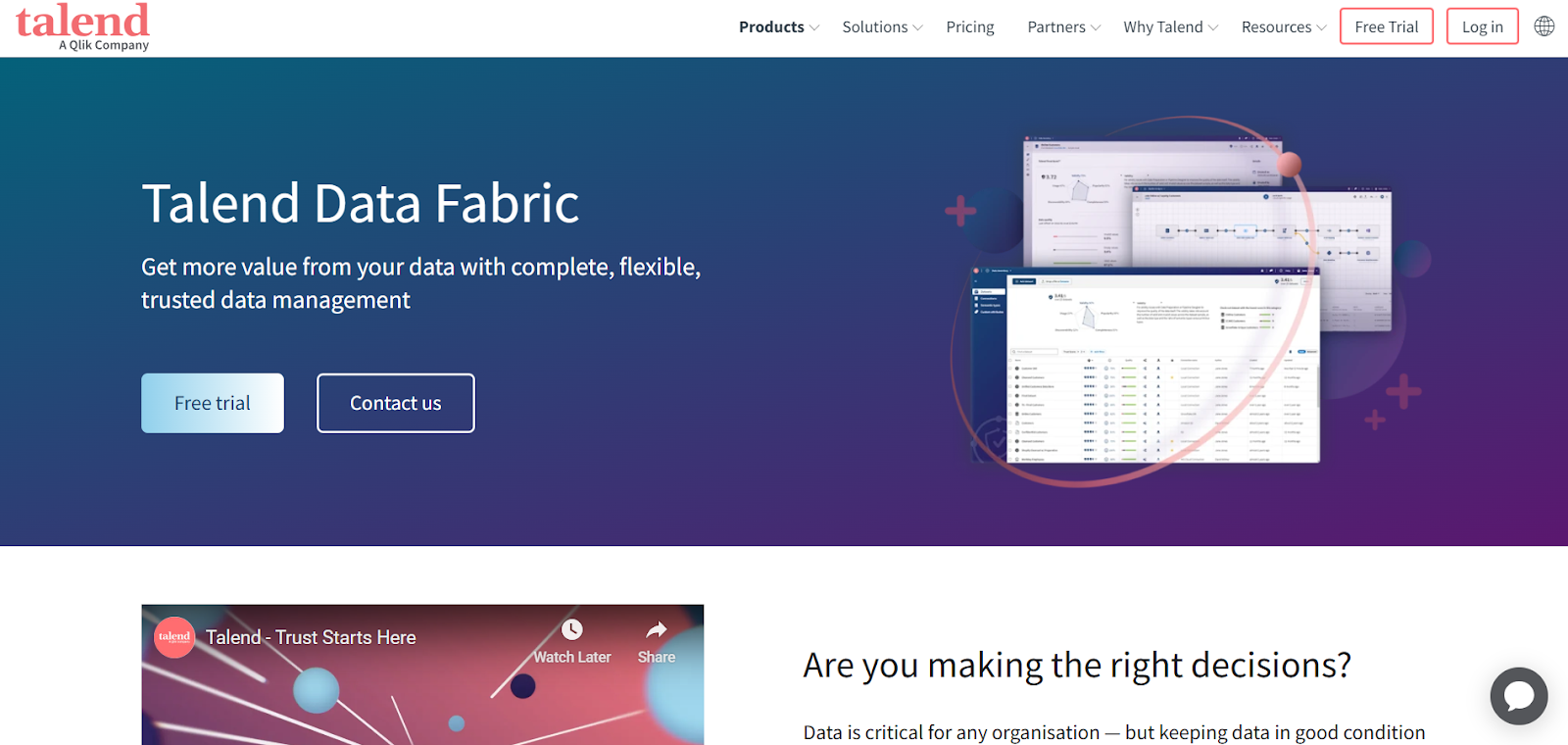
Talend Data Fabric combines data integration, metadata management, and data quality capabilities within a unified data platform. The platform allows organizations to standardize business terminology while synchronizing glossary definitions across data pipelines and transformation workflows. This integration helps enterprises maintain consistent data definitions.
Key features:
-
Talend Data Fabric connects business terminology with transformation pipelines through metadata-driven integration.
-
It synchronizes glossary definitions across data workflows to maintain consistent terminology.
-
Talend provides data quality profiling capabilities that identify inconsistencies in datasets and definitions.
-
The platform offers API-based integration that connects terminology governance with multiple enterprise systems.
-
It also enables governance teams to manage terminology alongside data integration processes.
Ideal for: Talend Data Fabric is best suited for enterprises consolidating diverse data platforms and standardizing terminology during modernization or acquisition projects.
How to evaluate enterprise terminology management software
Deloitte’s 2025 Chief Data Officer survey found that data governance was the top priority for the next 12 months at 51%, which reinforces why buyers are looking more closely at platforms that can standardize business definitions and connect them with metadata, policy, and reporting controls.
Since terminology governance touches analytics, compliance, and data operations, the system you choose should scale easily while maintaining consistent business definitions across the organization.
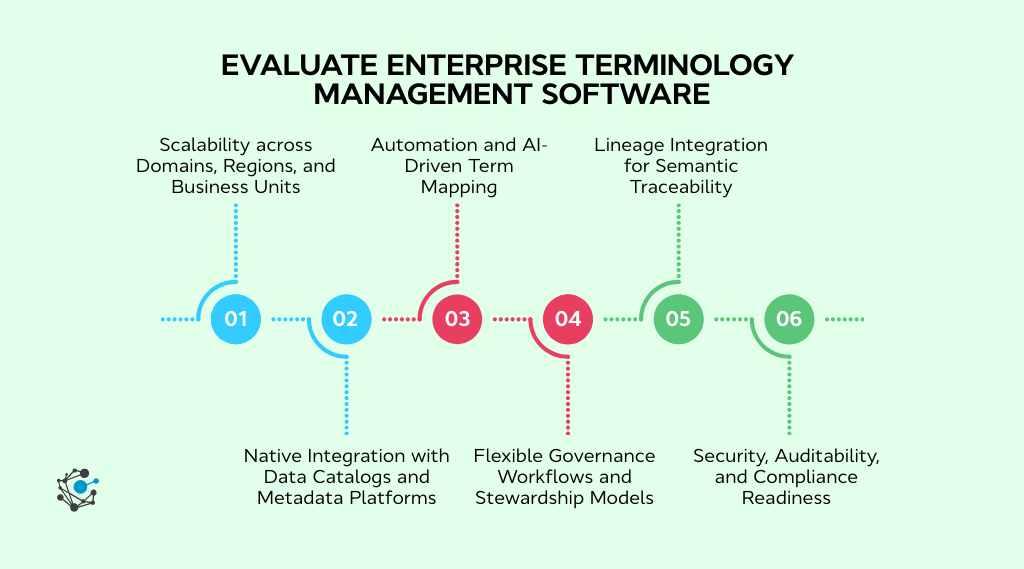
-
Scalability across domains, regions, and business units: A terminology platform should support multiple business domains and ownership structures. Large enterprises often manage thousands of terms across departments, and the system must handle growth without creating governance bottlenecks.
-
Native integration with data catalogs and metadata platforms: Terminology governance becomes far more useful when business definitions connect directly to metadata and data assets. Platforms that integrate with catalogs, warehouses, and BI tools allow teams to see how definitions relate to datasets, dashboards, and reports.
-
Automation and AI-driven term mapping: As data environments grow, manually identifying business terms becomes difficult. Modern platforms increasingly use automation to suggest glossary terms, map definitions to metadata, and highlight relationships across data assets.
-
Flexible governance workflows and stewardship models: Terminology management depends on clear ownership and approval processes. Platforms should support structured workflows that allow data stewards and domain owners to review, approve, and maintain business definitions without slowing governance processes.
-
Lineage integration for semantic traceability: Linking terminology to data lineage improves transparency across analytics and reporting environments. When definitions change, lineage visibility allows teams to quickly identify which pipelines, reports, or dashboards depend on those terms.
-
Security, auditability, and compliance readiness: Terminology systems often store definitions used in financial reporting or compliance frameworks. Governance platforms must provide role-based access controls, audit logs, and documentation that support regulatory requirements.
|
Terminology management becomes significantly more effective when it operates as part of a broader metadata governance architecture rather than as a standalone glossary. Platforms like OvalEdge bring glossary management, automated metadata harvesting, lineage mapping, and governance workflows into a unified environment, reducing fragmentation across governance tools while strengthening semantic consistency. |
The right platform ultimately turns terminology governance into a practical, operational capability rather than a documentation exercise. When glossary management, metadata, and lineage work together, enterprises gain the clarity needed to scale data governance with confidence.
Conclusion
When business vocabulary lives in scattered dashboards, spreadsheets, and documentation, governance frameworks struggle to deliver the clarity leaders expect from their data.
This is where enterprise terminology governance becomes practical rather than theoretical. OvalEdge helps organizations connect business glossary definitions with metadata, lineage, and governance workflows in one environment.
Instead of manually reconciling definitions across teams, enterprises gain a system that standardizes vocabulary, traces definitions across data pipelines, and maintains consistent terminology across analytics and reporting systems.
If your teams are currently managing business definitions through disconnected tools or ad-hoc documentation, schedule a demo with OvalEdge to see how an integrated governance platform works in practice.
FAQs
1. What is the difference between a terminology management system and a data catalog?
A terminology management system governs business definitions and controlled vocabulary, while a data catalog focuses on discovering and organizing technical data assets. Terminology tools prioritize semantic consistency; catalogs prioritize asset visibility and metadata indexing.
2. How does enterprise terminology management improve data quality?
Standardized terminology reduces ambiguity in reporting, calculations, and integrations. When teams use consistent definitions, data validation rules align more effectively, preventing metric discrepancies and improving overall data accuracy across analytics and operational systems.
3. Can terminology management software integrate with cloud data platforms?
Yes. Most enterprise-grade solutions integrate with cloud warehouses, data lakes, and BI platforms through APIs and metadata connectors, ensuring synchronized definitions across distributed environments without manual updates or duplicate glossary maintenance.
4. Who should own terminology governance in an enterprise?
Terminology governance typically involves domain data stewards, business owners, and governance councils. Ownership is distributed by business domain, while centralized oversight ensures enterprise-wide consistency and conflict resolution across departments.
5. Is terminology management only relevant for regulated industries?
No. While highly valuable in regulated sectors, terminology management benefits any enterprise managing cross-functional data. It strengthens analytics trust, supports digital transformation initiatives, and prevents KPI inconsistencies across business units.
6. How long does it take to implement enterprise terminology management software?
Implementation timelines vary based on data complexity and governance maturity. Initial glossary consolidation may take weeks, while full enterprise integration with metadata, lineage, and workflows can span several months depending on scale and automation readiness.
.png?width=1081&height=173&name=Forrester%201%20(1).png)
.png?width=1081&height=241&name=KC%20-%20Logo%201%20(1).png)