-2.png)
Regulatory scrutiny is intensifying as enterprise data environments grow more complex. Organizations now manage regulated data across cloud warehouses, SaaS platforms, legacy systems, and distributed analytics pipelines.
When auditors ask for proof of data origin or transformation logic, answering those questions often requires stitching together information from multiple tools and teams.
The urgency is reflected at the executive level.
According to the 2024 Data Governance Trends report by DATAVERSITY, about 60% of corporate leaders have prioritized data governance as a top focus area, highlighting its growing importance for compliance, trust, and risk management.
Leadership recognizes that fragmented oversight increases regulatory exposure.
As data volumes expand across hybrid and cloud-native environments, expectations around transparency and auditability continue to rise. This is where data lineage compliance software becomes essential for structured traceability and risk control.
In this guide, we will explain what it is, why it matters for regulatory alignment, and how to choose the right solution for building an audit-ready data platform.
What is data lineage compliance software?
Data lineage compliance software helps organizations prove where data originated, how it changed, and where it was used, with the explicit goal of meeting audit and regulatory expectations. Instead of treating lineage as a one-time diagram for documentation, it treats lineage as continuously updated evidence.
Many modern tools also connect lineage to governance controls, so we can see not just the flow of data, but the policies, classifications, owners, and risks tied to that flow. This is where the “compliance” part becomes real.
How it differs from standard data governance software
At a high level, traditional data governance software focuses on policies, ownership, and metadata visibility. It provides the organizational framework for managing data, but it does not always deliver continuous technical traceability across pipelines.
Data lineage compliance software builds on that foundation and adds audit-grade traceability that holds up under regulatory scrutiny.
Below is a clear comparison:
|
Capability Area |
Data Governance Software |
Data Lineage Compliance Software |
|
Core Focus |
Policy management, standards, stewardship |
End-to-end traceability for regulatory proof |
|
Documentation |
Static documentation and metadata cataloging |
Dynamic lineage graphs that update as pipelines change |
|
Ownership |
Stewardship workflows and business context |
Ownership plus technical dependency mapping |
|
Compliance Support |
Policy visibility and control mapping |
Automated compliance data tracking tied to real data flows |
|
Lineage Depth |
Often high-level or manually documented |
Automated, system-captured lineage at the table and column level |
|
Audit Readiness |
Manual documentation preparation |
Continuous technical audit trails ready for regulator review |
|
Monitoring |
Periodic governance reviews |
Automated compliance monitoring signals and impact alerts |
This distinction matters operationally. Governance tools help us define what should happen. Data lineage compliance software proves what actually happened, how data moved, and how it changed.
For organizations facing audit pressure, that difference is decisive.
Why automated data lineage tools are critical for regulatory compliance
Regulators do not want summaries. They want proof. During audits, they ask three practical questions:
-
Where did the data originate
-
What transformations were applied
-
Where did the data flow downstream
Without automated data lineage tools, most organizations rely on manual documentation and institutional knowledge. That creates predictable risks:
-
Heavy human dependency
-
Outdated or inconsistent audit trails when pipelines change
-
Slow responses because lineage must be reconstructed
Automation shifts the model from reactive to continuous. When lineage is system-captured, source-to-report relationships are recorded as pipelines run. Transformation logic and downstream dependencies are documented automatically, not retroactively.
This is where structured lineage practices become critical.
|
As outlined in OvalEdge’s whitepaper, Data Lineage: Benefits and Techniques, effective lineage is not about creating static diagrams. It is about maintaining lineage as a living technical record that evolves with the data ecosystem and supports transparency, trust, and audit defensibility. |
When lineage is continuously updated and tied to governance controls, compliance becomes operational. Teams retrieve defensible evidence instantly instead of scrambling to rebuild it.
That is the difference between passing an audit and controlling compliance risk proactively.
How real-time data traceability supports compliance monitoring
Real-time data traceability turns lineage into an active compliance control. Instead of static diagrams, we gain continuous visibility into how regulated data moves across systems.
What real-time traceability enables
It allows us to map:
-
Source-to-report relationships
-
Column-level lineage for sensitive fields such as financial or health data
-
Cross-platform flows across warehouses, ETL tools, BI platforms, and streaming systems
How it strengthens compliance monitoring
With this visibility, we can:
-
Run impact analysis before schema or pipeline changes
-
Detect sensitive data propagation into unauthorized systems.
-
Correlate lineage with access logs to identify risk patterns
Making lineage audit-ready
Modern platforms transform lineage into reportable evidence through dashboards, exports, and structured documentation. Continuous traceability ensures we are prepared before auditors ask, not after.
How compliance lineage architecture works
Compliance lineage architecture connects technical data flows with governance and regulatory controls. Rather than treating lineage as a static diagram, it captures how data moves across systems while linking those flows to policies, classifications, and ownership metadata needed for compliance.
In most environments, regulated data moves through several stages before appearing in reports or disclosures. Compliance lineage tracks this journey across the pipeline:
-
Source systems: Data originates from operational platforms such as databases, ERP systems, or external sources. Lineage records the origin and identifies regulated fields.
-
ETL and data pipelines: Data is ingested and transformed through pipelines where joins, filters, or aggregations occur. These transformations are automatically captured.
-
Warehouse transformations: Within warehouses or lakehouses, additional modeling prepares data for analytics and reporting.
-
Governance controls: Classifications, access policies, and ownership assignments are applied and linked to the data flow.
-
Regulatory reports and analytics outputs: Lineage connects upstream systems to dashboards and regulatory reports, providing traceable audit evidence.
Compliance lineage architecture works by connecting multiple layers of metadata, including:
-
Technical lineage showing how data moves across pipelines
-
Policy controls governing how data should be handled
-
Data classifications identifying regulated information
-
Ownership metadata defining accountability for datasets
Together, these elements create a unified traceability framework that supports audit readiness without duplicating governance or lineage processes.
Why organizations need data lineage compliance software for regulatory compliance
Regulatory expectations are no longer satisfied by policies alone. We are now expected to prove how data moves, how it changes, and how it is controlled across increasingly complex environments.
Data lineage compliance software becomes necessary when traceability must be continuous, defensible, and audit-ready.
Growing regulatory complexity and data sprawl
Regulatory complexity is rising across regions and industries. Privacy laws, industry mandates, and cross-border rules create overlapping obligations. At the same time, enterprise data footprints keep expanding, often faster than governance programs can keep up.
Common patterns we see:
-
Multi-cloud data lakes and warehouses
-
SaaS applications are creating new “shadow” data stores.
-
Distributed analytics environments with many transformation paths
When data sprawl grows, compliance exposure grows with it because we lose clarity on where regulated data lives and how it moves.
|
Do you know: For organizations managing distributed data estates, automated lineage becomes the foundation for restoring visibility. OvalEdge addresses this challenge by providing continuous, system-driven lineage across SQL, BI, and streaming environments. Instead of relying on manual documentation, teams gain real-time mapping of source-to-report flows and transformation logic. By connecting lineage with governance controls and compliance workflows, OvalEdge turns fragmented data ecosystems into structured, audit-ready environments. |
Risks of poor compliance data tracking
Poor compliance data tracking shows up during audits as missing or incomplete evidence. Operationally, it tends to create:
-
Incomplete audit trails
-
Delayed impact assessments during changes
-
Inaccurate compliance documentation across teams
The risk is not just theoretical. Regulatory penalties and audit delays can directly hit revenue and reputation, and internal audit leaders consistently highlight growing pressure to modernize assurance processes.
PwC’s Global Internal Audit Study 2023 reflects how internal audit functions are being pushed to evolve their capabilities in response to risk and scrutiny.
Manual tracking also fails for a basic reason: it does not scale with the pace of change. In cloud environments, pipelines and models update weekly or daily. A quarterly “lineage refresh” is not a control; it is a snapshot.
Enabling GDPR, CCPA, HIPAA, and SOX compliance
Different regulations ask different questions, but they all require one thing in common: traceability that can be proven. Data lineage compliance software provides the technical foundation to meet those expectations consistently across frameworks.
-
GDPR: Supports the right of access by identifying what personal data is held and where it originated. Documents processing activities and transformation logic across systems. Tracks downstream sharing and cross-border data movement to ensure transparency.
-
CCPA: Maps categories of personal information collected and their sources.
Connects data elements to stated business purposes. Traces disclosures and downstream data sharing to support “right to know” requests. -
HIPAA: Strengthens audit controls by showing how protected health information moves across systems. Links transformations to systems and the responsible users to support activity review. Improves investigation readiness during suspected misuse or breach scenarios.
-
SOX: Provides traceability for financial reporting data from source systems to final disclosures. Documents transformation logic that supports internal control validation. Enables impact analysis when upstream financial data structures or pipelines change.
Across these frameworks, regulatory data lineage creates a unified traceability model. It supports automated documentation, strengthens audit readiness, and allows impact assessment before compliance risks materialize.
Building an audit-ready data platform with automation
An audit-ready data platform produces compliance evidence as part of everyday operations, not as a last-minute exercise before an audit. Instead of reconstructing data flows under pressure, traceability is continuously captured and readily accessible.
In practice, this means:
-
Continuous lineage capture across pipelines that feed regulated reports and disclosures
-
Policy enforcement and classification are directly tied to data assets and movement paths.
-
Access logging and clear ownership assignment, so evidence reflects who accessed data, what changed, and where it moved
Automation transforms compliance from reactive to proactive. When lineage and governance controls are embedded into the data ecosystem:
-
Remediation becomes faster because dependencies are visible
-
Change management becomes controlled because the impact can be assessed before deployment.
-
Executive teams gain visibility into areas where compliance risk is concentrated.
This shift is already visible in practice.
|
OvalEdge case study: Strengthening governance and audit readiness In a global consulting firm, OvalEdge strengthened governance and audit readiness by:
|
As regulatory expectations expand beyond traditional finance systems into broader data environments, automation becomes the only scalable way to maintain defensible audit readiness.
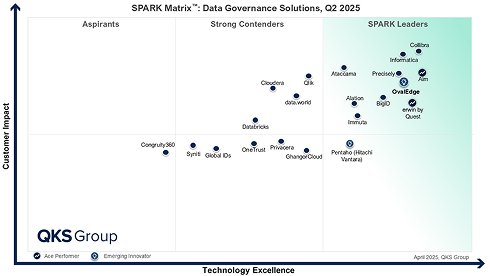
10 best data lineage compliance software platforms
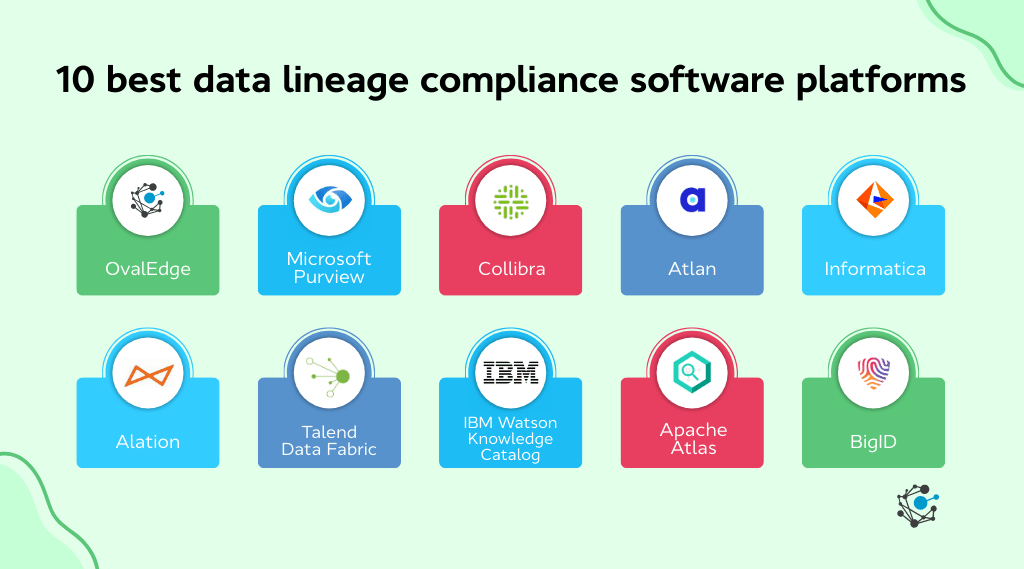
Below is a practical comparison of 10 platforms that support compliance data tracking through lineage automation, metadata management, governance controls, and audit-ready reporting.
1. OvalEdge
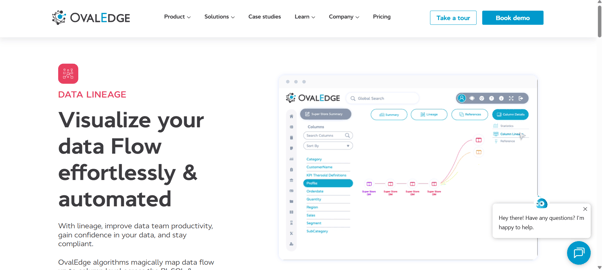
OvalEdge is a governance-first platform with automated lineage mapping across diverse data sources. It emphasizes traceability and visibility to support compliance and audit readiness in enterprise environments.
Core function and positioning: The platform positions data lineage as a core compliance capability, tying governance policies and metadata to real data flows. It focuses on delivering column-level impact analysis and lineage visualization that auditors and governance teams can trust.
Best features
-
Column-level lineage: Automated tracing of data at the column level across SQL, BI, and streaming sources
-
Cross-system coverage: Connects lineage across warehouses, ETL tools, analytics platforms, and dashboards
-
Lineage visualization: Intuitive graphs that show end-to-end data movement and transformation logic
-
Compliance context integration: Links lineage with governance policies and classifications for regulatory traceability
-
Impact analysis: Enables dependency analysis before changes to prevent compliance and reporting issues
Pros
-
Granular traceability: Column-level lineage aids in precise audit evidence
-
Governance plus lineage: Integrated with governance workflows for stronger compliance controls
-
Compliance monitoring support: Helps teams detect lineage-based risk before audits
Best fit: Ideal for teams that need detailed lineage tied to compliance controls and governance workflows. Works well in hybrid and multi-platform environments requiring audit-ready traceability.
2. Atlan
Platform overview: Atlan is an active metadata platform that emphasizes automated lineage and operational context. It supports dynamic traceability across modern data stacks.
Core function and positioning: Lineage is positioned as an actionable context, helping teams understand change impact and alert relevant stakeholders. The platform blends metadata, collaboration, and lineage into a single experience.
Best features:
-
Column-level lineage: Auto-stitches detailed lineage across connected systems
-
Automated lineage model: Captures lineage without manual intervention
-
Impact alerts: Raise notifications based on lineage-derived change impact
-
Operational workflows: Integrates lineage into issue and change management processes
-
Metadata search and discovery: Enhances traceability with rich context
|
Pros |
Cons |
|
|
Best fit: Cloud-first teams that want actionable lineage for compliance monitoring and impact response.
3. Collibra
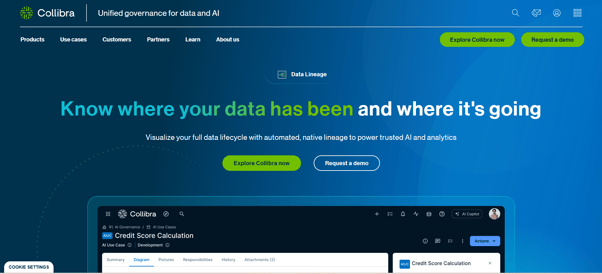
Platform overview: Collibra delivers enterprise data governance with deep technical lineage capabilities. It supports strong lineage visualization and export options for audit readiness.
Core function and positioning: Lineage is embedded within a broader governance framework at scale. The platform focuses on shareable artifacts and compliance reporting.
Best features:
-
Technical lineage graphs: Detailed, drillable views of transformations
-
Export for compliance reporting: Outputs lineage to formats for documentation
-
Table and column export scope: Enables focused export of relevant lineage segments
-
Broad data source support: Connects to many enterprise systems
-
Governance workflow integration: Combines lineage with stewardship and policy control
|
Pros |
Cons |
|
|
Best fit: Enterprises that need exportable technical lineage artifacts to support audits and compliance reporting.
4. Alation
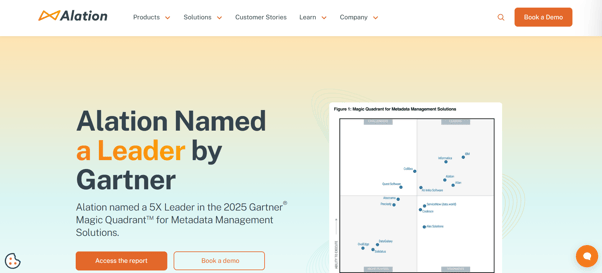
Platform overview: Alation is a catalog-first platform with lineage views that vary by connector capability. It blends discovery with traceability.
Core function and positioning: Lineage supports trust decisions by combining automated capture with analysis of query logs and connected systems.
Best features:
-
Two lineage types: Supports both table-level and column-level views
-
Connector-dependent column lineage: Enables deeper tracking where supported
-
Automated lineage capture: Harvests metadata from sources and query logs
-
BI lineage enablement: Extends lineage into popular BI tools
-
Lineage visualization: Explorable maps for impact and traceability
|
Pros |
Cons |
|
|
Best fit: Teams that want a catalog-led experience where lineage supports compliance explanations and impact checks.
5. Informatica
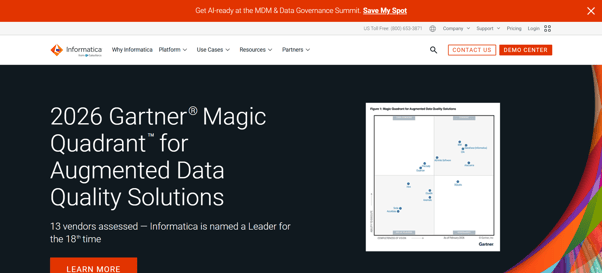
Platform overview: Informatica offers automated lineage within its Cloud Data Governance and Catalog suite. It emphasizes end-to-end visibility across complex estates.
Core function and positioning: Lineage is positioned as a trust layer, connecting sources, transformations, and usage into a unified view.
Best features:
-
Automated lineage: System-driven capture across metadata sources
-
End-to-end lineage visibility: Tracks journey from source to consumption
-
Relationship discovery: Identifies underlying dependencies through lineage
-
Catalog integration: Combines lineage with broader governance assets
-
Context for audit readiness: Lineage supports traceability and evidence
|
Pros |
Cons |
|
|
Best fit: Large organizations that want a comprehensive lineage tightly integrated with governance.
6. IBM Watson Knowledge Catalog
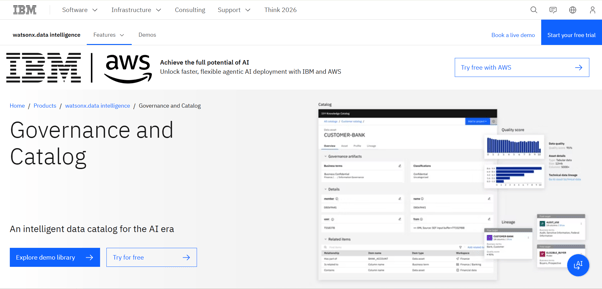
Platform overview: IBM enables advanced lineage through integration with a detailed lineage engine. It maps data lineage from origin to consumption within its catalog ecosystem.
Core function and positioning: Lineage supports audit readiness by connecting technical lineage data to governance controls and catalog assets.
Best features:
-
Origin-to-consumption mapping: Shows full data journeys
-
Audit readiness orientation: Designed with compliance traceability in focus
-
Connector-based lineage integration: Integrates external lineage engines via APIs
-
Catalog linkage: Embeds lineage into broader governance context
-
API-based extensibility: Enables integration with diverse pipelines
|
Pros |
Cons |
|
|
Best fit: Organizations aligned with existing catalog ecosystems that want lineage connected to governance.
7. Microsoft Purview
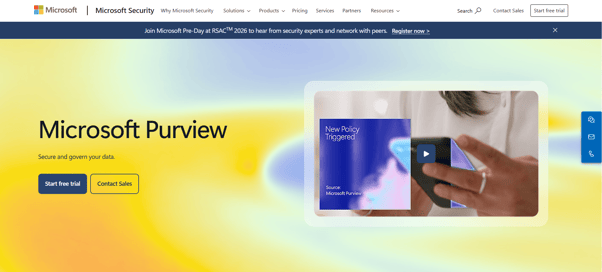
Platform overview: Purview is a governance service that captures lineage for scanned assets and integrates with Azure services. It focuses on metadata management tied to cloud platforms.
Core function and positioning: Lineage is part of Microsoft’s governance layer, with documented guidance on supported scenarios and limitations.
Best features:
-
Power BI lineage ingestion: Brings BI metadata into the governance context
-
Column-level lineage support: Available in supported scenarios
-
ADF lineage integration: Captures pipeline flows from data factory services
-
Scan-based lineage capture: Discovers lineage during metadata scans
-
Azure ecosystem alignment: Works with native cloud resources
|
Pros |
Cons |
|
|
Best fit: Azure-centric teams that want governance plus lineage within Microsoft services.
8. Talend Data Fabric
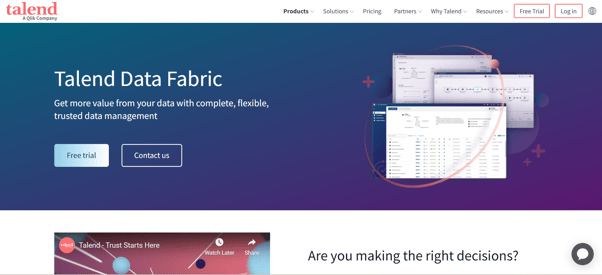
Platform overview: Talend Data Fabric supports lineage tracing within its broader integration and governance capabilities. It emphasizes both data and semantic flow lineage.
Core function and positioning: The platform positions lineage as part of integration plus governance, supporting traceability and impact analysis through metadata.
Best features:
-
Data flow lineage: Traces object relationships based on connection definitions
-
Semantic flow lineage: Links business and technical lineage concepts
-
Business-level lineage: Connects technical lineage to business context
-
Lineage analysis tooling: Tools to explore dependencies and flows
-
Compliance tracking narrative: Designed to support privacy and regulation workflows
|
Pros |
Cons |
|
|
Best fit: Teams using Talend for integration that also need lineage, impact analysis, and compliance tracking.
9. Apache Atlas
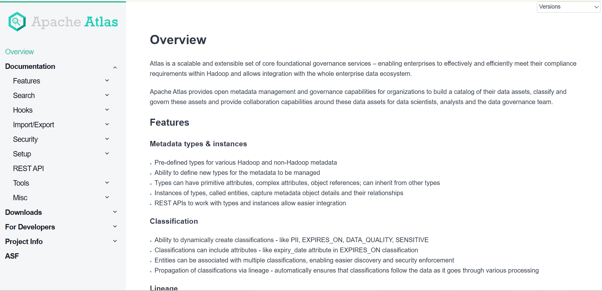
Platform overview: Apache Atlas is an open-source metadata governance framework that teams can extend for lineage tracking. It provides foundational cataloging and classification services.
Core function and positioning: Atlas is positioned as a building block for governance, enabling engineering teams to customize lineage and compliance workflows.
Best features:
-
Open metadata management: Provides a foundational asset catalog
-
Classification and governance support: Assigns context and policy tags
-
Extensible governance services: Custom lineage and compliance workflows
-
Framework for lineage automation: Can be adapted to pipeline needs
-
Community-driven development: Frequent enhancements and plugins
|
Pros |
Cons |
|
|
Best fit: Engineering-led organizations that want a customizable governance framework and can build lineage workflows around it.
10. BigID
Platform overview: BigID focuses on sensitive data discovery, classification, and governance controls tied to compliance and risk programs. It delivers transparency into regulated data movement.
Core function and positioning: The platform blends discovery, classification, and remediation with lineage-style visibility to support compliance and privacy objectives.
Best features:
-
Sensitive data discovery: Identifies regulated and sensitive fields
-
Policy-driven remediation: Automates quarantine and data control actions
-
Compliance reporting: Provides structured views for regulatory programs
-
Advanced data mapping: Shows flow and relationship context
-
AI-augmented lineage positioning: Uses intelligence to enhance traceability
|
Pros |
Cons |
|
|
Best fit: Privacy, security, and governance teams that prioritize sensitive data visibility and remediation while supporting compliance transparency.
How to evaluate data lineage compliance software for your organization
Choosing the right data lineage compliance software is less about feature volume and more about operational fit.
The goal is to select a platform that strengthens your governance model, supports regulatory obligations, and scales with your data environment.
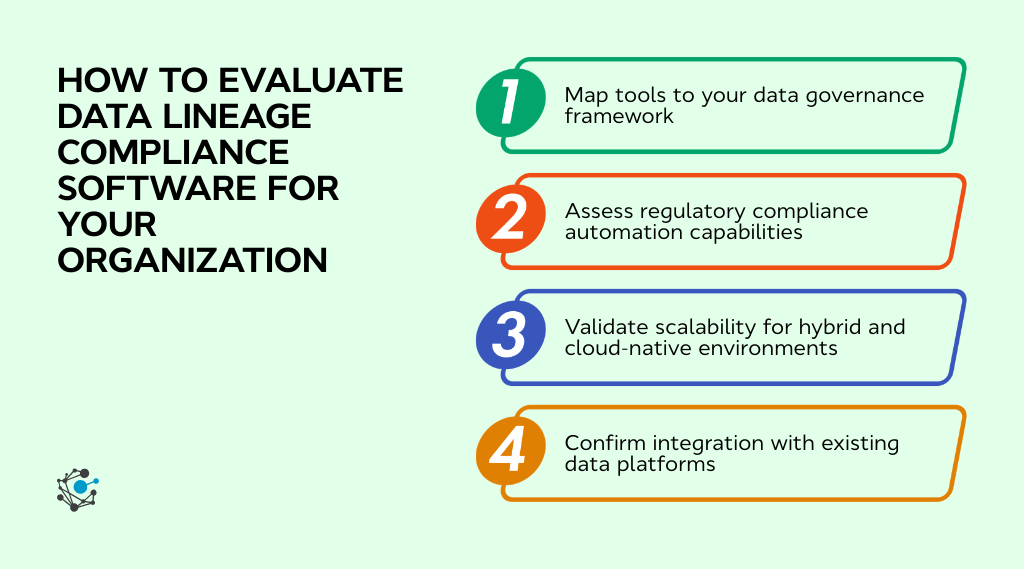
Step 1: Map tools to your data governance framework
Start by being honest about your governance maturity.
-
Do we have clear ownership for data products and regulated reports?
-
Do we have stewards responsible for maintaining definitions and policies?
-
Are we aiming for foundational visibility first, or full automation with policy enforcement?
The right platform should reinforce your operating model. If ownership and stewardship structures are still evolving, prioritize tools that simplify ownership assignment, stewardship workflows, and accountability tracking alongside lineage visualization.
|
Pro tip: Lineage without governance context creates visibility, but not control. Alignment between governance structure and lineage automation is what drives compliance outcomes. |
Step 2: Assess regulatory compliance automation capabilities
Features that appear similar in product demos can perform very differently during audits. Evaluate tools through a compliance lens.
-
Automated documentation generation: Can the platform produce structured evidence packs without manual screenshots or rework
-
Audit trail completeness: Can you reconstruct the transformation logic and dependencies after the pipelines change
-
Policy enforcement and classification: Can you demonstrate which controls apply to regulated fields and how those controls propagate
True automation means lineage is system-captured, continuously updated, and technically reliable. If documentation still depends on manual intervention, compliance risk remains.
When comparing vendors, it is important to distinguish between visual lineage diagrams and fully automated lineage capture.
|
Related reading: OvalEdge’s discussion on automated data lineage tools outlines how system-driven lineage replaces manually maintained mappings and strengthens regulatory defensibility |
Step 3: Validate scalability for hybrid and cloud-native environments
Scalability is not just about data volume. It is about operational resilience and coverage.
-
Can the platform render large lineage graphs without degrading usability?
-
Does it support multi-cloud estates, SaaS tools, and on-prem sources in a unified model
-
Can it align with your security architecture, including role-based access and environment segregation
You should also test performance under real change scenarios. For example:
-
How quickly does lineage update after a pipeline modification
-
Whether column-level lineage remains accurate across complex transformations
-
How the platform handles thousands of interconnected assets
True scalability means the system remains usable, accurate, and responsive as your data ecosystem grows and evolves. If performance drops or lineage becomes partial at scale, compliance confidence drops with it.
Step 4: Confirm integration with existing data platforms
Lineage quality rises and falls on connectors and APIs.
-
Review connectors for your ETL, warehouse, BI, and streaming tools
-
Validate API extensibility for edge systems
-
Confirm the tool can parse transformations where your logic actually lives, such as SQL, dbt, or orchestration layers
If your compliance risk is concentrated in a few audit-critical workflows, prioritize deep coverage there first, then expand.
|
Also read: OvalEdge’s Data Lineage Best Practices for 2026 for actionable guidance on building accurate, transparent, and compliant lineage as you evaluate tools. |
Conclusion
Data lineage compliance software has become essential for managing regulatory risk in complex data environments.
Continuous audit trails, automated impact analysis, and real-time compliance monitoring are no longer optional when scrutiny is increasing across privacy, healthcare, and financial reporting frameworks.
Audit readiness becomes practical when we can trace data from source to report, generate defensible documentation instantly, and connect governance controls directly to live data flows. That is what transforms compliance from reactive to operational.
To move forward effectively, identify audit-critical reports, define the required lineage depth including column-level tracking, evaluate automation maturity, and test a high-risk workflow through a focused proof of value.
OvalEdge brings automated lineage, governance workflows, and compliance reporting together in one platform.

If your organization is ready to strengthen traceability and reduce audit friction, book a demo to see how OvalEdge can support your compliance objectives.
FAQs
1. How does data lineage compliance software support internal audits?
Data lineage compliance software provides structured evidence of data movement, transformation logic, and ownership. Internal audit teams can trace report outputs back to source systems quickly, reducing review time and improving documentation accuracy across regulated workflows.
2. Does data lineage compliance software help with data breach investigations?
Yes. It helps investigators trace how sensitive data moved across systems, identify affected downstream assets, and determine exposure scope. This speeds root-cause analysis and strengthens incident reporting for regulatory authorities.
3. Can small and mid-sized companies benefit from data lineage compliance software?
Yes. Mid-sized organizations benefit when compliance requirements increase, but governance resources remain limited. Automated lineage reduces manual documentation effort and helps maintain structured compliance controls without expanding large audit teams.
4. What integrations should I look for in data lineage compliance software?
Look for integrations with ETL tools, cloud data warehouses, BI platforms, and data catalogs. Strong API support and metadata connectors ensure complete lineage coverage and reliable compliance data tracking across your technology stack.
5. How does data lineage improve compliance reporting accuracy?
Data lineage improves reporting accuracy by validating transformation logic and identifying upstream dependencies. When metrics change unexpectedly, teams can trace calculations back to source data, preventing incorrect regulatory submissions.
6. What is the difference between real-time lineage and batch-based lineage tracking?
Real-time lineage updates continuously as pipelines run, providing up-to-date compliance visibility. Batch-based lineage updates are periodically performed, which may delay impact detection and limit timely compliance monitoring in dynamic data environments.
.png?width=1081&height=173&name=Forrester%201%20(1).png)
.png?width=1081&height=241&name=KC%20-%20Logo%201%20(1).png)