The data lake problem usually starts after the architecture works. Data is landing from applications, pipelines, analytics tools, and AI workflows, but the context around it does not keep pace. Datasets multiply, metadata goes stale, ownership stays unclear, and the lake quietly drifts toward a swamp where nobody trusts what they find.
Governance is how teams close that gap. It adds the metadata, ownership, access controls, quality checks, lineage, and lifecycle rules that show which datasets are current, approved, and safe to use.
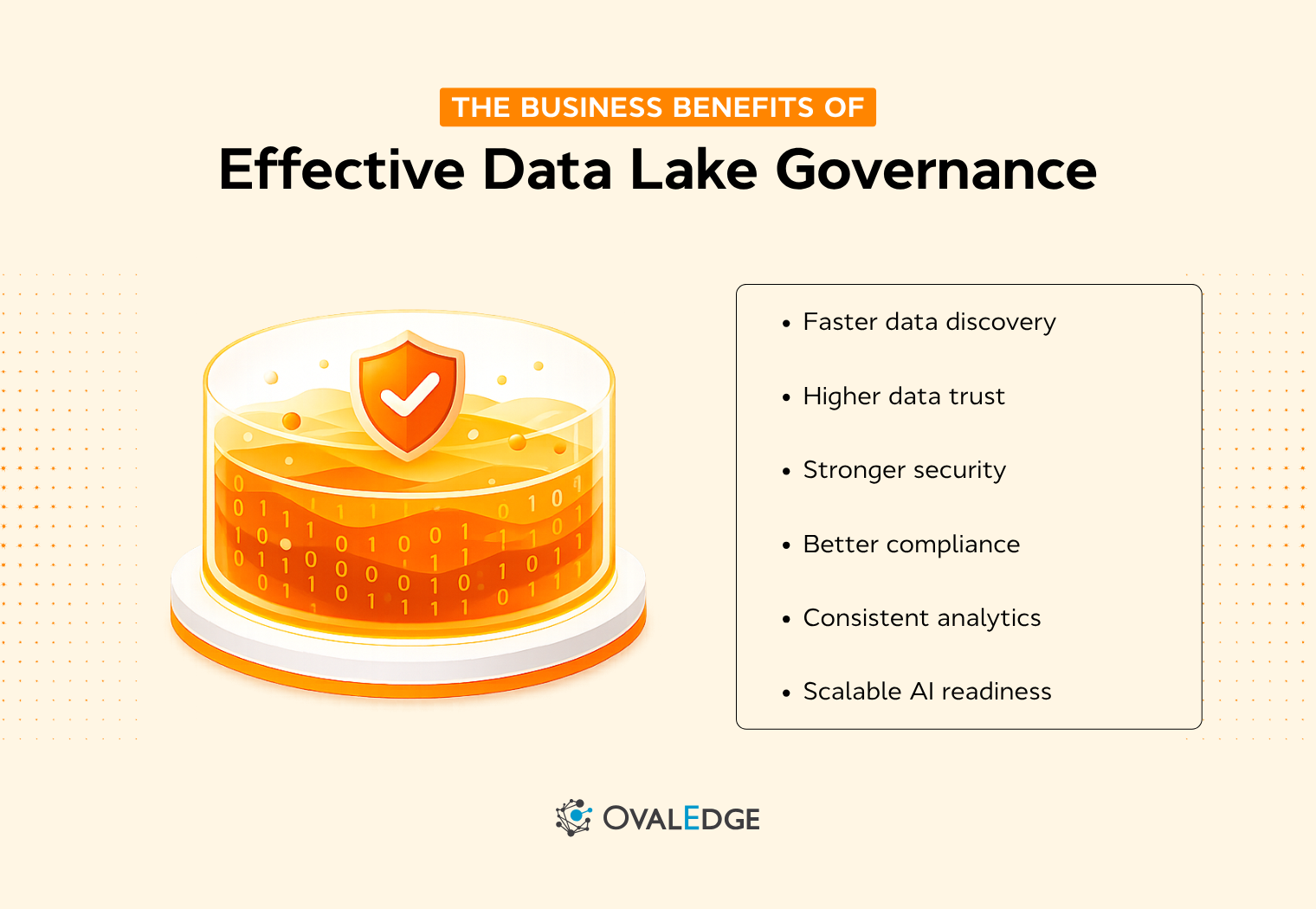
Data lake governance creates that control layer. It reduces manual validation, prevents data swamp risk, and gives data teams a practical way to keep lake assets usable for analytics, AI, reporting, and compliance.
What is data lake governance?
Data lake governance is how you manage lake assets through policies, metadata, ownership, access controls, quality rules, lineage, privacy controls, lifecycle rules, and certification. It helps us know what data exists, where it came from, who owns it, who can use it, and whether it is trusted for analytics, AI, reporting, or compliance.
Core controls include:
-
Metadata and cataloging: Capture source, schema, sensitivity, refresh frequency, and context, then make assets searchable through an enterprise data catalog.
-
Quality and lineage: Monitor freshness, schema changes, transformations, and downstream impact.
-
Access and privacy: Classify sensitive data, manage approvals, masking, and audit logs.
-
Ownership and certification: Assign owners, stewards, and approval signals for trusted datasets.
Data lake governance depends on both cataloging and metadata management.
Why does data lake governance matter for modern data teams?
Data lakes support analytics, AI, reporting, data science, and cross-team data sharing. But as data volume grows, manual governance breaks down because we cannot manage lake data through spreadsheets, tribal knowledge, or one-off approvals.
Data lake governance reduces validation work by giving users clear metadata, owners, and quality signals. It also helps prevent downstream breakages by tracking schema changes, lineage, and pipeline impact, while supporting auditability through access logs, policies, and compliance evidence across data governance for cloud environments.
Data lake vs data swamp: What governance prevents
A data lake becomes a data swamp when data is stored without the context needed to find, trust, protect, or reuse it. Governance prevents that by adding metadata, ownership, classification, quality checks, lifecycle rules, and certification.
|
Without governance |
With governance |
|
Users see multiple versions of the same dataset. |
Certification points users to the approved dataset. |
|
Dataset meaning, owner, and refresh status are unclear. |
Metadata shows source, owner, business context, and freshness. |
|
Sensitive or duplicated data stays hidden in the lake. |
Classification and discovery identify sensitive, duplicate, stale, or unused assets. |
|
Teams validate data manually before every use. |
Lineage, quality signals, and ownership help users trust data faster. |
For example, if a finance team finds three revenue datasets with different refresh dates, governance helps identify the certified source instead of forcing users to validate each version manually.
What challenges does data lake governance solve?
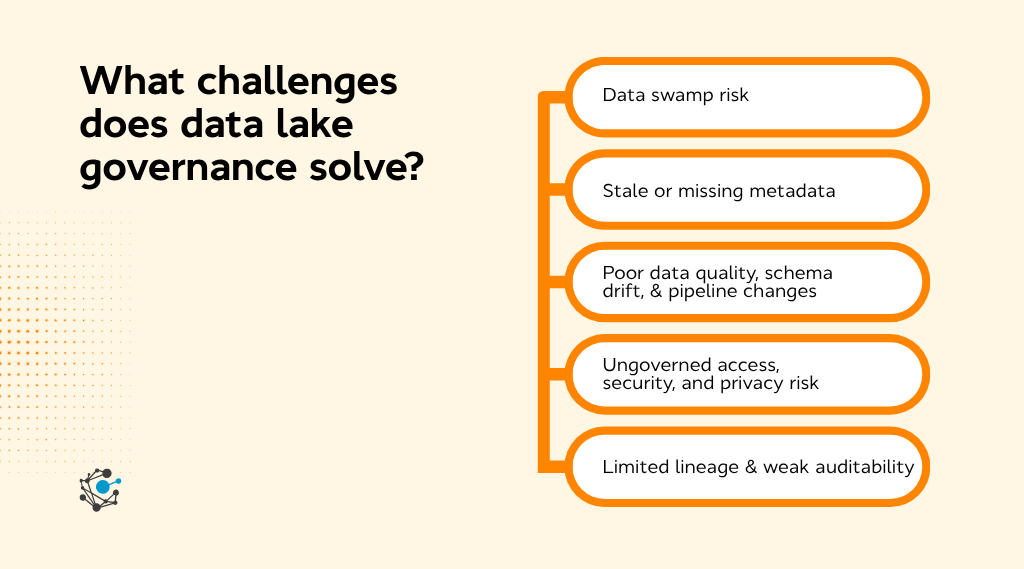
Data lake governance solves the gaps that appear when lake data grows faster than documentation, ownership, access control, and quality checks. It keeps data findable, trusted, protected, and audit-ready.
We usually see these gaps in a few recurring areas: messy lake assets, missing metadata, unreliable data, broad access, and weak lineage. Let’s break down what each challenge looks like and what governance does to fix it.
1. Data swamp risk
A data swamp forms when data is stored without business context, ownership, classification, or retirement rules. Teams may have thousands of lake assets, but no clear way to identify which ones are useful, duplicated, stale, sensitive, or approved.
Governance control: Data lake governance adds structure through cataloging, ownership, certification, and lifecycle rules. A data catalog makes lake tables, files, and objects searchable. Owners and stewards validate critical datasets. Certification workflows mark approved assets, while lifecycle rules and, data discovery techniques help identify unused, duplicate, or stale data.
OvalEdge expert’s insight: A data swamp is not a storage problem. It is a context problem. The data is there, but the metadata, ownership, classification, and certification signals needed to find and trust it are not.
Business outcome: Users spend less time searching, validating, and reconciling lake assets. They can find the right dataset faster, trust approved data, and reduce the risk of using outdated or duplicate information.
2. Stale or missing metadata
Stale metadata leaves users guessing what a dataset means, where it came from, when it refreshed, who owns it, and whether it is safe to use. This slows discovery, lowers trust, and pushes analysts into manual validation.
Governance control: Governance keeps metadata complete and current by defining required fields such as owner, source system, business definition, schema, refresh frequency, sensitivity level, quality score, lineage, usage history, and certification status. Active metadata adds usage signals, access activity, and operational context so metadata reflects how data is actually being used.
Business outcome: Teams can understand datasets without relying on tribal knowledge or engineering support. Better metadata improves search, speeds up onboarding, and helps users choose trusted data with more confidence.
3. Poor data quality, schema drift, and pipeline changes
Source systems change, but dashboards, pipelines, reports, and AI models may not get updated at the same time. A format change in a customer ID field, for example, can affect lake tables, downstream dashboards, and machine learning models before teams notice the issue.
Governance control: Governance applies quality rules for completeness, uniqueness, freshness, validity, and consistency. A data quality management system helps track quality scores, detect anomalies, trigger alerts, and route issues to the right owner. Lineage shows downstream impact when fields, schemas, or pipelines change.
OvalEdge expert’s insight: Schema drift is one of the most underestimated risks in lake environments. A single field-format change can silently break dashboards, compliance reports, and AI models if lineage and quality monitoring are not connected to the same pipeline.
Business outcome: Data teams can catch issues earlier, reduce reporting errors, and prevent pipeline changes from affecting analytics, compliance work, or AI outputs. This improves trust in lake data and reduces time spent on reactive troubleshooting.
4. Ungoverned access, security, and privacy risk
Data lakes often contain customer, employee, financial, behavioral, and operational data. Without access governance, users may receive broader permissions than needed, increasing privacy, compliance, and security exposure.
Governance control: Governance reduces that risk through sensitive data classification, role-based access, masking, approval workflows, access reviews, and audit logs. A clear data governance policy turns access rules into repeatable workflows, while data access governance helps enforce permissions and maintain compliance evidence.
Business outcome: Organizations can protect sensitive data while still enabling approved users to access what they need. This lowers privacy risk, strengthens audit readiness, and reduces the chance of unauthorized or inappropriate data use.
5. Limited lineage and weak auditability
Without lineage, teams cannot easily see where data came from, what changed, or where it is used. This makes root cause analysis, audit preparation, change reviews, and trust checks harder.
Governance control: Governance uses automated data lineage, transformation tracking, source-to-consumption mapping, and impact analysis. Teams can trace data from the source system to the lake table, transformation job, dashboard, report, application, or AI model.
Business outcome: Data teams can investigate issues faster, assess the impact of changes before they reach downstream users, and provide clearer evidence for audits. Strong lineage also helps business users and AI teams understand whether a dataset is traceable, reliable, and fit for use.
What does a data lake governance framework look like?
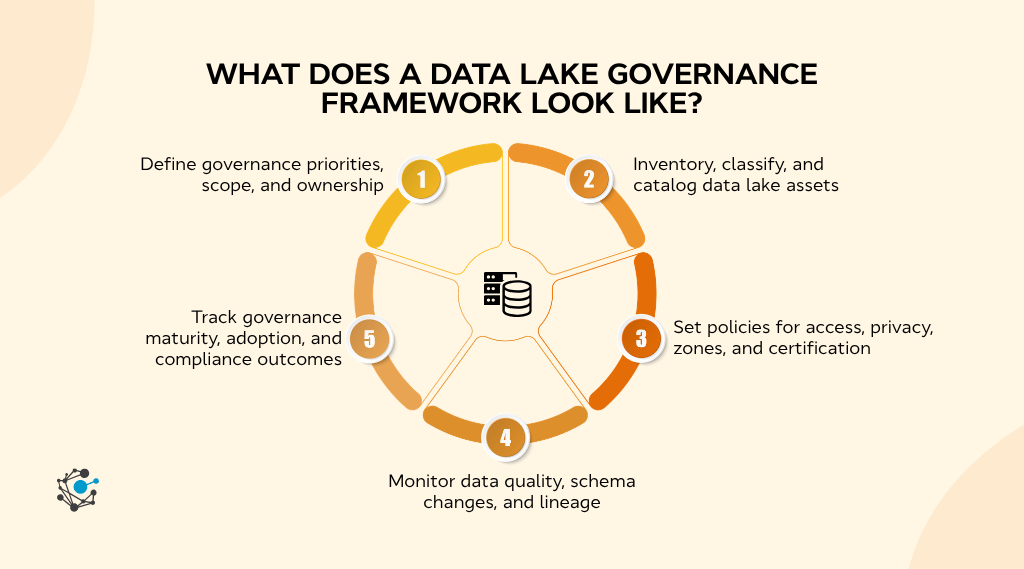
A data lake governance framework defines how we catalog, classify, access, monitor, own, certify, and retire lake assets. The objective is to create a practical operating model that keeps lake data trusted, secure, and reusable as usage grows.
For data lake teams, the framework usually starts with five core operating steps.
Step 1: Define governance priorities, scope, and ownership
Business objective: Establish accountability for the data that matters most.
Start with the business reason for governing the data lake. Focus on high-value, high-risk, or high-usage domains before expanding across the full lake.
Define the goals, priority datasets, owners, stewards, custodians, approvers, and success metrics. This gives every critical dataset a clear point of accountability, so teams know who approves use, who fixes issues, and who maintains business context.
Example: A financial services team starts with customer and transaction data because these assets carry reporting, privacy, and compliance impact.
Outcome: A focused governance scope with clear accountability.
Step 2: Inventory, classify, and catalog data lake assets
Business objective: Improve discoverability and give users the context needed to choose the right data.
Create an inventory of what exists in the lake, then classify assets by source, domain, sensitivity, owner, usage, lifecycle stage, and business value.
This step prevents the lake from becoming a blind storage layer. With a data catalog, users can search lake assets and quickly see the context needed to choose the right dataset, including source system, schema, owner, refresh frequency, sensitivity level, quality score, lineage, and certification status.
Unified data governance platforms like OvalEdge bring cataloging, classification, and metadata management into one searchable layer so teams can move from inventory to governed access without stitching together separate tools.
Example: A customer events table is tagged as Customer domain, Confidential, refreshed daily, owned by the data engineering team, and approved for product analytics.
Outcome: A searchable, classified view of lake assets.
Step 3: Set policies for access, privacy, zones, and certification
Business objective: Reduce access risk while making approved data easier to use.
Once assets are cataloged, define how they should be accessed, protected, promoted, retained, and certified. Separate raw, curated, certified, and archived zones so users know which datasets are exploratory and which are approved for reporting, analytics, or AI.
Document these rules in a data governance policy so access requests, privacy checks, retention decisions, and certification reviews follow the same process across teams.
Example: Raw customer data has restricted access, curated customer data has quality checks, and certified customer data requires steward approval.
Customer example: A European logistics company applied this approach across an Iceberg data lake with data products spread across multiple systems. Business users struggled to discover and request the right datasets. By cataloging data products with unique identifiers and connecting access requests to service desk and Active Directory workflows, the company gave users a self-service data marketplace where governed access replaced ad hoc requests.
Outcome: Clear rules for safe access, approved use, and lifecycle control.
Step 4: Monitor data quality, schema changes, and lineage
Business objective: Protect trust in lake data as systems, schemas, and pipelines change.
A governed lake needs continuous monitoring because data, schemas, and pipelines change. Define rules for accuracy, completeness, timeliness, consistency, validity, and uniqueness.
Use lineage to trace data from source to consumption. With automated data lineage, teams can see which lake tables, dashboards, reports, applications, or AI models may be affected before a schema or pipeline change causes wider issues.
OvalEdge expert’s insight: Data lake governance now serves two consumers: the people who have always needed trusted data, and the AI agents and automated workflows being deployed on that same data. Catalog, lineage, quality, and access controls become the governed context both depend on.
Example: If a customer ID field changes format, the owner is alerted and downstream users can see affected reports or models.
Outcome: Faster issue detection and stronger trust in lake data.
Step 5: Track governance maturity, adoption, and compliance outcomes
Business objective: Show whether governance is improving data use, trust, and compliance readiness.
Measure whether governance is improving how the lake is used. Track metadata coverage, owner assignment, certified datasets, quality issue resolution time, access request time, sensitive asset classification, stale datasets retired, and lineage coverage.
OvalEdge data governance dashboards give a single view of these governance KPIs, so teams can spot weak areas, report progress, and decide where to expand governance next.
Example: A governance lead sees that 80 percent of critical datasets have owners, but only 40 percent have certification.
Outcome: Clear visibility into maturity, adoption, and governance gaps.
Data lake governance maturity checklist
Use this checklist to assess whether the data lake is searchable, owned, protected, monitored, and trusted. If several items are missing, start with priority domains before expanding governance across the full lake.
-
Metadata: Do critical datasets have owners, descriptions, source details, refresh frequency, sensitivity tags, and business context?
-
Cataloging: Can users search and understand key lake assets without depending on engineering or tribal knowledge?
-
Access: Are permissions role-based, reviewed regularly, and supported by audit evidence?
-
Quality: Are key datasets monitored for completeness, freshness, validity, duplication, and consistency?
-
Lineage: Can teams trace where data came from, how it changed, and which reports, dashboards, or models use it?
-
Stewardship: Are owners and stewards assigned to resolve metadata, quality, access, and certification issues?
-
Certification: Is there a clear process for marking trusted datasets approved for analytics, reporting, or AI use?
If most answers are “no,” begin with cataloging, ownership, metadata, access, and quality rules for the most important data domains.
Conclusion
Data lake governance programs rarely fail because the framework is wrong. They stall because execution fragments across spreadsheets, disconnected catalogs, manual access reviews, and ad hoc stewardship as the lake scales across more domains, tools, and use cases.
Most enterprises already have the governance foundation a data lake needs: cataloged metadata, business definitions, ownership assignments, quality rules, access policies, and lineage. What breaks down is connecting those existing assets into one layer where people, analytics workflows, and AI systems can find trusted data with the context needed to use it responsibly.
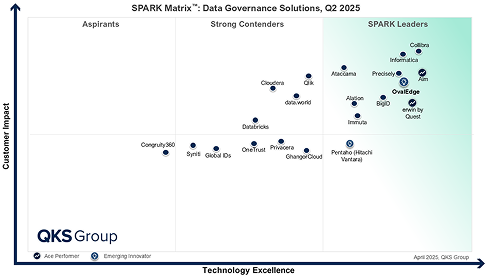
OvalEdge connects and activates that existing governance foundation through the Enterprise Context Graph, making governed lake data searchable, traceable, certified, and ready for analytical AI workflows like forecasting, risk scoring, and compliance reporting.
Schedule a demo to see how your governance foundation can support trusted analytics and AI across your data lake.