.jpg)
Organizations are rapidly adopting AI to make data more accessible and accelerate decision-making.
According to McKinsey's State of AI 2024 report, 65% of organizations regularly use generative AI, nearly double the adoption reported the previous year.
That's where conversational analytics software comes in. These platforms let users ask questions in plain language and receive accurate, explainable insights from enterprise data without writing SQL or relying on complex dashboards.
Before comparing platforms, it's important to clarify a common point of confusion. This guide focuses on conversational analytics for business intelligence, where users query enterprise data to understand what changed and why. It does not cover conversation intelligence tools that analyze customer calls, chats, and interactions for sales or contact center insights.
Key capabilities to evaluate in AI-driven conversational analytics platforms
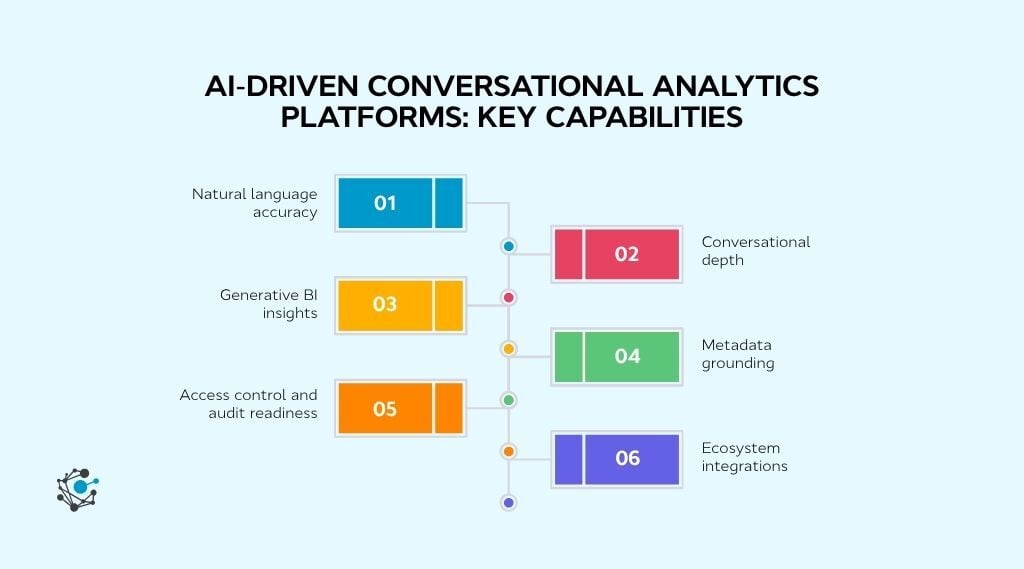
Most conversational analytics tools look impressive in a demo. The real test starts when you connect them to live enterprise data with real definitions, permissions, and edge cases. That’s when the gap between experimental features and production-ready platforms becomes obvious.
If you’re comparing options seriously, these are the capabilities that tend to matter most once the platform is in daily use:
-
Natural language accuracy: The platform's natural language processing should map questions reliably to business metrics and definitions instead of guessing based on loosely matched terms.
-
Conversational depth: Follow-up questions and iterative exploration should work without resetting context or changing the meaning of prior answers.
-
Generative BI insights: Summaries, drivers, and automated data storytelling should help explain what changed and why, not just restate numbers.
-
Metadata grounding: Glossary terms, lineage, and data quality indicators should inform every response to reduce ambiguity and build trust.
-
Access control and audit readiness: Permissions, role-based access, and traceability should apply consistently across conversational interactions.
-
Ecosystem integrations: The platform should connect cleanly with cloud data warehouses, BI tools, and collaboration surfaces already in use.
Customer expectations are moving too.
According to the Genesys report 2025, 64% of consumers believe AI will improve the quality and speed of customer experience over the next two to three years, which raises the bar for trustworthy analytics behind those interactions and makes it important to choose tools that stay accurate under real data and permissions.
Together, these capabilities determine whether conversational analytics becomes a dependable part of everyday decision-making or fades into a novelty after the initial excitement.
10 Best AI-driven conversational analytics platforms in 2026
Before diving into individual tools, it helps to clarify how this list is evaluated. The ranking looks at conversational depth, enterprise readiness, governance alignment, integration maturity, and how practical each platform is in real-world adoption.
The focus stays on analytics via natural language, not customer conversation analytics such as call or chat transcript analysis.
|
Platform |
Natural language capabilities |
Governance alignment |
Starting price |
Best for |
|
OvalEdge askEdgi |
High, agentic conversational analytics |
Native metadata, lineage, business glossary, and governance |
Custom |
Enterprises that need governed, self-service conversational analytics |
|
ThoughtSpot |
High, search-first analytics |
Semantic model-based governance |
From $25/user/month |
Fast ad hoc analytics and business search |
|
Microsoft Power BI |
Medium to high, Copilot-assisted queries |
Strong governance with Microsoft Fabric and semantic models |
From $14/user/month |
Organizations invested in the Microsoft ecosystem |
|
Google Looker |
Medium, Gemini-powered conversational analytics |
LookML semantic layer |
Custom |
Google Cloud and warehouse-native analytics |
|
Tableau |
Medium, Tableau Pulse and AI-assisted insights |
Trusted semantic and governance foundation |
From $15/user/month |
Executive dashboards and proactive insights |
|
Qlik Sense |
Medium, Insight Advisor Chat |
App-level governance and security controls |
Custom |
Existing Qlik customers expanding self-service analytics |
|
Tellius |
High, conversational analytics with automated root-cause analysis |
Governed semantic model |
Custom |
Teams that need automated "why did this happen?" analysis |
|
Domo |
Medium, AI-powered conversational BI |
Governance through centralized cloud platform |
Custom (30-day trial available) |
Organizations seeking an all-in-one cloud analytics platform |
|
Sigma |
Medium, Ask Sigma natural language queries |
Warehouse-native governance |
Custom |
Finance and operations teams working on cloud data warehouses |
|
Metabase |
Medium, Metabot AI for natural language SQL |
Tier-dependent governance and permissions |
Free (Cloud from $100/month) |
Startups and growing teams adopting affordable self-service BI |
Each of the platforms below approaches conversational analytics slightly differently. Some prioritize free-form questioning; others lean into guided insights or governance-first design. The sections that follow break down how each tool works in practice, where it shines, and where it fits best.
1. OvalEdge’s askEdgi
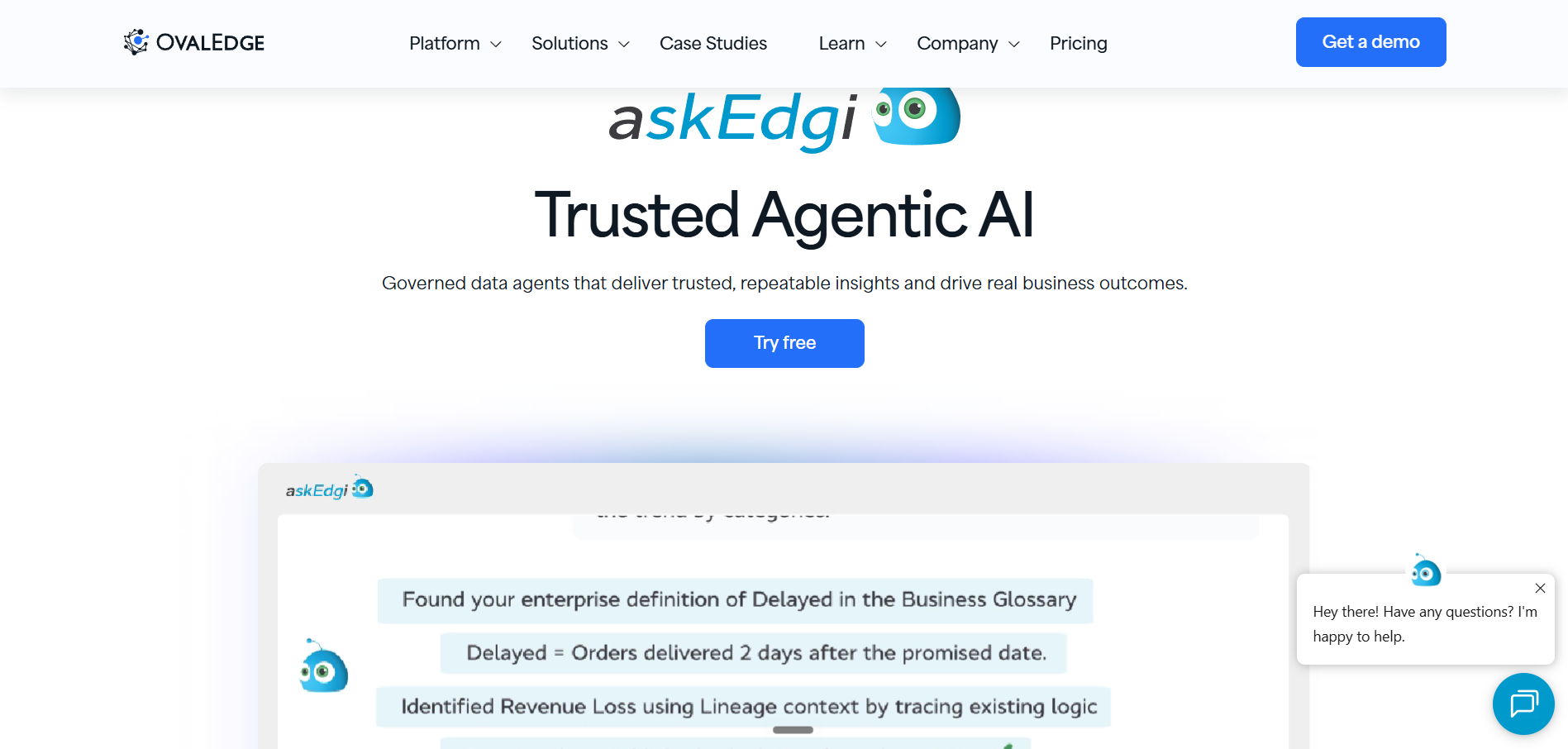
askEdgi is OvalEdge's agentic, AI-driven conversational analytics platform that enables business users to query enterprise data using natural language. Built on OvalEdge's metadata-driven governance foundation, it combines conversational AI with lineage, business glossary, data quality, and access controls to deliver trusted, explainable insights. The platform helps organizations scale self-service analytics while maintaining governance, security, and compliance.
Core features:
-
Conversational analytics: Ask business questions in natural language and receive governed, explainable answers.
-
Metadata-driven context: Uses lineage, business glossary, and metadata to improve response accuracy.
-
Sensitive data protection: Applies role-based access and data classifications to secure conversational queries.
-
Privacy-first AI: Customer data is never used to train AI models, supporting enterprise privacy requirements.
-
Agentic reasoning: Supports multi-step analysis, follow-up questions, and contextual decision-making.
Pricing: Custom enterprise pricing. Contact OvalEdge for a personalized demonstration and pricing.
Best for: Enterprises looking for governed conversational analytics with built-in metadata management and AI governance.
Why OvalEdge stands out
Unlike standalone AI assistants that generate answers from disconnected data sources, askEdgi is built on OvalEdge's unified governance platform.
Every response is grounded in governed metadata, business glossary terms, lineage, data quality, and access controls, helping organizations deliver consistent, explainable insights while maintaining security and compliance.
As analytics evolves beyond simple question-and-answer experiences, agentic AI can autonomously investigate business problems, identify root causes, and recommend next actions while operating within enterprise governance policies.
OvalEdge's Agentic Analytics Whitepaper explores how governed metadata, semantic context, and AI agents work together to deliver trusted self-service analytics at scale, with practical implementation guidance and real-world use cases.
Ready to see governed conversational analytics in action?

Book a demo to discover how askEdgi combines AI, metadata, lineage, and governance to deliver trusted enterprise insights.
2. ThoughtSpot
ThoughtSpot is an AI-powered analytics platform that enables users to search and analyze enterprise data using natural language. Its search-first interface and AI capabilities make it easy for business users to explore data without relying on dashboards or SQL. The platform works best when paired with well-defined semantic models and governed data.
Core features:
-
Natural language search: Ask business questions in plain English and receive instant answers.
-
AI-powered insights: Spotter AI summarizes trends and explains key business metrics.
-
Live analytics: Connects directly to cloud data platforms for real-time analysis.
-
Interactive visualizations: Automatically generates charts and dashboards from search results.
-
Semantic modeling: Maps business terms to governed metrics for consistent reporting.
Pricing: Essentials from $25/user/month (annual), Pro from $50/user/month, usage-based pricing from $0.10/query, Enterprise pricing on request.
Best for: Organizations that want search-driven self-service analytics with AI-assisted insights.
Pros
-
Intuitive search experience for non-technical users.
-
Strong integration with modern cloud data platforms.
-
AI-generated insights accelerate ad hoc analysis.
Cons
-
Multiple pricing models can be difficult to estimate.
-
Performance depends on well-designed semantic models and data preparation.
3. Microsoft Power BI
Power BI s a business intelligence platform that combines interactive dashboards, reporting, and AI-powered analytics. Its Copilot capabilities allow users to explore data using natural language, while Microsoft's semantic models help ensure consistent business definitions. The platform integrates seamlessly with the Microsoft ecosystem, making it a popular choice for enterprise analytics.
Core features:
-
Natural language Q&A: Ask questions in plain language to explore reports and datasets.
-
Copilot for Power BI: Generate reports, summaries, and DAX expressions with AI assistance.
-
Semantic models: Create governed business metrics and reusable data models.
-
Interactive dashboards: Build and share dynamic visual reports across the organization.
-
Microsoft integration: Connects natively with Microsoft Fabric, Excel, Azure, and Teams.
Pricing: Pro $14/user/month; Premium Per User $24/user/month; Embedded pricing available on request.
Best for: Organizations using Microsoft Fabric, Azure, and the broader Microsoft ecosystem.
Pros
-
Seamless integration with Microsoft products and services.
-
Strong reporting, visualization, and self-service BI capabilities.
-
Affordable entry pricing for enterprise BI.
Cons
-
Advanced DAX and data modeling have a steep learning curve.
-
Premium features often require additional licensing.
4. Google Looker
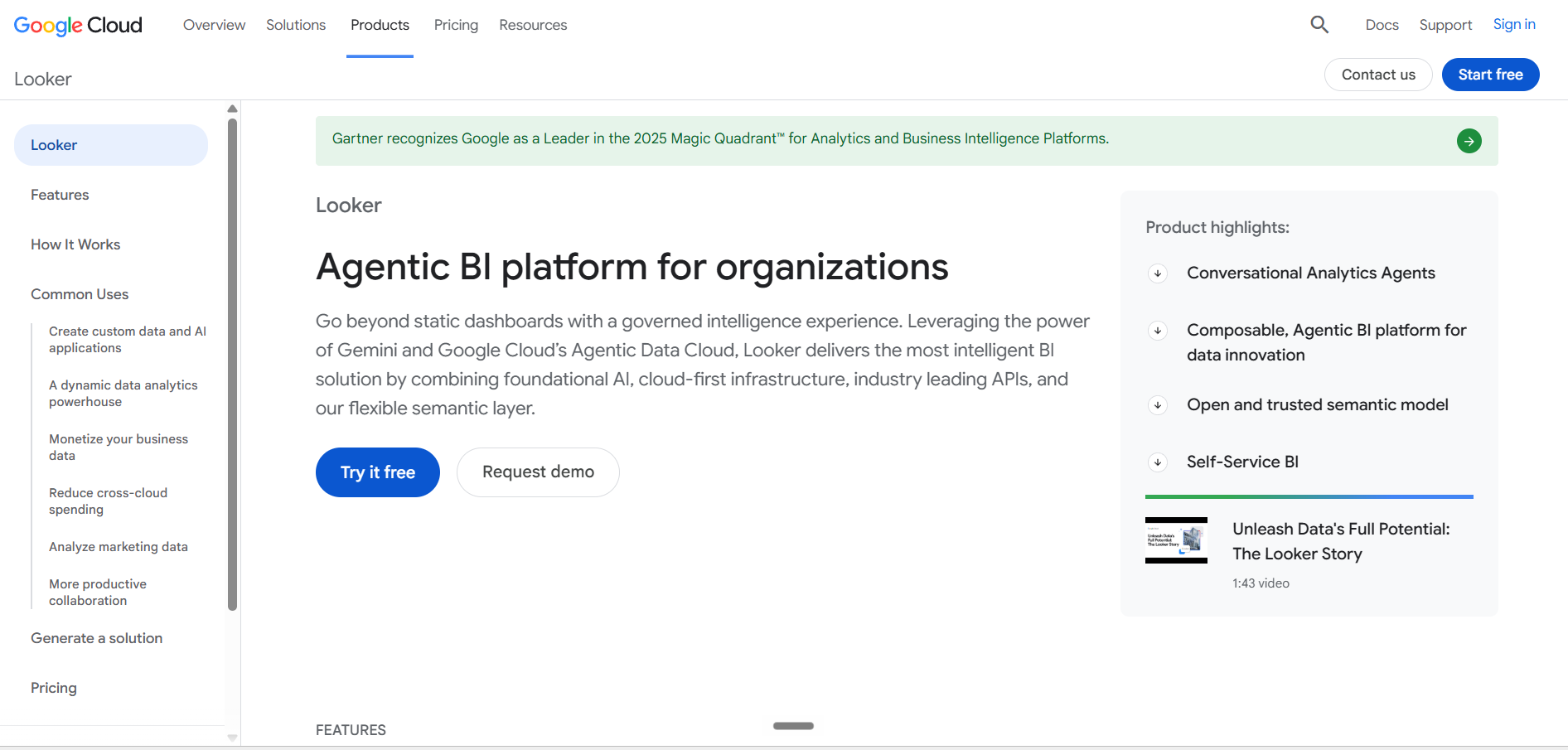
Google Looker is a cloud-native business intelligence platform that delivers conversational analytics through Gemini-powered natural language interactions. Built on LookML, it enables organizations to define governed business metrics and provide consistent analytics across teams. It is particularly well suited for organizations invested in the Google Cloud ecosystem.
Core features:
-
Conversational analytics: Query governed data using natural language with Gemini assistance.
-
LookML semantic layer: Standardizes business metrics and definitions across reports.
-
Cloud-native architecture: Connects directly to cloud data warehouses for live analytics.
-
Interactive dashboards: Build and share customizable reports and visualizations.
-
Google Cloud integration: Works seamlessly with BigQuery and other Google Cloud services.
Pricing: Custom annual pricing based on platform licensing and user requirements.
Best for: Organizations using Google Cloud that need governed, warehouse-native analytics.
Pros
-
Strong semantic modeling with LookML.
-
Native integration with Google Cloud and BigQuery.
-
Live queries eliminate the need for data extracts.
Cons
-
LookML requires technical expertise to implement and maintain.
-
Enterprise licensing and deployment can be complex.
5. Tableau
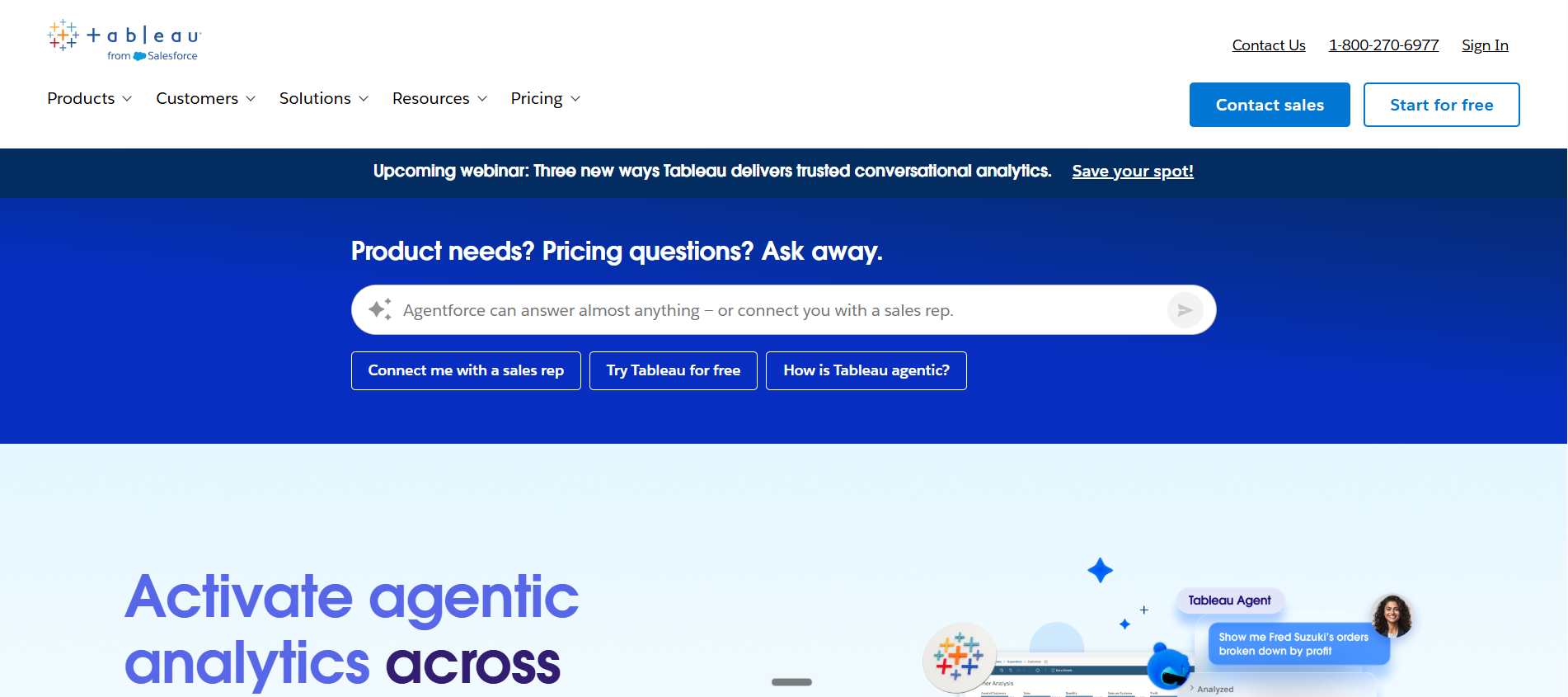
Tableau is a leading business intelligence platform known for its advanced data visualization and analytics capabilities. With Tableau Pulse and Tableau Next, it now incorporates AI-powered conversational insights and proactive metric monitoring. The platform helps business users understand trends and key drivers while relying on trusted, governed data.
Core features:
-
Tableau Pulse: Delivers AI-generated summaries and personalized insights on key metrics.
-
Natural language insights: Explains trends and business performance in plain language.
-
Interactive dashboards: Create rich, visual analytics for self-service reporting.
-
Trusted data foundation: Uses governed data sources to ensure consistent reporting.
-
Enterprise integrations: Connects with major cloud platforms, databases, and business applications.
Pricing: Standard from $15/user/month; Enterprise from $35/user/month; Tableau Next from $40/seat/month.
Best for: Organizations seeking industry-leading data visualization with AI-powered business insights.
Pros
-
Best-in-class interactive dashboards and visual analytics.
-
Tableau Pulse delivers proactive AI-generated insights.
-
Extensive ecosystem and enterprise integrations.
Cons
-
Licensing costs increase quickly for large user bases.
-
Advanced dashboard development requires experienced users.
6. Qlik Sense
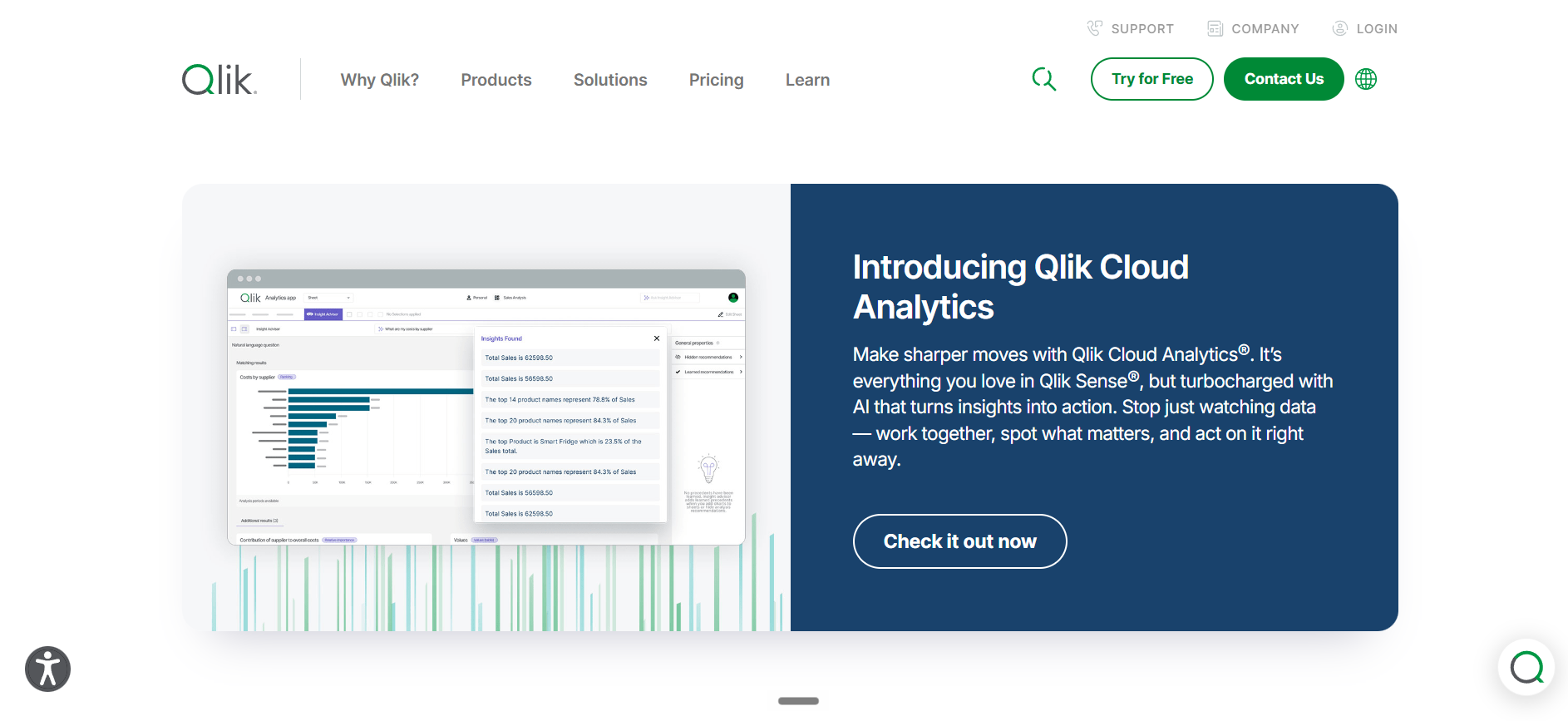
Qlik Sense is an AI-powered analytics platform that combines associative data exploration with conversational analytics through Insight Advisor Chat. Its unique data engine helps users uncover relationships across datasets while maintaining governance and security. The platform supports both cloud and on-premises deployments, making it suitable for regulated industries.
Core features:
-
Insight Advisor Chat: Ask natural language questions and receive AI-generated insights.
-
Associative analytics: Explore relationships across data without predefined query paths.
-
Interactive dashboards: Build self-service dashboards with drag-and-drop visualizations.
-
Enterprise governance: Apply role-based access controls and governed data models.
-
Flexible deployment: Available in cloud, hybrid, and on-premises environments.
Pricing: Custom pricing available on request.
Best for: Organizations using Qlik or those requiring governed analytics with flexible deployment options.
Pros
-
Unique associative engine enables deeper data exploration.
-
Supports cloud, hybrid, and on-premises deployments.
-
Strong governance and security for enterprise environments.
Cons
-
Custom pricing makes cost comparison difficult.
-
Large data reloads can occasionally affect performance.
7. Tellius
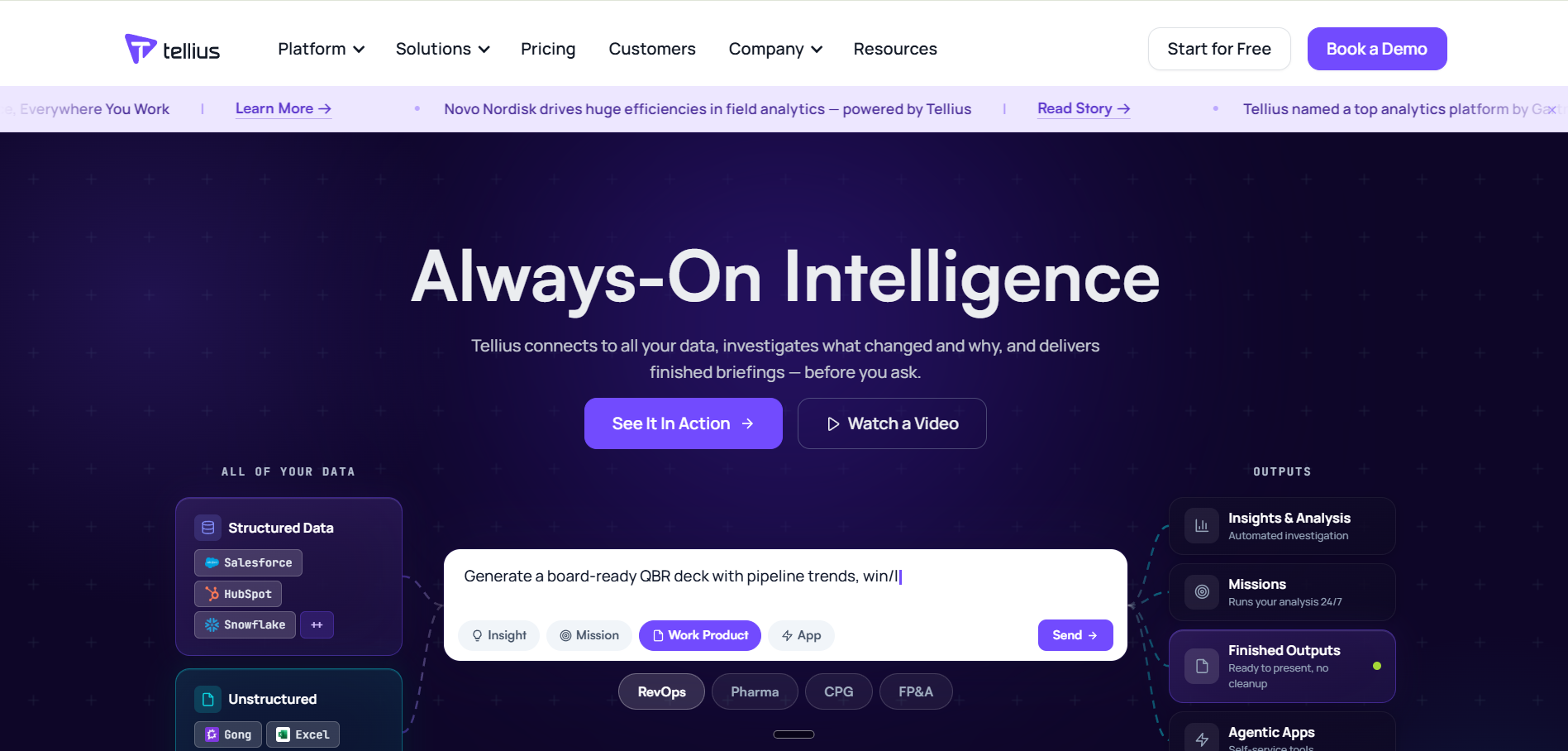
Tellius is an AI-powered analytics platform that combines conversational analytics with automated root-cause analysis. Instead of simply answering questions, it investigates why business metrics changed and presents findings through AI-generated narratives and visualizations. This makes it particularly valuable for organizations seeking faster, explainable insights from enterprise data.
Core features
-
Natural language queries: Analyze enterprise data using conversational search.
-
Automated root-cause analysis: Identifies key drivers behind changes in business metrics.
-
AI-generated narratives: Summarizes insights with contextual explanations and visualizations.
-
Anomaly detection: Automatically flags unusual trends and KPI deviations.
-
Enterprise governance: Supports governed analytics with secure access and semantic models.
Pricing: Custom pricing. Premium supports up to 10 users, while Enterprise adds ML modeling, SSO, APIs, and flexible deployment.
Best for: Organizations that want AI-powered root-cause analysis alongside conversational analytics.
Pros
-
Excellent automated root-cause and key-driver analysis.
-
AI-generated narratives simplify insight interpretation.
-
Strong support for enterprise-scale analytics.
Cons
-
Premium tier has a limited user capacity.
-
Advanced capabilities require Enterprise licensing.
8. Domo
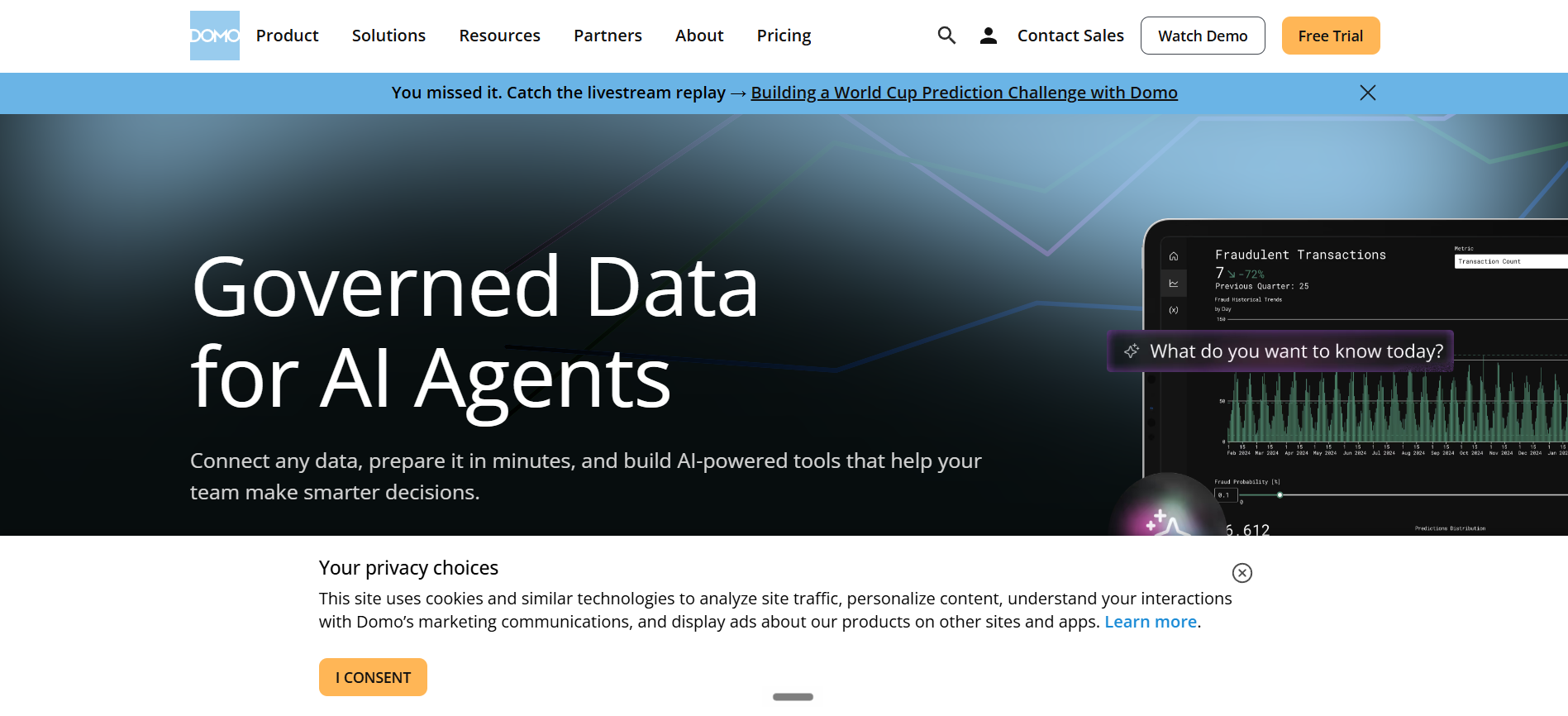
Domo is a cloud-based analytics platform that combines data integration, business intelligence, workflow automation, and AI-powered conversational analytics in a single solution. Its AI chat capabilities enable users to ask business questions in natural language while working with connected enterprise data. The platform is designed to unify analytics and operational workflows without requiring multiple tools.
Core features
-
AI chat: Query enterprise data using natural language for faster insights.
-
1,000+ data connectors: Integrates with cloud, on-premises, and SaaS applications.
-
Interactive dashboards: Create customizable dashboards for real-time business monitoring.
-
Workflow automation: Automates business processes and alerts based on data events.
-
Low-code app development: Build custom business applications using governed enterprise data.
Pricing: Custom pricing based on deployment requirements. A 30-day free trial is available.
Best for: Organizations seeking an all-in-one cloud platform for data integration, analytics, automation, and AI.
Pros
-
Combines data integration, analytics, and automation in one platform.
-
Extensive library of pre-built data connectors.
-
Low-code capabilities extend analytics into business workflows.
Cons
-
Pricing is not publicly available.
-
Broad feature set may require time to fully adopt.
9. Sigma
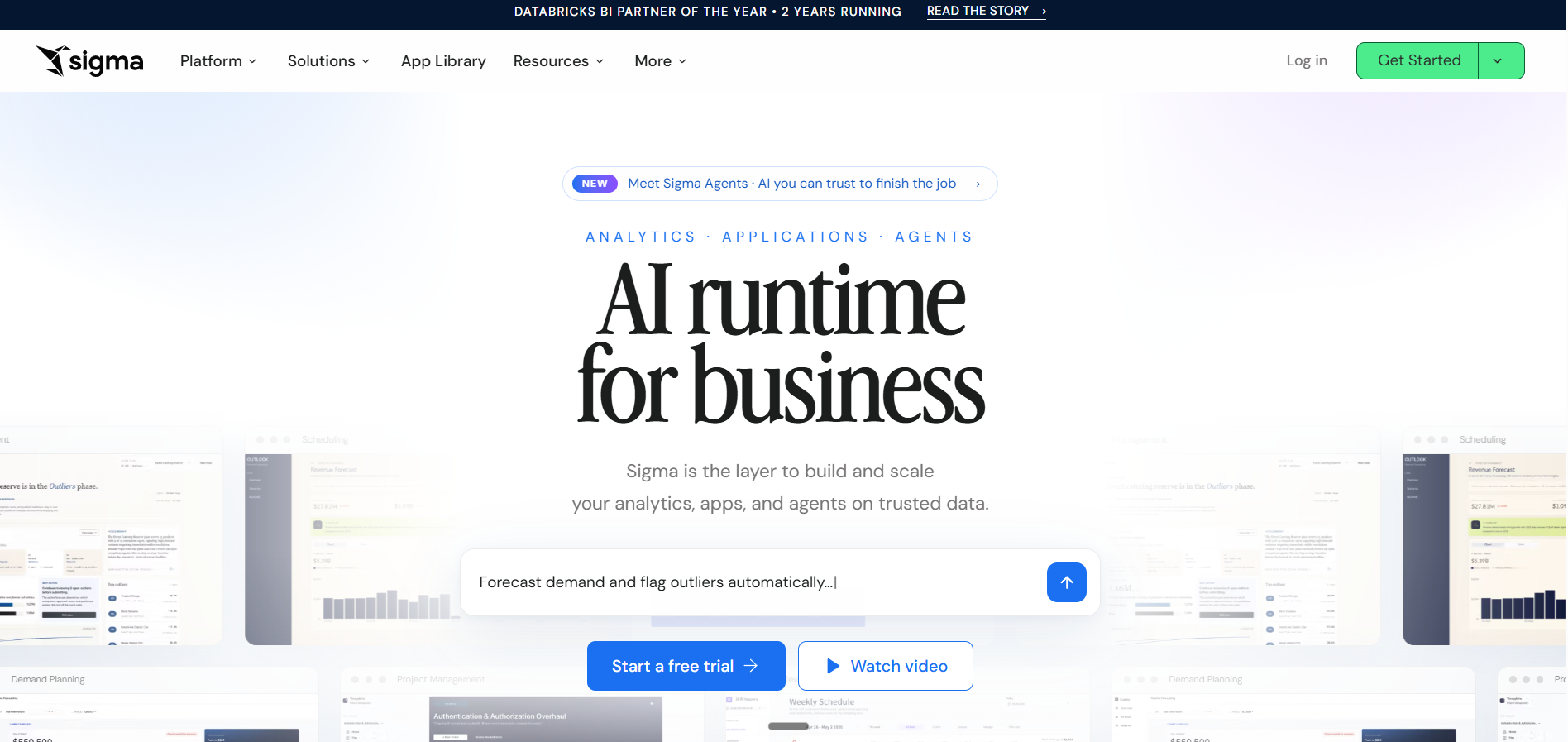
Sigma is a cloud-native business intelligence platform that delivers spreadsheet-style analytics directly on cloud data warehouses. Its Ask Sigma AI assistant enables users to query data in natural language, generate dashboards, and analyze live warehouse data without extracts. The platform is popular among finance and operations teams that want familiar spreadsheet workflows at enterprise scale.
Core features
-
Ask Sigma AI: Query data and generate dashboards using natural language.
-
Spreadsheet interface: Analyze live warehouse data in a familiar spreadsheet environment.
-
Warehouse-native architecture: Runs directly on cloud data warehouses without data extracts.
-
AI-powered applications: Build forecasting, planning, and budgeting solutions with AI assistance.
-
Collaboration tools: Share live reports and collaborate on governed enterprise data.
Pricing: Custom pricing based on deployment requirements.
Best for: Finance and operations teams that need spreadsheet-style analytics on live cloud data.
Pros
-
Familiar spreadsheet experience for business users.
-
Live querying eliminates data duplication and extracts.
-
Strong integration with modern cloud data warehouses.
Cons
-
Pricing is available only through custom quotes.
-
Best suited for organizations with a cloud data warehouse strategy.
10. Metabase
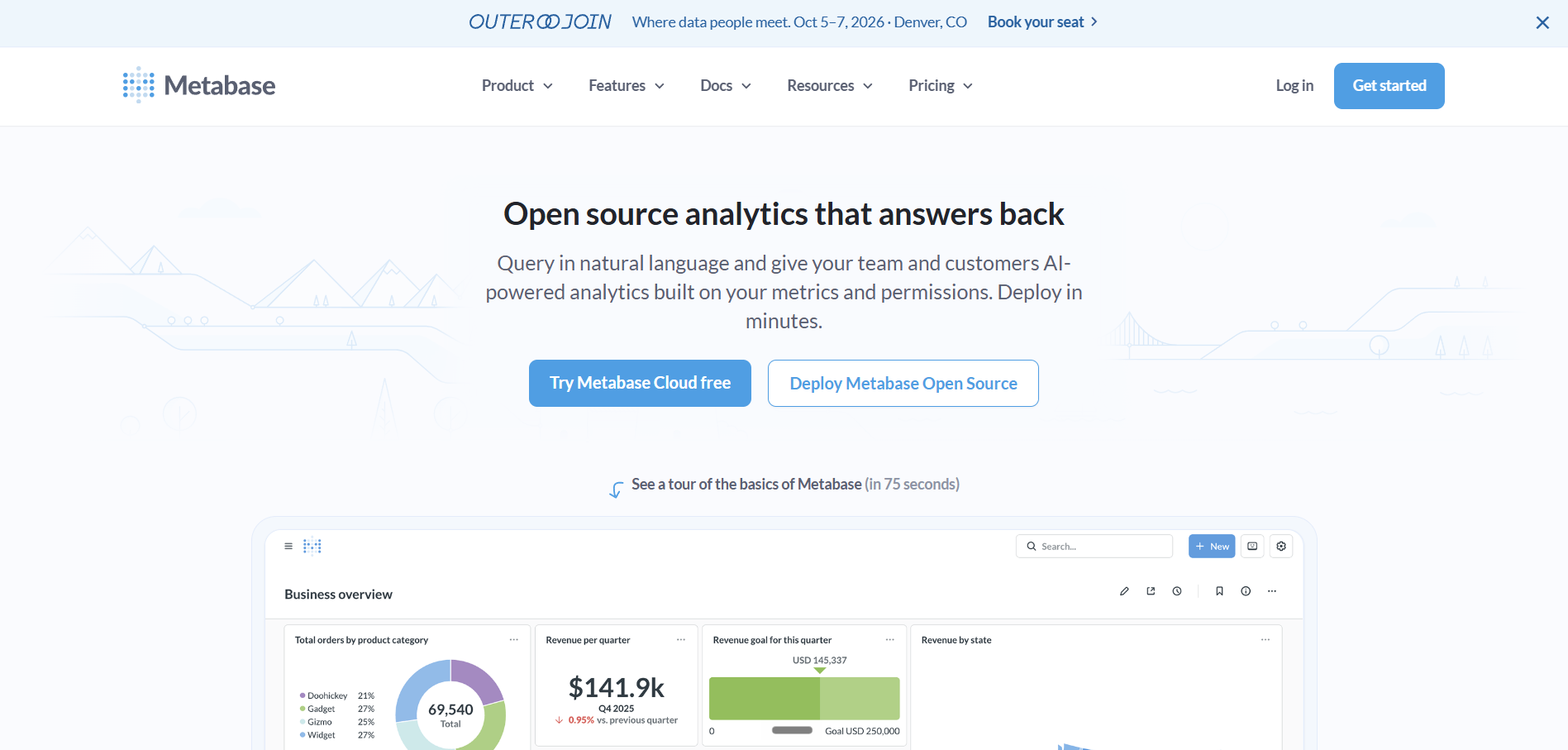
Metabase is an open-source business intelligence platform that enables teams to explore and visualize data without extensive technical expertise. Its Metabot AI assistant adds conversational analytics by converting natural language questions into SQL queries and visualizations. The platform offers a cost-effective path from self-service analytics to enterprise-grade governance.
Core features
-
Metabot AI: Converts natural language questions into SQL queries and charts.
-
Visual query builder: Build reports without writing SQL using a drag-and-drop interface.
-
Interactive dashboards: Create and share customizable dashboards across teams.
-
Granular permissions: Supports row- and column-level security in paid editions.
-
Embedded analytics: Embed dashboards into applications using secure authentication.
Pricing: Free self-hosted edition; Cloud Starter from $100/month + $6/user; Pro from $575/month; Enterprise pricing available on request.
Best for: Startups, SMBs, and growing organizations looking for affordable self-service analytics.
Pros
-
Free open-source edition for quick adoption.
-
Easy-to-use interface with minimal learning curve.
-
Affordable upgrade path for growing teams.
Cons
-
Advanced governance features are limited in the free edition.
-
Fewer enterprise AI capabilities than some premium BI platforms.
How to choose the right AI-driven conversational analytics platform
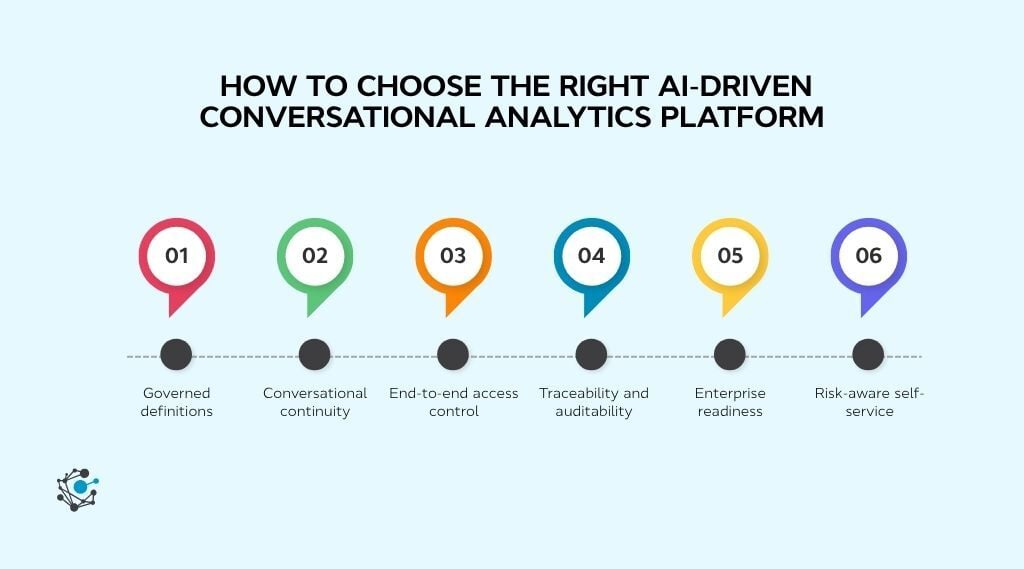
When it comes to choosing a conversational analytics platform, polished demos only tell part of the story. The real signal shows up in how a tool behaves once it is connected to production data, real users, and real constraints. Asking the right questions helps you separate genuinely ready platforms from those still built for controlled environments.
Here’s what to look for as you evaluate your options:
-
Governed definitions: The platform should resolve questions against approved metrics and business definitions rather than guessing when terms are ambiguous.
-
Conversational continuity: Follow-up questions should work naturally, with context preserved across multiple interactions instead of resetting each time.
-
End-to-end access control: Row-level and object-level permissions should apply consistently so users only see data they are authorized to access.
-
Traceability and auditability: Every answer should be explainable, with a clear path back to the data sources, definitions, and logic used.
-
Enterprise readiness: Support for SSO, logging, monitoring, and compliance workflows should be built in, not added as an afterthought.
-
Risk-aware self-service: The platform should reduce reliance on analysts while maintaining guardrails that prevent misuse or misinterpretation of data.
Platforms that meet these criteria tend to scale smoothly across teams and use cases. Those that don’t often stall after early enthusiasm, once accuracy, trust, and governance become everyday concerns.
For organizations that want conversational analytics to become a dependable decision tool rather than a risky experiment, platforms like askEdgi stand out by combining natural language access with built-in governance and auditability.
Conclusion
Most organizations fail at conversational analytics because the answers stop being trustworthy once real data, real users, and real permissions enter the picture. A conversational interface is easy to adopt, but sustaining confidence in the answers is not.
If you’re at the stage of narrowing options, the next step is less about testing another demo and more about pressure-testing how a platform behaves in your environment. That means seeing how it handles your definitions, your sensitive data, and your access rules, not a sanitized sample dataset.
This is where engaging with OvalEdge typically starts. A working session focuses on your data landscape, governance requirements, and business questions, then shows how askEdgi responds within those constraints. The goal is not to “wow” with generic AI, but to demonstrate how conversational analytics can work safely on trusted enterprise data.
Book a demo with OvalEdge today if you’re ready to see what governed, agentic conversational analytics looks like in practice.
.png?width=1081&height=173&name=Forrester%201%20(1).png)
.png?width=1081&height=241&name=KC%20-%20Logo%201%20(1).png)