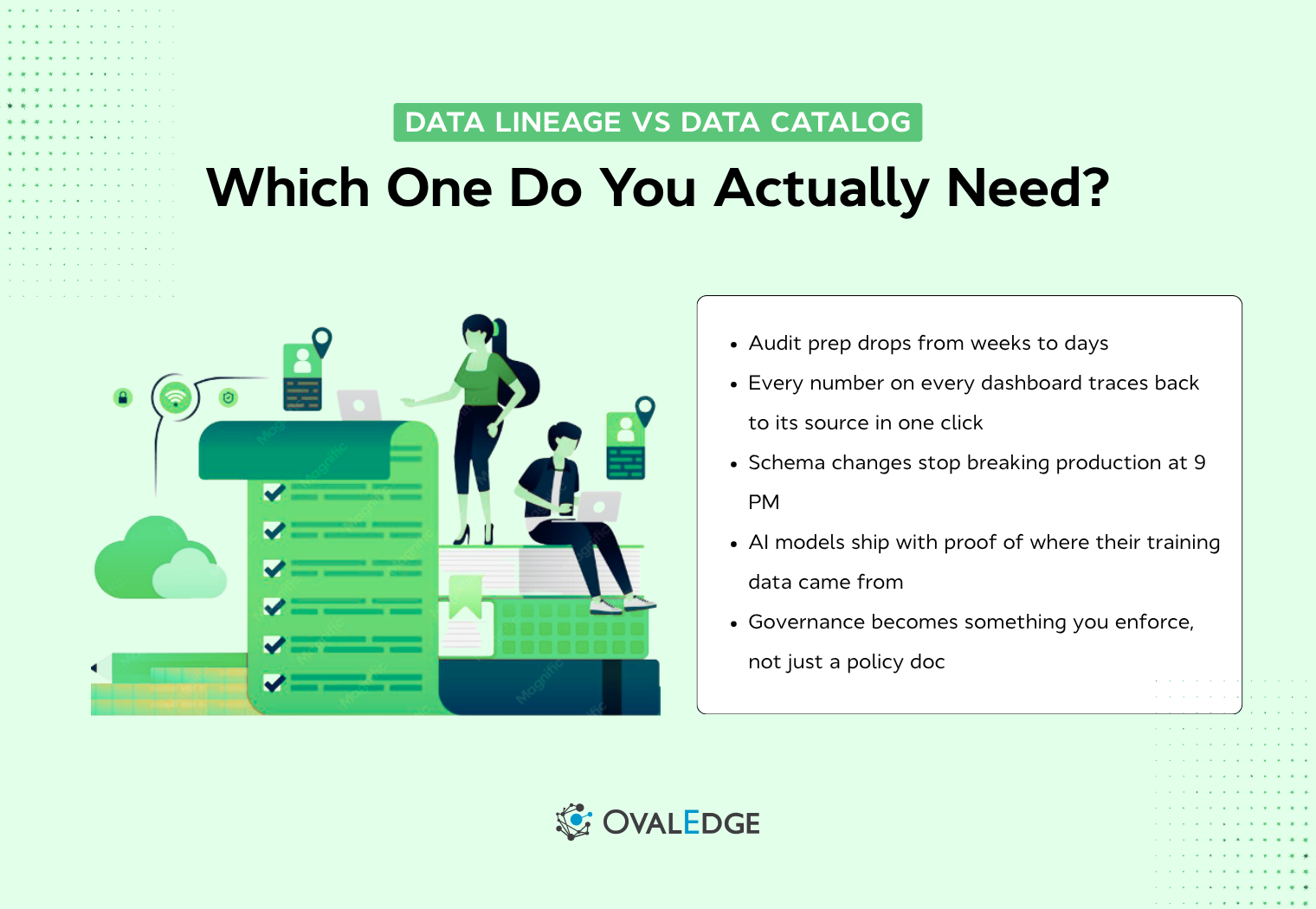
Organizational decisions that are data-driven fail when leaders can’t see how data moves or who touches it. Data lineage and cataloging restore that visibility by mapping data flows and organizing metadata into a single, searchable source of truth. Together, they turn data governance from a back-office function into a strategic advantage. With OvalEdge, enterprises unify lineage and cataloging to make data transparent, compliant, and ready for confident decision-making.
Most organizations have both a data catalog and some form of lineage tracking, but the two rarely operate as a single system. That gap costs them.
A 2023 Gartner survey found that fewer than half (44%) of data and analytics leaders believe their teams are truly delivering value. A major reason: nobody can fully trace where data came from, how it changed, or who is using it.
A data catalog answers "what data do we have?" Data lineage answers "where did it come from and how was it transformed?" Both are essential. Treated separately, they leave gaps in governance, compliance, and AI readiness. Treated as one connected system, they become the foundation for decisions you can actually trust.
This guide breaks down what each one does, how they differ, where they overlap, and how to use them together, with examples for governance, GDPR, HIPAA, and AI-ready data pipelines.
What is data lineage?
Data lineage tracks how data moves, transforms, and flows across systems, from where it originated to where it is finally used. It documents every step in the data flow, which is how teams monitor data quality, meet compliance requirements, troubleshoot broken reports, and trust the numbers on a dashboard.
Key components of data lineage
Data lineage is a detailed and structured mapping of various elements in the data lifecycle. Each component plays a specific role in ensuring data transparency, accuracy, and accessibility across systems.
Here are the key components of data lineage:
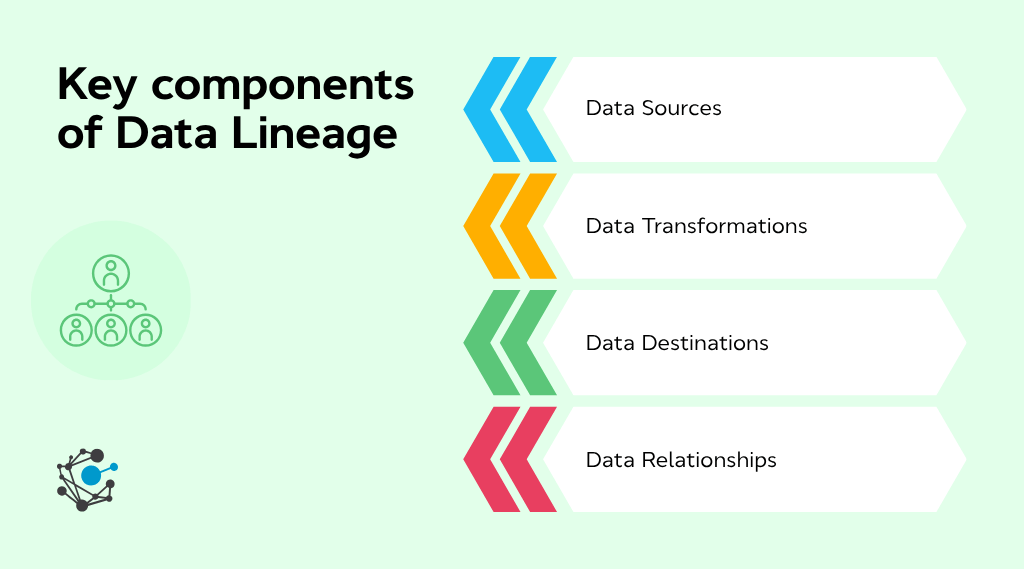
1. Data sources
Data sources are the foundational points where data originates. These could be transactional systems, data lakes, APIs, databases, external datasets, or even third-party applications.
Understanding where data comes from is crucial, as it sets the stage for the rest of the lineage process. If a company does not understand where data is coming from, it cannot ensure its quality or integrity.
For example, in a retail company, customer transaction data might come from a point-of-sale (POS) system. If the data in this system isn't properly understood or tracked, it could lead to errors when transferring it into other systems, like the inventory management system.
By tracking the source, data lineage ensures this initial source of data is accurate and reliable, reducing errors downstream.
2. Data transformations
Once data is captured, it often undergoes various transformations before reaching its final destination.
These transformations can range from simple modifications, such as data cleansing and formatting, to more complex processes like aggregation, enrichment, and calculation of metrics.
For example, raw transaction data might be transformed into aggregated monthly sales figures. A robust data lineage system tracks each transformation step, ensuring data remains accurate and consistent as it moves from one system to another.
Without proper lineage tracking, organizations can lose sight of how data is altered, which can result in mistakes. A seemingly small error in one transformation step, such as an incorrect formula in a report, can snowball and compromise the integrity of the entire dataset.
3. Data destinations
Data destinations refer to the systems, databases, or tools where data is stored and accessed after it has been processed. These might include data warehouses, business intelligence (BI) platforms, analytical dashboards, or even end-user applications.
Understanding where data is destined is just as important as understanding its source and transformation. If businesses are unaware of the final locations where their data resides, they can't ensure its accessibility or accuracy.
Furthermore, knowing the data destinations is vital for data governance and compliance, as it dictates who has access to what data and under what conditions.
Consider a healthcare provider who collects patient data through various forms and interfaces. This data is transformed and aggregated into a centralized data warehouse.
Without a clear understanding of where this data is being stored and who has access, there's a risk that sensitive patient information could be exposed to unauthorized users, violating privacy laws.
4. Data relationships
Data relationships illustrate how different datasets and systems interact with each other. These relationships can range from simple dependencies to more complex interactions where data flows between multiple systems.
Understanding these relationships helps organizations anticipate how changes in one dataset could impact other datasets or processes downstream. This is also why mature teams treat relationship mapping as a core part of their data lineage best practices, not an afterthought.
What is a data catalog?
A data catalog is a searchable inventory of all the data an organization owns. It stores metadata like definitions, owners, data types, sensitivity tags, and quality scores, so business users, analysts, and engineers can find the right dataset, understand what it contains, and trust it before using it.
For teams scaling data access across the business, an enterprise data catalog becomes the single source of truth for what data exists, who owns it, and how it should be used.
Core features of the data catalog
The power of a data catalog lies in its core features, each of which addresses specific data management challenges organizations face.
Below is a deeper dive into these key features, showcasing how they facilitate better data governance, accessibility, and collaboration.
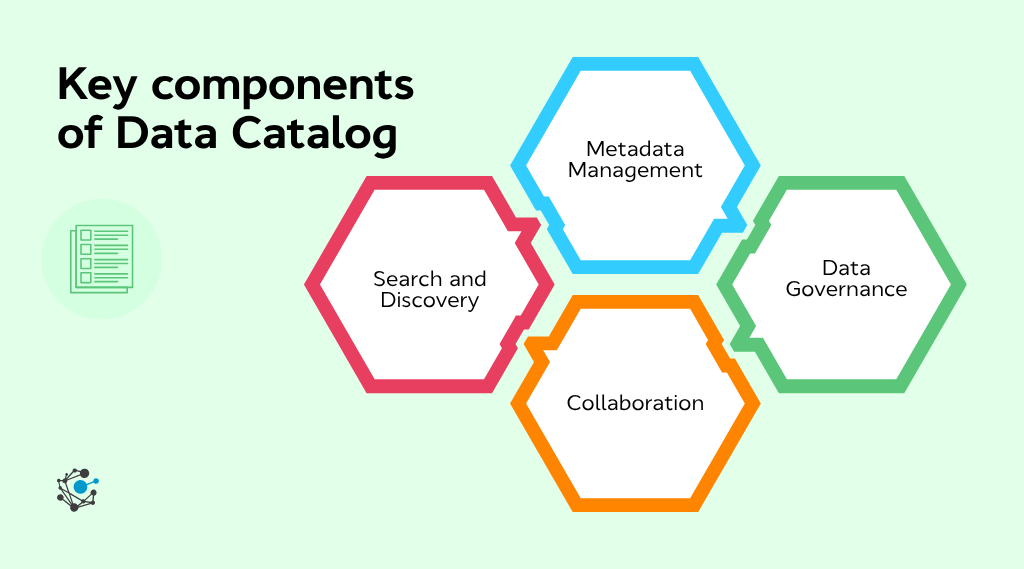
1. Metadata management
Metadata management is one of the cornerstone features of a data catalog. Metadata refers to the descriptive information about data, including its source, structure, format, usage, transformations, and relationships with other datasets.
By organizing and centralizing metadata, a data catalog makes this information easily discoverable and actionable across the organization.
|
For example, in a large retail company, metadata could include details about customer purchase history, such as the source (e-commerce platform), the format (CSV file), and the transformation (aggregated weekly). By maintaining detailed metadata in a catalog, the company can easily identify which datasets contain information about customer purchase behavior, ensuring that marketing, sales, and data science teams can leverage accurate and up-to-date data. |
Proper metadata management also ensures that organizations can track data lineage, a key feature that allows users to trace the origins of the data and understand how it has evolved over time.
This traceability is crucial for ensuring data quality, transparency, and compliance with data governance standards.
2. Search and discovery
The search and discovery capabilities of a data catalog address one of the most significant challenges in data management, such as finding the right data. With the sheer volume of data available to organizations, manually locating relevant datasets can be time-consuming and frustrating.
A data catalog streamlines this process by offering powerful search functionality that allows users to query metadata based on various criteria, such as keywords, business domains, or data tags.
By indexing the data, teams can easily search for datasets based on their specific needs, whether they are looking for sales data, customer feedback, or marketing performance metrics.
|
For example, in a financial services company, an analyst could use a data catalog to search for historical stock prices by querying the metadata tags related to the time period and market sector. This eliminates the need to manually sift through different spreadsheets or databases, improving both data accessibility and efficiency. |
3. Data governance
Data governance refers to the policies, processes, and standards that ensure the integrity, security, and accessibility of data within an organization.
A data catalog plays a central role in enforcing these governance practices by providing a clear, structured way to manage data assets, track ownership, and control access.
One of the biggest challenges for organizations is ensuring that only authorized individuals have access to sensitive or critical data.
A data catalog addresses this challenge by incorporating access control features, which ensure that only designated teams or users can access specific datasets. These permissions are typically based on roles, responsibilities, and compliance needs.
4. Collaboration
Collaboration is a growing necessity in modern workplaces, particularly for data-driven decision-making.
With multiple teams ranging from data engineers to business analysts working together, it is crucial that they share a common understanding of the data they are using.
A data catalog fosters this collaboration by providing a shared space where users can annotate, tag, and comment on datasets, enabling them to collaborate on data usage, quality issues, or new insights.
|
For example, a marketing team may find an issue with the way customer demographic data is categorized in the catalog. Using the catalog’s collaboration tools, they can leave comments for the data governance team to review and make necessary adjustments. This real-time collaboration not only resolves issues more quickly but also helps ensure that everyone is working with the most up-to-date and accurate data. |
With the increasing complexity of data environments, a well-maintained catalog not only saves time but also ensures that decisions are made based on reliable, accurate, and accessible data.
How data lineage fits into a data catalog
Data lineage plays a crucial role within a data catalog, turning a simple repository of metadata into a powerful tool for transparency, understanding, and governance.
A data catalog is primarily focused on organizing and making metadata searchable, but without lineage, it can lack the context needed for users to trust and fully comprehend the data they are accessing.
By integrating data lineage within the catalog, organizations gain a more robust, actionable understanding of their data assets.
At its core, data lineage provides a clear visualization of the journey data takes from its source, through various transformations, to its final destination.
This process enhances a data catalog’s value by not only showing where the data resides but also how it was created, how it changes across different systems, and how it relates to other data elements.
|
For example, if a data catalog lists a dataset in a data warehouse under a label like "Customer Data," it provides some basic information about the dataset's content and structure. |
However, without data lineage, users have no understanding of the quality or reliability of that data.
-
Was it sourced from an external CRM system?
-
Has it been cleansed or transformed before entering the warehouse?
-
Did it undergo any aggregations or filtering that might impact its accuracy?
Here’s where data lineage steps in. By embedding lineage into the data catalog, organizations can provide a full, end-to-end view of how data is acquired, transformed, and consumed.
This ensures that users not only know where the data came from but also understand its context, which is essential for trust and confidence.
A few other ways in which data lineage fits into the data catalog
Adding value with data lineage
The integration of data lineage within a data catalog significantly boosts the catalog’s ability to support data governance and compliance.
Many industries, particularly those in healthcare, finance, and government, are subject to strict regulations requiring complete visibility into data processing.
|
For example, regulations like GDPR or HIPAA require organizations to maintain a detailed record of how personal data is collected, processed, and stored. Without data lineage, it becomes nearly impossible to provide a comprehensive audit trail. |
When lineage is embedded within a data catalog, organizations can not only ensure compliance but also avoid costly mistakes.
|
For example, if a dataset undergoes multiple transformations (such as aggregation and anonymization) before being used in a report, lineage allows an organization to verify that it meets all compliance standards. It also helps identify potential risks, such as unapproved access or transformations that could violate privacy laws. |
Improved decision-making with full data context
Another significant benefit of embedding data lineage in a data catalog is the impact it has on data-driven decision-making. In modern enterprises, teams from various departments (e.g., marketing, finance, and operations) frequently use shared datasets.
|
For instance, marketing teams may access customer behavior data that was collected from multiple touchpoints, such as a CRM, website analytics, and transaction data. |
Without data lineage, these teams would rely on the assumption that the data is accurate and trustworthy. However, with lineage in place, they can trace how the data was gathered, how it was transformed (such as aggregated monthly sales), and where it was stored.
This full visibility improves the reliability of their analyses and ensures that decisions are based on consistent, transparent data.
Data lineage enables better data quality management
Data lineage also supports data quality management in a data catalog. Tracking data transformations in detail helps identify where data quality issues may arise, providing insights into potential discrepancies or errors.
|
For example, if certain data points are consistently incorrect after a transformation, lineage will highlight the problematic steps in the process, allowing teams to address the root cause rather than just the symptoms. |
In addition to identifying issues, lineage also helps with data monitoring.
|
For instance, an organization might set up automated data quality checks that use lineage to verify that data has gone through the correct transformation processes. If a dataset skips a crucial transformation, the lineage will flag this discrepancy, preventing poor-quality data from entering critical workflows. |
Enhancing collaboration across teams
When multiple teams work with the same data, a lack of understanding about how that data has been processed can create confusion and inefficiencies.
With embedded data lineage, a data catalog not only enables teams to find the data they need but also provides clarity on how that data was created and modified. This transparency fosters collaboration and ensures that everyone has the same understanding of the data they are using.
|
For example, a product team analyzing customer feedback might need data from a customer survey. If the data lineage is available in the catalog, they can see how the raw responses were cleaned, aggregated, and categorized before being used in analytics tools. This makes it easier for teams to discuss and collaborate on their findings, ensuring that their analyses are based on the same, consistent understanding of the data. |
By providing a complete view of how data moves, transforms, and is consumed, lineage adds an essential layer of context to the metadata stored in the catalog.
This combination not only improves the accuracy of data analyses but also ensures regulatory compliance, enhances collaboration, and supports data quality management.
Data lineage vs data catalog: key differences and similarities
Both data lineage and data catalogs are crucial elements of data management in modern organizations, yet they serve distinct but complementary functions. Understanding their key differences and how they interact is essential for businesses looking to optimize their data governance, accessibility, and overall management strategy.
|
Aspect |
Data lineage |
Data catalog |
|
Best for |
Impact analysis, root-cause investigation, compliance audits |
Data discovery, governance, self-service access |
|
Primary question answered |
"Where did this come from? How did it change?" |
"What data do we have? Who owns it?" |
|
Primary purpose |
Tracks the flow and transformation of data |
Organizes metadata so data can be found and used |
|
Target users |
Data engineers, compliance officers, and auditors |
Business analysts, data stewards, and governance teams |
|
Core function |
Visual map of data's journey across systems |
Searchable repository of metadata |
|
Key benefit |
Transparency, integrity, and compliance proof |
Discoverability, usability, and governed access |
|
Governance role |
Provides the audit trail that proves rules are followed |
Enforces classifications, ownership, and access policies |
|
Data quality role |
Traces errors to their source |
Surfaces certified, quality-scored assets |
|
Decision-making impact |
Builds trust through traceability |
Builds speed through self-service |
|
Tools and features |
Visual maps, transformation tracking, and audit trails |
Search, tagging, access controls, metadata indexing |
|
OvalEdge approach |
Automated, column-level lineage across catalog, BI, and pipelines |
Unified catalog with embedded lineage, governance, and AI-ready metadata |
While data lineage and data catalogs serve distinct functions, they are deeply interconnected. Lineage provides transparency by tracing how data flows and transforms. Catalogs organize metadata so people can find, understand, and use that data.
Together, they create a working data governance framework, one that improves data quality, usability, and collaboration across teams. For organizations trying to make better decisions from their data, treating these two as a single system is what unlocks the full value of both.
Data governance vs data lineage: how they fit together
Governance is the policy layer. Lineage is the proof layer. Confusing the two is one of the most common reasons data programs stall before they show value.
Data governance is the set of policies, ownership rules, access controls, and standards that define how data should be handled across the organization. It is a strategy and a framework. Governance answers: who owns this data, who can use it, and under what conditions.
Data lineage is the operational evidence that those policies are actually working. It traces how a piece of data moved from source to dashboard, what was changed, and who touched it along the way. Lineage answers: Did the data follow the governance rules?
Without lineage, a governance program is a written policy with no way to verify it. Without governance, lineage is a technical map with no rules to enforce. Mature data programs use both and treat them as two halves of the same system.
|
Dimension |
Data governance |
Data lineage |
|
Layer |
Policy and strategy |
Operational and technical |
|
Primary question |
Who can do what with which data? |
Where did this data come from, and how did it change? |
|
Owners |
Chief Data Officer, governance committee, data stewards |
Data engineers, compliance auditors, analysts |
|
Used for |
Defining standards, classifications, and access rules |
Proving compliance, debugging pipelines, and impact analysis |
|
Outcome |
A trusted data culture |
Traceable, defensible data flows |
A working data governance program uses lineage as one of its core enforcement mechanisms, alongside access controls, classification, and stewardship.
How data lineage and a data catalog operationalize data governance
Lineage and catalogs each have their own job. The governance impact happens when they work as one system, and the place this shows up most clearly is in change management and audit prep, two areas where a catalog alone or lineage alone is not enough.
When a data engineer modifies a source schema, deprecates a pipeline, or moves a workload from Oracle to Snowflake, the catalog flags the affected datasets while lineage shows every downstream dashboard, report, and AI model that depends on them. Teams can see the blast radius before they push the change. Without this combined view, schema changes break things in production, and the team finds out from a Slack message at 9 PM.
The same logic applies to audits. Compliance teams typically spend weeks before a GDPR or SOX audit pulling together where sensitive data lives and how it was transformed. With catalog and lineage operating as one layer, that work is already done. The question shifts from "can we prove compliance?" to "which view do you want?"
When to use data lineage vs a data catalog
The two tools answer different questions. The trick is knowing which one fits the situation in front of you, and recognizing when you actually need both.
Reach for data lineage when you need to:
-
Trace where a number on a dashboard came from or why it broke
-
Produce an audit trail for a regulator (GDPR, HIPAA, SOX, AI Act)
-
Map downstream impact before a schema change, system migration, or pipeline deprecation
-
Document training data for an AI model going into production
Reach for a data catalog when you need to:
-
Find a specific dataset by business term, not file path
-
Identify who owns a dataset, its quality score, and its certification status
-
Enforce role-based access controls at the dataset or column level
-
Standardize business definitions across teams, regions, or business units
You need both at the same time when:
-
A GDPR request requires tracing the data (lineage) and identifying every system owner (catalog)
-
A schema migration needs dependency mapping (lineage) and downstream team notification (catalog)
-
A new analyst needs to find the right dataset (catalog) and trust the numbers (lineage)
This is why modern data platforms have stopped treating catalog and lineage as separate purchases. The combined system is the unit of value, not either tool on its own.
Why data lineage and data catalogs matter more in the AI era
Most serious AI programs are converging on the same foundation: a unified catalog plus lineage, governed end-to-end. Three shifts are driving this.
1. AI training data needs proof of provenance: Regulators and internal review boards now ask for evidence that training data was sourced cleanly, transformed correctly, and is free of leakage or bias. Metadata alone cannot answer those questions. Column-level lineage can.
2. Agentic systems break without traceability: When an AI agent makes a recommendation, approves a transaction, or routes a customer, the team needs to trace that decision back through every dataset and transformation that influenced it. Without lineage, agentic AI becomes a black box nobody can explain to a regulator or a customer.
3. The EU AI Act treats data lineage as a compliance requirement: Article 10 requires high-risk AI systems to document where training data came from, how it was prepared, and what biases it contains. Catalogs without lineage will not pass audit. Similar frameworks are being adopted in the UK, the US, and APAC.
The platforms handling this well treat catalog and lineage as one governance layer, not two purchases.
|
AI is making the catalog the control plane for the entire data estate. The Agentic Analytics whitepaper covers how OvalEdge is building AI agents on top of a unified catalog and lineage, what this changes for governance teams, and where it is headed next. |
Data lineage and data catalog: a single governance system
Data lineage and data catalogs are not competing tools. They are two halves of one governance system, and the teams getting real value from their data are the ones that have stopped treating them as separate purchases.
The catalog answers what data exists, who owns it, and who can use it. Lineage answers where it came from, how it changed, and whether it can be trusted. Run them separately, and governance stays a written policy. Run them together, and it becomes something the organization can actually enforce, audit, and prove.
Ready to unify your catalog and lineage?
OvalEdge brings data cataloging, column-level lineage, governance, and role-based access into a single platform. Customers cut compliance audit prep from weeks to days, ship trusted AI faster, and run with a 337% ROI according to the Forrester Total Economic Impact study.
Book a 30-minute demo, and we will run a lineage trace and governance workflow on your own data, not a generic sandbox.
FAQs
1. How is data lineage different from data cataloging?
A data catalog is a searchable inventory of metadata, descriptions, ownership, and quality information about every data asset. Data lineage traces how each asset moved and was transformed across systems. Catalogs answer what data exists. Lineage answers how it got there. You need both.
2. What is data lineage in simple terms?
Data lineage is a record of every step your data takes, from where it was created, through every transformation and join, to where it is finally used in a dashboard, report, or AI model. It is the audit trail of your data.
3. Can a data catalog include data lineage?
Yes. Modern enterprise data catalogs include lineage as a native capability. OvalEdge embeds column-level lineage directly inside the catalog, so users can move from "find this dataset" to "show me where this column came from" in one click.
4. Are data governance and data lineage the same?
No. Data governance is the policy framework that defines who can do what with the data. Data lineage is the technical record of where the data came from and how it changed. Lineage is one of the tools governance uses to prove compliance.
5. What is the difference between data lineage and data flow?
Data flow is the path data takes through a system at a single point in time. Data lineage is the historical, transformation-aware record of that flow over time, including what changed, when it changed, and who touched it.
6. Is data lineage required for GDPR and HIPAA compliance?
In practice, yes. Both regulations require organizations to prove where personal or protected data resides and how it has been processed. Without lineage, producing an auditable record is nearly impossible. The EU AI Act now extends this requirement to training data for AI systems.
Deep-dive whitepapers on modern data governance and agentic analytics
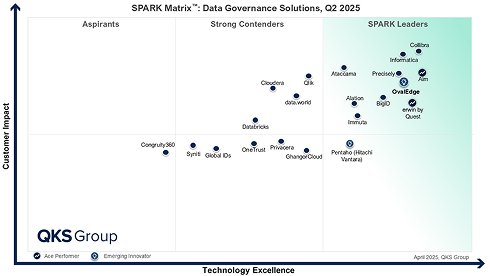
OvalEdge Recognized as a Leader in Data Governance Solutions
.png?width=1081&height=173&name=Forrester%201%20(1).png)
“Reference customers have repeatedly mentioned the great customer service they receive along with the support for their custom requirements, facilitating time to value. OvalEdge fits well with organizations prioritizing business user empowerment within their data governance strategy.”
.png?width=1081&height=241&name=KC%20-%20Logo%201%20(1).png)
“Reference customers have repeatedly mentioned the great customer service they receive along with the support for their custom requirements, facilitating time to value. OvalEdge fits well with organizations prioritizing business user empowerment within their data governance strategy.”
Gartner, Magic Quadrant for Data and Analytics Governance Platforms, January 2025
Gartner does not endorse any vendor, product or service depicted in its research publications, and does not advise technology users to select only those vendors with the highest ratings or other designation. Gartner research publications consist of the opinions of Gartner’s research organization and should not be construed as statements of fact. Gartner disclaims all warranties, expressed or implied, with respect to this research, including any warranties of merchantability or fitness for a particular purpose.
GARTNER and MAGIC QUADRANT are registered trademarks of Gartner, Inc. and/or its affiliates in the U.S. and internationally and are used herein with permission. All rights reserved.