%20(1).jpg)
Every business today is sitting on a mountain of data, but only a fraction of it is visible and understood.
According to IDC's Global DataSphere 2024-2028 forecast, about 92.9% of all data generated worldwide in 2023 was unstructured, and despite the rapid growth of structured data, unstructured data will continue to dominate enterprise environments through 2028.
As data spreads across cloud platforms, SaaS applications, databases, and file systems, organizations struggle to understand what they have and where it resides. That is where data discovery tools come in.
They automatically discover, classify, and map enterprise data, creating the visibility needed for governance, compliance, analytics, and AI. This guide explores what these tools do, the 10 best platforms in 2026, and how to choose the right one.
What are data discovery tools?
Data discovery tools are software platforms that automatically discover, classify, and map data across cloud, hybrid, and on-premises environments. They enrich data with metadata, create a searchable inventory of data assets, and improve visibility for governance, compliance, analytics, and AI.
A typical workflow follows four steps:
Connect → Scan → Classify → Visualize
While most modern platforms automate this workflow, organizations can also use different data discovery methods depending on their business requirements, data landscape, and governance maturity. By automating these tasks, data discovery tools help organizations find trusted data faster while reducing manual effort and improving governance.
Why organizations need data discovery tools
Every modern business manages data across cloud applications, databases, analytics platforms, SaaS tools, and on-premises systems. The challenge is no longer collecting data but finding, understanding, and trusting it. Without visibility, organizations waste time searching for data while governance and compliance risks increase.
Data discovery tools solve this by automatically scanning enterprise systems, identifying sensitive information, and creating a trusted inventory of data assets.
The benefits include:
-
Faster insights: Find trusted data quickly.
-
Better compliance: Identify and protect sensitive data.
-
Improved collaboration: Give business and technical teams a shared view of data.
-
Greater visibility: Maintain an up-to-date inventory of enterprise data.
Data discovery is also the foundation of effective data governance. Organizations cannot classify, protect, or govern data they have not discovered.
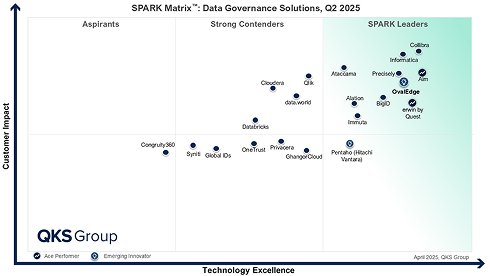
Platforms like OvalEdge extend discovery with metadata management, lineage, and governance, enabling organizations to build trusted, enterprise-ready data.
Not all discovery tools work the same way, though. Let’s look at the different types of data discovery tools and how each fits specific business environments.
Key features of the best data discovery tools
When evaluating data discovery tools, it’s not just about what they can find; it’s about how intelligently and efficiently they do it. The best tools combine automation, scalability, and visibility to help teams manage complex data landscapes with confidence.
1. Source connectivity
The foundation of any good discovery tool is the ability to connect seamlessly across databases, cloud platforms, data warehouses, and SaaS systems. This ensures a single, unified view of your entire data ecosystem.
2. Metadata and data lineage visualization
Top tools don’t just identify data; they map how it moves through your systems. Lineage visualization helps teams trace the origin, transformation, and flow of data, making compliance and troubleshooting much easier.
3. AI-Driven classification
Modern solutions use machine learning to automatically classify structured and unstructured data. This reduces manual tagging and ensures sensitive or high-risk data is instantly recognized and handled appropriately.
4. Data profiling and quality scoring
Profiling capabilities analyze data accuracy, completeness, and consistency. Built-in scoring systems flag anomalies early, improving data reliability before it reaches analytics or reporting pipelines.
5. Collaboration dashboards
Shared dashboards allow business, IT, and compliance teams to collaborate from a single interface, tracking ownership, access, and status of data assets. This boosts transparency and governance across departments.
6. Advanced features
Leading platforms are evolving beyond traditional discovery:
-
Natural language search lets users query data assets conversationally.
-
Auto-tagging and PII detection simplify compliance.
-
Integration with BI, privacy, and governance systems creates an end-to-end ecosystem for trusted data use.
These features don’t just enhance compliance; they unlock faster decision-making and greater organizational agility.
Top 10 best data discovery tools
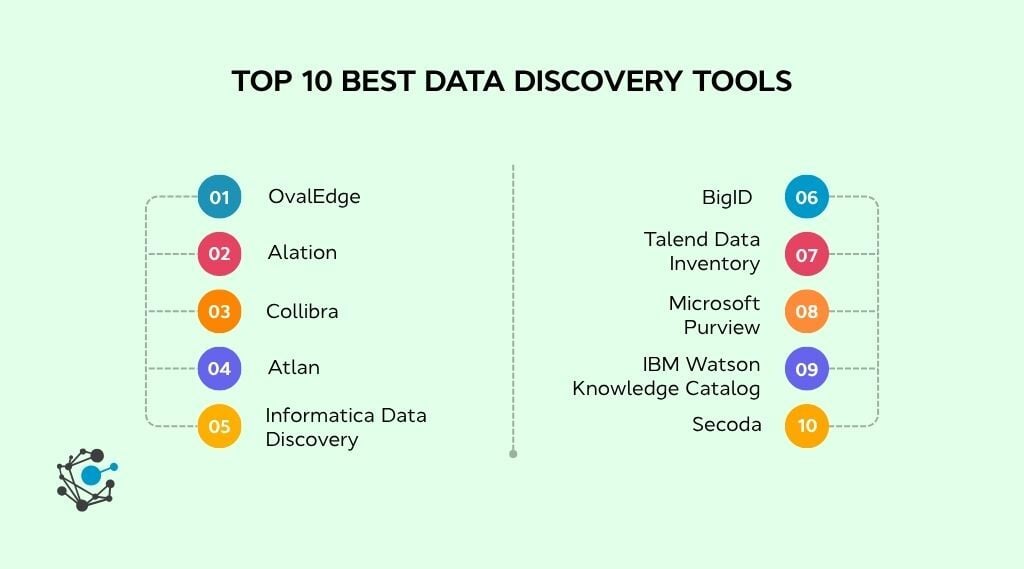
Choosing the right data discovery tool depends on your organization's data landscape, governance requirements, and analytics maturity. Some platforms focus on self-service discovery, while others combine discovery with enterprise data catalog capabilities, lineage, governance, and compliance.
Before exploring each platform in detail, here's a quick comparison of the leading data discovery tools in 2026.
|
Tool |
Best for |
Discovery + Governance in One |
Deployment |
|
OvalEdge |
Unified discovery, cataloging, and governance |
Yes |
Cloud, Hybrid, On-premises |
|
Alation |
Self-service catalog for large user bases |
Partial |
Cloud, Hybrid |
|
Collibra |
Enterprise governance and policy management |
Yes |
Cloud, Hybrid |
|
Atlan |
Modern, collaborative data teams |
Partial |
Cloud |
|
Informatica |
Large, distributed data ecosystems |
Yes |
Cloud, Hybrid |
|
BigID |
Sensitive data discovery and privacy use cases |
Privacy-led |
Cloud, On-premises |
|
Talend Data Inventory |
Data discovery with data quality scoring |
Partial |
Cloud |
|
Microsoft Purview |
Microsoft and Azure-native organizations |
Yes |
Cloud |
|
IBM Watson Knowledge Catalog |
AI and machine learning-driven data management |
Yes |
Cloud |
|
Secoda |
Small and mid-sized teams seeking fast deployment |
Partial |
Cloud |
1. OvalEdge
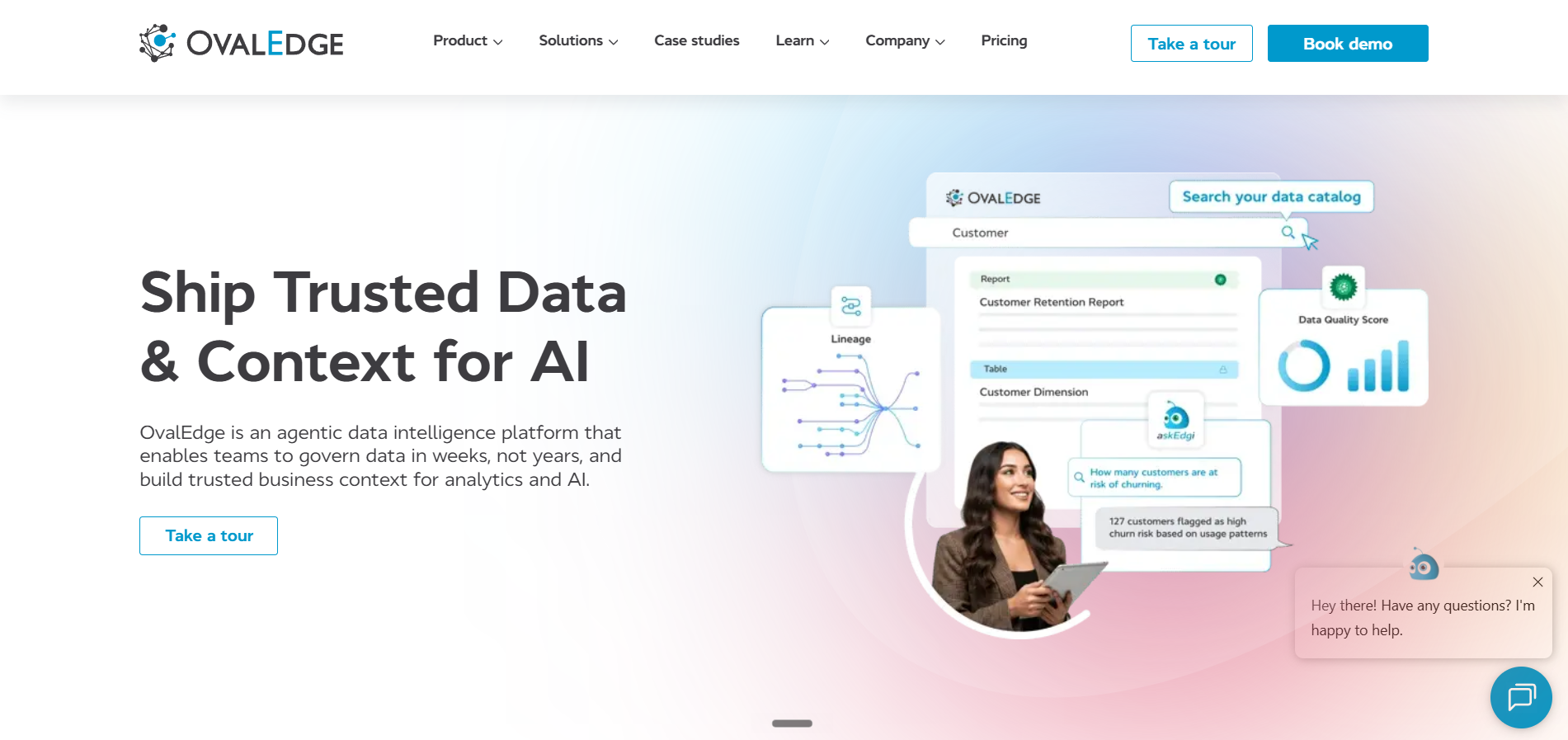
OvalEdge is an enterprise data discovery platform that combines automated discovery, metadata management, data cataloging, lineage, and governance in a single solution. It helps organizations discover, understand, and trust data across on-premises, hybrid, and multi-cloud environments.
Key features:
-
Automated discovery: Scans databases, cloud platforms, and SaaS applications to build a unified inventory of enterprise data.
-
Metadata catalog: Centralizes business and technical metadata for faster search, documentation, and collaboration.
-
Data lineage and impact analysis: Provides end-to-end visibility into data movement for governance, compliance, and root-cause analysis.
-
Policy and access controls: Supports compliance with regulations such as GDPR, CCPA, and HIPAA through built-in governance.
-
Broad integrations: Connects with leading BI platforms, data warehouses, cloud services, and governance tools.
Why it stands out:
OvalEdge goes beyond data discovery by bringing cataloging, lineage, governance, and compliance together in a unified platform. This enables organizations to not only find their data but also understand its context, establish trust, and govern it consistently across the enterprise.
Want a deeper look? The Pop-Up Data Warehouse Whitepaper explores how enterprises can reduce data movement, simplify modern data architectures, and deliver trusted analytics using a metadata-driven approach.
Best for: Enterprises seeking a unified approach to data discovery, cataloging, and privacy management.
Book a demo with OvalEdge to explore how OvalEdge helps organizations automate data discovery, centralize metadata, and govern enterprise data through a single platform.
2. Alation
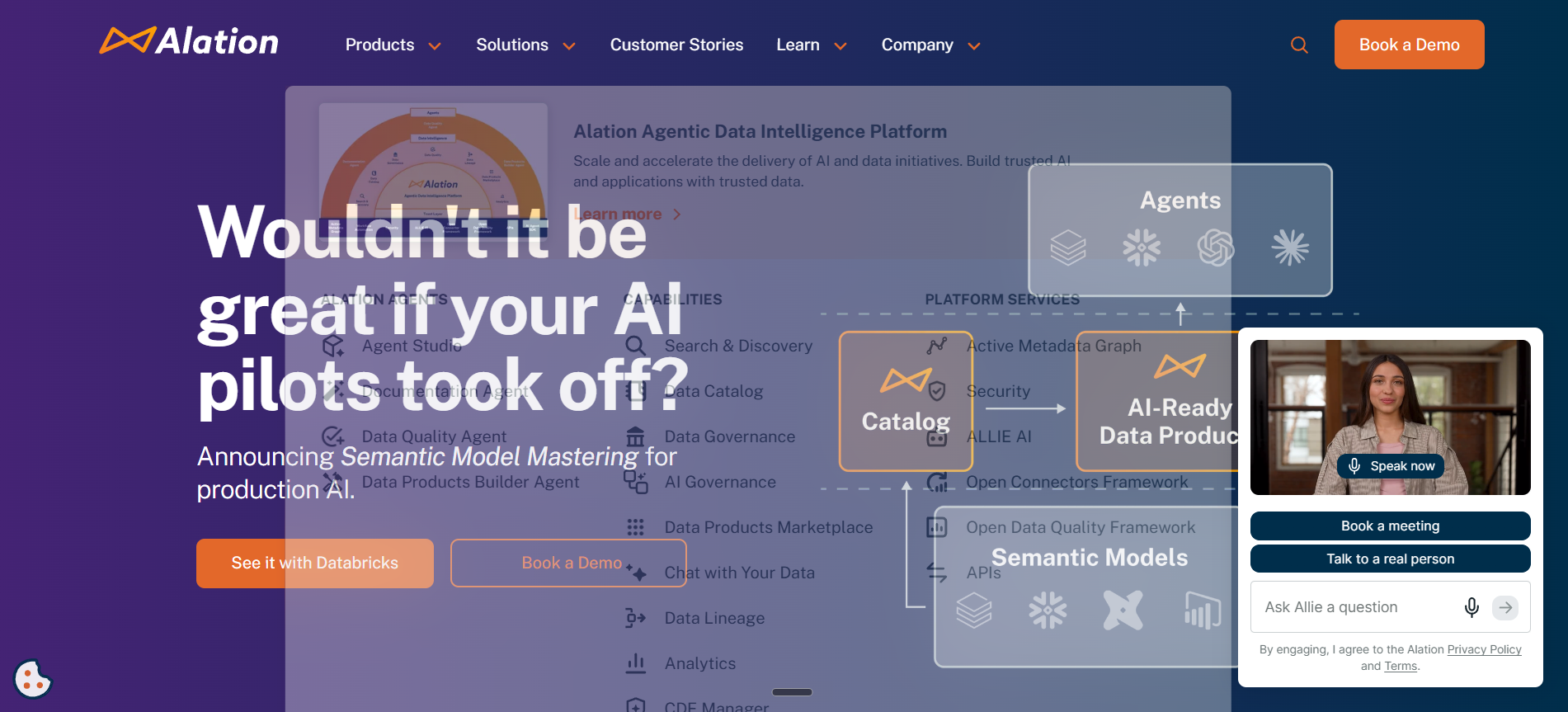
Alation is a leading data intelligence platform designed to help organizations discover, catalog, and govern their data assets. With an intuitive search interface and broad connectivity, it bridges the gap between business users and technical datasets.
Key features:
-
Natural language search: Helps business users quickly find relevant data assets.
-
Automated metadata and lineage: Captures metadata and traces data from source to consumption.
-
Business glossary: Standardizes business definitions and improves collaboration.
-
Governance workflows: Supports stewardship, policy management, and trusted data access.
Best for: Enterprises seeking a robust self-service data catalog with strong governance and metadata capabilities, especially those with large data estates and many business users.
3. Collibra
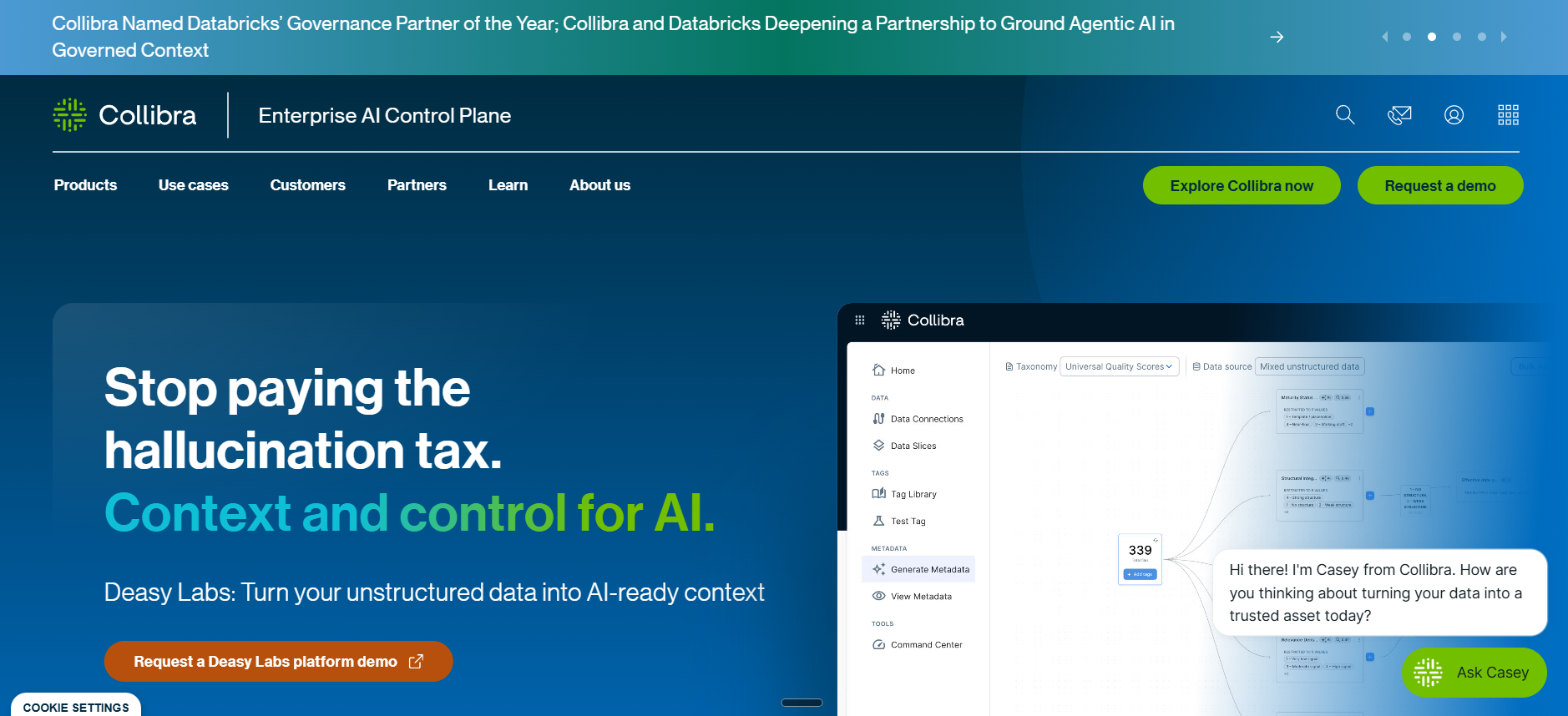
Collibra is an enterprise-grade data intelligence platform that unifies data discovery, cataloging, governance, and quality in a single ecosystem. It’s designed for large organizations managing complex, multi-cloud data environments.
Key features:
-
Automated discovery: Discovers data across cloud, on-premises, and hybrid environments.
-
Unified data catalog: Combines cataloging, governance, and quality management.
-
End-to-end lineage: Tracks data movement and transformations across systems.
-
Governance workflows: Automates stewardship, policy enforcement, and compliance
Best for: Enterprises that need end-to-end data governance and discovery with strict compliance and data quality requirements.
4. Atlan
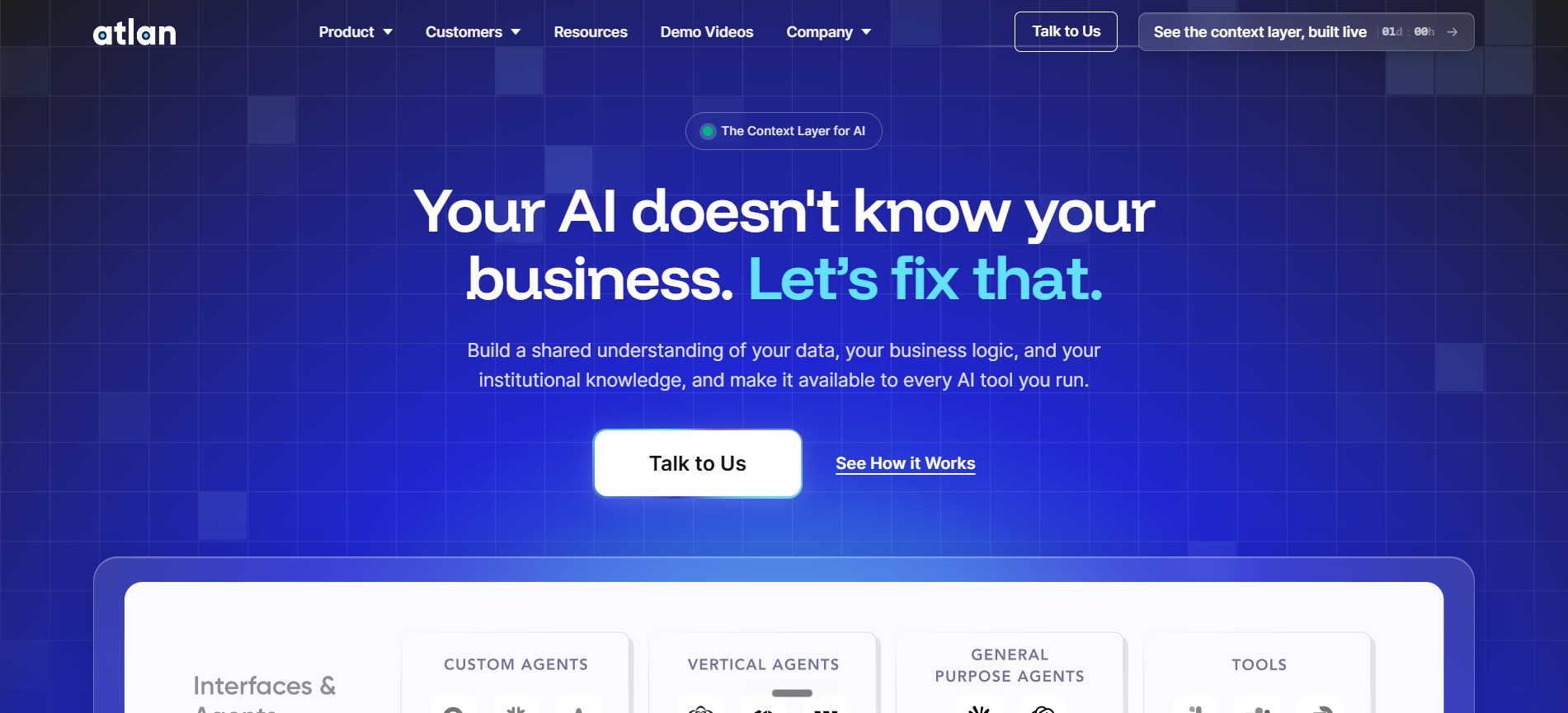
Atlan is a modern data discovery and collaboration platform built for teams that want to democratize access to data. It combines discovery, cataloging, lineage, and collaboration into an easy-to-use interface designed for both technical and non-technical users.
Key features:
-
Unified data workspace: Connects data warehouses, BI tools, and transformation platforms.
-
Automated lineage: Maps relationships using active metadata.
-
Collaborative workspace: Enables discussions, documentation, and knowledge sharing.
-
Governance controls: Applies access management and governance policies.
Best for: Data-driven teams looking for an easy, collaborative discovery experience with strong integrations and minimal setup effort.
5. Informatica Data Discovery
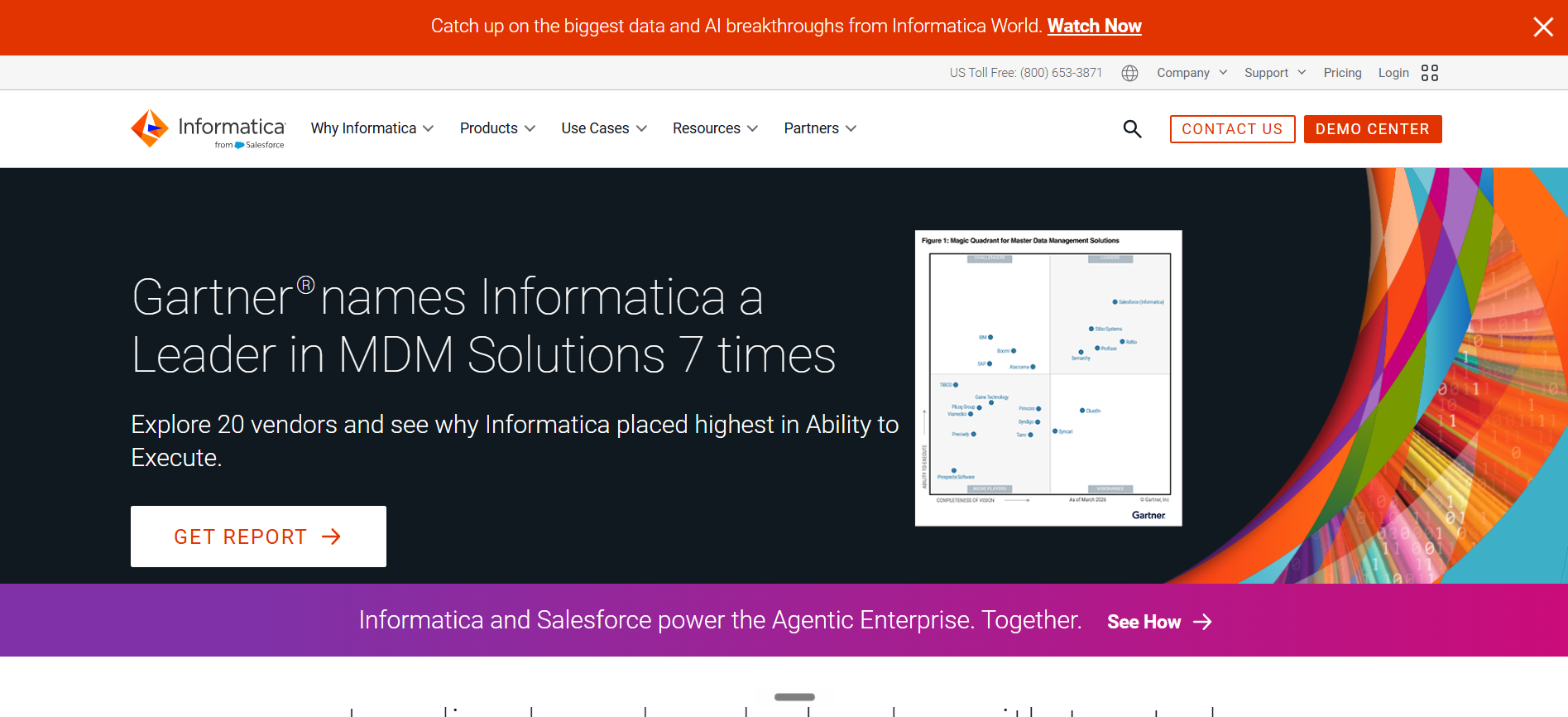
Informatica offers an enterprise-grade AI-powered data discovery and governance platform as part of its Intelligent Data Management Cloud (IDMC). It enables organizations to identify, classify, and monitor data across cloud, on-premises, and hybrid systems.
Key features:
-
AI-powered discovery: Uses the CLAIRE AI engine to automate metadata enrichment and profiling.
-
Enterprise-wide scanning: Discovers structured, semi-structured, and unstructured data.
-
Privacy and governance: Supports regulatory compliance through integrated governance.
-
Stewardship recommendations: Suggests data owners, quality rules, and governance actions.
Best for: Enterprises managing large, distributed data ecosystems that need scalable automation for discovery and compliance.
6. BigID
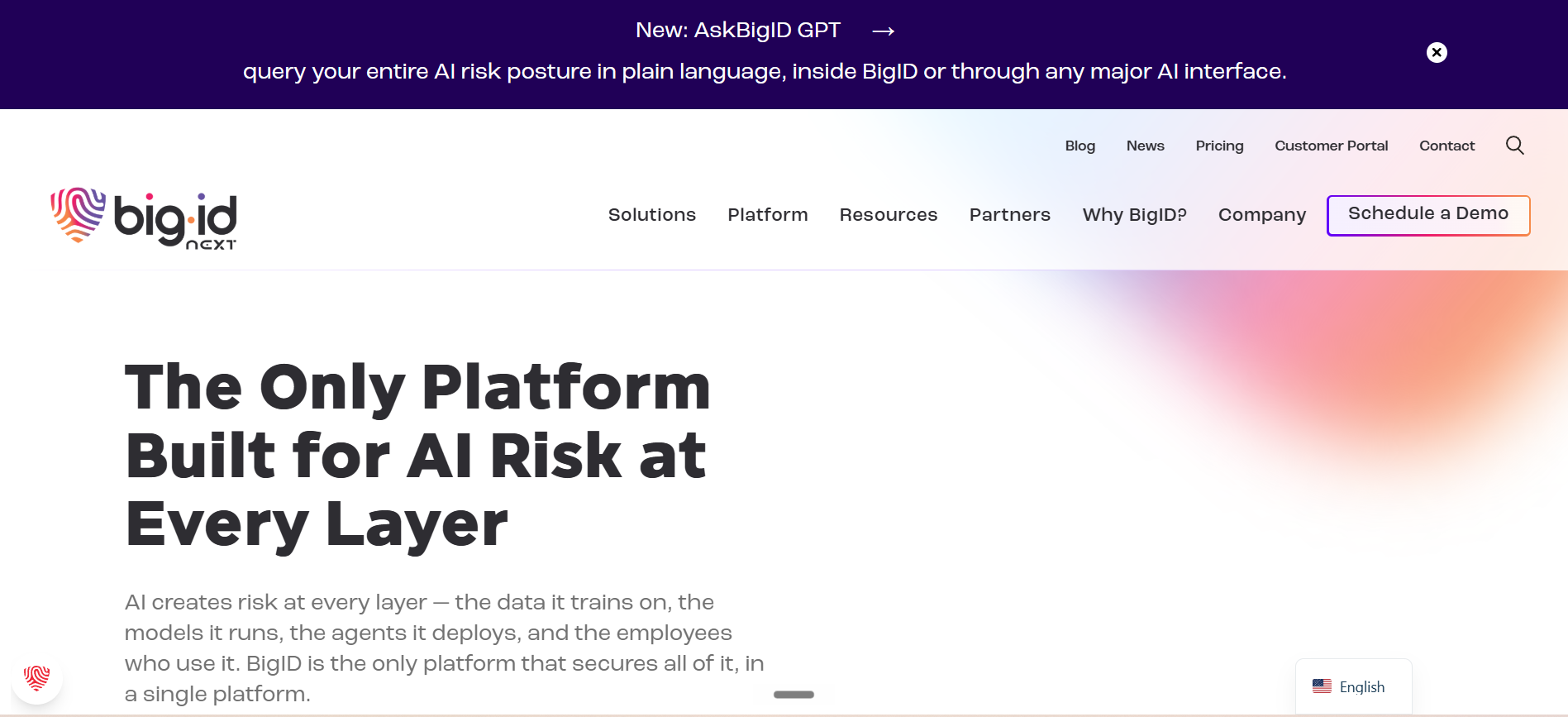
BigID is an AI-powered data discovery and intelligence platform that helps organizations identify, classify, and protect sensitive and personal data across hybrid and multi-cloud environments.
Key features:
-
Sensitive data discovery: Identifies PII and regulated data across enterprise systems.
-
AI-driven classification: Automatically classifies sensitive and personal data.
-
Privacy management: Supports GDPR, HIPAA, CCPA, and other regulations.
-
Data mapping: Visualizes where sensitive information resides and how it flows.
Best for: Enterprises that need AI-driven visibility into sensitive and regulated data to manage privacy and reduce risk.
7. Talend Data Inventory
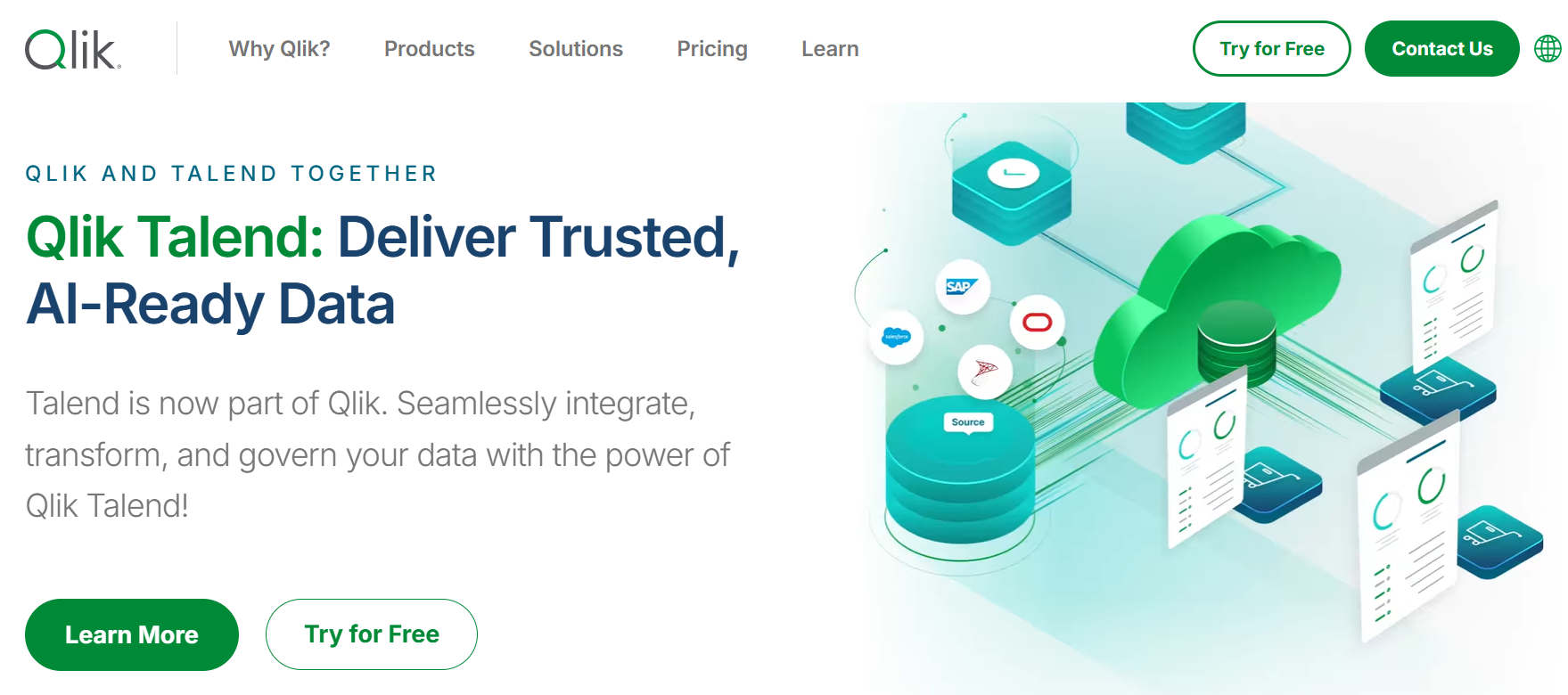
Talend Data Inventory is a cloud-native data discovery and quality platform that helps organizations understand, trust, and manage their data across multiple systems. It combines discovery, profiling, and quality scoring in a single environment.
Key features:
-
Data profiling: Assesses data quality, completeness, and accuracy.
-
Metadata repository: Makes enterprise data searchable and easier to understand.
-
Quality scoring: Prioritizes remediation based on data quality metrics.
-
Talend integration: Connects discovery with governance and data integration capabilities.
Best for: Businesses that want a unified platform for discovery and quality management without needing deep technical setup.
8. Microsoft Purview
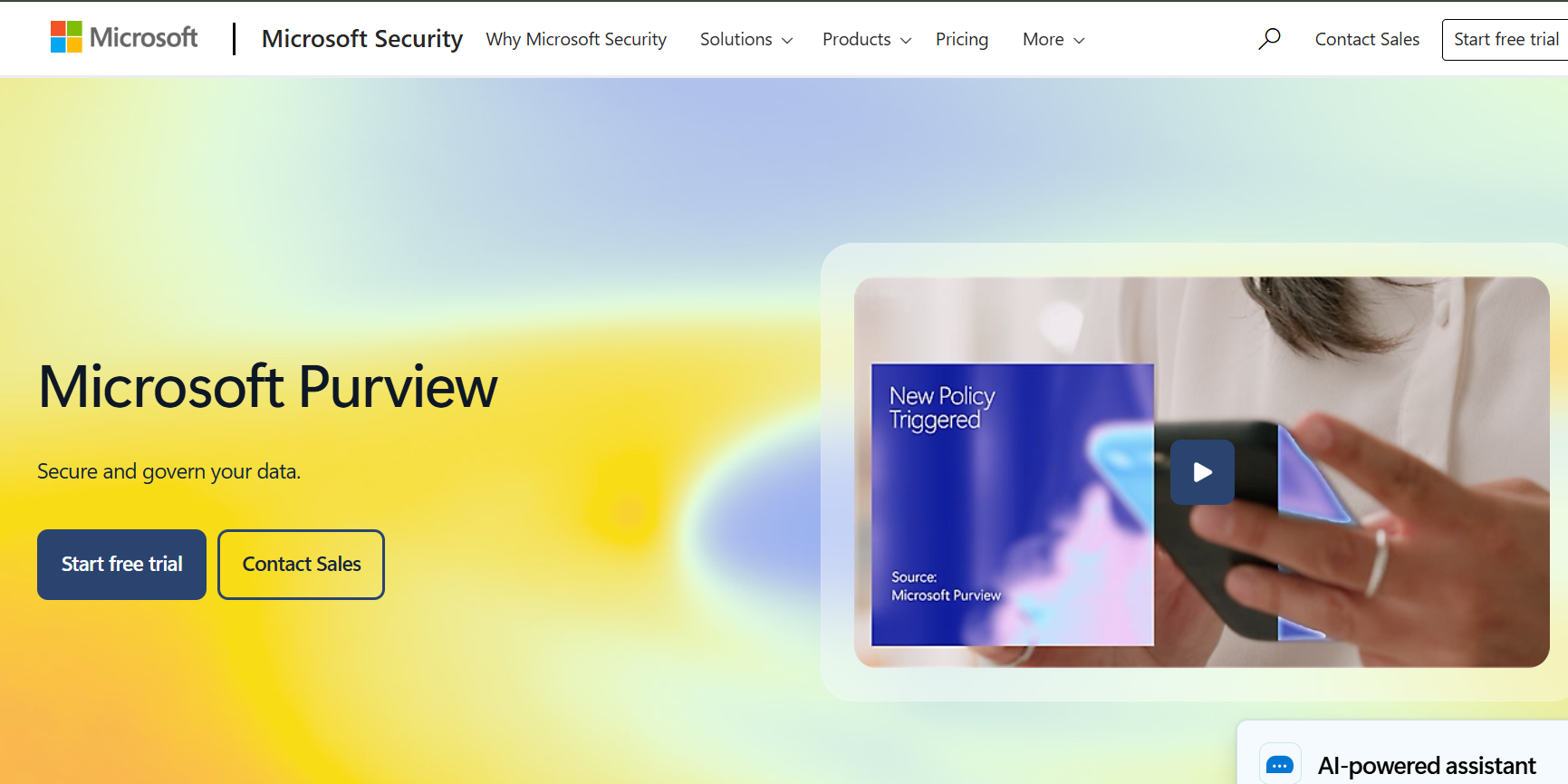
Microsoft Purview is a unified data governance and discovery solution that helps organizations manage and secure data across on-premises, multi-cloud, and SaaS environments. It integrates deeply with Microsoft’s ecosystem, making it ideal for enterprises already using Azure and Microsoft 365.
Key features:
-
Automated discovery: Scans data across Microsoft and non-Microsoft environments.
-
Data classification: Automatically labels sensitive and regulated information.
-
Data lineage: Provides end-to-end visibility into data movement.
-
Microsoft ecosystem integration: Connects seamlessly with Azure, Microsoft 365, and Power BI.
Best for: Organizations operating within the Microsoft ecosystem, seeking end-to-end governance and compliance visibility.
9. IBM Watson Knowledge Catalog
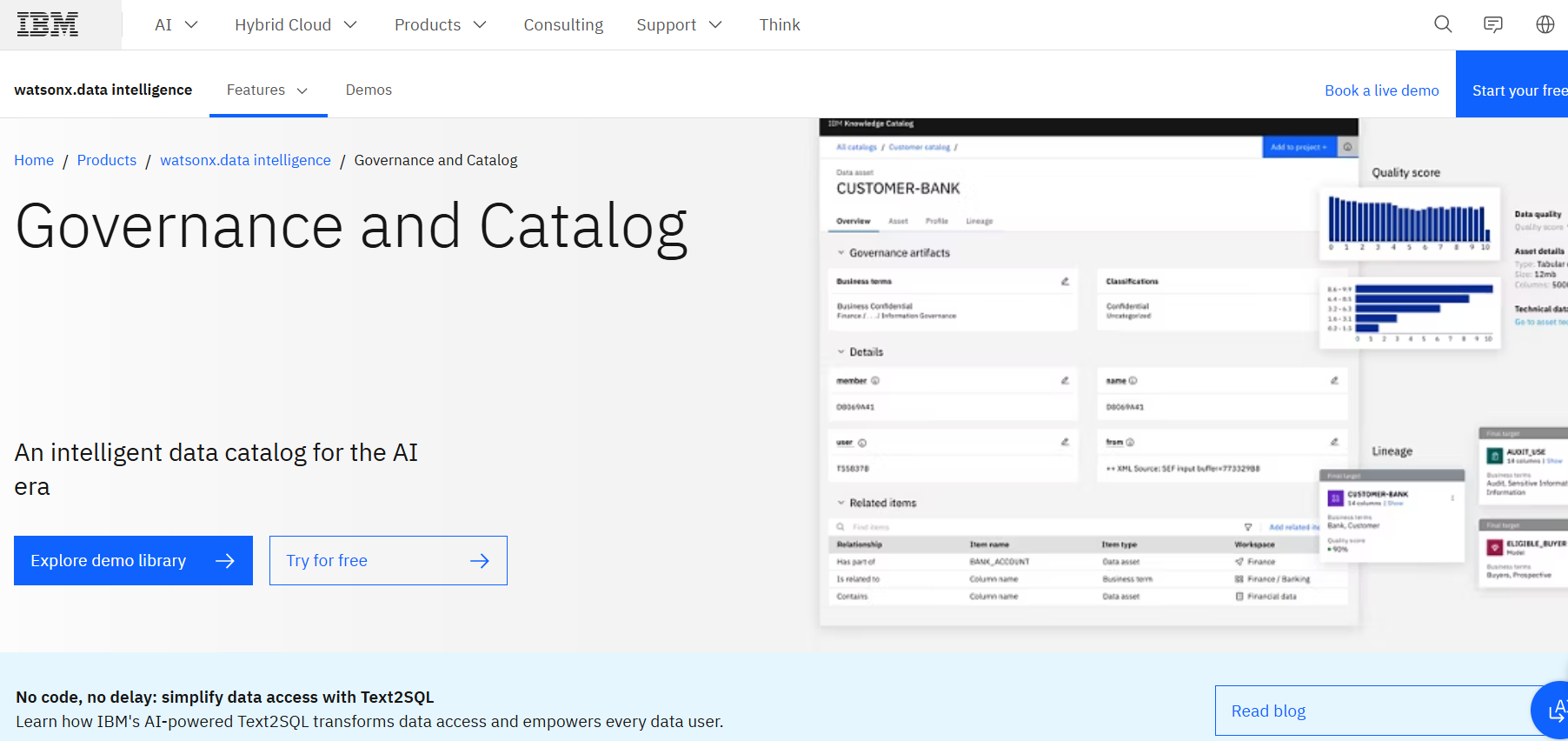
IBM Watson Knowledge Catalog is a cloud-based data discovery and cataloging platform that enables organizations to find, curate, and govern their data with the power of AI. It’s part of the IBM Cloud Pak for Data suite, supporting advanced analytics and AI workflows.
Key features:
-
AI-powered cataloging: Automates metadata discovery and enrichment.
-
Data quality and lineage: Improves governance and auditability.
-
Collaboration tools: Enables teams to curate and share trusted data assets.
-
IBM ecosystem integration: Works with Cloud Pak for Data and AI workflows.
Best for: Enterprises that rely on AI, machine learning, or advanced analytics need a robust governance layer to manage large-scale data operations.
10. Secoda
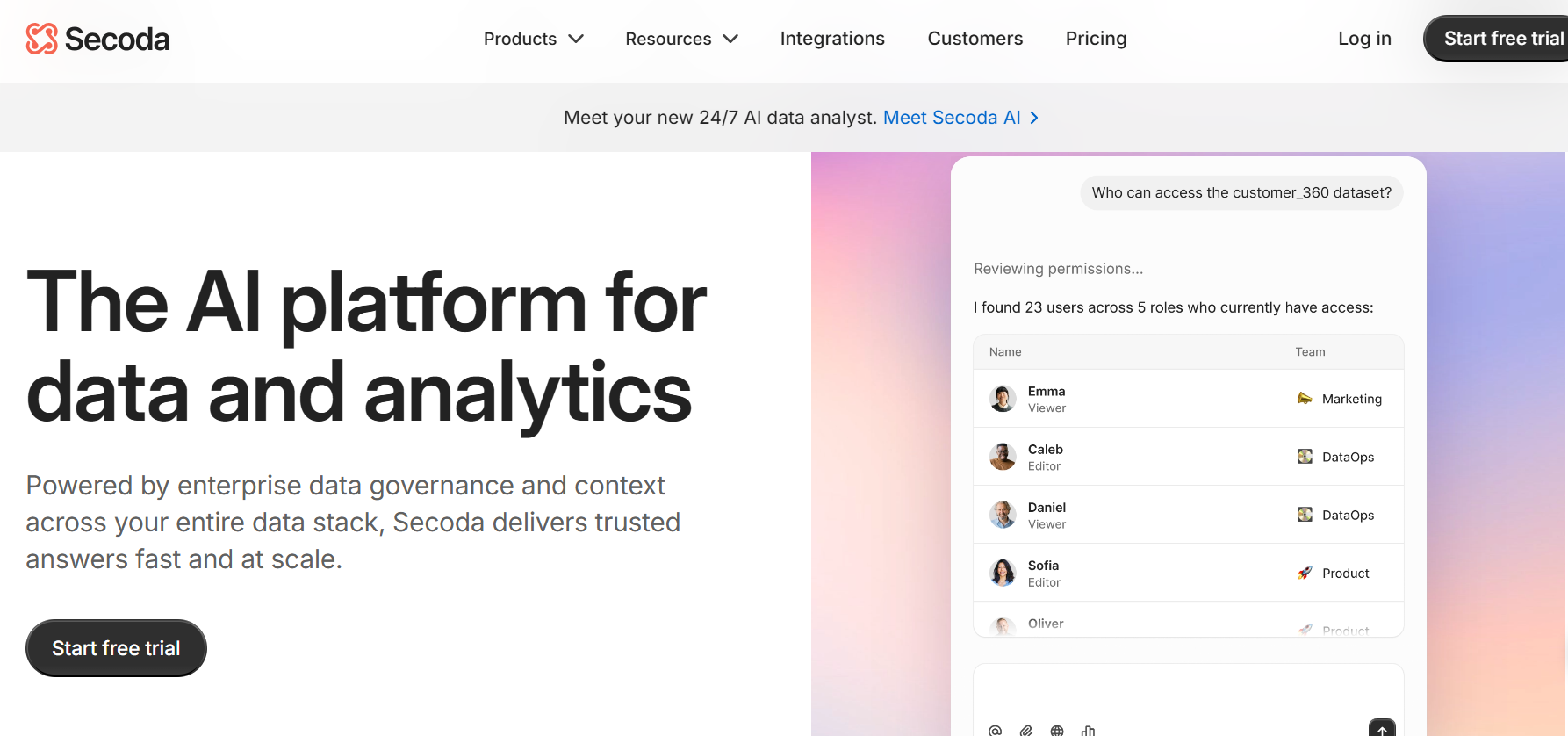
Secoda is a modern data discovery and documentation platform that simplifies how teams find, understand, and use data. It centralizes knowledge about data sources, lineage, and definitions in one searchable workspace, helping teams move faster without constant Slack questions or manual data hunting.
Key features:
-
Automated cataloging: Discovers and documents enterprise data assets.
-
AI-generated documentation: Creates contextual documentation automatically.
-
Collaboration: Supports tagging, commenting, and knowledge sharing.
-
Modern integrations: Connects with Snowflake, dbt, BigQuery, Looker, and other analytics tools.
Best for: Small to mid-sized teams that want a lightweight, easy-to-deploy discovery solution focused on collaboration and speed.
With so many strong contenders in the data discovery space, from enterprise-grade platforms to lightweight AI-powered tools, choosing the right one depends on your business goals, data maturity, and tech ecosystem.
Let’s break down how to choose the best data discovery tool for specific needs.
How to choose the right data discovery tool
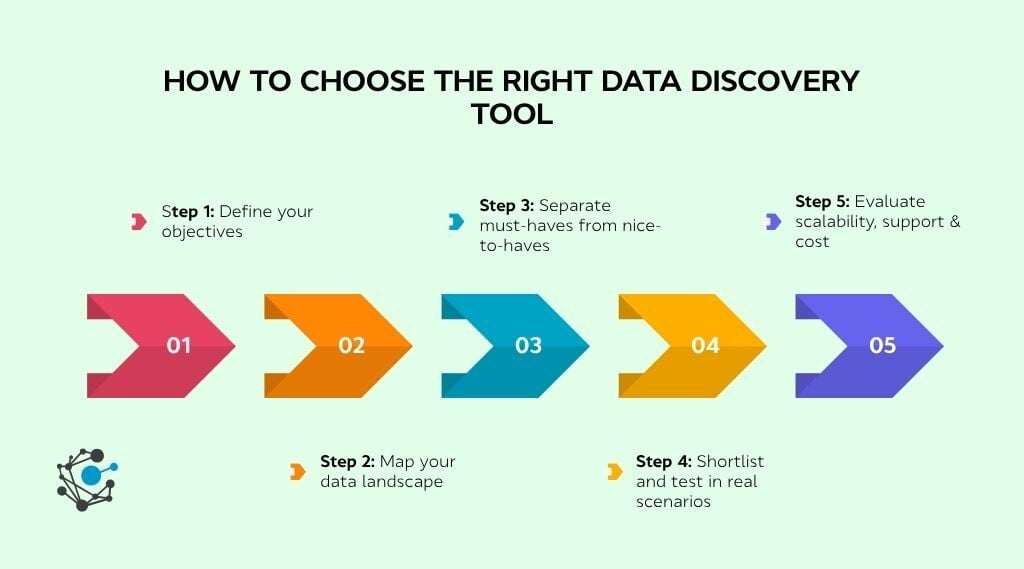
Finding the right data discovery tool isn’t just about comparing features; it’s about understanding how the tool fits into your data ecosystem and helps your teams actually use data better.
The process doesn’t have to be overwhelming; here’s a simple way to approach it.
Step 1: Define your objectives
Start by being clear on what you’re solving for.
Do you need stronger compliance and audit readiness? Better visibility for analytics? Or a way to manage unstructured data more efficiently? The clearer your goals, the easier it becomes to identify which tools genuinely add value versus those that just look good on paper.
Step 2: Map your data landscape
Every organization’s data environment is unique. Whether your systems are fully cloud-based, on-prem, or hybrid, your discovery tool needs to plug into all of them seamlessly.
Look for solutions that connect easily with platforms like Snowflake, AWS, Salesforce, or Power BI, so your team spends less time integrating and more time discovering insights.
Step 3: Separate must-haves from nice-to-haves
Not all features carry the same weight.
Your must-haves should include automated data discovery, metadata tagging, lineage tracking, and access control. Features like natural language queries or AI-powered data quality checks are great add-ons, but they shouldn’t distract from your core needs.
Step 4: Shortlist and test in real scenarios
Once you’ve narrowed down your options, request demos or free trials. Don’t rely on presentations; put the tools to work with your real data.
Platforms like OvalEdge make this process practical by offering guided pilots where you can test data discovery, classification, and governance on live systems, helping you see measurable outcomes before you buy.
Step 5: Evaluate scalability, support & cost
The right tool should grow with your business. Consider how easily it scales across departments, integrates with new tools, and supports your broader enterprise data governance strategy as compliance requirements and data volumes evolve.
Also, check the support ecosystem; training, documentation, and dedicated success teams can make or break adoption. OvalEdge, for example, pairs enterprise-grade discovery with personalized onboarding and long-term support, making it easier to operationalize across data teams.
Quick checklist
-
Works across cloud, hybrid, and on-prem systems
-
Automates PII detection and metadata tagging
-
Offers visual lineage and data mapping
-
Includes role-based access control
-
Integrates with BI, analytics, and governance tools
-
Comes with reliable onboarding and support
Now that we’ve mapped the needs and shortlisted vendors, it’s time to put the picks to the test and see how each one performs in real workflows before making the final call.
Conclusion
Data discovery is no longer just about locating information. It is the foundation for building trusted, governed data that supports better decisions, regulatory compliance, analytics, and AI. As your data landscape grows, the right platform should do more than scan and catalog assets. It should provide metadata management, lineage, governance, and business context in a single solution.
When comparing data discovery tools, evaluate how well each platform supports your long-term data strategy, integrates with your existing ecosystem, and scales with evolving business needs. OvalEdge brings these capabilities together, helping organizations discover, understand, govern, and trust enterprise data from one unified platform.
If you're ready to improve data visibility, strengthen governance, and unlock more value from your enterprise data, book a demo with OvalEdge to see how its end-to-end data discovery and governance platform can help your organization build a trusted foundation for analytics and AI.
.png?width=1081&height=173&name=Forrester%201%20(1).png)
.png?width=1081&height=241&name=KC%20-%20Logo%201%20(1).png)